
The best things to do in Hydra revolve around one rare quality: this is a Greek island with no cars. No scooters and no bicycles, where donkeys, water taxis and your own feet are the only way to get around. Just a short ferry from Athens in the Saronic Gulf, Hydra keeps a timeless, elegant calm that has drawn artists, sailors and travellers for generations. Its stone harbour town, grand captains’ mansions, rocky swim spots, monastery trails and quiet art scene give it a character quite unlike the busier Cyclades. From wandering the car-free lanes to swimming off the rocks at sunset, the things to do in Hydra are simple, beautiful and unhurried. Plan the whole trip with Greece Tours.
Hydra rewards slow exploration rather than a checklist. The amphitheatric town of stone mansions climbs the hillside around a perfect natural harbour, and coastal paths lead out to fishing hamlets and clear-water coves. There are museums that tell the island’s remarkable maritime and revolutionary history, monasteries high on the mountain with sweeping views. Donkeys and horses to ride. Tavernas where the day ends over fresh fish and a Saronic sunset. This guide sets out the best things to do in Hydra: exploring the town and harbour, the mansions and museums, the island’s history, the beaches and swim spots. The coastal walks, the monastery hikes, the donkeys and horse riding, the art scene, boat trips.
Where to eat, drink and watch the sun go down.
Why visit Hydra, and what makes it special?
Hydra is special because it bans all vehicles, so donkeys, water taxis and walking are the only transport. This car-free rule, combined with elegant stone architecture and a short hop from Athens, gives the island a rare, timeless calm.
The single thing that sets Hydra apart is the total ban on motor vehicles and even bicycles. There are no cars, no scooters and no mopeds anywhere on the island; goods and luggage move by donkey and mule, and people travel on foot or by water taxi. This one rule shapes everything, keeping the air clean. The lanes quiet and the pace unhurried. It is the reason Hydra has kept its character while so many Greek islands have been reshaped by traffic and development. Arriving here feels like stepping back into a more graceful age.
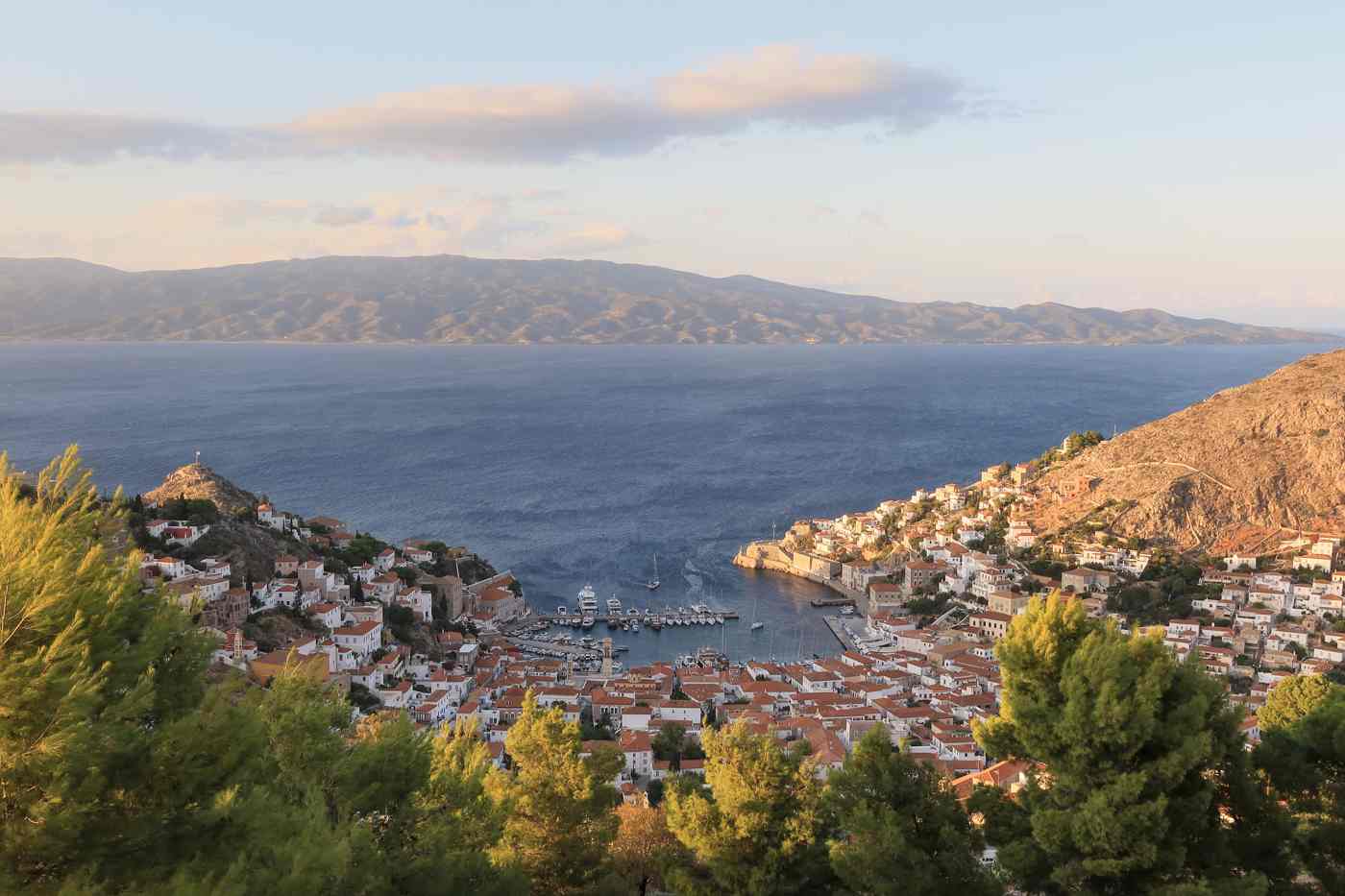
The setting matches the atmosphere. The town, known as Chora, rises in an amphitheatre of grey-stone mansions and white houses around a horseshoe harbour. With cannons at its mouth and yachts and fishing boats along the quay. Its 18th- and 19th-century captains’ houses and neoclassical facades give it an elegance rare among island ports, and its beauty has long drawn painters, writers and film-makers. Set in the Saronic Gulf, Hydra is one of the easiest islands to reach from Athens, yet it feels a world away.
This combination of accessibility and preservation is what makes a visit so rewarding. Because it is close to Athens, Hydra works both as a day trip and as a longer, more restful stay, and details of the excursion are covered on the page for a day trip to Hydra. Whether you come for hours or days, the appeal is the same: an elegant. Car-free island where the things to do in Hydra are about atmosphere, walking, swimming and looking, rather than rushing from sight to sight.
What is there to do in Hydra Town and the harbour?
In Hydra Town you can wander the car-free stone lanes, watch the harbour life of yachts, cafes and donkeys, admire the grand captains’ mansions, and see the marble clock tower of the cathedral.
Hydra Town, or Chora, is the first and greatest of the things to do in Hydra, and most visits begin at its horseshoe harbour. The quay curves around the water, lined with cafes, tavernas, boutiques and art galleries, while yachts. Fishing boats and water taxis come and go. Donkeys wait patiently to carry goods up into the town. Old cannons still point out to sea from the harbour mouth, a reminder of the island’s naval past. The whole scene. Framed by tiers of stone houses, is one of the most photogenic in Greece.
Behind the waterfront, a maze of narrow, stepped lanes climbs the hillside, and simply wandering them is a pleasure in itself. There are no cars to dodge, so you can drift between whitewashed houses, flower-filled courtyards, small squares and tiny churches, discovering viewpoints over the harbour as you climb. The marble bell tower and clock of the cathedral of the Dormition of the Virgin, set in a former monastery just off the quay. Is the town’s landmark. Its courtyard and small Byzantine museum are worth a look. Getting pleasantly lost in the lanes is essential.
The harbour is also the stage for the island’s social life. Lingering over a coffee or a drink to watch it unfold is one of the classic things to do in Hydra. In the morning the boats unload and the donkeys work; by evening the cafes fill and the light turns golden on the mansions. Elegant, lively and car-free, Hydra Town rewards both active exploring and simple people-watching. It is the natural base from which the rest of the island opens up on foot and by boat.
What are Hydra’s captains’ mansions and architecture?
Hydra’s captains’ mansions are grand stone houses built by wealthy sea captains and merchants in the 18th and 19th centuries. Their elegant neoclassical and vernacular architecture, rising around the harbour, gives the town its distinctive, dignified character.
The stone mansions that climb the slopes around the harbour are among the most striking things to do in Hydra simply to look at and, in cases, to visit. Built in the 18th and 19th centuries, when Hydra was a wealthy and powerful maritime nation. They were the homes of rich sea captains and merchant families whose ships traded and fought across the Mediterranean. Solid, grey-stone and often three or four storeys high, with fine doorways, courtyards and painted interiors, they give the town an architectural grandeur unusual for a small Greek island.
These archontika, or captains’ houses, are the physical record of Hydra’s golden age. Names such as Koundouriotis, Tombazis, Voulgaris and Kriezis belonged to families whose wealth and ships made the island a major power, and their mansions were built to match their status. Several stand out along the waterfront and on the surrounding hills, their scale and craftsmanship speaking of a time when Hydra rivalled far larger places. The Tombazis mansion now houses a branch of the Athens School of Fine Arts, a fitting link between the island’s grand past and its modern life as an artists’ haven.
Admiring this architecture is woven into almost everything else you do in the town, but it is worth seeking out the finest houses deliberately. Their weathered stone, elegant proportions and hillside setting are central to Hydra’s timeless beauty, and understanding who built them and why deepens a visit enormously. Whether glimpsed from the harbour, passed in the lanes or entered as a museum. The captains’ mansions are one of the defining sights and one of the most rewarding things to do in Hydra for anyone interested in history and design.
Which museums you visit in Hydra?
The key museums in Hydra are the Lazaros Koundouriotis Historical Mansion, a grand restored captain’s house, and the Historical Archives Museum, which tells the island’s maritime story and its major role in the Greek War of Independence.
For all its outdoor pleasures, Hydra has excellent museums. Visiting them is one of the most rewarding things to do in Hydra on a hot afternoon or a cultural day. The Lazaros Koundouriotis Historical Mansion is the grandest, one of the finest captains’ houses on the island. Restored and furnished to show how a wealthy Hydriot family lived, with period rooms, costumes and paintings. Perched above the town, it also offers notable views over the harbour and the sea, combining architecture, history and a viewpoint in one visit.
Down by the waterfront, the Historical Archives Museum of Hydra holds the island’s collective memory. Its collection of documents, portraits, weapons, ship models and relics traces Hydra’s rise as a maritime power and its central part in the struggle for Greek independence. For anyone wanting to understand why such a small island matters so much in Greek history. It is essential. It puts the mansions and cannons seen around the town into their proper context. The museum is compact and easily seen in an hour.
Beyond these two, the town rewards the culturally curious with smaller collections. The cathedral by the harbour houses a Byzantine and ecclesiastical museum, and temporary exhibitions and galleries appear around the island through the season. Together they make museum-going a genuine highlight rather than an afterthought, and they explain the wealth and history behind Hydra’s beauty. Adding one or two of them to a walk through the town is among the best things to do in Hydra for a fuller sense of the place.
What is Hydra’s history in the Greek War of Independence?
Hydra was one of the most powerful maritime forces in the Greek War of Independence.
Understanding Hydra’s history transforms a visit, and the island’s part in the Greek War of Independence is its proudest chapter. By the early 19th century, Hydra had grown enormously wealthy from seafaring and trade, and its captains owned a large fleet of fast, well-armed merchant ships. When the revolution against Ottoman rule broke out, the islanders converted this fleet into a navy and threw their fortunes behind the cause, making Hydra one of the three great naval islands, alongside Spetses and Psara, that carried the war at sea.
The names of Hydra’s heroes are woven into the town. Admiral Andreas Miaoulis, whose statue stands at the harbour, led the Greek fleet in daring actions, and families such as the Koundouriotis provided both ships and national leaders. Hydriot fireships and crews harried and defeated far larger Ottoman fleets, and the island poured its wealth into the struggle. This is why a small island carries such weight in the Greek national story, and why its mansions, cannons and museums are treated with such pride.
For visitors, this history is not confined to the museums; it is everywhere in Hydra. The cannons at the harbour mouth, the admirals’ statues, the grand captains’ houses and the very wealth that built the town all stem from this seafaring, revolutionary past. Reading the island through that lens, and marking the anniversaries and monuments, turns sightseeing into something deeper. Learning the story behind the beauty is one of the most enriching things to do in Hydra, and it gives every lane and mansion an added layer of meaning.
Where can you swim in Hydra, and are there beaches?
Hydra has few sandy beaches but many lovely swim spots off rocks and pebbles.
Swimming is one of the great things to do in Hydra, though visitors expecting long sandy beaches adjust their expectations: the island’s coast is mostly rock and pebble. The swimming is off ledges and small coves into deep, clear water. Right beside the town, Spilia and Hydronetta are favourite spots where you climb down concrete platforms and rocks straight into the sea. Often with a bar and sun-warmed stone to lie on. They are stylish, sociable and perfect for a swim between wandering the lanes.
Along the coast to the west, an easy walk or a short water-taxi ride brings you to prettier bays. Kamini is a small fishing harbour with a pebble beach. Beyond it Vlychos has a longer pebble shore and famous tavernas. Reached on foot by the coastal path or by boat. Mandraki, to the east of the town, is the island’s only fully sandy beach and the most organised, with facilities and a resort. Each has its own character, and hopping between them by water taxi is part of the fun.
For clearer, quieter water, the more remote coves reward the effort. Bisti and Agios Nikolaos, at the far west of the island, and other hidden inlets offer beautiful, secluded swimming in turquoise water, reached mainly by water taxi or boat trip. Because so beaches are accessible by road, and there are no roads anyway, boats are central to beach life here. Chasing the best swim spots by water taxi, from the town platforms to the distant coves, is one of the most enjoyable things to do in Hydra in summer.
What coastal walks can you do in Hydra?
Hydra’s most popular coastal walk is the flat, scenic path west from the town to the hamlets of Kamini and Vlychos, passing swim spots and tavernas.
Walking is not just an activity but the main way to get around. The coastal paths are among the finest things to do in Hydra. The classic, easy walk leads west from the edge of the town along the shore to Kamini. A pretty fishing hamlet. On to Vlychos, taking roughly thirty to forty-five minutes at a gentle pace. The path is mostly flat and paved, passing rocky swim spots. Small chapels and views across to the Peloponnese. It can be broken with a swim or a meal along the way.
This shoreline route is suitable for almost everyone and needs no special preparation beyond decent shoes, water and sun protection. Vlychos, at its end, has a little stone bridge and a cluster of celebrated tavernas right by the water. Making it a perfect turnaround point for lunch or an early dinner before walking back or catching a water taxi to town. Doing the walk in the softer light of the late afternoon, with the sea beside you the whole way, is a simple, memorable pleasure.
Beyond this easy path, the car-free island invites more walking in every direction. Trails lead east toward Mandraki and its beach, and inland and upward toward the monasteries and the mountain. The absence of traffic makes every route peaceful, and the constant sea views are a reward in themselves. Whether a short stroll between swims or a longer coastal ramble. Walking is woven into almost all the best things to do in Hydra. It is the truest way to experience the island.
Can you hike to Hydra’s monasteries?
Yes, hiking up to Hydra’s monasteries is one of the island’s great experiences.
For more energetic visitors, the climb to the mountain monasteries is one of the most rewarding things to do in Hydra. A stone-paved path zigzags up from the town to the monastery of Profitis Ilias and the neighbouring convent of Agia Efpraxia, set high on the slopes above Chora. The ascent takes around an hour to an hour and a half on foot, climbing steadily through pine and scrub, and it can also be done part-way by donkey. The reward at the top is a pair of peaceful, working religious houses and some of the finest views in the whole Saronic Gulf.
From the monasteries the panorama is superb, taking in the town far below, the harbour, the surrounding sea and the mountains of the Peloponnese across the water. The monks and nuns keep gardens and sometimes offer a simple welcome, and the sense of quiet and height is a complete contrast to the bustle of the harbour. Going early in the day, before the heat, is wise, and stout shoes, water and sun protection are essential, as there is little shade on the climb.
Hydra has other monasteries and chapels scattered across its rugged interior and coast. Including the remote Zourvas monastery at the island’s far eastern tip, reached by a long hike or by boat. For most visitors, though, the Profitis Ilias and Agia Efpraxia walk is the classic, combining exercise, spirituality and spectacular views in a half-day outing. For those who enjoy walking, it stands among the very best things to do in Hydra and shows a wilder, higher side of the island beyond the elegant town.
What about donkeys and horse riding in Hydra?
Donkeys and mules are Hydra’s working transport, carrying goods and luggage through the car-free lanes, and seeing them is part of the island’s charm.
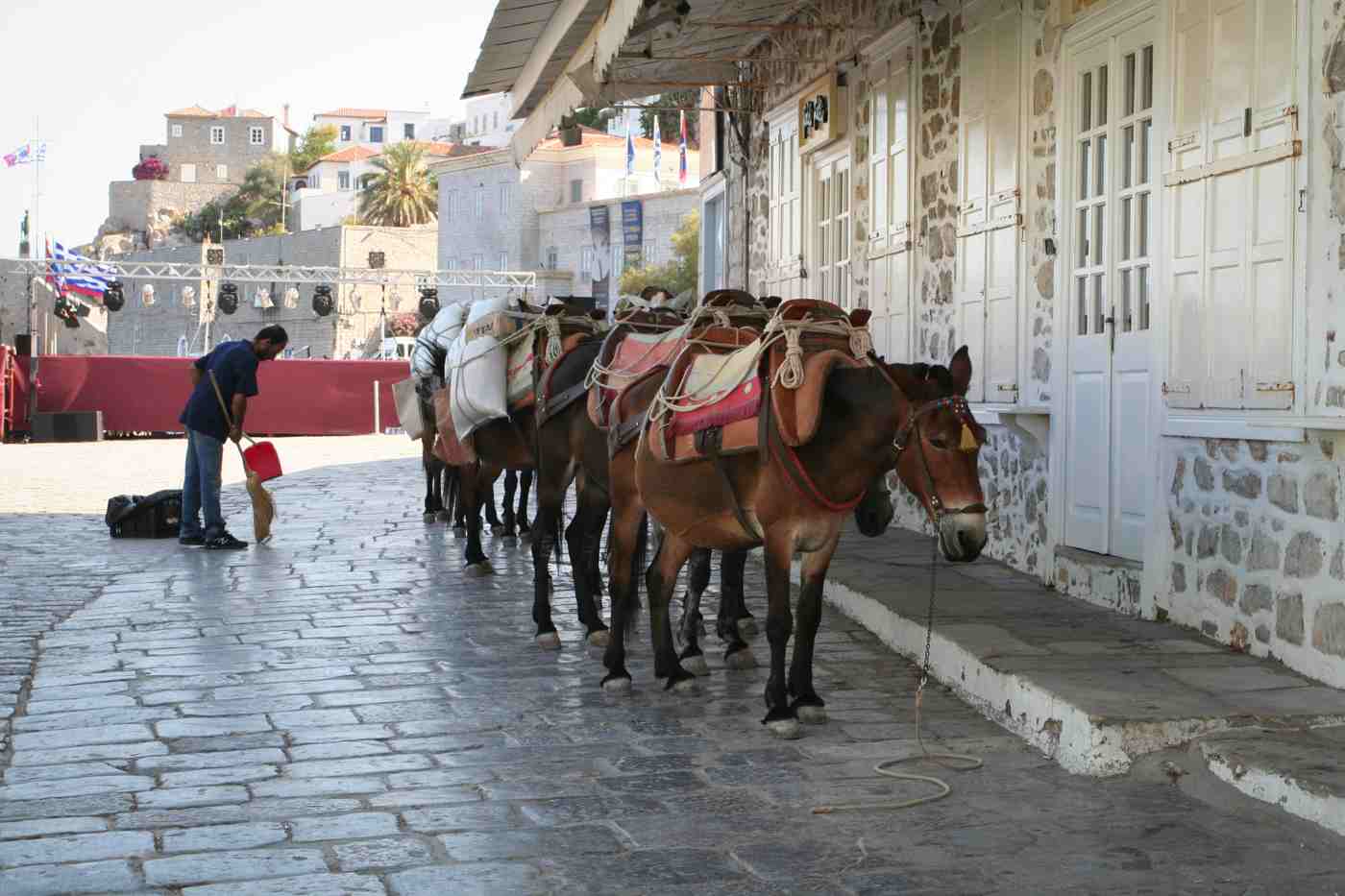
Donkeys and mules do the heavy lifting, and they are one of the most characterful things to do in Hydra to watch and photograph. Lines of them wait at the harbour to carry building materials, shopping, luggage and everything else up the stepped lanes to the houses and hotels, led by their handlers. They are the island’s lorries, taxis and removal vans all in one. Their patient presence along the quay and in the alleys is an essential part of the Hydra scene. Watching a train of laden donkeys climb the steps is a classic island moment.
For a more active experience, guided horse riding is a notable way to see the island. Local stables offer rides along scenic coastal and inland trails, passing viewpoints, chapels and quiet corners that visitors never reach on foot. Rides are tailored to different levels, from gentle walks for beginners to longer treks, and they open up the island’s rugged landscape in a relaxed, traditional way. Exploring Hydra from the saddle is both fun and in keeping with the island’s animal-powered, car-free spirit.
The most celebrated highlight is the chance to ride a horse into the sea. On rides, in the right conditions, you can take a horse into the shallows for a swim. A rare and joyful experience that has become one of the signature things to do in Hydra for visitors. Whether you simply admire the working donkeys along the harbour or saddle up for a coastal ride. The island’s animals are central to its identity and to the pleasure of a stay.
What is Hydra’s art scene, and where can you see it?
Hydra has a rich art scene, long a haven for painters, writers and musicians.
Hydra has drawn artists for over a century, and exploring its creative side is one of the more unexpected things to do in Hydra. The island’s beauty, light and calm made it a haven for painters, writers and musicians, and that legacy lives on in galleries, exhibitions and cultural events through the season. The grand Tombazis mansion houses a branch of the Athens School of Fine Arts, where students work and exhibit. Continuing a tradition that has made Hydra one of Greece’s most artistic islands.
The best-known contemporary venue is the DESTE Foundation Project Space, set in a former slaughterhouse on the coast just outside the town. Each summer it stages an ambitious contemporary art exhibition that draws the international art world to the island. Turning a walk along the shore into an encounter with cutting-edge work in a dramatic setting. Around the harbour and the lanes, smaller galleries and studios show painting, sculpture and photography, and the town has a quietly sophisticated, creative atmosphere.
This artistic heritage also has literary and musical strands. Hydra was famously home to a bohemian community of writers and musicians in the mid-20th century, and that romance still colours the island’s image. For visitors, dipping into the galleries, catching a summer exhibition or simply sensing the creative spirit in the elegant, car-free town adds a distinctive layer to a stay. Seeking out the art is among the most rewarding things to do in Hydra for those who like their travel with a cultural edge.
Can you take a boat trip around Hydra?
Yes, boat trips and water taxis are central to Hydra.
With no roads and a rugged coast, boats are essential to island life, and getting out on the water is one of the best things to do in Hydra. Water taxis operate constantly from the harbour, whisking visitors around the coast to the swim spots and beaches at Kamini. Vlychos, Mandraki, Bisti and the remoter coves that are hard or impossible to reach on foot. Fast, fun and scenic, they are the island’s buses and a pleasure in themselves, and hiring one to reach a quiet beach is a quintessential Hydra experience.
For a fuller day on the water, boat trips circle the island or venture further afield. A cruise around Hydra reveals its dramatic, largely uninhabited coastline of cliffs. Coves and monasteries seen from the sea, with stops to swim in water far clearer than anything reachable by land. Trips also run to the nearby islet of Dokos, a quiet, almost empty island with beautiful bays and an ancient shipwreck site offshore. Popular for swimming and snorkelling in an unspoiled setting.
Sailing and private charters are available too, and the calm Saronic waters make for easy, beautiful days afloat. Whether a five-minute water-taxi hop to a swim or a full day cruising the coast and neighbouring islets, the sea is where much of Hydra’s summer pleasure lies. Because the island turns its back on the car and toward the water, boat trips are not just an add-on but one of the central things to do in Hydra. They show the island at its most relaxed and beautiful.
Where can you eat, drink and watch the sunset in Hydra?
Hydra has excellent seafood tavernas around the harbour and in Kamini and Vlychos, stylish bars along the quay, and famous sunset swim-bars like Hydronetta.
Eating and drinking well is one of the easiest and most enjoyable things to do in Hydra. The harbour and lanes are full of tavernas and restaurants serving fresh fish and seafood, Greek classics and more refined cooking, while the waterfront cafes and bars are perfect for a coffee, an ouzo or a cocktail as you watch the boats. For a more local, laid-back meal, the tavernas at Kamini and Vlychos. Right by the water along the coastal path, are much loved. A long lunch there is a highlight of any visit.
Hydra also has a stylish drinking and sunset scene. The swim-bars built into the rocks beside the town, above all Hydronetta and Spilia, are the classic places to end an afternoon. Letting you swim off the rocks and then settle with a drink as the sun sinks over the Saronic Gulf. Bathed in golden light, with the sea below and the mountains of the Peloponnese across the water. These spots offer some of the finest sunsets in the Saronic islands and a genuinely glamorous atmosphere.
To round off the island’s pleasures, look out for local sweets such as amygdalota. The almond cakes for which Hydra is known. Enjoy the famous cats that lounge in every doorway and square. Between the seafood tavernas, the harbour bars, the sunset swim-spots and the sweet shops, the food and drink are woven through everything else, and lingering over them is essential. Ending the day with a meal and a sunset is, for many, the very best of the things to do in Hydra.
Frequently Asked Questions
How days do you need in Hydra?
You can see the highlights of Hydra in a single day trip from Athens, wandering the harbour town, swimming off the rocks and having lunch by the water. However, staying two or three nights lets you enjoy the island at its proper, unhurried pace: walking the coastal paths to Kamini and Vlychos, hiking up to the monasteries, exploring the museums, taking a water taxi to the remoter coves. Lingering over sunsets once the day trippers have left. Because Hydra is small and car-free, its pleasures are gentle and best savoured slowly. While a day gives a taste, an overnight stay reveals the calm, elegant island that visitors fall in love with.
Are there really no cars in Hydra?
Correct, Hydra genuinely has no cars, no motorbikes and not even bicycles. Motor vehicles are banned across the whole island, and this rule is central to its identity and charm. Instead, everything moves by donkey and mule, on foot, or by water taxi and boat: goods, luggage and building materials are all carried up the stepped stone lanes by animals. The only motorised exceptions are a couple of service vehicles such as a rubbish truck and ambulance. This car-free rule keeps the air clean. The town quiet and the atmosphere timeless. It is one of the main reasons Hydra feels so different from other Greek islands and so appealing to visitors.
Does Hydra have good beaches?
Hydra does not have long sandy beaches; its coast is mostly rock and pebble, and swimming is off ledges, platforms and small coves into deep, clear water. Beside the town, Spilia and Hydronetta let you climb straight into the sea from concrete platforms and rocks, while Kamini and Vlychos along the coast have pebble beaches and tavernas. Mandraki, east of the town, is the only fully sandy and organised beach. The clearest, quietest swimming is at remote coves such as Bisti, reached by water taxi.
The swimming in clear, deep water off the rocks and in the hidden coves is superb and very much part of the island’s appeal.
How do you get to Hydra?
Hydra is reached by ferry from the port of Piraeus in Athens, in the Saronic Gulf. Fast passenger ferries and catamarans make the crossing in around ninety minutes to two hours. Running times a day in season. The island is easy to visit as a day trip or for a longer stay. Because Hydra bans all vehicles, these are passenger-only boats; you cannot bring a car, and you have no use for one on the island anyway. On arrival everything is within walking distance or a short water-taxi ride. Hydra is also a popular stop on Saronic Gulf cruises from Athens, often combined with the neighbouring islands of Poros and Aegina.
Is Hydra worth visiting as a day trip?
Yes, Hydra makes an excellent day trip from Athens, and it is one of the most popular island excursions from the capital. In a single day you can arrive by fast ferry, explore the beautiful car-free harbour town and its lanes, admire the captains’ mansions. Visit a museum, swim off the rocks at Spilia or Hydronetta. Enjoy a seafood lunch by the water before returning in the evening. The island’s small size and walkable town make it easy to experience in hours. That said, staying overnight rewards you with the quieter. More magical Hydra that emerges once the day trippers leave.
A day trip is a notable introduction that often leaves visitors wishing they had stayed longer.
When is the best time to visit Hydra?
The best time to visit Hydra is late spring and early autumn, roughly May, June, September and early October, when the weather is warm and sunny, the sea is pleasant for swimming and the island is lively but not overwhelmed. July and August are the hottest and busiest months, with the most day trippers and the liveliest atmosphere, though the car-free streets never feel as choked as a road-based resort. Spring brings wildflowers and green hillsides ideal for the monastery hikes, while autumn keeps the warm sea with thinner crowds. Winter is very quiet, with businesses closed, but the town keeps its beauty.
For the best balance of warm weather, swimming and atmosphere, the shoulder months are ideal.
What is Hydra famous for?
Hydra is famous above all for being car-free: no vehicles are allowed, and donkeys, water taxis and walking are the only transport, which gives the island its timeless, elegant atmosphere. It is also renowned for its beautiful stone harbour town and grand 18th- and 19th-century captains’ mansions. For its major role in the Greek War of Independence as one of the great naval islands. For its long history as a haven for artists, writers and musicians. Add clear-water swim spots off the rocks, mountain monasteries with sweeping views, famous sunsets and a sophisticated. Bohemian charm. It is easy to see why Hydra is one of the most beloved and distinctive of all the Greek islands.