
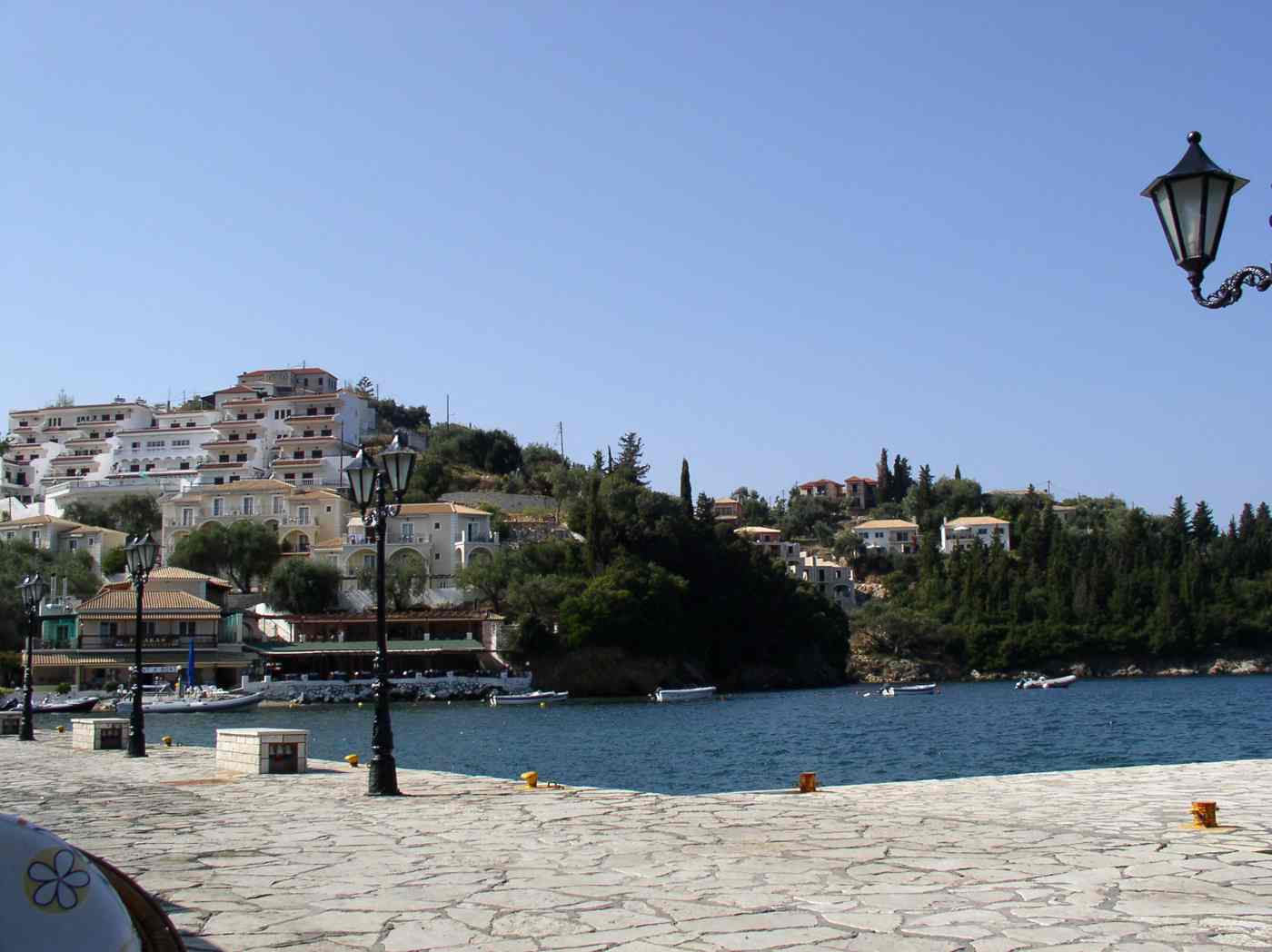
Sivota is a small former fishing village set on a deep, sheltered bay on the south-east coast of Lefkada, one of the Ionian islands of Greece. The village sits about 35 km south of Lefkada Town and roughly 30 km from Aktion airport at Preveza. A narrow, near-landlocked inlet cuts back between green hills to a horseshoe waterfront, forming one of the safest natural anchorages in the Ionian. Each summer the bay fills with moored yachts, and a promenade of fish tavernas wraps its head. This guide explains what Sivota is, where it lies and why sailors treat it as a fixed stop. Plan the whole trip with Greece Tours.
The waterfront tavernas at Sivota give the village its evening rhythm, and many offer visiting sailors free overnight mooring, water and shore power in exchange for a meal. Crews therefore crowd the quay after dark, and the bay stays busy through the sailing season. Sivota has almost no beach of its own at the head of the inlet. Several small beaches lie a short drive away, including Mikros Gialos, Poros, Ammoussa and Rouda bay. Together these strands link Sivota to the beaches of Lefkada, from the sheltered south-east coves to the windsurfing sands further round the coast.
What and where is Sivota in Lefkada?
Sivota is a small former fishing village on a sheltered south-east bay of Lefkada, about 35 km south of Lefkada Town. It lies roughly 30 km from Aktion airport at Preveza.
Sivota occupies the south-east corner of Lefkada, an Ionian island joined to the Greek mainland by a low causeway and a floating bridge. The village grew from fishing, and its houses climb the slopes around a deep inlet rather than spreading along an open shore. From Lefkada Town the drive south covers about 35 km along the east coast road. The route passes through hills and olive groves before dropping to the water at the head of the bay. This position keeps Sivota apart from the busier northern resorts and gives it a quieter, working-harbour character that visitors notice on arrival.
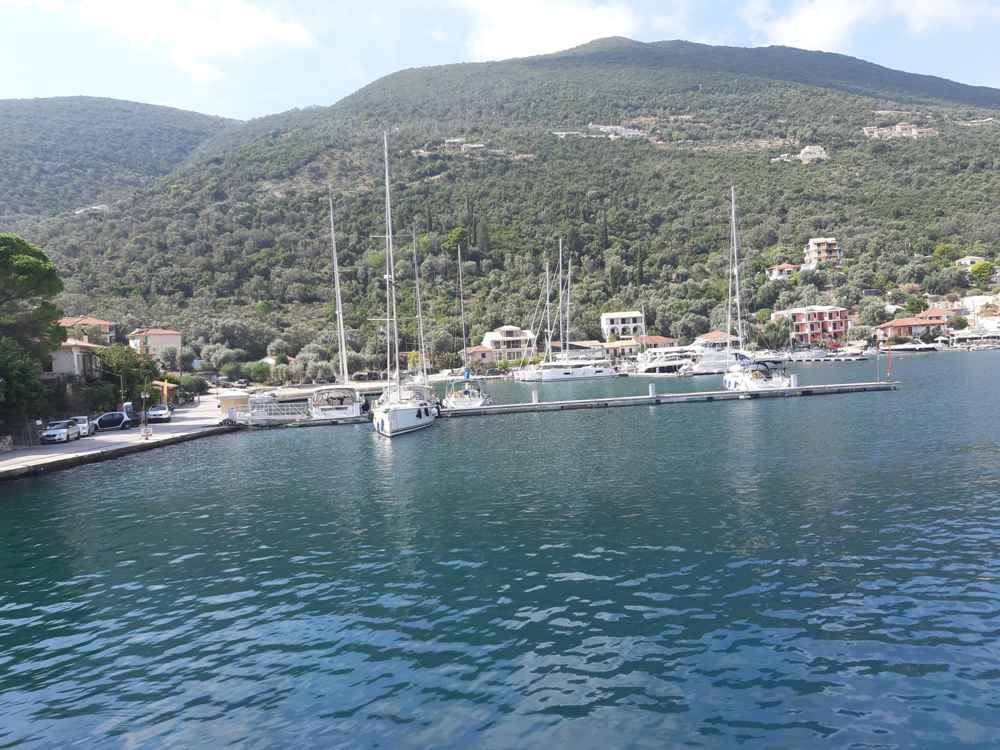
The bay itself is the defining feature of Sivota. A narrow, near-landlocked inlet cuts back between green hills, so the water reaches well inland and the open sea stays out of sight from the waterfront. This shape shelters boats from wind and swell on almost every side. At the head of the inlet a horseshoe waterfront curves around the moored yachts, lined with tavernas and shops. The surrounding hillsides remain largely green with pine and olive, and no large hotels break the skyline. The overall scene reads as a natural harbour first and a holiday village second.
Access to Sivota is straightforward by road. The nearest airport is Aktion at Preveza, about 30 km away on the mainland, reached across the Lefkada bridge and down the east coast. Drivers from Lefkada Town follow the coastal road south, while the port towns of Nydri and Vasiliki lie within easy reach for day trips. Public buses serve the island, though services to the smaller south-east villages run less often than those on the main routes. Most independent visitors therefore arrive with a hire car or by boat, and the final approach descends a wooded valley to the bay.
The name Sivota is shared with another sailing spot on the mainland coast near Parga, which sometimes causes confusion. The Lefkada Sivota is the horseshoe bay on the island’s south-east shore, not the mainland resort of the same name. On the island it functions as a small settlement rather than a large town, with a permanent population that swells sharply in the sailing months. Its economy leans on the harbour, the tavernas and passing crews rather than on wide sandy beaches. That distinction shapes everything about the place, from its layout to the daily rhythm along the quay.
Why is Sivota’s bay one of the best natural harbours in the Ionian?
Sivota’s bay is a near-landlocked inlet that cuts deep between hills, shielding moored boats from wind and swell on nearly every side. This shelter makes it one of the safest natural anchorages in the Ionian.
The geography of the inlet explains its reputation. The entrance is narrow and turns back on itself, so the hills close off the open sea and block the prevailing summer wind. Inside, the water lies flat even when the channel outside is choppy. This natural protection matters in the Ionian, where the afternoon breeze builds quickly and open anchorages grow uncomfortable. At Sivota a boat lies still through the night without rolling. The combination of a deep basin, high sides and a tight mouth gives the bay a calm that few other stops on the circuit match.
Depth adds to the shelter. The basin holds enough water for yachts to anchor close to the quay, and the bottom gives reliable holding for ground tackle. Boats moor stern-to along the waterfront or drop anchor in the middle of the bay. Space is finite, so in peak season the anchorage fills and later arrivals raft together or tuck into the corners. Even at capacity the water stays calm, which is the main reason skippers plan their day around reaching Sivota before evening. The security of the spot outweighs the crowding for most crews sailing the southern Ionian.
The bay’s role in the wider region reinforces its status. Sivota sits within a cluster of sheltered anchorages in the southern Ionian, alongside the channels around Meganisi and the bays near Nydri. Among these, Sivota is prized for the completeness of its protection, since the surrounding hills wrap almost the full circle. The narrow entrance also keeps the swell from working in, so conditions at the quay stay settled through the night. For flotillas and independent crews planning a route between Lefkada and the islands to the south, the bay serves as a dependable overnight halt in changeable weather.
Shelter shapes the character of the village as much as the sailing. Because the bay draws boats rather than beachgoers, the waterfront is built for crews arriving from the water. Mooring lines, chandlery needs and evening meals set the pattern of the day. The calm also makes the inlet popular for swimming from the boats and for small tenders crossing to the tavernas. The same enclosure that protects the yachts limits the breeze on hot afternoons, so the head of the bay feels still and warm. That trade-off is part of why Sivota reads as a harbour rather than a resort.
What is the sailing and yacht scene at Sivota like?
Sivota is a fixed stop on the Ionian sailing circuit, and its bay fills with moored yachts every summer evening. Flotillas and independent crews raft along the quay and anchor in the basin.
The southern Ionian is one of the most popular sailing grounds in Greece, and Sivota sits squarely on its main circuit. Boats work a loop that links Lefkada, Meganisi, Kefalonia and Ithaca, with steady summer winds and short hops between anchorages. Sivota’s shelter makes it a natural overnight point on this route. Charter yachts, flotillas and private cruisers all call in, so the bay carries a mix of sailing styles and nationalities. The volume peaks from midsummer, when the quay and the anchorage fill by late afternoon. Crews therefore aim to arrive early to secure a spot on the waterfront.
Mooring at Sivota follows the pattern of a taverna quay rather than a formal marina. Boats come alongside stern-to at the waterfront, dropping an anchor off the bow and running lines back to the shore. Larger numbers anchor out in the basin and use tenders to reach the village. There is no large commercial marina at the head of the bay, so the tavernas manage much of the waterfront themselves. This informal system works because the shelter holds boats steady overnight. It also means space is first come, first served, and the front row along the quay tends to go early.
The evening is the busiest part of the sailing day at Sivota. As boats settle, crews gather along the waterfront, and the tavernas fill with sailors comparing routes and weather. The mix of flotilla groups and independent yachts gives the quay a sociable feel that crews return for year after year. Lights from the moored boats reflect across the flat water of the inlet. The scene is a defining image of the southern Ionian circuit, repeated on most summer nights through the season. By morning the bay empties again as crews leave early to catch the wind for the next leg.
Sivota also suits sailors who are not on a fixed flotilla schedule. The bay works as a base for exploring the south-east coast by boat, with day sails to nearby beaches and coves that have no road access. Its position near Vasiliki puts one of the Ionian’s best wind spots within a short passage, which appeals to crews who combine cruising with dinghy sailing or windsurfing. Skippers use Sivota to wait out a strong forecast, confident in the shelter of the inlet. For many, the bay is less a destination than a reliable hinge in a longer Ionian itinerary.
What are the fish tavernas and the free-mooring custom at Sivota?
A promenade of fish tavernas wraps the head of Sivota’s bay, and many offer sailors free overnight mooring, water and shore power in exchange for a meal. This custom keeps the waterfront busy each evening.
The tavernas define the waterfront at Sivota. They line the horseshoe quay at the head of the inlet, with tables set close to the water where the yachts moor. Fishing shaped the village, and the restaurants continue that link by serving the catch of the local boats. Because the bay draws so crews, the tavernas form the commercial heart of the place, more so than shops or hotels. Their terraces face the moored fleet, so diners watch the boats and the boats watch the diners. This close arrangement of quay, table and hull gives the evening its particular atmosphere.
The free-mooring custom is the practical link between the boats and the tavernas. Many restaurants along the quay let visiting yachts tie up stern-to at their section of waterfront without a berthing charge. In return, the crew is expected to eat at that taverna in the evening. Water and shore power are often provided as part of the same arrangement. The exchange suits both sides, since the boat gains a secure, serviced berth and the taverna gains diners. This informal trade has become a fixed feature of the southern Ionian, and Sivota is one of the bays most associated with it.
The custom shapes how crews plan their evening at Sivota. On arrival, a boat chooses a taverna’s stretch of quay, ties up, and effectively books its dinner table by doing so. The choice of berth is therefore also a choice of restaurant. Because space is limited in high season, the front spots fill early, and later boats anchor off and tender in. The system runs on trust rather than paperwork, with no central marina office collecting fees. For sailors, the appeal is clear: a sheltered berth, basic services and a meal ashore, all settled without a formal mooring charge.
The waterfront is not only for sailors. Visitors staying ashore, and those arriving by car from Lefkada Town or Vasiliki, also use the tavernas, so the promenade mixes crews with land-based guests. The walk around the head of the bay passes table after table facing the water, which makes the quay the main public space of the village. Evening is the peak, when the moored fleet, the lit terraces and the still water combine. This concentration of dining along one curved waterfront, tied to the boats through the mooring custom, is the feature most visitors remember from Sivota.
Does Sivota have a beach, and what beaches are nearby?
Sivota has almost no beach of its own at the head of the bay, since the waterfront is a mooring quay. Small beaches such as Mikros Gialos, Poros, Ammoussa and Rouda bay lie a short drive away.
The bay at Sivota is built for boats, not bathers. Its shore is a quay lined with tavernas, and the water at the head of the inlet serves moorings rather than swimming from a strand. Visitors who expect a sandy town beach find instead a working waterfront. Swimmers do use the clear water of the inlet, often entering from the boats or the rocks at the edges of the bay. For a proper beach day, though, most people drive out of the village to the small coves along the surrounding coast. This lack of a bay beach is one of the defining traits of Sivota.
Several small beaches lie within a short drive of Sivota. The family bay of Mikros Gialos, paired with the nearby settlement of Poros, offers a sheltered strand of pebble and sand a little way up the coast. Ammoussa is a quieter beach in the same south-east stretch, with calm water and a low-key setting. These spots give people staying in or around Sivota an easy alternative to the harbour front. Distances are short, so a beach morning and a taverna evening fit comfortably into one day. The roads reach each cove, though approaches narrow as they drop to the water.
Rouda bay adds another option a short way along the coast. It is a broad, open bay with a longer beach than the tucked-away coves nearer the village, backed by gentle hills. Further round to the south-west lies Vasiliki, whose long sandy beach is one of the best windsurfing spots in the Mediterranean, drawing sailors and surfers through the season. The stretch of coast between Sivota, Rouda and Vasiliki therefore holds a range of beaches within easy reach. From a sheltered family cove to an exposed windsurfing shore, the south of the island offers variety that the harbour bay itself lacks.
The pattern of nearby beaches fits how visitors use Sivota. The village works as a base on the water and at the taverna quay, while the beaches sit a short drive out along the coast. This split means Sivota rewards those with a boat or a car more than those relying on a single town beach. Set in the wider context of the beaches of Lefkada, the south-east coves around Sivota are among the quieter choices, away from the busier west-coast sands. For crews and drivers exploring this corner of Lefkada, the harbour and its scattered beaches work best together.
Where you stay in Sivota, and who does it suit?
Sivota suits couples and quiet-seeking travellers. Family studios sit near the water, while villas and small boutique hotels spread across the green hillsides above the bay.
Accommodation at Sivota falls into two clear groups. Near the water, family-run studios and guesthouses put visitors within a short walk of the tavernas, the moored boats and the evening harbour scene. On the green hillsides that ring the bay, villas and small boutique hotels take the higher ground, many with pools and wide views over the water. The mood across both is calm and a little upmarket rather than package resort. Prices reflect that quieter, more considered character, and the village stays low-rise and green rather than lined with large blocks. This mix answers a common question about where to stay in Lefkada for a slower, water-facing base.
The waterfront studios suit travellers who want to step straight into village life. Mornings begin beside the moored yachts, and dinner is paces from the door at a taverna over the water. These simpler, family-run rooms tend to cost less than the hillside properties and keep guests close to the harbour rhythm. They favour couples and small groups who value walkability and the calm harbour setting more than a private pool. Because the village stays quiet after the sailing crews eat, the noise stays low even in the waterfront rooms, which is part of the reason Sivota draws a settled, repeat-visitor crowd each season.
The hillside villas and boutique hotels suit visitors who want privacy, a pool and a long view over the bay. Set among the greenery above the harbour. They trade the immediate waterfront for quiet and space. Most reward the short descent to the tavernas with an outlook back over the moored boats. Families and couples travelling by car often choose these, since the elevated position and the off-road location both assume a vehicle. The upmarket, unhurried feel is strongest here, away from the harbour edge. For anyone weighing where to stay in Lefkada with a car and a preference for calm, the Sivota hillsides make a strong, scenic case.
Sivota rewards a certain kind of traveller and gently discourages others. It suits couples, sailing visitors and families who value a calm, scenic and slightly upmarket base over nightlife and big-resort facilities. It suits less well those who want a lively strip, a long town beach on the doorstep or frequent public transport, since the buses are limited and the beaches sit a short drive away. Nydri, to the north, works better for anyone wanting a busier base built around boat trips, while Vasiliki draws the watersports crowd. Sivota keeps its quiet harbour identity, and most who book it come specifically for that unhurried, water-facing character.
What is the food and dining like at Sivota?
Dining at Sivota centres on the harbour. Waterfront tavernas serve fresh fish and traditional Greek dishes at tables set right over the water, in a calm, unhurried setting.
The food scene at Sivota is defined by its harbour. A line of tavernas runs along the water. Most set their tables right at the edge, so diners eat with the moored boats and the bay in front of them. Fresh fish is the anchor of the menus, alongside familiar Greek dishes cooked in the traditional way. The setting is unhurried and a little refined rather than raucous, matching the calm, upmarket mood of the village as a whole. Because the bay shelters visiting yachts, the tavernas cater to a mix of arriving sailors and staying guests, which keeps the harbour front busy and sociable through the warm evenings.
Fish leads the table at Sivota. The waterfront tavernas build their menus around the day’s catch, served simply and priced by weight in the usual Greek manner. Alongside the fish sit the standards of the Greek kitchen, so those who prefer meat, vegetables or shared meze plates are well covered. The cooking leans traditional rather than experimental, letting the ingredients and the setting do the work. Eating over the water is the point here, and the harbour position turns a plate of grilled fish into the centre of an evening. This straightforward, sea-facing dining is a large part of why the village earns its calm, quietly upmarket reputation.
Dining at Sivota carries a distinct rhythm through the day. Mornings are quiet, with coffee tables looking out over the still bay and the moored boats. The harbour front wakes properly in the evening, when staying guests and arriving sailing crews fill the waterside tables together. Because the village stays small and low-key, the atmosphere is sociable without turning into a nightlife strip. Dinner tends to run long and slow, in keeping with the unhurried mood. Visitors staying on the hillsides walk or drive the short distance down for the evening meal. Then return to the quiet of the villas and boutique hotels above, where the pace slows again after dark.
For a village its size, Sivota concentrates a lot of its life into the harbour tavernas. There is no large resort strip and no cluster of clubs, so the waterside restaurants become the social centre each evening. This works in the village’s favour for the calm, upmarket crowd it attracts, though visitors wanting more variety or livelier nights sometimes drive north to Nydri, which is busier and built around its boat trips. Within Sivota itself the focus stays on fresh fish, traditional Greek plates and the water view. That narrow but well-executed offer suits the harbour setting and reinforces the unhurried character that defines the whole south-east coast village.
What boat trips and watersports run from Sivota?
Sivota launches small self-drive boats and sailing charters from its sheltered bay. The calm water and nearby coves make it a natural base for exploring the south-east coast.
The sheltered bay gives Sivota a natural role as a launch point for the water. Small self-drive boats can be hired from the harbour, letting visitors set out on their own to the string of quiet coves along the south-east coast. Sailing charters also leave from the bay, drawing on the same calm, protected water that makes Sivota a favourite overnight anchorage for cruising yachts. The village sits close to the other south-east coves and to Vasiliki. A day on the water opens up a run of beaches and inlets that are hard to reach by road. This water access is central to what Sivota offers.
Self-drive boats are the most flexible option from Sivota. The small hire boats need no licence in most cases and let visitors plan their own route along the sheltered coast. Stopping at coves for a swim wherever the water tempts them. The calm bay makes launching and returning straightforward, which suits first-time skippers and families. Because the south-east coast holds a series of small, quiet inlets, a hired boat turns a day into a private tour of beaches that stay empty from the land. This independence, more than any organised excursion, is what many Sivota visitors come for, and it fits the village’s calm, self-directed character.
Sailing charters give Sivota a more serious nautical side. The bay’s shelter and its position on the cruising routes of the Ionian make it a working sailing base as well as a holiday harbour. Charters heading out from here reach the neighbouring islands and the quieter anchorages of the coast, and returning crews fill the tavernas in the evening. The presence of these yachts is a defining feature of Sivota, and it shapes the whole harbour scene. For visitors, the sailing traffic is part of the appeal. Turning the waterfront into a place where holidaymakers and cruising sailors share the same tables and the same calm evening view.
Sivota’s watersports character is deliberately gentle, which distinguishes it from its neighbours. The focus here is on boat hire, sailing and swimming in sheltered water rather than high-wind sports. Anyone wanting windsurfing looks to Vasiliki, the south-west village that serves as the island’s windsurfing centre thanks to its reliable afternoon wind. Sivota, by contrast, trades on calm. Its bay stays protected, its water stays flat, and its appeal rests on easy access to the coves rather than on adrenaline. That division suits both villages and helps visitors choose, since Lefkada’s south coast offers the calm harbour of Sivota and the windswept bay of Vasiliki within a short drive of each other.
How do you get to Sivota and get around?
A car is the practical way to reach Sivota. The village sits off the main road down a hillside approach, about 35 km south of Lefkada Town, and buses are limited.
Reaching Sivota realistically means driving. The village lies about 35 km south of Lefkada Town. On the island’s south-east coast. It sits off the main road at the end of a hillside approach that drops down to the bay. Local buses serve the area only lightly, so they do not make a dependable way to come and go. A hire car removes that constraint and is the arrangement most visitors choose, matching the pattern across much of Lefkada. Because the island is joined to the mainland by a causeway near Lefkada Town, driving in from the airport region or from elsewhere on the island is straightforward once a vehicle is arranged.
The final approach shapes how Sivota feels. The road leaves the main route and descends the hillside to the harbour, so the village reveals itself gradually as the bay opens below. This off-road, downhill position is part of the reason Sivota stays quiet and green rather than busy and built up. It also explains why a car matters so much once here. The hillside villas and boutique hotels sit above the water, and reaching them, the beaches and the neighbouring coves all assumes a vehicle. Visitors arriving without one find themselves tied to the immediate harbour, which is pleasant but limits how much of the surrounding coast they can explore.
Getting around from a Sivota base works best on four wheels. The nearby beaches sit a short drive away rather than on the doorstep, and the other south-east coves reward a car or a hired boat. Nydri lies to the north on the same coast, and Vasiliki to the south-west, both reachable by road in well under an hour. With a vehicle, Sivota becomes a calm base from which to tour the whole southern end of the island. Without one, the limited buses and the hillside location make day trips awkward. For that reason, most guidance on the village, and on the wider question of where to stay in Lefkada, assumes a hire car.
Planning the logistics ahead of time smooths a Sivota stay. Arranging a hire car for the whole trip, rather than relying on the thin bus service, is the single decision that most affects how the holiday unfolds. It unlocks the beaches, the coves, the neighbouring villages and the boutique hotels on the hillsides above the harbour. It also makes the off-road, downhill location an asset rather than an obstacle, since arriving and leaving become simple. Visitors who accept from the start that Sivota is a driving base tend to enjoy it most. Using the quiet harbour as a home to return to after days spent exploring the wider south-east coast of the island.


How does Sivota compare with Nydri and Vasiliki, and when you visit?
Sivota is the calm, upmarket harbour; Nydri to the north is busier and built around boat trips; Vasiliki to the south-west is the windsurfing centre. Visit across the warm season.
The three south-coast villages divide the map neatly. Sivota is the calm, slightly upmarket harbour on the south-east coast, defined by its sheltered bay, its fish tavernas and its sailing traffic. Nydri lies to the north on the same coast and runs busier, built around its boat trips and offering more shops, tavernas and nightlife. Vasiliki sits to the south-west and serves as the island’s windsurfing centre, drawing a younger, sportier crowd on the strength of its reliable afternoon wind. Each village answers a different holiday, and understanding that split is the key to choosing between them for the question of where to stay in Lefkada.
Sivota against Nydri is a choice about pace. Nydri is the larger, livelier base, with a long waterfront. A broad choice of tavernas and shops. The departure point for many of the island’s boat trips to the surrounding islets. Sivota, quieter and greener, keeps to its harbour and its calm evenings. Visitors who want organised excursions, easy amenities and a busier atmosphere lean towards Nydri; those who want stillness, sailing and a slower dinner over the water choose Sivota. The two sit close on the same coast, so a Sivota base can still reach Nydri easily by car for a busier day out before returning to the quiet harbour.
Sivota against Vasiliki is a choice about water. Vasiliki’s bay funnels a dependable afternoon wind, which has made it the windsurfing centre of the island and the natural home for board sports and the crowd that follows them. Sivota’s bay does the opposite, staying sheltered and flat, ideal for swimming, small self-drive boats and calm sailing rather than high-wind sport. Visitors set on windsurfing base themselves at Vasiliki; those wanting calm water and a quiet harbour choose Sivota. The two lie a short drive apart on the southern end of the island. A stay in one still allows a day trip to the other to sample the contrast.
Timing a visit to Sivota follows the warm season. The harbour and its tavernas come to life through the summer months, when the sailing traffic is strongest and the water is at its best for swimming and boat trips. The calm, upmarket character holds throughout, without the crowds and intensity of the larger resorts. Late spring and early autumn offer quieter versions of the same, with warm water, working tavernas and thinner crowds, though the village winds down outside the core season. For most visitors, the aim is a warm-weather stay that makes full use of the sheltered bay, the fish tavernas and the easy reach of the south-east coast.
Frequently Asked Questions
Is Sivota in Lefkada a good place for families?
Sivota suits families who want a calm, scenic base rather than a resort with big facilities. The sheltered bay makes for safe, flat water, and small self-drive boats let a family explore the quiet coves along the south-east coast at their own pace. Accommodation ranges from family-run studios near the harbour to hillside villas and boutique hotels with pools, so there is space for different budgets and needs. A car is important, since the beaches sit a short drive away and the buses are limited. Families wanting more shops, boat trips and amenities on the doorstep sometimes prefer Nydri to the north, which is busier.
Those happy with a quiet harbour, fish tavernas over the water and easy days on calm water find Sivota a settled, comfortable choice.
Do you need a car to stay in Sivota?
A car is strongly recommended for a Sivota stay. The village sits off the main road, about 35 km south of Lefkada Town, at the end of a hillside approach that descends to the bay. Local buses serve the area only lightly, so they are not a dependable way to come and go. Without a vehicle, visitors are tied to the immediate harbour, which is pleasant but limits access to the beaches. The neighbouring coves and the villas and boutique hotels on the hillsides above the water. With a hire car, Sivota becomes a calm base from which to reach Nydri to the north, Vasiliki to the south-west and the wider south-east coast.
Arranging a car for the whole trip is the single decision that most shapes how much of the island a Sivota stay can cover.
What is the difference between Sivota and Vasiliki?
Sivota and Vasiliki are both south-coast villages of Lefkada, but they offer opposite kinds of water. Sivota, on the south-east coast, has a sheltered, flat bay that suits swimming, small self-drive boats and calm sailing. It carries a quiet. Slightly upmarket harbour character built around fish tavernas over the water. Vasiliki, to the south-west, funnels a reliable afternoon wind and serves as the island’s windsurfing centre, drawing a younger, sportier crowd focused on board sports. The choice comes down to what a visitor wants from the water: calm and sheltered at Sivota, windswept and active at Vasiliki. The two sit a short drive apart.
A stay in one still allows a day trip to the other, letting visitors sample both the quiet harbour and the windsurfing bay.
What kind of food does Sivota serve?
Sivota’s dining centres on the waterfront tavernas that line the harbour. Fresh fish anchors the menus, served simply and usually priced by weight in the traditional Greek manner. Alongside the familiar dishes of the Greek kitchen for those who prefer meat, vegetables or shared meze plates. The cooking leans traditional rather than experimental, and the real draw is the setting, with tables set right over the water among the moored boats. Mornings are quiet, while the harbour front comes alive in the evening as staying guests and arriving sailing crews fill the tables together. The atmosphere stays sociable without becoming a nightlife strip, in keeping with the village’s calm, upmarket mood.
Visitors wanting more variety sometimes drive north to Nydri, but within Sivota the focus stays firmly on fresh fish and the sea view.
Can you hire boats or go sailing from Sivota?
Sivota is a natural base for the water. Small self-drive boats can be hired from the harbour. Letting visitors set out on their own along the sheltered south-east coast and stop at quiet coves to swim, often without needing a licence. Sailing charters also leave from the bay, drawing on the same calm, protected water that makes Sivota a favourite anchorage for cruising yachts. The presence of these visiting boats defines the harbour scene, and returning crews fill the tavernas each evening. The focus is on calm-water boating and sailing rather than high-wind sports, which distinguishes Sivota from Vasiliki and its windsurfing.
For anyone who wants to explore beaches that stay empty from the land, a hired boat from Sivota turns a day into a private tour of the coast.
When is the best time to visit Sivota?
The best time to visit Sivota is across the warm season, when the harbour. The tavernas and the sailing traffic are all at their liveliest and the water is ideal for swimming and boat trips. The summer months bring the fullest version of the village, though it keeps its calm, upmarket character rather than turning into a crowded resort. Late spring and early autumn offer quieter alternatives, with warm water, working tavernas and thinner crowds, making them attractive to visitors who want the sheltered bay without peak-season numbers. Outside the core season the village winds down, so a warm-weather stay makes best use of what Sivota offers.
Whichever the timing, the aim is the same: to enjoy the sheltered bay, the fish tavernas and the easy reach of the south-east coast.