
Captain Corelli’s Mandolin links the novel by Louis de Bernieres, the film directed by John Madden, and the real island of Kefalonia where both are set. The story unfolds during the Second World War, when Italian and then German forces occupied the largest of the Ionian islands. At its heart are Antonio Corelli, an Italian officer and mandolin player, and Pelagia, the daughter of the local doctor. The adaptation, with Nicolas Cage as Corelli and Penelope Cruz as Pelagia, was shot on the island itself. For visitors, the result is a story fixed to a real and reachable landscape. Plan the whole trip with Greece Tours.
The production not simply film the modern island. Instead the crew built sets and dressed existing places, constructing the fictional village at Dichalia and dressing the port of Sami to stand in for the pre-war harbour. The beaches at Antisamos and Myrtos supplied the film’s most recognisable scenes, while the wartime history of the Italian Acqui Division gave the plot its tragic core. Little of the temporary construction survives, so visitors follow the real places themselves, chiefly Sami, Antisamos and Myrtos, often on themed tours run from Sami.
What is Captain Corelli’s Mandolin and who wrote it?
Captain Corelli’s Mandolin is a novel by Louis de Bernieres, set on Kefalonia during the wartime occupation. It follows the Italian officer Antonio Corelli and a local woman, Pelagia.
Louis de Bernieres wrote the novel and set it on Kefalonia, the largest of the Ionian islands off the west coast of Greece. The story unfolds during the Second World War, when Italian and then German forces occupied the island. At its centre stand Antonio Corelli, an Italian artillery officer with a passion for the mandolin, and Pelagia, the daughter of the local doctor. Their relationship grows against a background of military occupation, shifting loyalties and the hardship of island life under foreign command. The book blends romance, comedy and tragedy, and it moves between the personal lives of villagers and the wider currents of the war.
The novel brought Kefalonia to a wide international readership and became one of the most widely translated works of British fiction of its period. Louis de Bernieres drew on the island’s landscape, its village culture and its wartime experience, weaving historical events into an invented cast of characters. Much of the drama turns on the fate of the Italian garrison and the relationships between soldiers and the local population. The doctor, Pelagia’s father, records the island’s history in his own writing, giving the book a strong sense of place. Readers often arrive on Kefalonia already familiar with the story, and they look for the villages, beaches and harbours described in its pages.
Music runs through the novel, and the mandolin gives the title its name. Corelli plays the instrument through the long months of occupation, and it becomes a symbol of the tenderness that survives amid conflict. The novel also carries a darker weight, because it records the destruction of the Italian garrison after the collapse of the alliance between the two occupying powers. De Bernieres set the human story against this factual catastrophe, and the contrast between everyday village life and sudden violence gives the book much of its force. The later chapters follow the island through the post-war decades, including the earthquake that reshaped its towns.
For visitors to Kefalonia, the novel works as an introduction to the island’s history and geography. It names real places, from the port of Sami to the mountain villages, and it fixes them in the imagination of travellers. The success of the book led directly to a major film adaptation, which brought a production crew to the island and put its beaches and harbours on screen. Between the printed page and the finished film, Kefalonia became a destination associated with a single story. Understanding the novel first helps visitors read the landscape, because the film changed details while keeping the central setting on the island.
How was the Captain Corelli’s Mandolin film made and who starred in it?
John Madden directed the film adaptation, which was shot on location on Kefalonia. Nicolas Cage played Captain Antonio Corelli and Penelope Cruz played Pelagia.
John Madden directed the screen adaptation, bringing a full production to Kefalonia to film on the island where the story is set. Nicolas Cage took the role of Captain Antonio Corelli, the Italian officer and mandolin player at the heart of the plot. Penelope Cruz played Pelagia, the doctor’s daughter who falls in love with him. The production used real island locations for scenes, filming along the coast and in the hills around Sami on the east side of Kefalonia. Because the story is rooted in a specific place, the choice to shoot on the island itself gave the film its landscapes of sea, mountain and harbour.
The film condensed the long novel into a single narrative arc, keeping the central romance and the wartime setting while simplifying much of the surrounding material. Madden’s version placed strong emphasis on the visual setting, using the island’s beaches, olive groves and steep coast roads as a constant backdrop. The cast combined international stars with supporting players, and the production dressed real places and built temporary sets to recreate the pre-war island. The finished film reached a wide audience and reinforced the association between the story and Kefalonia. Many viewers who had not read the book first encountered the island through these images of sunlit bays and mountain villages.
Filming on Kefalonia required the production to solve a basic problem. The towns shown in the story belonged to a period before the great Ionian earthquake, which had destroyed much of the island’s older architecture. To recreate that lost world, the crew built sets and dressed existing places rather than filming the modern towns as they stand. The work concentrated on the east coast around Sami, where the harbour and nearby beaches offered the settings the script required. Local people were involved in the production, and the arrival of a large film crew was a significant event for the island. The shoot left few permanent traces once the temporary structures came down.
The film’s release turned Kefalonia into a recognised location for a generation of travellers. Visitors began to seek out the beaches and viewpoints seen on screen, chiefly around Sami, Antisamos and Myrtos. The production’s use of real coastline meant that many of these places can still be visited, even though the built sets have gone. Local guides and tour operators responded by offering themed routes that link the main filming spots. For the island’s east coast in particular, the film added a layer of interest on top of the natural attractions of the beaches. The combination of a famous story and accessible locations continues to draw people who know the film.
What real wartime history lies behind the story?
The story rests on the fate of the Italian Acqui Division, stationed on Kefalonia during the occupation. German forces took over the garrison after the alliance between the two powers collapsed.
The Italian Acqui Division was stationed on Kefalonia during the years of occupation, holding the island as part of the wider Italian presence in the Ionian Sea. Italy and Germany had fought as allies, and the island’s garrison was Italian while that alliance held. When Italy left the war and changed sides, the position of the Italian troops on Kefalonia became suddenly dangerous. German forces moved to take control of the garrison, and the two former allies faced each other across the island. This reversal forms the historical hinge of both the novel and the film, and it explains the tragedy that overtakes the Italian soldiers in the story.
The confrontation on Kefalonia ended in disaster for the Acqui Division. After fighting between the Italian and German forces, large numbers of Italian soldiers were killed. The episode became one of the grim events of the war in the Ionian islands. Louis de Bernieres built his fictional characters around this real catastrophe, placing the invented Corelli among the Italian troops whose fate the history records. The novel does not shy away from the violence, and the film retains the central shock of the garrison’s destruction. For visitors, this history gives the beaches and hills a weight beyond their appearance, because the pleasant landscape was the setting for real suffering.
The events on Kefalonia are commemorated on the island and remembered in both Italy and Greece. The story of the Acqui Division is part of the wider history of the occupation of Greece. It draws visitors with an interest in the war as well as readers of the novel. The film brought this history to a far larger audience, many of whom knew little of the events before seeing the adaptation. Understanding what happened to the garrison helps visitors make sense of the story’s shift from romance and comedy to tragedy. The real history is not an invention of the novel but the factual ground on which the fiction stands.
Beyond the fate of the division, the occupation shaped daily life on Kefalonia for the local population. The novel describes shortages, fear and the awkward closeness between soldiers and villagers, and these details reflect the real experience of island communities under foreign command. The doctor and his daughter in the story stand for the civilians caught between the occupying forces and the currents of the wider war. The film keeps this domestic side of the occupation, showing the village and its people alongside the military drama. For travellers, the human scale of the story makes the history approachable, and it connects the visible places to the lives once lived in them.
Where were the film’s sets built on Kefalonia?
The production built the fictional village and the doctor’s house at Dichalia, on the road between Sami and Antisamos. Sami itself was dressed to stand in for the pre-war port.
The main sets stood at Dichalia, a spot on the road that runs between Sami and Antisamos on the east coast of Kefalonia. Here the production built the fictional village of the story, along with the doctor’s house that features so heavily in the plot. Because the great Ionian earthquake had flattened the island’s older towns, no surviving village looked right for the pre-war period, so the crew constructed one. The temporary buildings were made for filming rather than to last, and they created a convincing setting for the village scenes. Dichalia sits a short distance inland from the coast, between the port and the beach used for the soldiers’ camp.
Little of the built village survives today, because the sets were temporary structures dismantled after filming. Visitors who go to Dichalia looking for the doctor’s house find the landscape rather than the buildings, since the constructed village has gone. The location remains of interest chiefly for its place in the production and its position on the route between Sami and Antisamos. Knowing that the village scenes were filmed here, rather than in a real settlement, helps visitors understand how the film recreated a lost world. The absence of surviving sets is common to many film locations, where the physical settings exist only for the duration of the shoot.
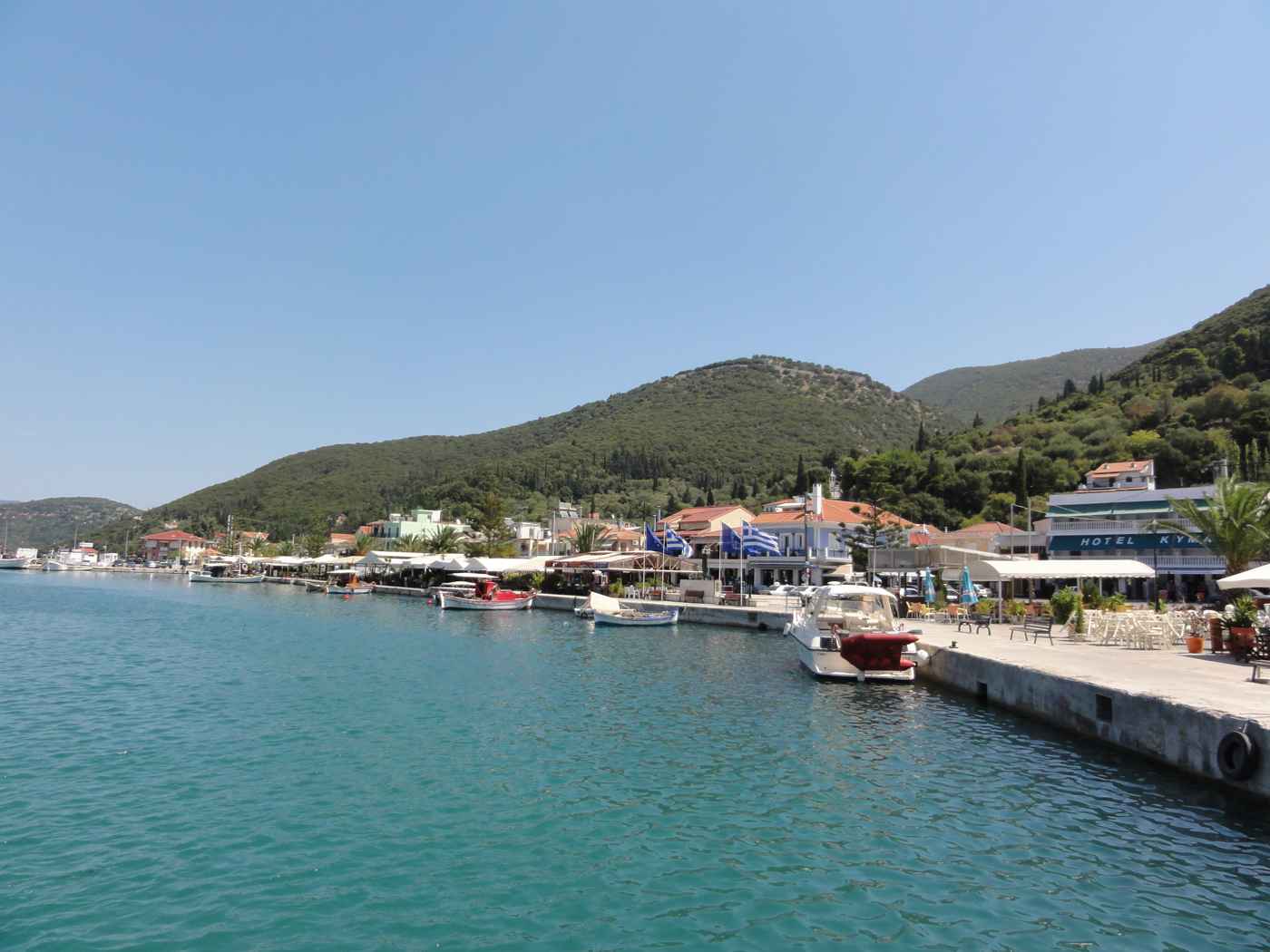
Sami, the main port on the east coast of Kefalonia, was dressed by the production to stand in for the pre-war harbour town. The modern town had been rebuilt after the earthquake, so the crew altered its appearance to match the period of the story. Harbour scenes were filmed along the Sami waterfront, using the real quay and seafront as the backdrop for the arriving ships and the life of the port. Sami serves today as the main base for visitors following the film’s locations, because it sits at the centre of the filming area. The town’s harbour remains recognisable from the film even without its temporary dressing.
The filming area forms a compact triangle on the east coast of Kefalonia, linking Sami, Dichalia and Antisamos within miles. Sami provided the harbour, Dichalia held the built village, and Antisamos beach served as the soldiers’ camp. This concentration made the shoot practical and now makes the locations easy to visit together. From Sami, the road climbs over a ridge to reach Antisamos, passing near the set location at Dichalia on the way. The short distances mean visitors can see the main filming spots in a single outing, using Sami as a base and moving out to the beach and back.
Why is Antisamos beach the film’s key location?
Antisamos beach, on the east coast about a couple of miles east of Sami, is where the Italian soldiers pitch their camp in the film. It is the adaptation’s most recognisable setting.
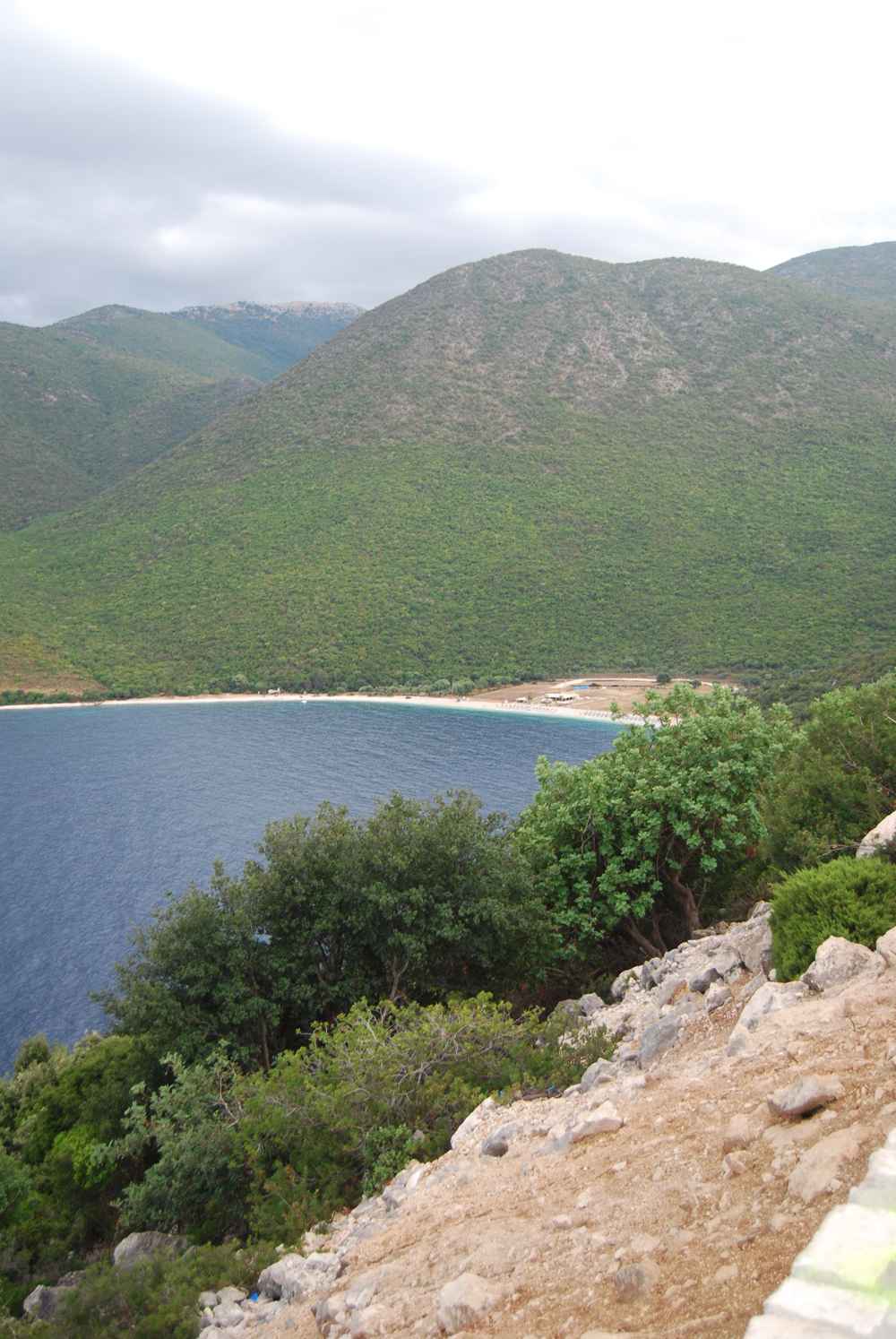
Antisamos beach lies on the east coast of Kefalonia, roughly a couple of miles east of Sami over a steep road that climbs a ridge before dropping to the shore. The beach sits in a green bay backed by hills, with clear water and a shingle shore. In the film, this is where the Italian soldiers pitch their camp, and the setting became the most recognisable of all the filming locations. The drive from Sami is short but winding, crossing high ground before the descent to the bay. The beach’s natural setting, framed by wooded slopes and sea, gave the production a distinctive backdrop for the camp scenes.
The soldiers’ camp scenes anchor much of the film’s middle section, and Antisamos provides their setting. The wide bay allowed the production to stage the military encampment against sea and hills. The images of the beach became closely tied to the film in the minds of viewers. Because the beach is a natural feature rather than a built set, it survives exactly where the filming took place, unlike the village at Dichalia. Visitors can stand on the same shore seen in the camp scenes and recognise the surrounding hills. This continuity makes Antisamos the single most rewarding location for travellers following the film on Kefalonia.
Antisamos today is a popular beach in its own right, drawing visitors for its water and setting as much as for its film history. Facilities near the shore serve beachgoers through the season, and the bay is a common stop on tours of the east coast. The road from Sami is the only approach by land, and it rewards the climb with views over the coast before the descent. For those following the film, the beach combines an easy visit with a direct link to the most famous scenes. Its position close to Sami means it fits naturally into a day spent exploring the filming area.
Reaching Antisamos requires the drive over the ridge from Sami, and the road is steep in places, so visitors allow time for the short but demanding route. The beach has no large settlement, and it keeps its natural character of hills, trees and clear water. Because it appears so prominently in the film, it draws both beachgoers and travellers interested in the locations. Standing on the shore, visitors can look back at the slopes that framed the camp on screen. Antisamos rewards a visit whether or not one knows the film, but for admirers of the adaptation it is the essential stop on the east coast of Kefalonia.
What other Kefalonia locations appear in the film?
Myrtos beach on the north-west coast appears in the scene where a wartime mine washes ashore and is detonated. The monastery of Agia Fanentes above Sami and viewpoints around Fiskardo and Agia Efimia also feature.
Myrtos beach lies on the north-west coast of Kefalonia, a broad crescent of pale shingle below steep white cliffs. In the film, it appears in the scene where a wartime mine washes ashore and is detonated, using the dramatic sweep of the bay as its setting. Myrtos is one of the best known beaches on the island, reached by a winding road that descends from the coast road above. Its combination of bright water and high cliffs makes it recognisable, and its brief appearance adds it to the list of the film’s Kefalonia locations. Visitors following the film often include Myrtos alongside the east-coast spots around Sami.
The mountain monastery of Agia Fanentes stands above Sami, on high ground overlooking the port and the east coast of Kefalonia. Its ruins feature in the film, and the elevated position gives wide views over the surrounding landscape. Reaching the monastery involves a climb from Sami, and the site rewards visitors with its setting as much as its history. The old walls and the outlook over the coast connect the location to the film’s mountain scenes. For travellers based in Sami, the monastery adds a hillside destination to the coastal locations, and it sits within reach of the main filming area on the island’s east side.
Viewpoints around Fiskardo and Agia Efimia also appear among the film’s Kefalonia locations. Fiskardo lies at the northern tip of the island, a harbour village that escaped the worst of the great Ionian earthquake and kept much of its older architecture. Agia Efimia sits on the east coast north of Sami, a small port on the same stretch of shore. Both places offered the production settings of harbour and coast that suited the story’s world. For visitors, they extend the film trail beyond the core sites around Sami, taking in the northern part of the island. The drive between them follows the scenic east and north coasts of Kefalonia.
Taken together, the film’s locations spread from the east coast around Sami to the north-west at Myrtos and the northern tip at Fiskardo. This spread reflects the production’s search for settings that matched the pre-war island, from harbours to beaches to mountain sites. Most visitors concentrate on the core group of Sami, Antisamos and Myrtos, which are the easiest to reach and the most closely tied to memorable scenes. Those with more time add the monastery of Agia Fanentes and the northern villages. The geography of the locations gives a natural route around the eastern and northern parts of Kefalonia, linking the filming spots into a tour of the island.
How can visitors plan a Captain Corelli’s Mandolin locations day?
Visitors base themselves in Sami, the film’s main location and the hub for themed tours. From there they reach Antisamos and Myrtos, the two beaches most closely tied to the film.
Sami makes the natural base for a day following the film’s locations on Kefalonia, because it lies at the centre of the filming area and stood in for the pre-war port. From the town, the main sites are within a short drive, and themed local tours run from Sami for those who prefer a guided route. The harbour front, where the port scenes were filmed, is the starting point, and the town has the services a visitor needs for a day out. Using Sami as a hub keeps travel times short and links the coastal and hillside locations into a single, manageable itinerary on the island’s east side.
A locations day usually begins in Sami, taking in the harbour front before crossing the ridge to Antisamos beach, where the soldiers’ camp scenes were filmed. From the east coast, visitors drive north-west to Myrtos beach for the setting of the mine scene, following the coast road with its views over the sea. Those with more time add the monastery of Agia Fanentes above Sami or continue north towards Fiskardo and Agia Efimia. The core route of Sami, Antisamos and Myrtos captures the most recognisable settings. It fits comfortably into a single day with time for swimming at the beaches along the way.
Themed local tours run from Sami and offer a guided way to follow the film’s locations for visitors who prefer not to drive. These tours link the main sites, and a guide can point out where the sets stood and how the places appeared on screen. Because the built village at Dichalia has gone, a guide’s explanation helps visitors picture the vanished sets. Tours vary in what they include, and travellers choose according to how much of the island they wish to see. For independent visitors, a hire car covers the same ground, since the distances between Sami, Antisamos and Myrtos are short on the east and north-west coasts.
Visitors find real places rather than film sets, because little of the temporary construction survives on Kefalonia. The village and the doctor’s house at Dichalia have gone, and Sami stands as the modern town rather than the dressed port of the film. What remains is the landscape itself, unchanged in its main features: the harbour at Sami, the bay at Antisamos and the cliffs above Myrtos. Following the locations is therefore an exercise in matching scenes to real coast and hills, guided by knowledge of the film. For admirers of the story, the pleasure lies in standing where it was filmed, on the beaches and harbours of the island.


Frequently Asked Questions
Was Captain Corelli’s Mandolin filmed on Kefalonia?
Captain Corelli’s Mandolin was filmed on Kefalonia, the island where Louis de Bernieres set his novel. John Madden directed the adaptation, with Nicolas Cage as Captain Antonio Corelli and Penelope Cruz as Pelagia, and the production used real island locations for scenes. Because the great Ionian earthquake had destroyed the older towns, the crew built sets and dressed existing places to recreate the pre-war island. The fictional village and the doctor’s house were constructed at Dichalia, between Sami and Antisamos, and the port of Sami was dressed to stand in for the pre-war harbour. Antisamos beach served as the Italian soldiers’ camp, and Myrtos beach appeared in the scene with the wartime mine.
Filming therefore took place on the island itself, chiefly around the east coast, which is why the locations can still be visited today around Sami.
Can you visit the film locations on Kefalonia today?
Visitors can follow the film’s locations on Kefalonia, though they find real places rather than surviving sets. The built village and the doctor’s house at Dichalia were temporary structures, taken down after filming, so little of the constructed setting remains. What survives is the landscape used in the film: the harbour at Sami, dressed for the production but still recognisable. Antisamos beach. Where the soldiers’ camp was staged. And Myrtos beach, seen in the mine scene. The monastery of Agia Fanentes above Sami and viewpoints around Fiskardo and Agia Efimia also feature. Most visitors base themselves in Sami and reach the core beaches within a short drive.
Themed local tours run from the town for those who prefer a guided route, and independent travellers cover the same ground by hire car along the east and north-west coasts.
Where is Antisamos beach and how do you get there?
Antisamos beach lies on the east coast of Kefalonia, roughly a couple of miles east of Sami. The only land approach is a road that climbs a steep ridge behind Sami before dropping to the bay, so the short distance involves a winding drive over high ground. The beach sits in a green bay backed by wooded hills, with clear water and a shingle shore, and it draws beachgoers as well as film visitors. In the adaptation, Antisamos is where the Italian soldiers pitch their camp, and it is the most recognisable of all the locations. Because it is a natural beach rather than a built set, it survives exactly where the filming took place.
Visitors typically reach it from Sami, either on a themed tour or by hire car, and combine the visit with a swim in the bay.
What happened to the Acqui Division on Kefalonia?
The Acqui Division was the Italian force stationed on Kefalonia during the occupation, and its fate forms the historical core of the story. Italy and Germany had fought as allies, so the island’s garrison was Italian while that alliance held. When Italy left the war and changed sides, German forces moved to take control of the garrison, and the two former allies confronted each other on the island. The clash ended in disaster for the Italian soldiers, large numbers of whom were killed in one of the grim episodes of the war in the Ionian islands.
Louis de Bernieres built his fictional characters, including Corelli, around this real catastrophe, and the film keeps the shock of the garrison’s destruction. This history gives the pleasant landscape of Kefalonia a deeper weight for visitors who know the story.
Do the film sets still exist on Kefalonia?
Little of the film’s built sets survives on Kefalonia, because they were temporary structures made only for the shoot. The fictional village and the doctor’s house, constructed at Dichalia on the road between Sami and Antisamos. Were dismantled after filming. Visitors who go looking for them find the landscape rather than the buildings. Sami, which the production dressed to stand in for the pre-war port, has returned to its ordinary appearance as the modern town rebuilt after the great Ionian earthquake. What endures are the natural locations: Antisamos beach, Myrtos beach, the monastery of Agia Fanentes and the northern villages. Following the film is therefore a matter of matching remembered scenes to the real coast and hills.
For most visitors, the appeal lies in standing on the actual beaches and harbours used in the adaptation.
How do you plan a Captain Corelli’s Mandolin tour from Sami?
A Captain Corelli’s Mandolin tour usually starts in Sami, the port that served as the film’s main location and the hub for themed local tours. From the town, visitors take in the harbour front, where the port scenes were filmed, then cross the ridge to Antisamos beach for the setting of the soldiers’ camp. Many continue north-west to Myrtos beach, seen in the mine scene, following the coast road with its sea views. Those with more time add the monastery of Agia Fanentes above Sami or the northern villages of Fiskardo and Agia Efimia. Themed tours run from Sami for visitors who prefer a guide, while independent travellers cover the route by hire car.
The core group of Sami, Antisamos and Myrtos fits into a single day, with time for swimming at the beaches.