
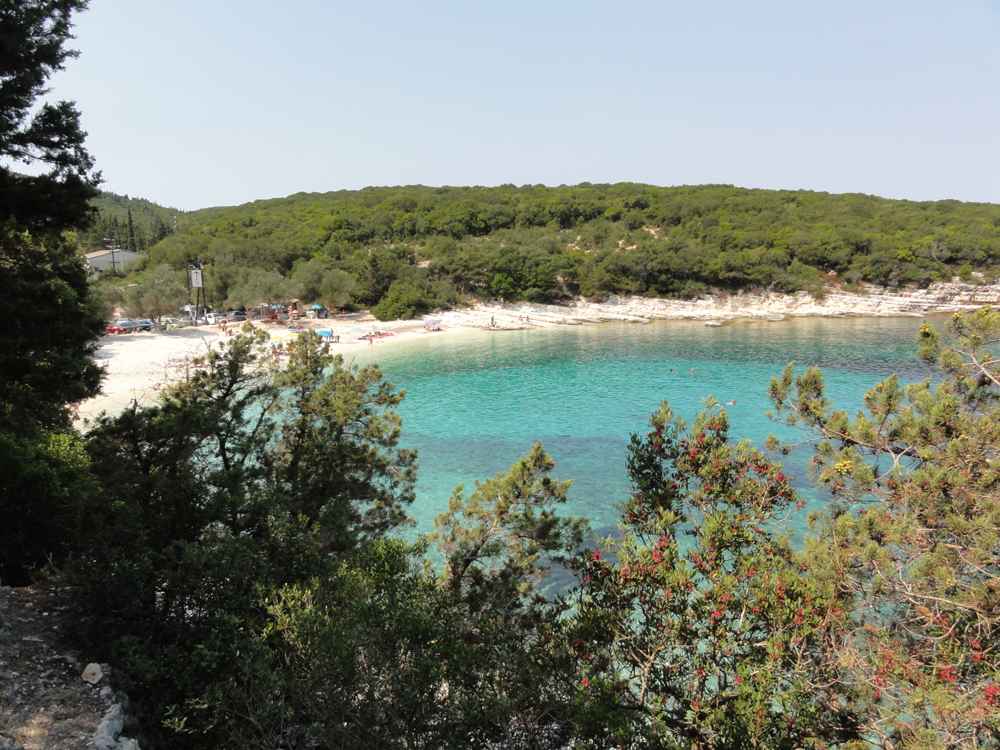
The Fiskardo beaches sit at the northern tip of Kefalonia, ringed around the pastel harbour village that survived the earthquake. This stretch of coast trades long sandy strands for small pebble coves set in woods of pine and cypress. The water is the draw here, clear and turquoise over pale stone, and much of it counts among the best snorkelling on the island. Emblisi lies about 1.5 km north of the village and pulls the largest crowds, while Foki sits just south below a cypress grove. Quieter coves such as Dafnoudi, Alaties and Kimilia reward a short walk or a drive along the coast. Plan the whole trip with Greece Tours.
Understanding the Fiskardo coast means accepting that its beaches are coves, not beaches in the wide sandy sense. Each one occupies a small notch in a green, rocky shoreline, and few have anything resembling a resort behind them. That character shapes a visit: shade and water are worth carrying. Footwear helps on the pebbles. A mask turns an ordinary swim into a chance to watch fish over the rocks. This guide covers the character of the coast, the main coves of Emblisi, Foki and Dafnoudi, the white-rock inlets of Alaties and Kimilia. What to bring, the snorkelling, how to reach each spot. Which cove suits which kind of visitor.
Why are the beaches around Fiskardo in Kefalonia coves rather than long sandy beaches?
The northern tip of Kefalonia is a green, rocky headland cut by small inlets. These notches hold pebble and white-rock coves in pine and cypress woods, not the broad sand found further south.
The land around Fiskardo rises quickly from the sea into wooded slopes, and the coastline is broken into a series of small bays. Each bay forms a cove rather than a continuous shore, so the beaches here are compact pockets of pebble or pale rock rather than long ribbons of sand. Pine and cypress trees grow close to the water in places, giving the coast a green backdrop that is unusual for a Greek island beach. The shape of the terrain, more than anything else, explains why visitors find coves at every turn instead of the wide sandy strands common on the southern and western sides of Kefalonia.
The pebble underfoot has a practical effect on the swimming experience. Pebble and rock beds keep the water clear because there is little loose sand to cloud it. That clarity is one reason the area is valued by swimmers and snorkellers. It also means the seabed shelves in different ways from cove to cove, with inlets dropping into deep water close to shore. The trade-off is comfort, since pebbles are harder on bare feet than sand, and the coves offer less room to spread out when they fill in high summer.
The woods behind the coves matter as much as the shore itself. Cypress groves and pines come down almost to the shingle at places such as Foki, and this natural cover provides the only shade at spots. Because none of these coves has a large resort behind it, the tree line is often the difference between a comfortable afternoon and a hot one. The green setting also keeps the coast feeling quiet and low-built, with tavernas and facilities kept small and seasonal rather than developed into anything resembling a resort strip.
This cove character defines how a day near Fiskardo works. Rather than settling on one enormous beach, visitors tend to move between several small coves, choosing according to how busy, how shaded or how remote they want to be. The distances involved are short, mostly kilometres or a walk of minutes, so it is realistic to see more than one cove in a day. Understanding that the beaches are coves, each with its own access and facilities, is the key to planning time well along this part of the Kefalonia coast.
What is Emblisi beach and why is it the busiest?
Emblisi is a white-pebble cove about 1.5 km north of Fiskardo with clear turquoise water. Easy road access and a partly organised front make it the busiest of the group.
Emblisi lies about 1.5 km north of Fiskardo village and is the most visited of the northern coves. It is a compact bay of white pebbles that meets water of a bright turquoise colour, framed by low rock and greenery on either side. The pale stone underfoot lightens the sea to that characteristic shade in the shallows, which is a large part of the cove’s appeal. Its position close to the village, combined with clear water and a manageable size. Means it draws a steady stream of swimmers through the summer season and fills more readily than the coves that need a walk to reach.
Road access explains much of the popularity. Emblisi can be reached by car along a short route from Fiskardo. There is space to arrive without the long approach on foot that some of the quieter coves require. That convenience makes it a natural first stop for families and for anyone who does not want to carry gear far. The cove is partly organised, so visitors find more in the way of facilities here than at the wilder inlets nearby, though it remains a small pebble bay rather than a developed resort beach with rows of amenities behind it.
The partly organised front sets Emblisi apart from its neighbours. Some seasonal provision exists at the beach, which helps on a hot day when shade and refreshment are otherwise scarce along this coast. Because facilities are limited even here, arriving early is sensible in peak season if a shaded spot matters, since the compact size means the cove reaches its comfortable capacity sooner than a large beach would. Even so, the water stays the main event, clear and inviting close to shore and well suited to an easy swim without a long approach.
Emblisi works best for visitors who want clear water without effort. Its short drive from the village, pebble shore and turquoise shallows make it a straightforward choice for a swim, a family afternoon or a first taste of the Fiskardo coves. Those seeking solitude will find it busier than the walking coves, so it suits people who prioritise ease of access over having the shore to themselves. As the introduction to the area’s water, it shows exactly why the north of Kefalonia is prized for swimming, all within a short distance of the harbour.
What can visitors expect at Foki beach south of Fiskardo?
Foki sits just south of Fiskardo, a pebble cove backed by a grove of cypress trees. It has a seasonal taverna, good snorkelling and a path toward the Venetian lighthouse on the headland.
Foki lies just south of Fiskardo and is one of the most recognisable coves on this coast. Thanks to the grove of cypress trees that rises directly behind the pebble shore. The tall, dark trees give the bay a distinctive look and, more usefully, a band of natural shade close to the water. It is a short distance from the village, which makes it easy to reach without a long approach. The combination of trees. Pebble and clear sea has long made it a favourite for a relaxed swim within easy range of the harbour.
The cove offers more in the way of facilities than the remote inlets nearby. A seasonal taverna operates at Foki. Visitors can find refreshment during the summer months without leaving the bay. Which is a genuine advantage on a coast where such provision is scarce. That said, the beach keeps its natural, low-key feel, with the cypress grove rather than any built structure defining the setting. The seasonal nature of the taverna is worth noting, as it reflects the general pattern along the Fiskardo coves where facilities appear in high season and thin out around it.
Snorkelling is a strong reason to choose Foki. The water is clear and the rocky margins of the cove give fish and marine life places to gather, so a mask reveals plenty close to shore. Beyond the swimming, a path leads from the area toward the Venetian lighthouse that stands on the headland guarding the entrance to Fiskardo. A walk that adds a short exploration to a beach day. This blend of good snorkelling, shade and a nearby landmark gives Foki more variety than a simple swimming stop.
Foki suits visitors who want a rounded half-day rather than only a swim. The cypress shade helps families and anyone sensitive to the midday sun, the seasonal taverna removes the carry everything. The snorkelling and lighthouse path give reasons to linger. Its position just south of the village keeps it convenient, so it pairs naturally with a stroll around Fiskardo harbour. For those weighing the coves against each other, Foki offers the best balance of facilities, shade and interest of the beaches close to the village.
How do you reach Dafnoudi and what makes it special?
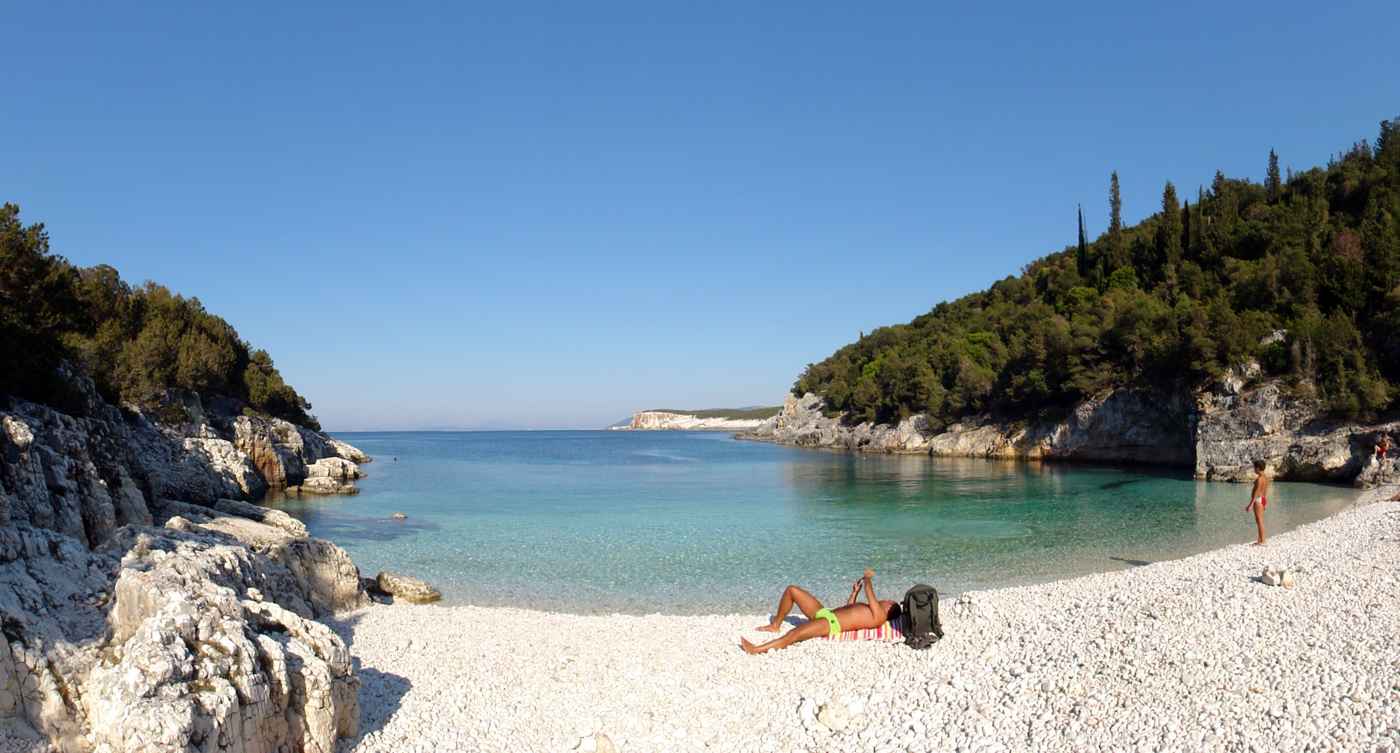
Dafnoudi is a secluded pebble cove reached by a walk of about fifteen minutes through woodland. It has no facilities, deep clear water and occasional sightings of Mediterranean monk seals in a cave.
Dafnoudi is the most secluded of the coves around Fiskardo, and reaching it is part of its character. The final approach is a walk of roughly fifteen minutes on a path through woodland, so the cove cannot be reached directly by car in the way Emblisi can. That short trek filters out casual crowds and keeps the bay quieter than the roadside coves. Rewarding those who make the effort with a pebble shore tucked into the trees and a sense of remove from the busier stretches of coast to the south.
There are no facilities at Dafnoudi, and planning has to account for that. Visitors find no taverna, no organised provision and no shade beyond what the natural surroundings offer, which makes carrying water and sun cover essential rather than optional. The absence of amenities is the price of the seclusion, and it shapes the kind of visit the cove suits. Anyone expecting refreshment on arrival will be caught out, so the sensible approach is to treat Dafnoudi as a self-sufficient trip with everything needed brought in on the walk.
The water is the reward. Dafnoudi has deep, clear water that is excellent for swimming and snorkelling, and its clarity is among the best on this clear-water coast. The cove is also known for occasional sightings of Mediterranean monk seals, which use a cave at one end of the bay. These seals are a rare and protected species. Encounters are a matter of chance rather than certainty, and quiet. Respectful behaviour in the water gives the best prospect of seeing wildlife without disturbing it in its shelter.
Dafnoudi is best for confident swimmers and those who value quiet over convenience. The fifteen-minute woodland walk, the lack of facilities and the deep water together make it less suited to very young children or anyone wanting an easy roadside swim. For walkers, snorkellers and visitors happy to be self-contained, it is one of the highlights of the Fiskardo coves. Offering seclusion, clear deep water and the slim but real chance of sharing the bay with a monk seal near its cave.
What are the white-rock coves of Alaties and Kimilia like?
Alaties and Kimilia are small, quiet coves further along the coast toward Antipata. Both are marked by striking pale white rock and clear water, with little in the way of development behind them.
Further along the coast toward Antipata lie Alaties and Kimilia, two coves defined by their pale white rock rather than by pebbles alone. The striking light stone frames the water and gives these inlets a bright, distinctive appearance that sets them apart from the greener coves nearer the village. Both are small and quiet, sitting away from the immediate surroundings of Fiskardo. They reward visitors willing to travel a little further along the northern coast in search of scenery and clear water without crowds.
The pale rock is the defining feature of both coves. At Alaties, white stone rises around a small bay and creates a contrast with the sea that is unusual on this part of the island. Kimilia shares that white-rock character, a compact cove of striking pale stone that stays quiet through much of the season. The colour of the rock, combined with clear water. Makes these inlets memorable. Their smaller scale means they never take on the busier feel of the roadside coves closer to the harbour village.
Facilities are minimal at both, in keeping with the pattern along this coast. Neither Alaties nor Kimilia has a resort behind it, so visitors plan to bring what they need, including shade and water, much as they for Dafnoudi. The lack of development is part of the appeal, keeping the coves natural and unhurried, but it also means these are not places to rely on finding refreshment. Their position toward Antipata puts them at the quieter end of the Fiskardo coast, away from the flow of visitors around the village itself.
These white-rock coves suit visitors chasing scenery and solitude over convenience. The pale stone and clear water make them rewarding for photographs and for a quiet swim, while their distance from the village and lack of facilities keep numbers low. For anyone exploring the north of Kefalonia beyond the well-known beaches, Alaties and Kimilia round out the picture of the Fiskardo coast. Showing how varied its small coves are, from green cypress bays to bright inlets of white rock toward Antipata.
What visitors bring and what facilities exist at the Fiskardo beaches in Kefalonia?
Bring shade and water to every cove, since none has a large resort behind it. Facilities are limited and seasonal, strongest at Emblisi and Foki, and absent at Dafnoudi, Alaties and Kimilia.
The single most useful piece of advice for the Fiskardo coves is to bring shade and water. None of these beaches has a big resort behind it, so natural tree cover and whatever visitors carry are often the only protection from the sun. Water is equally important at the coves without facilities, where nothing is available to buy on arrival. A parasol or beach shelter, plenty of drinking water and sun protection turn a hot afternoon on an exposed pebble shore into a comfortable one. This preparation matters more here than at developed resort beaches.
Footwear and swimming gear complete the essentials. Because the coves are pebble or white rock rather than sand, water shoes or sturdy sandals make entering the sea and walking the shore far easier on the feet. A mask and snorkel are well worth packing given the clarity of the water and the rocky margins where marine life gathers. For the coves that need a walk, such as Dafnoudi. Comfortable shoes for the woodland path are sensible. A bag that carries everything in one trip saves repeated journeys to and from the car.
Facilities vary sharply from cove to cove. Emblisi is partly organised and offers the most provision of the group, while Foki has a seasonal taverna where refreshment can be found during the summer. These two coves near the village are therefore the easiest for visitors who prefer not to be entirely self-sufficient. Even so, provision at both is limited and seasonal. Thinning outside the peak months. It is unwise to assume everything will be open or that a shaded spot will remain free late in the day.
The remote coves have no facilities at all. Dafnoudi, Alaties and Kimilia offer no taverna and no organised provision, so visitors must arrive fully prepared with food, water and shade. This absence is part of what keeps them quiet and natural, but it makes planning essential. The practical rule along the whole Fiskardo coast is to treat every cove as though nothing will be available. Carry more water than seems necessary. Rely on the seasonal facilities at Emblisi and Foki only as a convenience rather than a certainty.
How good is the snorkelling and how do you reach each cove?
The Fiskardo coves offer some of the clearest snorkelling water on Kefalonia. Emblisi and Foki are reached by car, Dafnoudi by a woodland walk, and coves can also be approached by boat.
Snorkelling is one of the strongest reasons to visit this coast. The pebble and white-rock seabeds keep the water exceptionally clear, and the coves count among the best places to snorkel on Kefalonia. Rocky margins around each bay give fish and marine life shelter, so a mask reveals plenty within a short swim of the shore. Foki and Dafnoudi are especially noted for their underwater clarity. The latter with deep water that appeals to confident snorkellers. The overall standard of visibility along this stretch is difficult to match elsewhere on the island.
Reaching the coves depends on which one is chosen. Emblisi, about 1.5 km north of Fiskardo, has easy road access and can be reached by car with little effort, making it the simplest to visit. Foki, just south of the village, is likewise close and reachable without a long approach. These two roadside coves are the most convenient for anyone travelling with children or heavy gear. Their short distance from the harbour means they can be combined easily with time spent in Fiskardo itself.
The quieter coves ask for more effort on foot. Dafnoudi requires a walk of about fifteen minutes through woodland, which is what keeps it secluded, so sturdy footwear and a self-sufficient approach are needed. The white-rock coves of Alaties and Kimilia lie further along the coast toward Antipata and are reached by travelling beyond the immediate area of the village. These walking and driving approaches filter the crowds, so the reward for the extra distance is a quieter shore and, often, clearer water with fewer swimmers around.
Boat access opens up the coast in a different way. Because Fiskardo is a harbour village, several of these coves can be approached from the water. Arriving by boat gives a view of the pine-fringed shoreline that the roads do not. A boat also makes it possible to string together more than one cove in a day and to reach quieter spots without the walk. Whether by car, on foot or by boat, the short distances involved mean visitors can sample several of the Fiskardo coves and their clear water in a single outing.
Frequently Asked Questions
Which Fiskardo beach is best for families?
Emblisi and Foki are the most family-friendly of the Fiskardo coves. Emblisi lies about 1.5 km north of the village with easy road access, a white-pebble shore and clear turquoise shallows, so children and gear can arrive without a long walk. Foki, just south of Fiskardo, adds a cypress grove that provides natural shade and a seasonal taverna for refreshment during summer. Both are close to the village and partly provisioned, which suits families who prefer not to carry everything. Water shoes help on the pebbles at either cove, and bringing shade and water remains sensible even at these easier beaches.
The walking cove of Dafnoudi and the remote white-rock inlets of Alaties and Kimilia are better left to older children or adults, as they have no facilities and, in Dafnoudi’s case, deep water and a fifteen-minute path.
Can you see monk seals at Dafnoudi?
Dafnoudi has occasional sightings of Mediterranean monk seals, which use a cave at one end of the secluded pebble cove. Sightings are a matter of chance rather than a guarantee, since the monk seal is a rare and protected species and moves according to its own patterns. The cove’s quiet setting, reached by a walk of about fifteen minutes through woodland. Its deep clear water make it one of the more likely places along the Fiskardo coast to encounter one. But visitors swim there without seeing a seal at all. If a seal is present, keeping a respectful distance and behaving quietly in the water gives the best chance of observing it without causing disturbance.
The cave shelter not be approached or entered, as protecting the animals’ resting place matters more than a closer look. Calm behaviour benefits both the seals and future visitors.
Are the Fiskardo beaches sandy?
The Fiskardo beaches are not sandy. The northern tip of Kefalonia is a green, rocky headland cut into small inlets, so the beaches here are pebble and white-rock coves rather than long sandy strands. Emblisi is a white-pebble cove, Foki a pebble bay beneath cypress trees. Dafnoudi a secluded pebble cove reached on foot, while Alaties and Kimilia are marked by striking pale white rock. The pebble and rock seabeds keep the water very clear, which is one of the main attractions of the area and a reason the coast is prized for snorkelling. The trade-off is comfort underfoot, so water shoes or sturdy sandals make swimming and walking the shore far easier.
Visitors expecting the wide sand found on Kefalonia’s southern and western coasts adjust their expectations; the appeal of Fiskardo lies in small, clear-water coves set among pine and cypress.
How far is Emblisi from Fiskardo village?
Emblisi lies about 1.5 km north of Fiskardo village. The short distance and easy road access make it the most convenient of the northern coves to reach by car. Which is a large part of why it is the busiest. It is a compact white-pebble cove with clear turquoise water and a partly organised front. It offers more provision than the remoter inlets nearby, though it remains a small pebble bay rather than a developed resort beach. Because it fills more readily than a large beach, arriving early in peak season helps in securing a shaded spot, as facilities and natural shade are both limited.
Its closeness to the harbour means a visit combines easily with time spent in Fiskardo itself. It makes a natural first stop for anyone wanting clear water without the walk that quieter coves such as Dafnoudi require.
Do you need a car to visit the beaches around Fiskardo?
A car makes visiting the Fiskardo coves easier but is not the only option. Emblisi, about 1.5 km north of the village. Foki, just south of it. Both have straightforward road access and are the simplest to reach by car with children or heavy gear. Dafnoudi, by contrast, needs a walk of roughly fifteen minutes through woodland, and the white-rock coves of Alaties and Kimilia lie further along the coast toward Antipata. Because Fiskardo is a harbour village, coves can also be reached by boat, which gives a different view of the pine-fringed shore and makes it possible to string together more than one bay in a day.
Walking is realistic for the coves closer to the village and for Dafnoudi’s path. Overall, a car widens the choice and shortens the effort, but boat trips and walks open up the quieter beaches for those without one.
Where is the best snorkelling near Fiskardo?
The coves around Fiskardo offer some of the clearest snorkelling water on Kefalonia, with the pebble and white-rock seabeds keeping visibility high. Foki, just south of the village, is a strong choice, as its clear water and rocky margins gather fish within an easy swim of the cypress-shaded shore. Dafnoudi is another highlight, its deep clear water suiting more confident snorkellers who are willing to make the fifteen-minute woodland walk to reach it. The white-rock coves of Alaties and Kimilia toward Antipata also offer clear water in quiet settings. A mask and snorkel are well worth packing anywhere along this coast, and water shoes ease entry over the pebbles.
Snorkellers carry their own water and shade, treat the monk seals’ cave at Dafnoudi with respect. Plan a self-sufficient visit to make the most of the clear conditions.