
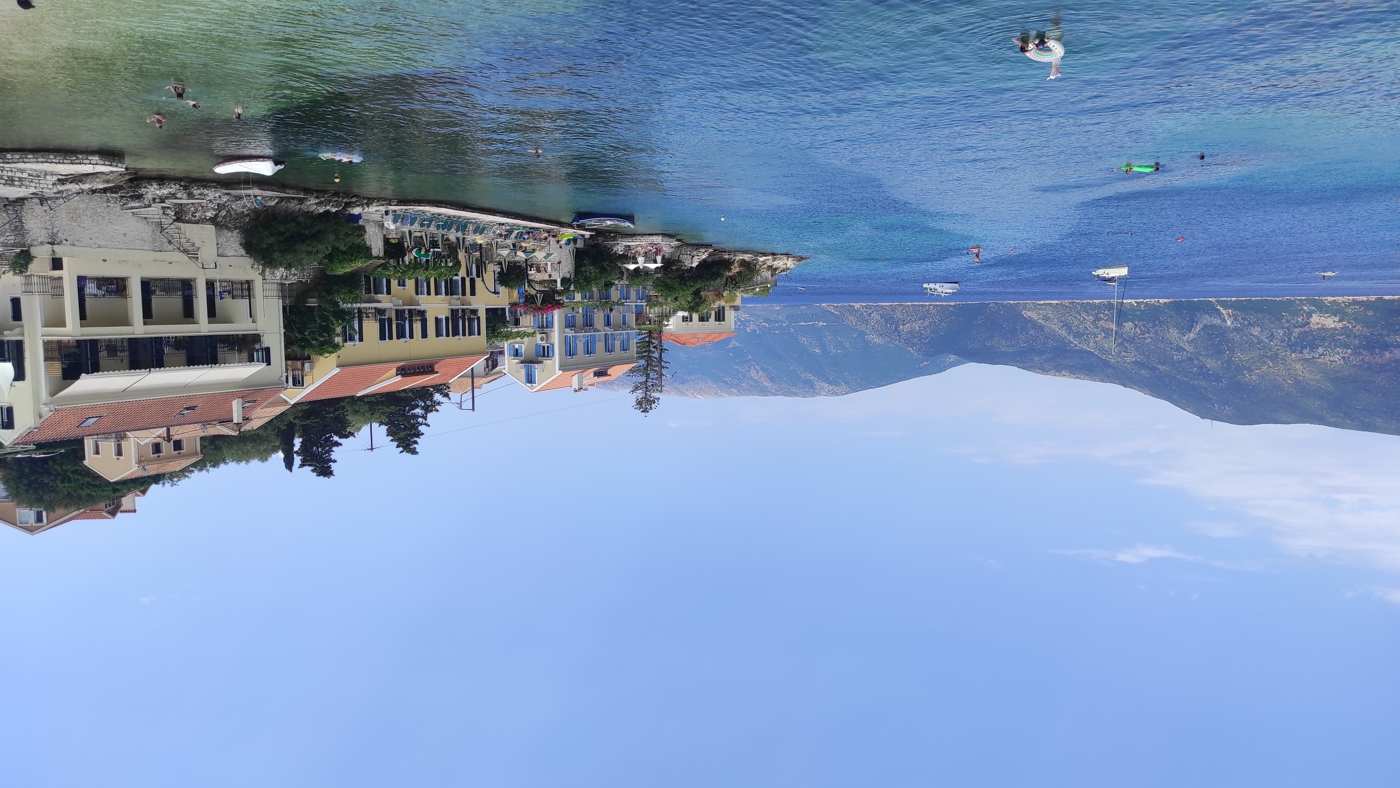
Kefalonia sits in the Ionian Sea off the west coast of Greece. Its cooking belongs to that western world rather than to the Aegean. The island covers about 773 square kilometres of mountain, pasture, olive grove and vineyard, and the kitchen follows that ground closely. Cooks here bake more than they grill, and pies in layered pastry carry the island’s reputation further than any grilled fish. Meat reaches the table more often than it does on smaller, drier islands. Pulses, wild greens, garlic and quince fill slow pots through the cooler months. Travellers who arrive from Santorini or Naxos register the difference inside a single meal. Plan the whole trip with Greece Tours.
The core list of dishes runs shorter than you expect, and it repeats across the island.
Restaurants across the island split into four recognisable types. Town tavernas in Argostoli and Lixouri cook the full local repertoire, including baked pies that need hours in the oven. Harbour tavernas in Fiskardo, Sami, Assos and Poros work with fish priced by the kilo and grilled over charcoal. Village kitchens inland, around the Omala valley and the slopes of Mount Ainos, serve goat, pork, pulses and greens with barrel wine. Beach canteens at Myrtos, Antisamos, Xi and Petani handle lunch between swims. Knowing which type of place cooks which dish saves you from ordering the wrong plate at the wrong table. This guide covers the food first, then the wine, then the streets of the capital.
What makes Kefalonia’s food different from Aegean island cooking?
Kefalonia cooks in an Ionian idiom: baked pies, pulses, garlic sauces and slow meat stews stand where the Aegean puts grilled fish, capers and sun-dried tomato. Rain, mountain pasture and a wheat-and-pastry tradition move the centre of the table inland.
Rainfall explains most of the gap. The Ionian coast takes roughly three times the winter rain of the central Aegean. Green pasture therefore lasts into early summer, and Kefalonia supports cattle, pigs, goats and sheep at a scale the Cycladic islands never managed. Meat works as a main ingredient here rather than a festival luxury. Water also allows leafy crops, courgettes, tomatoes and quince trees in the valleys behind Argostoli, Sami and Lixouri. Aegean cooking answers drought with capers, dried fava, salt-cured fish and hard cheese. Kefalonian cooking answers abundance instead. Pies, casseroles and garlic sauces carry fat and herbs, rather than concentrating flavour through drying and salting.
Even the salads lean on cooked greens instead of raw tomato and cucumber.
Pastry marks the second difference. Households on the island built their name on pies with a base and a lid. The dough gets rolled thin, folded around meat, rice, greens or pulses, then baked slowly in a wood oven. Aegean pies tend to be smaller, cheese-led and often fried. Kefalonian pies run large and deep, cut into squares, and one pie feeds eight to ten people at a family table. Bakeries in Argostoli and Lixouri still sell pie by weight through the morning. Tavernas that advertise a pie usually bake one batch a day. Kitchens therefore run out by mid-afternoon in July and August. Ordering the pie at lunch rather than dinner solves the problem.
Village festivals bake the largest trays, for 200 people.
Venetian rule left a further layer on the menu. The Ionian Islands stayed under Venice for roughly four centuries while the Aegean passed to Ottoman control. The vocabulary of the Kefalonian kitchen still shows it. Terms for stews, pastry and sweets follow Italian roots. Dishes that combine tomato, garlic and cinnamon in one pot repeat patterns found across the Adriatic. Pasta belongs to traditional home cooking here, not to tourist menus. Salt cod arrived through the same trading routes, shipped in dry and stored for months. It became the standard partner for garlic sauce on fasting days, and it holds that place on taverna lists today. Sweet spices in savoury pots trace back to the same Venetian centuries.
Ordering habits follow from all of that. A table on Naxos or Paros builds around grilled fish, fava, tomato fritters and cheese. A table on Kefalonia builds around a baked dish that left the oven hours earlier. Beside it sit a garlic dip, a plate of cooked wild greens, a pulse soup and bread. Fish still matters in the harbour villages of Fiskardo, Sami and Poros, where boats land daily. Inland tavernas rarely make it the centre of the menu. Visitors who order only grilled fish across a week miss the five dishes that define the island. Ask the kitchen what came out of the oven that morning.
That one question changes the meal more than any menu translation.
What is kreatopita, and which dishes define Kefalonia’s table?
Kreatopita is the island’s signature meat pie: beef and pork chopped small, bound with rice, onion, garlic and herbs, then baked between sheets of pastry. Riganada, aliada, tsigaridia, bourbourelia and sofigado complete the core Kefalonian repertoire.
Kreatopita takes its character from the filling rather than the pastry. Cooks use two meats: beef for depth and pork for fat. Both get cut by knife into small cubes, so the filling keeps texture after long baking. Rice absorbs the juices as the pie cooks. Onion, garlic, black pepper, cinnamon and fresh herbs season the whole mix. The filling goes into a lined tin, takes a pastry lid, and bakes for over an hour. The top browns while the meat finishes cooking inside its own steam. Served warm and cut into squares, one portion works as a full main course. Tavernas that make it properly plan a day ahead.
Riganada sits at the opposite end of the effort scale. A barley or wheat rusk gets moistened with water until the centre softens. Grated tomato, dried oregano, salt and olive oil go on top, sometimes with crumbled white cheese. Shepherds and field workers ate it as a working lunch away from a kitchen. Tavernas now bring it as a starter or alongside drinks in the late afternoon. The rusk stays firm at the edge while the middle turns soft. Oregano carries the dish, and Kefalonian versions use more of it than the Cretan dakos they resemble. The name follows from rigani, the Greek word for oregano. Two rusks and a glass of Robola make a workable light lunch.
Aliada and tsigaridia cover the garlic and the greens. Aliada blends boiled potato, raw garlic, olive oil and vinegar into a thick pale dip with real bite. It arrives beside salt cod that has been soaked, floured and fried in oil. That pairing anchors fasting-day meals and stays on taverna menus through the year. Tsigaridia starts with wild greens gathered on the hillsides above the villages. The greens get blanched, then finished in a pan with onion, olive oil and often a little tomato. The result carries a light fry rather than a plain boil. Both plates cost little and show the island kitchen at its most direct.
Order them together and the garlic and the bitterness balance each other.
Bourbourelia and sofigado close the core range. Bourbourelia is a winter soup of pulses and grains cooked in one pot. Chickpeas, beans, lentils, corn and wheat berries go in together with olive oil and herbs. The soup thickens enough to eat with a spoon and bread, and it fed households through Lent. Sofigado pairs beef with quince and cooks slowly until the fruit breaks down into the sauce. The sweetness works against the meat rather than beside it. Around these dishes, tavernas set out local hard and soft cheeses and thyme honey from the hills below Mount Ainos. Mandoles, almonds in caramelised red sugar, close the meal and travel home well in a paper bag.
Where does Robola wine grow on Kefalonia?
Robola grows on limestone slopes in the high Omala valley inland from Argostoli, where poor stony soil and altitude produce a dry white with citrus and mineral edges. Kefalonia also bottles sweet red Mavrodaphne and aromatic Muscat.
Altitude and rock define the wine. Vines climb terraced limestone between roughly 300 and 800 metres above sea level. The stone drains hard and forces low yields, which concentrates the fruit. Growers work small parcels, and the harvest still runs largely by hand because the slopes defeat machinery. The plain below holds the monastery of Agios Gerasimos, patron saint of the island, and the growers’ cooperative that processes much of the crop. Visitors therefore treat the Robola valley as one stop combining church and cellar. The drive inland from the coast takes about 25 minutes. The road climbs steadily through fir and cypress before the valley opens out. Vineyards then run right to the edge of the plain.
Robola in the glass runs pale, dry and sharp-edged. The wine shows lemon, green apple and a stony finish. Alcohol usually sits between 12 and 13 per cent, and acidity stays high enough to cut through olive oil. That structure makes it the standard partner for fried salt cod with aliada. It works equally with grilled fish in Fiskardo and Sami and with the cheeses served before a meal. Tavernas across the island pour it by the half-litre and litre carafe as well as by the bottle. The carafe version usually comes from the same valley. Serve it cold, around 10 degrees, rather than chilled to the point of numbness.
Mavrodaphne and Muscat handle the sweet end of the list. Mavrodaphne is a dark grape better known across the water around Patras. On Kefalonia it produces a fortified red with raisin, fig and cocoa notes. The wine follows dinner, poured beside walnut cake or a spoon sweet of quince. Muscat gives an aromatic white with orange blossom and apricot, made both dry and sweet on lower ground. Neither travels as far as Robola in reputation, yet both hold their place on taverna lists and village shop shelves. A meal that ends with a small glass of either, plus thyme honey over yoghurt, follows the pattern local families keep.
Both wines pour in small glasses, closer to 60 millilitres than to a full measure.
Tasting rooms sit close to the vines. The cooperative cellar and the private producers around the Omala plain open through the warm months. They run short tastings and sell by the bottle and the case at cellar rates. A morning at the monastery, a tasting and a village lunch fill half a day from Argostoli, Lixouri or Sami. Drivers split the tasting between the group, because the roads back down run narrow and steep with tight bends. Shops on the Lithostroto in town stock the same bottles, so wine carried home costs little more than wine bought at the source. Producers on the Paliki peninsula pour Muscat and dry whites as well.
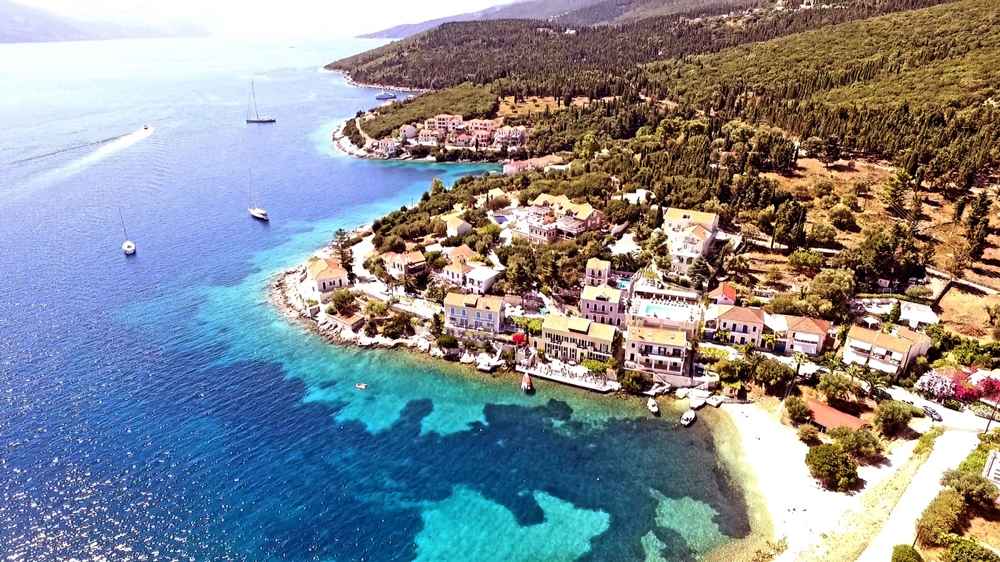
Where do you eat in Argostoli, the capital of Kefalonia?
Argostoli concentrates its restaurants on three fronts: the Lithostroto pedestrian street, the cafés and tavernas around Plateia Valianou, and the fish tavernas along the lagoon near the De Bosset bridge. Each front serves a different meal and hour.
The Lithostroto runs as a paved pedestrian spine through the centre of Argostoli. Shops, bakeries, cafés and small restaurants line it, with tables set out along the marble. Traffic stays out, so the street works for a slow lunch or a long evening. Bakeries here sell pie by the slice through the morning, and pastry shops carry mandoles and local sweets. Restaurants along the run cook the full island repertoire, from baked pies to charcoal grills. Menus in the side lanes usually price below the ones facing the main street. Walking the whole length takes under ten minutes. Comparing three or four menus before you sit down costs nothing but that walk.
Plateia Valianou holds the densest cluster of tables in town. The square sits a short walk uphill from the waterfront, under trees that shade it through the afternoon. Cafés fill from mid-morning with coffee and iced drinks. The same terraces switch to dinner service after eight in the evening, when the square becomes the social centre of the capital. Families circulate until late, and children play under the trees while their parents eat. Kitchens here handle grills, pasta, pies and the standard cooked dishes, and portions run large. Prices sit above the side streets, and the trade is the view rather than the food, which stays solid across the terraces.
Fish tavernas gather along the lagoon shore near the De Bosset stone bridge. The bridge crosses the water on a low causeway roughly 700 metres long, built under British rule. Tables face the lagoon, and fishing boats tie up within sight of them. Fish comes priced by the kilo, chosen from ice and grilled whole over charcoal. Loggerhead sea turtles feed beside the boats through the summer, and watching them from the quay has become part of the evening. Agree the weight and the price at the counter before the fish goes on the grill. Pair it with a carafe of Robola, boiled greens and a tomato salad.
The walk across the bridge afterwards runs flat and lit until late.
Timing shapes what lands on your plate. The covered market and the fish stalls near the port work in the morning. Tavernas that shop daily therefore put their best material out at lunch. Kitchens that bake kreatopita pull it from the oven around midday and sell through the afternoon, so an evening request often meets an empty tray. Greek diners eat late, from nine onwards, and a table booked at seven in high summer sits half empty. Service runs slower at that hour too. Ferries to Lixouri leave from the Argostoli quay through the day, which makes lunch across the bay and dinner in town one easy plan. The crossing runs about 20 minutes each way.
Where do you eat in Fiskardo and Assos in northern Kefalonia?
Fiskardo and Assos serve the smartest harbourside cooking on Kefalonia, with tables set along the quay a metre from the water. Both villages run a short season, fill after 21:00, and reward booking ahead in high summer.
Fiskardo carries the densest run of harbourside tables in northern Kefalonia. The quay is lined with pastel houses that survived the great Ionian earthquake. The kitchens lean towards fish, grilled meat and Kefalonian meat pie, plated with more care than the inland villages bother with. Waiters work a narrow strip between the shopfronts and the moored yachts, so tables turn slowly and dinner runs close to two hours. Foki and Emblisi beaches lie within 2 kilometres of the village, which brings swimmers onto the quay from about 20:00 onwards. The harbour front measures barely 400 metres end to end. Walking the row and reading every board takes ten minutes before you commit to a table.
Assos sits about 12 kilometres south of Fiskardo on a narrow isthmus. Its tavernas gather on a small waterfront below the Venetian castle. Tables stand on stone terraces three steps above the cove, facing fishing boats and the pine-covered peninsula behind them. The village is tiny, so the eating strip is short and the water-edge tables are claimed by 20:30 through July and August. Cooking here follows the same harbourside register as the far north: grilled fish, lamb, and meze plates of wild greens and beans. The road down from the main coast highway drops 3 kilometres in tight hairpins. Drivers park above the isthmus and walk the last stretch down into the village.
Kefalonian meat pie anchors the northern menus. The pie bakes beef, lamb, rice and herbs together, and it runs heavier than the pies of the Aegean islands. Kitchens in the north also plate aliada, a garlic and potato purée eaten with fried salt cod. Tsigaridia, wild greens fried down with onion, sits beside it. Robola is the island’s white grape, grown in the Omala valley about 40 kilometres south. It pours by the glass and by the half-litre carafe on nearly every list in the north. Fish arrives whole and grilled over charcoal with lemon and oil, without sauce. Desserts stay short, running to yoghurt with honey or the local quince and grape-must sweets served on a spoon.
Driving north takes longer than the map suggests. The coast road from Argostoli to Fiskardo covers about 50 kilometres of curves and needs 75 minutes. Assos sits roughly 40 kilometres out, and Myrtos beach lies between the two, which is why northern dinners tend to follow a full beach day. Both villages work a short season, with kitchens opening around late April and closing through October. Parking is the real constraint in the north. The quay itself is pedestrian, and the car parks above the village fill by 20:00 in August. The last approach narrows to a single lane above the harbour.
Arriving by boat solves that problem, and the anchorage stays busy with charter yachts every summer evening.
What fish do Sami and Agia Efimia land, and how is it priced?
Sami and Agia Efimia sell the day’s catch by weight, priced per kilo at the counter rather than per plate. The boats work the channel towards Ithaca, so the board changes daily with the wind and the season.
Sami is the island’s second port, on the east coast about 24 kilometres from Argostoli, with ferries running to Ithaca and the mainland. Its waterfront tavernas face the quay and the Ithaca channel, and they take the catch from boats tied up 30 metres away. Agia Efimia lies 9 kilometres north along the same coast, a smaller fishing and yachting harbour with a tighter row of tables. Both villages serve fish that has not travelled far: sea bream, sea bass, red mullet, picarel, and whatever the nets brought in that morning. Antisamos beach sits 4 kilometres east of Sami, so the dinner traffic follows the swimming crowd back into town.
Fish is sold by weight on Kefalonia, priced per kilo rather than per portion. The practice is universal along the Sami and Agia Efimia quays. Waiters carry out the tray or open the chilled cabinet. The diner picks a fish, and it is weighed at the table before it reaches the grill. A whole fish of about 400 grams feeds one person, while a kilo fish is shared between two or three. Diners ask for the weight and the per-kilo rate before the fish leaves the counter, because the gap between farmed and line-caught rates is wide. Small fry such as picarel, sardines and anchovies cost less per kilo and are fried rather than grilled.
The board changes daily, because the boats work the channel between Kefalonia and Ithaca and stay in port when the wind turns. Northerly blows in July and August cut the small-boat catch. The tavernas then fall back on farmed bream and bass, which the menu labels as farmed. Octopus hangs drying on lines along the Agia Efimia quay and reaches the charcoal after a day in the sun. Lobster and crayfish appear irregularly and carry the highest per-kilo rate on the counter. Fried atherina, a small silver fish eaten whole, fills the cheapest line on the counter. Squid and cuttlefish come stuffed, fried or stewed with wine.
Cuttlefish cooked in its own ink with rice holds a permanent place on the east coast.
Melissani and Drogarati caves sit within 5 kilometres of Sami. Both rank high on any list of things to do in Kefalonia, and that shapes the town’s eating rhythm. Melissani closes in the late afternoon, so the tavernas take a first wave from about 19:00 and a fuller one after 21:00. Agia Efimia keeps later tables, because its yacht crews eat once the boats are secured for the night. Ferry departures from Sami also push a lunchtime trade that the northern villages never see. Cave visitors clear the car parks well before the dinner service starts.
Booking is rarely needed on the east coast outside August, when the quay tables in both villages go early and the back rows fill last.
Where do you eat in Skala, Lourdas and Lixouri in southern Kefalonia?
Skala and Lourdas run beach tavernas at the sand’s edge, while Lixouri keeps simpler town tavernas around its main square. Southern cooking stays plainer than the northern harbours, built on grills, meze plates and the day’s vegetables.
Skala anchors the southeast coast about 40 kilometres from Argostoli, with a long pebble-and-sand beach backed by pines and a main street lined with tavernas. Beach tavernas here sit directly behind the sand and serve from midday until late. Pines behind the shore give shade to the tables closest to the water. Lighter lunch plates run alongside the full evening menu. The Roman villa mosaics at the edge of the village draw a morning crowd that spills into the same kitchens by 13:00. Grilled meat dominates the southern boards more than fish does, because the local fishing fleet is small. Salads built on tomato, cucumber, olives and feta, plus fried courgette and tomato keftedes, carry the vegetarian side.
Lourdas lies on the south coast under Mount Ainos, about 16 kilometres east of Argostoli, with beach tavernas strung along the shore road. The village splits in two, an upper settlement on the slope and a beach strip 4 kilometres below it down a steep, winding road. Tables at beach level face the Ionian directly and stay open through the afternoon for swimmers, which is unusual on this island. The upper village keeps a handful of tavernas cooking for residents, serving later, with more oven dishes and less charcoal. Wild greens gathered on the Ainos slopes, gigantes beans baked in tomato and goat in lemon sauce turn up on both levels.
Lixouri is the island’s second town, on the Paliki peninsula, reached by a ferry crossing of about 20 minutes from Argostoli. Its tavernas cluster around the main square and the waterfront. They cook plainer than the northern harbours, for a town trade rather than a yachting one. Xi beach, with its red-orange sand, lies 8 kilometres south, and Petani beach sits 9 kilometres northwest, each with tavernas above the shore. The square fills after 21:00 with families, and the kitchens run meze plates, grilled meat and baked dishes rather than long fish counters. Crossing back on the last ferry needs checking at the quay, since the evening timetable is shorter than the daytime one.
Beach tavernas on the south coast work a different clock from the harbour restaurants of the north. Kitchens at Skala, Lourdas, Xi and Petani open from about 11:00, feed swimmers through the afternoon, and rarely close between lunch and dinner. Shade comes from tamarisk trees and reed canopies rather than from walls. Menus stay short and repeat along the coast: grilled fish and meat, one or two oven dishes, salads and fried vegetables. Sunbed service blurs into table service at Xi and Petani, so a drink at the sand turns into a meal without anyone moving. Both of those beaches face west, which leaves the last tables in direct sun until about 20:30 in midsummer.


How do meal times and booking work at a Kefalonia taverna?
Kefalonian tavernas fill late, with the busiest hour falling after 21:00 and kitchens taking orders until about midnight. Harbour tables in the north need booking in high summer, while inland villages seat walk-ins through the whole evening.
Greeks eat late, and Kefalonia keeps that clock: lunch runs from 14:00, dinner starts near 21:00, and tavernas are busiest between 21:00 and 23:00. Kitchens take orders until about midnight in July and August, and closer to 22:30 in spring and late autumn. Arriving at 19:00 means an empty room and a kitchen still preparing. The tourist-facing tavernas in Fiskardo, Sami and Skala do serve from that hour. Breakfast barely exists outside the hotels, and a coffee stands in for it. Eating alongside residents means sitting down at 21:30 rather than at dusk. Sunday lunch is the exception, a long midday meal that fills the inland village tavernas from about 14:00 and runs past 17:00.
Booking matters in one place above all, the harbour front in the far north. Water-edge tables there are reserved days ahead through July and August. Assos runs the same pressure on a smaller scale, with its cove-side terraces spoken for by early evening. Walk-ins still find a table one row back from the water. Sami, Agia Efimia, Skala, Lourdas and Lixouri seat walk-ins on most nights, though a table for six needs a phone call the same day. Tavernas take bookings by telephone, and hotels place the call for their guests without fuss. Turning up at 20:00 rather than 21:30 is the reliable alternative, because the first sitting has space that the second does not.
Vegetarian eating on Kefalonia runs through the meze plates rather than through a separate menu section. Horta, the boiled wild greens dressed with oil and lemon, appears on nearly every board, alongside tsigaridia, the same greens fried down with onion. Gigantes beans baked in tomato, aliada made from garlic and potato, and fried courgette anchor the vegetable side. Tomato keftedes, stuffed vine leaves and grilled feta complete a meal of four or five orders. Ordering that way costs less than two main courses and covers more of the local cooking. Checking that the beans and greens are cooked without meat stock is a fair question, and taverna staff answer it directly.
A Kefalonian taverna serves everything at once rather than in courses, so meze, salads and mains land as they leave the kitchen. Bread and a cover charge appear on the bill by default, and water arrives by the bottle rather than from a jug. House wine comes in half-litre and litre carafes drawn from local barrels, with bottled Robola from the Omala valley as the step up. Paying happens at the table, and small change left behind covers the tip rather than a fixed percentage. A closing plate of fruit or a small glass of spirit arrives unordered at the end of the meal. That courtesy forms part of the service.
Frequently Asked Questions
What time do restaurants in Kefalonia open for dinner?
Kefalonian tavernas open for dinner around 19:00 and reach their busiest hour after 21:00. Kitchens keep taking orders until about midnight in July and August. Greeks eat late, so a room that looks empty at 19:30 fills completely by 21:30. Tourist-facing tavernas on the Fiskardo quay, the Sami waterfront and the Skala main street serve continuously from midday. That suits anyone who wants an early table with a view. Village tavernas inland keep tighter hours and open only for the evening service. Lunch on the island starts from 14:00 rather than at midday, and Sunday lunch stretches from about 14:00 past 17:00. Sunday is the one day the island eats its main meal in daylight.
Beach tavernas at Skala, Lourdas, Xi and Petani break the pattern by serving from about 11:00 through the afternoon. Closing times pull back to roughly 22:30 in spring and late autumn, when the season thins and kitchens shut earlier.
How is fish priced in Kefalonia tavernas?
Fish is priced by weight in Kefalonia tavernas, quoted per kilo rather than per plate. The fish is weighed in front of the table before it goes on the charcoal. Waiters bring out a tray or open a chilled cabinet, and the diner picks the fish. The final bill follows the scale. A fish of about 400 grams feeds one person, while a kilo fish is shared between two or three. Asking for the weight and the per-kilo rate before the fish leaves the counter avoids the usual surprise. Line-caught fish carries a far higher rate than farmed bream and bass. Menus label farmed fish as farmed, and frozen items carry an asterisk under Greek law.
Small fry such as picarel, sardines and anchovies cost less per kilo and come fried rather than grilled. That makes them the practical order on the Sami and Agia Efimia quays.
Do you book a restaurant in Fiskardo?
Booking is worth doing for the water-edge tables on the Fiskardo quay through July and August. The front row there is reserved days in advance. The village is small, and the harbour front runs barely 400 metres end to end. Yacht crews claim the best positions early in the evening. Tables in the second row and on the lanes behind the quay stay open to walk-ins on most nights. Assos runs the same pattern on a smaller scale, with its cove-side terraces taken by about 20:30. Arriving at 20:00 instead of 21:30 is the simplest way to eat well without a reservation. The first sitting has room that the second sitting does not.
Hotels and villa managers place the call for guests, and tavernas take bookings by telephone. Sami, Agia Efimia and the southern beach tavernas need no booking at all. Outside the peak weeks the pressure drops everywhere.
What food is Kefalonia known for?
Kefalonia is known for its meat pie, a baked pie of beef, lamb, rice and herbs. The pie runs heavier and more filling than the pies of the Aegean islands. Aliada, a thick garlic and potato purée eaten with fried salt cod, belongs to the island specifically. Tsigaridia, wild greens fried down with onion, appears across the meze boards. Gigantes beans baked in tomato and horta dressed with oil and lemon sit beside it. Fish is grilled whole over charcoal with nothing but lemon and oil. Cuttlefish cooked in its own ink with rice holds a place on the east coast. Goat cooked in lemon sauce turns up on the mountain village menus.
Robola, the white grape grown in the high Omala valley, is the island’s wine. It pours by the carafe and by the bottle across the island. Local honey, quince sweets and thyme from the Ainos slopes finish the picture.
Which parts of Kefalonia have beach tavernas?
Beach tavernas cluster on the south and southeast coasts of Kefalonia, at Skala and Lourdas. The Paliki peninsula adds two more stretches at Xi and Petani. Kitchens at these beaches open from about 11:00 and feed swimmers through the afternoon without a break. The harbour restaurants of the north do not work that way. Skala backs a long pebble-and-sand beach with pines behind it and a main street of tavernas. Lourdas splits between an upper village on the Ainos slope and a beach strip 4 kilometres below. Xi is known for red-orange sand and Petani for a deep bay under cliffs. Both face west, which keeps the last tables in sun until about 20:30 in midsummer.
Antisamos and Makris Gialos also keep tavernas a step back from the sand. Menus stay short across all of them: grilled fish and meat, salads, fried vegetables and one or two oven dishes.
Is it easy to eat vegetarian in Kefalonia?
Vegetarian eating on Kefalonia is straightforward, because the meze plates carry the vegetables. Horta, the boiled wild greens dressed with olive oil and lemon, sits on nearly every taverna board. Tsigaridia, the same greens fried down with onion, sits beside it. Gigantes beans baked in tomato, aliada made from garlic and potato, and fried courgette fill the middle of the order. Tomato keftedes, stuffed vine leaves, grilled feta and a tomato-and-cucumber salad complete a meal of five plates. Ordering meze this way costs less than two main courses. It also covers more of the island’s own cooking than a grill plate does. Greek fasting periods leave every taverna with a stock of dishes cooked without meat or dairy.
Staff answer questions about meat stock in beans and greens directly. Ainos honey and local olive oil sit on the table by default. Vegan eating needs one extra check on feta, yoghurt and honey.