
Limnionas on the Kefalos peninsula offers a tranquil escape on the island of Kos. This small fishing harbour, nestled between two sandy coves, provides a serene setting away from the bustling tourist spots. Plan the whole trip with Greece Tours.
Located about 45 km from Kos Town, Limnionas is easily accessible by car. The twin coves, separated by a rocky headland, offer calm waters ideal for families. With its picturesque sunsets and quaint fish tavernas, Limnionas is a hidden gem.
What is Limnionas on Kos?
Limnionas is a small fishing harbour with twin sandy coves on the northwest side of the Kefalos peninsula in southwest Kos. Clear shallow water, a taverna-lined quay, and west-facing sunsets define this low-key corner.
Limnionas sits on the northwest shore of the Kefalos peninsula, the southwest tip of Kos, about 45 km from Kos Town. A small quay lined with fish tavernas marks the centre of the low bay, framed by two sandy coves. The harbour faces west across the open Aegean, so late afternoons bring long light over the water. Fishing boats moor at the jetty through the day, and nets dry along the stone edge. Tamarisk trees line the sand and throw shade near the shoreline. The bay sits sheltered from the swell that hits the exposed west coast farther south, which keeps the shallows calm and swimmable on most summer days.
Visitors reach Limnionas mainly by car, following the winding coast road south from Kefalos village toward the peninsula’s western headlands and the fishing bay below.
The quay at Limnionas forms the working heart of the bay. Small fishing boats tie up along the jetty, their hulls painted in the blues and reds typical of the Dodecanese. Owners unload the morning catch and hang nets to dry beside the water. A short row of fish tavernas backs the quay, their tables set only steps from the moorings. The bay has no marina, no berth for large craft, and no resort strip. This scale keeps the pace slow and the noise low through the day. Boats come and go on their own rhythm rather than to a timetable.
The harbour serves the families who have fished this stretch of the Kefalos coast for generations, and the trade still shapes daily life here. Cats often wait near the tables for scraps.
The two coves at Limnionas sit on either side of a low rocky headland that splits the bay in half. Both hold soft sand and shelve gently into water that stays clear and shallow near the shore. The beaches here run small next to Tigaki or Marmari on the north coast, each stretching only a short distance before the rocks take over. Tamarisk trees stand behind the sand and give shade through the middle of the day. The headland between the coves hands snorkellers a rocky edge to explore within about 3 metres of the beach.
Swimmers move easily from one cove to the other by stepping over the low spur or wading around its base at the waterline. This compact layout packs sand, rock, and calm water into one small, walkable bay.
The character of Limnionas stays low-key across the whole bay. There is no organised sunbed operation covering the sand, no beach club, and no line of hotels behind the shore. Green tamarisk and open ground back the coves rather than concrete. The harbour draws a mix of local families, self-drive visitors, and the crews of the fishing boats. Crowds stay thin even in high summer because the bay sits 45 km from the main port and needs a car to reach. This distance from Kos Town and the resorts of the northeast keeps Limnionas off most package itineraries. People come mainly to swim, eat fish by the water. Watch the sun drop behind the sea.
Then drive back over the hills toward Kefalos before dark falls across the peninsula.
How can you reach Limnionas from Kefalos?
Limnionas lies about 6 km north of Kefalos village by car, a drive of roughly 15 minutes on the peninsula’s coast road. Signs point the way down toward the harbour, with parking beside the quay.
The drive from Kefalos to Limnionas covers about 6 km and takes around 15 minutes by car. The route leaves the village on the road across the Kefalos peninsula and turns down toward the northwest coast. Signposts mark the descent to the harbour, so the turning is easy to spot. The road narrows on the final stretch as it drops toward the bay and the fishing quay. Hills roll away on either side, planted with olive trees and low scrub typical of southwest Kos. The Aegean stays in view for much of the descent as the water opens out to the west.
Drivers reach the shore beside the tavernas, where a level area gives room to park within a short walk of both coves and the jetty. The last curves demand a slow, careful pace.
The peninsula road that links Kefalos and Limnionas runs in reasonable condition and suits standard hire cars. The surface is paved for most of the way, with a rougher final section near the harbour that calls for a slower pace. Traffic stays light outside the peak weeks of July and August, so the drive rarely feels busy. Parking sits close to the beach on open ground behind the quay, and there is no charge or barrier. Space fills up around the middle of a summer day, when families arrive for lunch and a swim. Arriving before noon or after 4 pm gives the best chance of a spot near the tavernas.
The short walk from the car to the sand keeps the harbour practical for a half-day trip with beach gear and children.
Reaching Limnionas from Kos Town means a drive of about 45 km, or roughly one hour, across the length of the island. The route heads southwest from the capital, past Antimachia and its airport, then on toward Kefalos before the turn to the coast. A hire car gives the most direct way to cover the distance and reach the harbour on your own schedule. Public buses serve Kefalos village from Kos Town but do not run down to the Limnionas bay itself. Riders who arrive by bus face a walk of about 6 km or a taxi for the last leg. Cycling the full 45 km suits only strong riders, given the hills near Kefalos.
Most visitors treat Limnionas as a car destination and fold it into a wider day around the peninsula.
The road to Limnionas passes three stops worth folding into the same trip. Kefalos village sits on the ridge above with its windmill, tavernas, and views over Kamari bay to the south. Agios Stefanos and its early Christian basilica ruins lie a short drive away on the peninsula’s south side, opposite the Kastri islet. The exposed south coast at Kamari holds a long sandy beach and the boats that shuttle out to the islet. Drivers can pair a morning at one of these south-facing beaches with an afternoon and sunset at Limnionas on the northwest shore. This clustering of sites within about 5 km makes the western tip of Kos rewarding for a full day.
With the harbour a natural final stop before the long drive back east toward Kos Town.
What are the features of Limnionas harbour?
Limnionas harbour centres on a small stone-and-concrete quay with a jetty where fishing boats moor. A short row of fish tavernas lines the waterfront, and open parking sits behind the sand between the twin coves.
The harbour at Limnionas is built around a compact quay and a short jetty reaching into the sheltered water. Fishing boats tie up here in a line, rising and falling on the gentle movement inside the bay. The quay stays low and simple, with mooring rings, coils of rope, and stacked crates rather than any large port structure. Water inside the harbour arm sits calm even when the open west coast farther south takes the swell. This shelter is the reason the boats can moor here safely through the season. The jetty gives an easy platform for watching the harbour at work or for a swim in deeper water off its end.
The whole set-up serves small-scale fishing, not ferries or tour boats, which keeps the waterfront quiet and unhurried through the day.
Fishing sets the daily rhythm at Limnionas harbour. Crews head out in the early hours and return through the morning with the day’s catch of fish and, at times, octopus and squid. Nets hang to dry along the quay, and the smell of salt and diesel drifts across the water. The catch often moves straight from the boats to the kitchens of the tavernas only steps away. This short chain from sea to table is the reason the fish here tastes as fresh as it does. Watching the boats come in gives a plain, honest picture of island life away from the resorts.
The scene changes little from one year to the next, and the bay keeps the working feel that larger harbours on Kos have mostly traded for tourism and pleasure craft.
The tavernas behind the quay form the social centre of Limnionas. Tables spread across terraces and under awnings, most set within about 3 metres of the water and the moored boats. Diners look straight out over the harbour to the coves and the open sea beyond. The kitchens lean on the day’s catch, so menus follow what the boats bring in rather than a fixed printed list. Prices sit around the level of other village tavernas on Kos, with fish sold by weight. The pace stays slow, and a meal here easily runs across an afternoon. This close link between the boats. The water.
The tables gives Limnionas its pull for people who want to eat fish where it lands rather than in a busy resort restaurant on the north coast.
The harbour also works as the launch point for the beaches on either side. The two coves sit within a minute’s walk of the quay, one to the north and one to the south of the low headland. Swimmers can leave their gear near the tavernas and reach clear water in moments. The jetty and rocks give snorkellers and confident swimmers deeper water and a rocky edge to explore. Short walks lead up onto the headland for a wider view over the bay and along the coast. This mix of harbour, sand, and rock inside one small bay lets a visit shift easily between eating, swimming, and quiet time by the water.
Everything at Limnionas stays within about 300 metres, which makes the bay simple to enjoy without any planning at all.
What makes the twin coves of Limnionas special?
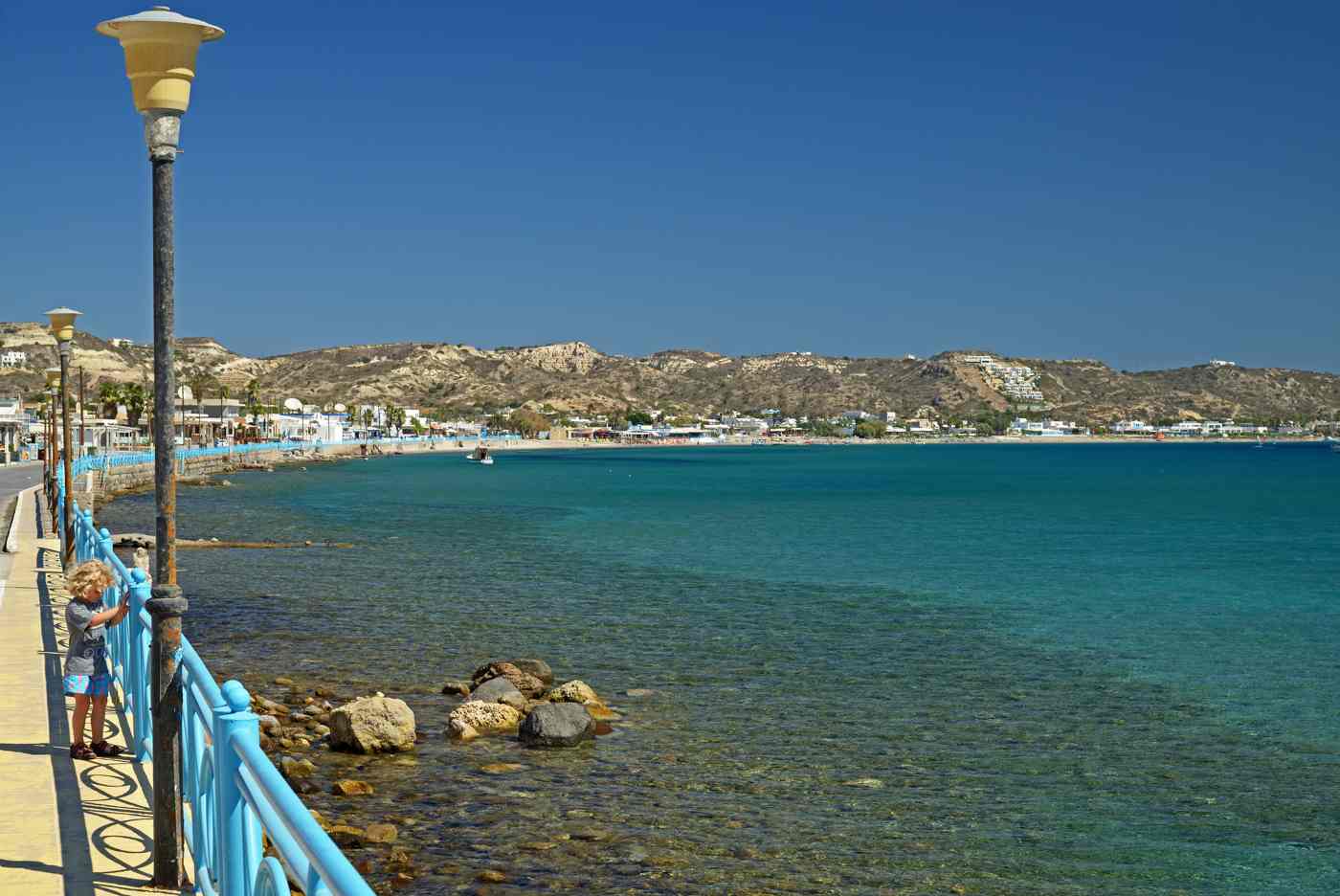
The twin coves sit on either side of a low rocky headland that shelters them from the west-coast swell. Both hold soft sand, clear shallow water, and tamarisk shade, which suits swimming and quiet days.
The twin coves of Limnionas are the reason most people make the drive to the bay. A low rocky headland runs out between them and divides the shore into two separate beaches. This spur shelters both coves from the swell that rolls onto the open west coast farther south near Agios Theologos. Water inside each cove stays noticeably calmer as a result, even on days when wind pushes waves onto exposed stretches. The northern cove and the southern cove each hold soft sand and shelve gently into the sea. The headland gives the bay its shape and its shelter at the same time.
Swimmers, families, and snorkellers all gain from this natural break, which turns an otherwise exposed part of the Kefalos coast into two sheltered pockets of calm, clear water.
The water at Limnionas draws swimmers for its clear, shallow entry. The seabed shelves slowly from the sand, so the depth stays low for a good distance out from the shore. This gradient lets waders and weaker swimmers stay comfortable well beyond the waterline. The clarity comes from the calm inside the sheltered coves, where little sediment stirs up. Fish gather around the rocks of the central headland and along the base of the low cliffs. Snorkellers find a rocky edge to follow within about 3 metres of the sand, with no swim far. Underfoot the beaches mix soft sand with patches of small stones near the rocks.
The combination of shelter, clarity, and a gentle slope makes the coves an easy place to spend hours in and out of the sea.
Green tamarisk trees back both coves and set Limnionas apart from the bare, sun-struck beaches elsewhere on the peninsula. Their branches give natural shade a short step behind the sand, which matters through the strong heat of a Kos summer. Open ground and low scrub run behind the trees rather than any built development. The beaches carry little in the way of organised sunbeds or bars, so shade means the trees or your own umbrella. This green fringe gives the bay a softer feel than the rocky, exposed coast to the south. Families spread out under the tamarisks with picnics and gear between swims.
The mix of soft sand, shade, and quiet ground behind the shore is uncommon on this dry corner of Kos and pulls repeat visitors back to Limnionas year after year.
The coves face west and northwest, which shapes how the light falls across the day. Mornings stay softer, with the sun still low behind the hills of the peninsula. By late afternoon the beaches sit in full sun as the light swings around toward the sea. This west-facing aspect means the coves hold their warmth into the evening and set up the sunset view over the water. Swimmers time a late dip to catch the calm, glassy water that often settles as the wind drops toward dusk. The headland casts a growing shadow across one cove as the sun sinks.
This daily shift of light and shade gives each cove a different feel morning and evening, and it rewards visitors who stay past the middle of the day at Limnionas.
Why is Limnionas ideal for families?
Limnionas suits families through its calm, shallow water and soft sand inside two sheltered coves. Tavernas, shade, and parking sit within a short walk of the beach, which keeps a day here simple with young children.
Limnionas works well for families thanks to the calm, shallow water of the twin coves. The seabed shelves gently from the sand, so young children can wade and paddle a long way out while staying in low water. The rocky headland between the coves blocks the west-coast swell and keeps the surface calm on most days. Parents can watch children from the sand with a clear view across the shallow bay. Soft sand at the shoreline gives an easy, comfortable entry with no sharp drop. These conditions make the coves far gentler than the exposed, wave-hit beaches on the south and west of the peninsula.
The natural shelter, rather than any lifeguard or barrier, is what makes Limnionas a practical choice for a beach day with small children playing in the water.
The amenities around Limnionas keep a family day straightforward. Fish tavernas line the quay a short walk from both coves, so lunch, drinks, and a shaded table sit close at hand. Open parking behind the sand means gear, coolers, and pushchairs travel only about 30 metres to the beach. There are no long paths, steep steps, or cliff descents to manage with children. The tavernas give a base for a meal and a break out of the sun in the middle of the day. This tight layout, with car, sand, water, and food all within reach, removes much of the effort a beach trip with young children usually brings.
Families can settle in one spot and let the day run at an easy pace without shuttling gear back and forth across the sand.
Shade and space add to the appeal of Limnionas for families. Tamarisk trees stand behind both coves and give natural cover from the midday sun, which matters through July and August on Kos. Groups spread out under the branches with towels, food, and beach toys between swims. The coves rarely fill to the point of crowding, so children have room to dig and play on the sand. Gentle, low water at the shore lets toddlers paddle safely within arm’s reach of a parent. The calm inside the sheltered bay means no strong pull or sudden depth to worry about.
This blend of shade, sand, and quiet water covers the practical needs of a family beach day without any of the noise or press of a busy resort strip on the north coast.
A visit to Limnionas fits neatly into a family day around the Kefalos peninsula. The harbour makes a good half-day stop, with a morning swim, a taverna lunch, and an afternoon back on the sand. The short 6 km drive up to Kefalos village opens further options, from a walk among its lanes to views over Kamari bay. The long sandy beach at Kamari on the south coast gives another calm option for children within about 5 km. Families can split a day between two beaches on the peninsula and return to Limnionas for the sunset. This clustering of easy, child-friendly spots close together keeps travel time short between stops.
Parents avoid long transfers, and children move quickly from one swim to the next across the western tip of the island.
How does Limnionas compare to Agios Theologos?
Limnionas offers sheltered coves and calm, shallow water, while Agios Theologos on the open west coast draws surf and stronger waves. The two beaches sit close together and suit different moods on the same day.
Limnionas and Agios Theologos sit only a short drive apart on the Kefalos peninsula yet feel like opposites. Limnionas holds two sheltered coves with calm, shallow water behind a low rocky headland. Agios Theologos faces the open sea on the exposed west coast, where wind and swell roll straight onto a long, wild stretch of sand. The waves that break at Agios Theologos are the same swell the Limnionas headland keeps out of its coves. One bay reads as quiet and green with tamarisk shade, the other as raw, open, and wind-blown. This contrast within about 5 km lets visitors choose calm swimming or rougher surf on the same afternoon.
Depending on the mood and the strength of the wind that blows across the western tip of Kos on the day.
The swimming conditions mark the clearest split between the two beaches. Limnionas gives calm, shallow water that shelves slowly and suits children, weaker swimmers, and long, easy dips. Agios Theologos offers deeper, livelier water with waves that draw bodyboarders and surfers when the swell runs. The wind that makes Agios Theologos exciting is the same wind the Limnionas coves shut out. Swimmers who want a safe, sheltered paddle head for Limnionas; those who want to ride waves cross to the open coast. On a calm day the gap narrows and both beaches settle, but on a windy one the difference is stark.
Reading the wind before choosing between the two lets visitors match the sea to what they want from the day on this exposed western tip of Kos.
Doing both beaches in a single day is straightforward given how close they sit. A short drive across the peninsula links the sheltered coves of Limnionas with the open sweep of Agios Theologos. Visitors often spend a calm morning swimming at Limnionas, then cross to Agios Theologos for its wilder sea and famous sunset. The two beaches share the same corner of the Kefalos peninsula, so travel time between them stays under half an hour. Both lie roughly 45 km from Kos Town, which makes a car the practical way to reach and connect them. Pairing the pair gives a full picture of the western coast, from tucked-away harbour to exposed shore.
This easy combination is one reason the tip of Kos rewards a full day rather than a quick stop on the way past.
The two beaches suit different visitors and different times of day. Limnionas draws families, older visitors, and anyone after calm water, shade, and a fish lunch by the quay. Agios Theologos pulls surfers, walkers, and those who want a dramatic, open shore with a well-known sunset from its taverna. The sheltered coves of Limnionas hold their own sunset over the water, softer and framed by the headland. Choosing between them, or taking both, depends on whether a day leans toward rest or toward the wind and waves. Neither replaces the other; each shows a distinct face of the Kefalos coast. Visitors who see both come away with the full range of the peninsula’s shoreline.
From the quiet fishing bay at Limnionas to the raw Aegean edge at Agios Theologos a short drive away.
What is the best time to visit Limnionas?
Late spring through early autumn brings the best conditions at Limnionas, with warm sea and long daylight. May, June, and September stay quieter than the July-to-August peak while keeping water warm enough for swimming.
Late spring to early autumn gives the strongest conditions for a visit to Limnionas. Water in the sheltered coves warms through May and June and holds its heat into September and October. Long daylight across these months leaves time for a morning swim, a taverna lunch, and an evening on the sand. The tavernas run their full service through the warm season, so fresh fish stays on the menu. Warm, settled weather also makes the 45 km drive from Kos Town and the descent to the harbour easy. Sea temperatures peak in late summer, when the shallow coves feel almost bath-warm at the shore.
This wide window, running roughly from May into October, gives visitors a long stretch in which Limnionas delivers calm swimming and reliable sun on the western tip of Kos.
July and August mark the peak weeks at Limnionas, in step with the wider Kos season. Warm, dry weather and school holidays bring more cars down to the bay, and the parking behind the sand fills by the middle of the day. The coves still hold their calm, and the sand rarely feels as packed as the resort beaches of the north coast. Arriving before noon secures a shaded spot under the tamarisks and a place at a taverna table. The sea sits at its warmest in these weeks, and the long evenings stretch the sunset window later. Even at the busiest, the 45 km distance from Kos Town keeps the crowds thinner than at Tigaki or Kardamena.
High summer suits visitors who want the warmest water and accept a livelier bay in exchange.
The shoulder months of May, June, and September reward visitors who prefer a quieter Limnionas. Fewer cars reach the bay outside the school holidays, so the coves and the tavernas stay calm even at midday. The sea holds enough warmth for comfortable swimming across all three months, with September water still warm from the long summer. Softer light and cooler air make the midday hours on the sand more pleasant than in peak heat. Parking behind the beach stays easy to find, and the tavernas serve at a relaxed pace. Sunsets in September often carry more colour as the season turns.
These shoulder weeks give the clearest sense of the low-key bay the fishing families know, before or after the short summer rush, and repeat visitors plan around them deliberately.
Wind matters more at Limnionas than the calendar month alone. The Kefalos peninsula catches the meltemi, the dry north wind that blows across the Aegean in summer, and the western tip feels it strongly. The low headland shelters the coves from the worst of the swell, but a hard blow still ruffles the surface and stirs the sand. Checking the forecast before the drive helps, since a calm day turns the coves glassy and a windy one leaves them choppy. Mornings often stay calmer than afternoons, when the wind tends to build. The neighbouring open coast at Agios Theologos takes the wind head-on, which makes Limnionas the better choice on blustery days.
Reading conditions rather than only the season gives the best odds of finding the coves at their calmest and clearest.
What are the sunset views like at Limnionas?
Sunsets at Limnionas fall straight over the open Aegean, since the twin coves face west and northwest. Calm evening water mirrors the light, and the rocky headland stands in silhouette as the sun drops behind the sea.
Sunset is the signature moment at Limnionas, thanks to the bay’s west-facing aspect. The coves and the harbour look straight out over the open Aegean, so the sun drops directly into the sea rather than behind hills. Colour builds across the sky through the last hour of light as the sun sinks toward the horizon. The tavernas along the quay give a front-row position over the water for the whole show. Nothing tall stands between the beach and the western horizon, which leaves the view clean and open. This orientation is uncommon on Kos, where most beaches face north or east away from the setting sun.
The plain geography of a west-facing bay is the reason evenings at Limnionas draw visitors who time their whole day around the final hour on the sand.
The calm water of the coves adds to the sunset at Limnionas. Wind often drops toward dusk, and the sheltered surface settles into a glassy sheet that mirrors the colour of the sky. Reflected light doubles the effect, spreading the reds and oranges across both the water and the wet sand. The rocky headland between the coves stands dark against the bright horizon as the sun falls behind it. Fishing boats at the jetty sit still in the calm, their outlines sharp against the glowing water. Tamarisk trees frame the view from the back of the beach. This mix of still water, silhouette, and open horizon gives the evenings their pull.
The same shelter that keeps the coves calm for swimming through the day sets up the mirror-like water that defines a Limnionas sunset.
Diners often watch the sunset from a taverna table on the Limnionas quay. Dinner runs late as the light fades, with fresh fish and a view over the harbour to the sea. Tables set close to the water put diners in line with the sun as it drops behind the horizon. The kitchens keep serving through the evening, so a meal can start before sunset and carry on into the dark. Prices track other village tavernas on the peninsula, with fish sold by weight. Eating where the boats land, as the sky colours over the same water, ties the meal to the setting in a direct way.
This combination of a fish dinner and an open western horizon is the reason evenings at the harbour stretch long past the last of the light.
Photographers find clear compositions at Limnionas in the last hour of light. The rocky headland gives a strong dark shape against the bright sky, and the moored boats add foreground detail near the quay. Reflections on the calm coves double the colour and fill the lower frame. The tamarisk trees behind the sand frame wider shots from the back of the beach. Low sun rakes across the sand and the water, picking out texture that midday light flattens. Standing on the headland itself opens a view along both coves toward the horizon. The bay’s plain, uncluttered shoreline keeps distractions out of the frame.
These conditions reward visitors who stay past the middle of the day, since the light at Limnionas does its best work in the final hour before the sun meets the sea.


What activities can you enjoy at Limnionas?
Limnionas rewards swimming, snorkelling, and quiet beach time in its sheltered coves, plus fresh fish at the quay tavernas. Short walks over the headland and a sunset over the water round out an easy day.
Swimming and snorkelling top the list of things to do at Limnionas, and they rank among the calmest water activities on this side of Kos. The sheltered coves give clear, shallow water that suits long swims and easy paddling for children. The rocky headland between the beaches offers snorkellers a reef-like edge within about 3 metres of the sand. Fish gather around the rocks and along the jetty, so masks and fins pay off close to shore. Anyone building a list of things to do in Kos can slot Limnionas in as the quiet swimming stop on a peninsula day.
The water stays low and calm well out from the shore, which lets swimmers relax rather than fight waves. Simple, unhurried time in the sea is the main draw at this harbour.
Eating fresh fish ranks alongside swimming as a reason to spend time at Limnionas. The tavernas on the quay cook the catch the boats bring in that morning, only a short step from where it lands. Grilled fish, octopus, and calamari appear on menus that follow the day’s haul rather than a fixed card. Diners sit within metres of the moored boats and the water, which ties the meal to the working harbour. Prices sit around the level of other village tavernas on the peninsula, with whole fish sold by weight. A long, slow lunch by the quay easily fills the hottest part of the day between swims.
This link between the boats, the kitchens, and the tables gives eating at Limnionas a directness that resort restaurants on the north coast rarely match.
Short walks and quiet exploring round out a visit to Limnionas beyond the sand and the tavernas. The low headland between the coves gives an easy climb for a wider view over both beaches and along the coast. Paths run along the shore and up onto the open ground behind the tamarisk trees. Watching the fishing boats work the harbour offers a slow, unforced way to pass an hour. The jetty gives a spot to sit above deeper water or to fish with a simple line. Rock pools and the base of the low cliffs reward a careful look at the water’s edge. None of this needs planning or gear, which fits the low-key mood of the bay.
Limnionas rewards people who slow down rather than chase a packed schedule of activity through the day.
Limnionas also serves as a base for reaching other sites on the Kefalos peninsula. Kefalos village sits 6 km up the road with its windmill, lanes, and views over Kamari bay. Agios Stefanos and its early Christian basilica ruins lie a short drive south, opposite the Kastri islet in the bay. The long beach at Kamari and the boats out to Kastri give another half-day within about 5 km. Visitors often pair a morning at one of these south-coast spots with an afternoon and sunset at Limnionas. This clustering of beaches, ruins, and villages across a small area makes the western tip of Kos rewarding for a full day.
The harbour works as a natural final stop before the 45 km drive back toward Kos Town in the evening light.
What are the dining options at Limnionas?
Fish tavernas line the Limnionas quay and cook the catch the local boats land each morning. Menus follow the day’s haul, with whole fish sold by weight and tables set only steps from the moored boats.
Dining at Limnionas centres on the fish tavernas that line the harbour quay. Each sits only steps from the jetty where the boats moor, so the kitchens work with fish landed the same morning. Menus follow the day’s catch rather than a fixed printed list, which means the choice shifts with what the sea gives. Whole fish sell by weight, chosen from the day’s haul and grilled or cooked to order. Tables spread across terraces set close to the water, with a clear view over the coves and the open sea. Prices track other village tavernas on the Kefalos peninsula.
This tight link between the boats and the tables is the reason people drive 45 km to eat here, since places on Kos put the catch and the kitchen so close together.
The dishes at Limnionas draw on the standard repertoire of a Greek fishing harbour. Grilled whole fish leads the menu, alongside octopus, calamari, and small fried fish eaten whole. Simple sides fill out a meal, from Greek salad and horta greens to bread and local cheese. Cooking stays plain and lets the freshness of the catch carry the plate, with little more than olive oil, lemon, and herbs. The exact offering changes day to day with the boats, so no two visits look quite the same. Portions suit sharing across a table over a long lunch. This straightforward, sea-led cooking fits the low-key mood of the bay far better than an elaborate resort menu would.
Eating here means taking what the harbour landed that morning, cooked without fuss beside the water it came from.
The setting shapes the meal as much as the food at Limnionas. Taverna tables sit on terraces and under awnings about 3 metres from the moored boats and the lapping water. Diners look out across the twin coves to the open Aegean while they eat. The working harbour supplies the backdrop, with fishermen tending nets and boats shifting on the calm surface. Cats wait near the tables, and the pace stays slow through a long afternoon. Evening service runs into the sunset, when the water colours and the light drops behind the sea. This blend of fresh fish, an open view, and an unhurried rhythm gives dining at Limnionas its character.
The harbour offers a plain, honest table by the water rather than the polished restaurants of the northern resorts.
Timing shapes the choice between a Limnionas lunch and a sunset dinner. Midday brings a long, slow meal in the shade of the awnings, paired with swims in the coves either side. Late afternoon and evening turn the tavernas toward the sunset, with tables set in line with the sun over the water. The kitchens serve across the day and into the dark, so either works. Booking ahead is rarely needed outside the peak July and August weeks, though a table near the water fills faster at sunset. Costs stay around the level of other peninsula tavernas, with fish by weight the main variable.
Whether taken at noon or dusk, a meal at Limnionas ties directly to the boats and the bay, and it caps a day on this quiet western corner of Kos.
Frequently Asked Questions
What is the best way to get to Limnionas from Kos Town?
A hire car is the most practical way to reach Limnionas from Kos Town, since the harbour lies about 45 km southwest across the island. The drive takes roughly one hour, heading past Antimachia and its airport toward Kefalos before the marked turn down to the coast. Signposts point the way as the road descends the final stretch to the bay, where open parking sits behind the sand near the tavernas. Public buses run from Kos Town to Kefalos village but stop short of the Limnionas bay itself. Which leaves a walk of about 6 km or a taxi for the last leg down to the harbour.
A car keeps the trip flexible and lets you fold in other stops on the Kefalos peninsula. Such as Kefalos village, the basilica ruins at Agios Stefanos. The long beach at Kamari. Cycling the full 45 km suits only strong riders, given the hills that climb toward Kefalos before the descent to the shore.
Can you swim at Limnionas?
Swimming is the main activity at Limnionas, and the twin coves rank among the calmest places to swim on this side of Kos. A low rocky headland shelters both beaches from the swell that hits the open west coast, so the water inside the coves stays calm on most days. The seabed shelves gently from the soft sand, which keeps the depth low well out from the shore and suits children and weaker swimmers alike. Clear water and rocks around the central headland reward snorkellers within about 3 metres of the beach, where fish gather along the reef-like edge. Tamarisk trees behind the sand give shade between swims through the hot summer months.
The shelter comes from the natural shape of the bay rather than any barrier or lifeguard, so reading the wind before a hard blow still matters for the calmest water. Mornings usually stay flatter than afternoons, when the meltemi tends to build across the peninsula.
What facilities are available at Limnionas?
Limnionas keeps its facilities simple, in step with the low-key mood of the bay. A short row of fish tavernas lines the quay and serves the catch the local boats land each morning, with tables set close to the water. Open parking sits on level ground behind the sand between the twin coves, with no charge or barrier, though it fills by midday through July and August. The beaches carry little in the way of organised sunbeds or beach bars, so shade means the tamarisk trees behind the sand or your own umbrella. There is no marina, no large development, and no resort strip, which is much of the appeal for those seeking a quiet day.
Visitors planning a full day do well to bring water, snacks, and sun cover, since the nearest shops sit up in Kefalos village about 6 km away by car. Toilets and other services stay basic, tied to the tavernas rather than any organised beach facility on the sand.
Is Limnionas suitable for a family day out?
Limnionas suits a family day out through its calm, shallow water and the short distances between car, sand, and tavernas. The twin coves shelve gently from soft sand and sit sheltered behind a low rocky headland. Young children can wade and paddle in low water while parents watch from the beach. Open parking behind the sand keeps the walk with gear, coolers, and pushchairs down to about 30 metres. Tamarisk trees give natural shade through the midday heat, and the fish tavernas on the quay provide a lunch stop and a break out of the sun. The calm inside the sheltered bay means no strong pull or sudden drop in depth to manage with children.
A visit pairs well with the short 6 km drive up to Kefalos village or the long beach at Kamari. Which lets families link two easy swimming spots across one relaxed day on the western tip of the peninsula and its coast.
What makes Limnionas a unique destination on Kos?
Limnionas stands apart on Kos through its mix of a working fishing harbour and two sheltered swimming coves in one small bay. The quay serves real fishing boats that land the catch cooked in the tavernas steps away, which ties the food directly to the sea. A low rocky headland splits the shore into twin coves and shelters both from the west-coast swell, giving calm, shallow water backed by green tamarisk shade. The bay faces west, so the sun sets straight over the open Aegean, an aspect most Kos beaches lack. Its distance of 45 km from Kos Town keeps crowds thin and leaves the harbour off most package itineraries.
This combination of live fishing, sheltered coves, tamarisk green, and an open sunset gives Limnionas a character the busier resort beaches of the north coast do not share. Few places on the island put the boats, the kitchens, and the swimming so close together in one spot.
Are there any nearby attractions to visit from Limnionas?
Four sites on the Kefalos peninsula sit within a short drive of Limnionas and pair well with a visit. Kefalos village lies about 6 km up the road, with its windmill, lanes, tavernas, and views over Kamari bay to the south. Agios Stefanos and its early Christian basilica ruins stand a short drive away on the south coast, opposite the small Kastri islet reached by boat. The long sandy beach at Kamari runs along the south-facing shore and gives another calm swimming option for the day. Agios Theologos on the open west coast draws surfers and walkers with its wild sea and well-known sunset, a short drive across the peninsula.
Visitors often pair a morning at one of these spots with an afternoon and sunset at Limnionas. This clustering of beaches, ruins, and villages across a small area makes the western tip of Kos rewarding for a full day rather than a quick stop on a wider island tour.
What visitors bring when visiting Limnionas?
Visitors to Limnionas do well to pack for a self-sufficient day at a low-key beach, since facilities beyond the tavernas stay limited. Swimwear, towels, and strong sun cream head the list, along with a hat and plenty of water for the hot months. An umbrella or sunshade helps, as the tamarisk trees give the main natural shade and there is little organised cover on the sand. Snorkelling gear pays off around the rocky headland, where fish gather in clear, shallow water within about 3 metres of the sand. Water shoes ease the walk over the stony patches near the rocks between the two coves. A camera earns its place for the west-facing sunset over the coves.
Cash is worth carrying for the tavernas. Since the nearest shops sit about 6 km away in Kefalos village. Any snacks or extras are best bought before the drive down to the harbour. A light picnic, water shoes, and a book round out an easy day spent by the sheltered coves.