
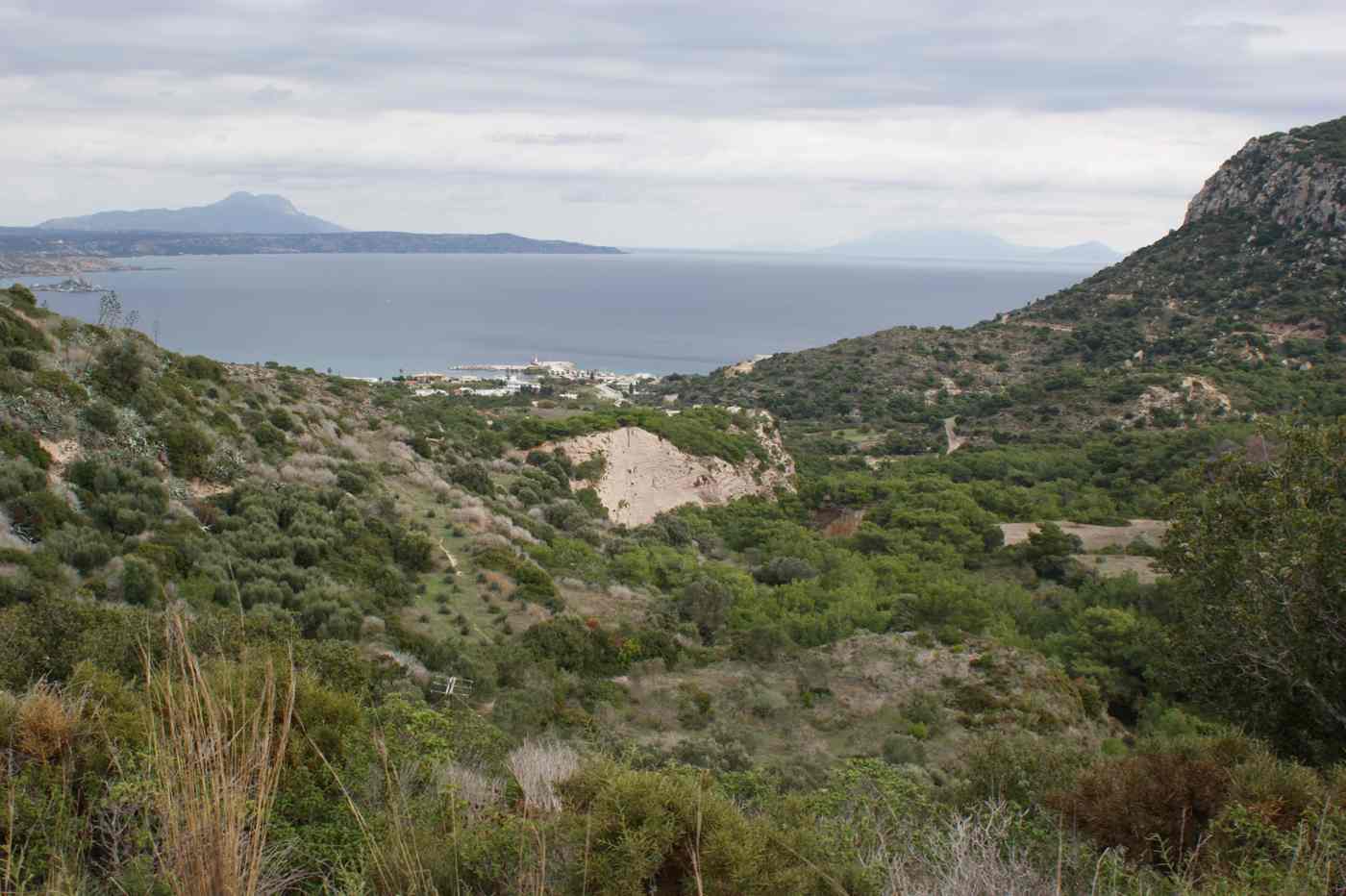
Kos rewards independent travel more than most Aegean islands, because its flat, 40 km spine links ancient sites, mountain villages and southwest beaches that buses reach on thin schedules. A rental car, scooter or bicycle turns the whole coast into a single touring day. This guide covers why a car helps on Kos, where to collect one at the airport, Kos Town and the resorts. What the roads and distances feel like, how parking works in the capital. Where two wheels beat four. Plan the whole trip with Greece Tours.
Rental offices concentrate at Kos International Airport near Antimachia, along the Kos Town waterfront, and inside Kardamena, Kefalos, Tigaki and Mastichari. The choice of pickup shapes the trip: an airport collection suits a straight run to the southwest, while a town desk fits guests who cycle the flat grid first and add a car later. The sections below weigh each option against the island’s short distances, its one real climb to Zia, and its famously bike-friendly capital.
Why rent a car on Kos?
A rental car turns Kos into a single-day loop, linking Kos Town, the Asklepion, Zia on Mt Dikeos, and the Kefalos beaches about 40 km away that buses reach on thin, seasonal schedules.
Kos stretches about 40 km from Kos Town in the northeast to Kefalos in the southwest, and a car covers that span in under an hour. Public buses connect the capital with Tigaki, Mastichari, Kardamena and Kefalos, but departures thin out at midday and after early evening. Weekend and shoulder-season timetables shrink further. A rental car removes the wait, letting drivers reach the Asklepion 4 km outside town, the salt-pan lagoon behind Tigaki, and Zia on Mt Dikeos in one continuous route. Families with beach gear, coolers and small children gain the most, since a boot carries what a bus seat cannot.
Visitors comparing transport options can weigh a hire car against ferries and flights on the guide to how to get to Kos before booking anything.
Southwest Kos rewards drivers most, because the Kefalos peninsula holds the widest choice of coastline. Paradise beach, Camel beach and Magic beach line the sheltered Kefalos bay, and Agios Stefanos frames the Kastri islet with its early Christian basilica ruins. A car parks close to each cove, while the bus drops passengers on the main road above, adding a steep walk down. Inland targets favour drivers too: the Asklepion terraces, the Venetian castle at Antimachia, the pottery workshops of Pyli, and Zia at about 350 m elevation on Mt Dikeos. Each sits off the coastal bus corridor and sees infrequent service.
A rented vehicle strings these ancient, mountain and beach stops into a route that matches the driver’s pace rather than a fixed printed timetable.
Flat terrain makes Kos one of the easier Greek islands to drive, unlike the steep hairpins of Rhodes or Crete. The northern coast road runs almost level from Kos Town through Tigaki, Marmari and Mastichari, so first-time visitors gain confidence quickly. Only the climb to Zia and the ridge of Mt Dikeos brings real gradient, and that road stays paved and well graded. A car also anchors day trips: drivers reach Mastichari for the Kalymnos ferry, or Kardamena for the Nisyros boat, then return the same evening without a fixed coach. Cyclists share the island too, and drivers pass marked bike lanes around the capital, covered in the guide to cycling on Kos.
Steady speeds and short distances keep fuel costs modest across a week.
Car hire suits visitors staying three days or longer, or groups splitting the daily rate four ways. A couple based in Kardamena or Kefalos, far from the Kos Town bus hub, recovers the cost within two beach-hopping days. Short-stay guests near the capital, who plan to cycle the flat grid and walk to the harbour, often skip a car entirely. Kos rewards a mixed approach: a hire car for two touring days across the island of Kos, then bicycles for the town itself. Drivers weigh the season too, since July and August traffic thickens around Kos Town and the resort strips.
Booking ahead of a summer arrival secures a vehicle at the airport, where demand peaks and walk-up availability tightens across the busiest summer weeks.
Where do you pick up a rental car on Kos?
Rental offices cluster at Kos International Airport near Antimachia, along the Kos Town waterfront, and inside the resorts of Kardamena, Kefalos, Tigaki and Mastichari, so travellers collect a car at the airport on arrival or later in their base.
Kos International Airport ‘Hippocrates’ (KGS) sits near Antimachia in the island’s centre, about 25 km southwest of Kos Town and 6 km from Kardamena. Most fly-drive visitors collect a car here, stepping from the arrivals hall to a nearby counter or a short shuttle to the lot. Picking up at the airport suits guests heading straight to the southwest, since Kefalos lies about 15 km further west and Kardamena minutes away. The central location splits the island evenly, placing the northern beaches and Kos Town within a 30-minute drive. Arranging the car before landing matters at KGS, where summer charter flights land in clusters and counter queues build.
A confirmed booking with a named collection time keeps the transfer to the open road short and calm.
Kos Town holds the second cluster of rental desks, spread along the waterfront and the streets behind the harbour near the Plane Tree of Hippocrates. Guests who arrive by ferry from Piraeus, Rhodes or Bodrum, rather than by air, collect a car steps from the port. Town pickup suits visitors who spend their first day on foot or by bike, then add a vehicle midway through the stay for touring days. Offices here stand close to the Knights’ Castle of Nerantzia and the ancient agora, so returning the car folds into a final harbour walk. The dense one-way grid demands care at collection, since narrow lanes and pedestrian zones surround the pickup points.
Staff usually point drivers to the ring road that skirts the centre.
Resort offices extend collection into the places visitors sleep, cutting the reach the airport or capital first. Kardamena on the south coast, the island’s largest resort, holds rental desks near its long beach and the Nisyros ferry quay. Kefalos in the southwest, Tigaki and Marmari on the north shore, and Mastichari by the Kalymnos ferry each carry local counters. Booking a car in the resort suits guests who arrive by transfer coach and want a vehicle only for two or three touring days. Delivery to the hotel is common at these bases, so drivers skip a separate trip to collect the keys.
Resort pickup also shortens the run to nearby beaches, since Tigaki’s salt-pan lagoon and Kardamena’s sands sit within minutes of each office.
Collection at any Kos office follows the same short routine: a driving licence, the booking voucher, and a payment card in the main driver’s name. Drivers from outside the EU often carry an International Driving Permit alongside the home licence, arranged before travel. Checking the car with the agent at handover protects the deposit, so photographing existing scratches on doors, wheels and bumpers takes only a minute. Fuel policy varies by office, and the full-to-full arrangement, where the tank returns as it left, tends to cost the least. The nearest large station sits on the Antimachia road near the airport and on the edge of Kos Town.
Confirming the return point and closing time at pickup avoids a rushed final morning before a flight or ferry.
What are driving conditions, roads and distances like on Kos?
Kos offers mostly flat, well-surfaced roads across a 40 km island, with a fast north-coast route, a slower southwest run to Kefalos, and one mountain climb to Zia, so distances stay short and driving times rarely pass 50 minutes.
The main axis road runs the length of Kos from Kos Town southwest past the airport and Antimachia toward Kefalos, forming the island’s spine. A parallel northern coast road links Kos Town with Tigaki, Marmari and Mastichari, staying flat and straight beside the beaches. Both carry two lanes with sound tarmac, painted lines and regular junctions to the villages inland. Kos Town to the airport covers about 25 km in roughly 30 minutes, and the airport to Kefalos adds about 15 km more. Traffic stays light outside the capital, though the resort strips at Kardamena and Tigaki fill during summer beach hours.
Roundabouts and clear signage in Latin and Greek script mark the main turns, so drivers follow the route without a printed paper map.
Mount Dikeos brings the island’s only real gradient, and the road up to Zia climbs to about 350 m in a series of steady bends. The surface stays paved the whole way, wide enough for two cars, with stone-walled edges and pull-ins for the sunset crowd. Zia fills in the late afternoon, so its small car parks and roadside spaces tighten, pushing later arrivals to walk the final stretch uphill. Inland lanes to Pyli, Asfendiou and the old villages narrow further, winding between olive groves and stone houses. These roads reward slow speeds, since farm vehicles and the occasional flock share the tarmac.
The descent back to the coast opens long views over the north shore, the salt pans and the Turkish mainland across the strait.
Distances on Kos stay compact, which keeps a touring day realistic. Kos Town to Zia runs about 15 km, Kos Town to Kardamena about 27 km, and Kos Town to Kefalos about 40 km at the far tip. Driving is on the right, seat belts are required, and headlight and phone rules match the rest of Greece. Speed limits fall on the open axis road and drop sharply through villages and the Kos Town grid, where pedestrians and cyclists share the space. Scooters and quad bikes weave through summer traffic near the resorts, so drivers hold a wide margin.
Parking a car and switching to a bicycle works well in the capital, since the flat grid and marked lanes favour two wheels for short town hops.
Fuel stations cluster on the Antimachia road near the airport, at the edge of Kos Town, and along the approaches to Kardamena and Kefalos. Filling before a Kefalos or Zia run makes sense, since the southwest tip and the mountain villages carry fewer pumps. Night driving stays calm on the main roads, though the inland lanes to Pyli and Asfendiou run unlit between villages. Animals and cyclists appear on rural stretches after dark, so lower speeds pay off. Summer brings the heaviest traffic to Kos Town and the resort strips, peaking as beach crowds return at midday and again near sunset.
Early starts beat both the heat and the queues, letting a driver reach the Asklepion or Kefalos before the coaches and the day’s warmth build.
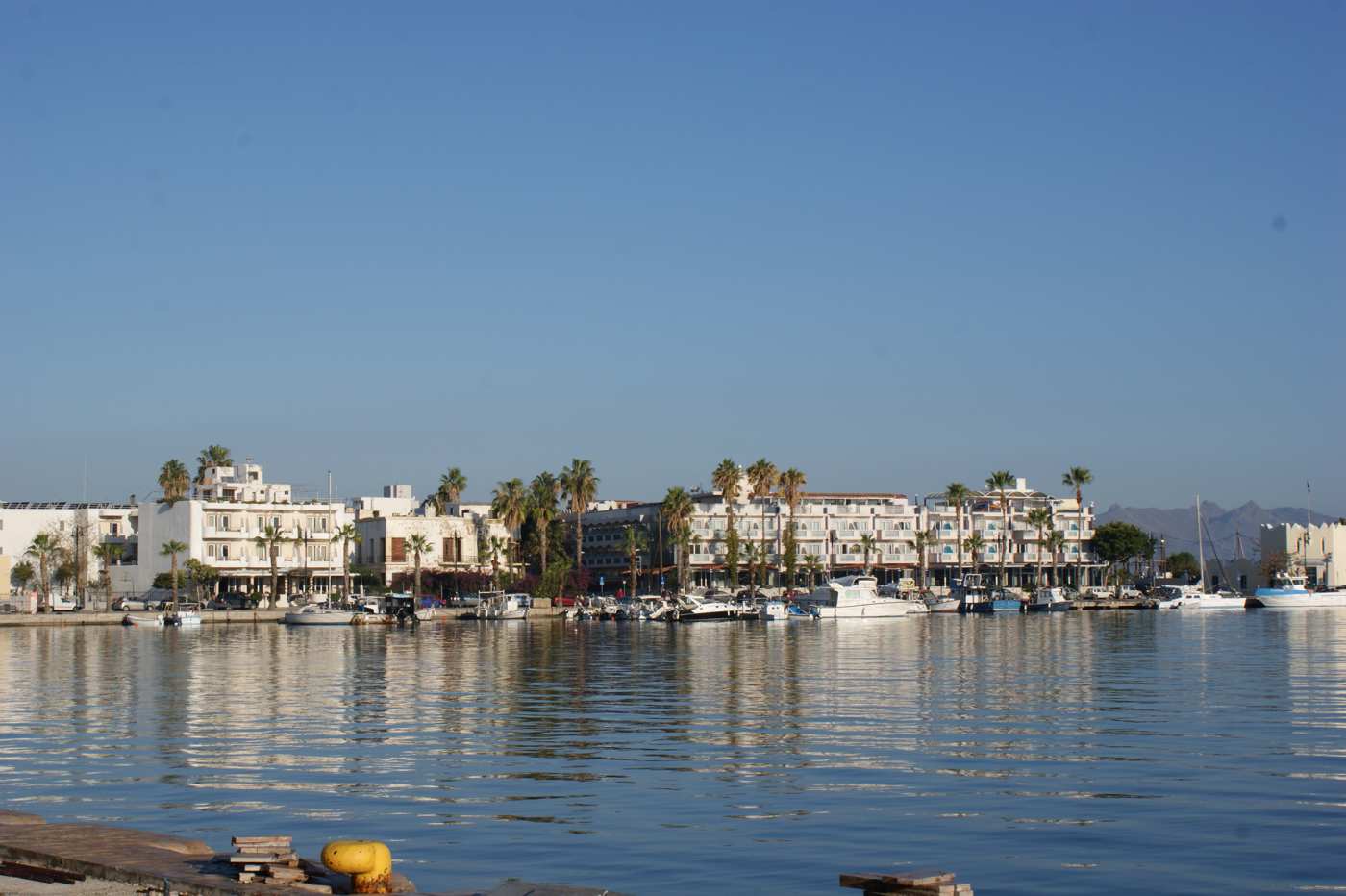
Where do you park in Kos Town?
Kos Town keeps its historic core largely car-free, so drivers park in the free and paid lots ringing the centre, along the marina, and on side streets outside the pedestrian zone, then cover the flat grid on foot or by.
Kos Town centres on a compact grid where the harbour, the ancient agora, the Plane Tree of Hippocrates and the Knights’ Castle of Nerantzia sit within a short walk. Much of this core stays pedestrianised or one-way, closed to through traffic during the day. Drivers who aim straight for the harbourfront meet barriers, narrow lanes and delivery restrictions, so parking on the edge and walking in saves real time. The flat layout makes that walk easy, with the castle, the agora ruins and the Roman odeon all inside about 300 metres. Leaving the car outside the zone also protects it from the tight turns and blind corners of the old streets.
A short ten-minute stroll covers the main sights from any of the ring lots.
Parking clusters ring the centre, so a driver has ready choices within a short walk of the sights. The marina on the eastern harbour holds a large paved lot beside the yachts, close to the castle and the seafront cafes. Open lots and street bays spread along the western waterfront toward Lambi and behind the main shopping streets. Signs and painted lines mark the paid zones, while free spaces sit slightly further out along the ring road. Arriving before mid-morning secures the closer spaces, since the harbour lots fill as day-trippers and ferry passengers arrive. Kos Town rewards patience over circling.
Drivers who take the first open bay on the edge reach the harbour on foot faster than those hunting a spot by the water.
Paid parking in Kos Town runs through marked bays and ticket machines rather than a single central garage. Rates stay modest by mainland standards, and the outer perimeter lots cost nothing outside the tightest harbour blocks. Blue-marked bays signal paid stretches, while white bays and the outer ring hold free spaces that fill first with resident cars. Reading the roadside sign matters, since certain streets restrict parking to permit holders near the pedestrian core. Hotels inside the grid rarely offer their own spaces, so guests staying in the old town lean on the public lots nearby.
A driver who bases the car at the marina or the western waterfront, then walks or cycles the centre, avoids the slow daily hunt for a parking space entirely.
Summer tightens parking most, since beach traffic and evening diners fill Kos Town from mid-morning until late. Arriving for sightseeing before the harbour lots fill, then leaving before the evening rush, keeps a car easy to place. Ferry days add pressure, because passengers for Rhodes, Kalymnos or Bodrum park near the port and leave vehicles for hours. Drivers heading to the Asklepion, 4 km southwest, often skip the town lots and use the site’s own roadside parking instead. Combining errands helps too: one stop covers the castle, the agora and the Plane Tree, all reachable on foot from a single bay.
A car parked on the ring road and a short walk in beats making repeated moves between the harbour and the town beach fronts.
Are scooters, ATVs and bicycles good alternatives on Kos?
Scooters, ATVs and bicycles all work on Kos, since the flat 40 km island and its Kos Town bike lanes suit two wheels, though a car still wins for the Kefalos beaches and long cross-island days with luggage or children.
Scooters and mopeds fill the resort rental strips at Kardamena, Kefalos and Tigaki, aimed at couples and solo travellers on short hops. A scooter reaches the north-coast beaches and the nearer villages easily, threading the flat roads and slipping into tight parking the town lots lack. Riders need the correct licence category, and a helmet is required by law across Greece. The open axis road to Kefalos, about 40 km from Kos Town, tests a small scooter against summer traffic and afternoon wind on the exposed southwest. Two riders with beach bags also strain a 50 cc machine on the longer climbs toward Zia.
Scooters suit a single base and short daily loops rather than a full island circuit with gear and passengers aboard the machine.
Quad bikes and buggies line the same resort strips, marketed for beach runs and short off-tarmac tracks near Kefalos and Kardamena. An ATV carries two and handles the rougher approach lanes to coves like Camel beach, where the surface turns to gravel above the sand. Speeds stay low, so a quad fits short trips rather than the 40 km run to the far southwest. The open cabin leaves riders exposed to sun and summer heat, and helmets remain required. Noise and stability limit their appeal for families with young children compared with a compact car.
Quads work best as a novelty day out from a single resort base, covering the local beaches and a village loop, then returning before the heat of the afternoon builds.
Bicycles match Kos better than almost any Greek island, thanks to the flat terrain and the marked lanes threading Kos Town and its outskirts. Rental shops across the capital and the resorts hire city bikes, and the seafront route runs level toward Lambi, Psalidi and the salt pans behind Tigaki. A bike covers the town sights, the beaches within about 5 km, and the Therma hot-spring coast without any parking worry. Distance sets the limit, since the Asklepion climb and the 40 km haul to Kefalos push beyond a casual day ride. Riders combine modes well, parking a hire car at the edge of Kos Town, then cycling the centre.
Families with older children take to the lanes easily, and the level grid keeps the effort light.
Choosing between wheels comes down to distance, group size and luggage on Kos. A car earns its cost for the Kefalos beaches, the Zia sunset and any day that crosses the full 40 km island with children or gear. Scooters and quads fit a single resort base and short beach loops, trading boot space for easy parking and lower rates. Bicycles rule the flat capital and the north-coast paths within riding range, and cost the least of all. A blended plan works best for a week: a hire car for two touring days across the far corners, then bicycles for the town and its nearest beaches.
Matching the machine to each day keeps every corner of the island reachable without any wasted time or expense.
How far does the public bus network on Kos reach without a car?
The KTEL regional buses link Kos Town with Tigaki, Marmari, Mastichari, Kardamena, Kefalos, Zia and the airport, while the town DEAS urban service covers the capital, so bus travel reaches the main coastal resorts.
The KTEL regional network runs from the central bus station in Kos Town, a short walk from the harbour, out along both coasts of the island. Northbound routes serve Tigaki about 10 km away, Marmari, and Mastichari, the port for Kalymnos ferries around 30 km from the capital. Southern routes reach Kardamena, the resort near the airport, and continue to Kefalos on the southwest tip roughly 40 km distant. A separate mountain service climbs to Zia on Mt Dikeos. Buses to the airport at Antimachia connect with arriving flights, and single tickets are bought directly from the driver.
This network carries visitors between the busiest beaches and villages without a hire car, provided they plan around the posted departure times. Printed timetables hang at the Kos Town station and at the main village stops.
The DEAS urban buses run inside Kos Town and its close suburbs, looping past the harbour, the archaeological sites, Lambi beach and the nearer resort strips. These town routes carry a flat fare and depart often through the day. A visitor staying in the capital reaches the Casa Romana. The ancient agora and the town beaches on foot or by a short ride. Buses suit travellers who base themselves in one resort and want the beach, tavernas and set day excursions rather than a touring holiday. Families without a driving licence, students and anyone avoiding parking in the busy town centre gain from the network.
The flat terrain along the north coast also makes the bus a steady link between Tigaki and the capital about 12 km east.
Bus travel falls short once a plan reaches beyond the timetable. Services thin out in the evening, so a late dinner in Zia or a sunset up Mt Dikeos leaves riders stranded after the last departure. Cross-island hops force a change back through Kos Town, since routes radiate from the capital rather than linking resort to resort directly. Reaching the string of beaches along Kefalos bay, or the quiet inland villages around Pyli, means long waits or a walk from the nearest stop. Anyone wanting to combine the Asklepion, a mountain village and a southwest beach in one day struggles by bus.
The wider list of things to do in Kos rewards a car, which turns three separate bus days into a single flexible loop.
A mixed approach suits a wide range of stays. Bus tickets carry a low flat fare each way, so short trips from the capital to Tigaki or Kardamena stay cheap without any rental commitment. A hire car booked for two or three days of a week-long stay covers the touring days, while the bus handles the beach mornings. Kos Town itself needs no car, given the flat cycle-friendly grid and the DEAS loops. Drivers returning a vehicle to the airport at Antimachia save a transfer on departure day. Weighing the two comes down to how far and how often a plan strays from the north-coast resorts.
Short, resort-based holidays lean on the bus, while island touring that takes in Zia, Kefalos and Pyli tips the balance firmly toward a hire car.
What licence and road rules apply to driving on Kos?
Drivers on Kos need a full national licence, and visitors from outside the EU carry an International Driving Permit alongside it.
A full driving licence held for at least one year lets a visitor rent and drive on Kos. Licences from EU and EEA countries are accepted as they stand, so a German or French holidaymaker simply presents the card at the rental desk. Drivers holding a licence from outside the EU pair it with an International Driving Permit, a translation booklet issued in the home country before travel. The rental agent checks the licence, a passport or ID card and a credit card in the main driver’s name at pick-up. Additional drivers are named on the agreement, each showing a valid licence.
Anyone planning to drive from Kos Town to the Asklepion, Zia or Kefalos carries these documents in the car, since police checks happen on the main roads.
Minimum age rules come from the rental companies rather than a single island law. Most desks set the floor around 21 to 23, and drivers under 25 often pay a young-driver surcharge added to the daily rate. The licence held for a minimum period, commonly one to three years, reassures the insurer covering the car. An upper age limit appears at certain firms, so older drivers confirm the policy when booking. These thresholds shift between companies, and a driver checks the exact terms before paying a deposit.
A 20-year-old visitor keen to reach the beaches of Kefalos bay or the mountain road to Zia confirms eligibility in advance, since a refused rental at the airport desk strands the group. Reading the age clause avoids a wasted transfer to Antimachia on arrival day.
Greek traffic drives on the right, and Kos follows the national code. Seat belts are compulsory in front and rear seats, and children ride in an age-appropriate restraint. Speed limits fall around 90 km/h on the open road between Kos Town and Kefalos, drop through built-up stretches, and slow further in resort centres such as Kardamena and Tigaki. Mobile phones stay in a cradle, since handheld use draws a fine. Alcohol limits sit below the level of one drink for most drivers, so the safe course is none before driving. Motorbikes and quad bikes are common, and drivers watch for them on the mountain bends up to Zia.
Parking rules, one-way streets and pedestrian zones tighten inside Kos Town, where the flat grid fills with cyclists through the day.
Road quality across Kos stays high on the main routes. The coastal road from Kos Town runs smooth and mostly flat toward Tigaki, Marmari and Mastichari on the north shore. The route south to Kardamena, Antimachia and Kefalos climbs and dips across the island’s spine, with wider lanes near the airport. The mountain road to Zia narrows and twists through pine slopes on Mt Dikeos, so drivers take the hairpins slowly. Farm tracks toward inland villages such as Pyli turn to gravel in places, and a standard car handles them with care. Summer traffic thickens around Kos Town and the airport at Antimachia on flight-change days.
Signage carries Greek and Latin lettering, and the short 40 km span of the island keeps every drive from the capital under an hour.
Which corners of Kos does a hire car reach that buses miss?
A hire car opens the quiet reaches of Kos: the string of beaches along Kefalos bay, the inland villages around Pyli, the hot-spring beach at Therma, and the sunset tavernas of Zia after the last bus has gone.
Kefalos bay on the southwest tip holds the beaches that reward a car most. Paradise beach, known for the bubbles rising offshore, sits along the sweep of sand with Camel and Magic beaches close by. Agios Stefanos looks across to the Kastri islet with its chapel and the ruins of an early Christian basilica on the shore. These spots lie roughly 40 km from Kos Town, near the end of the bus line, and reaching more than one in a day needs a vehicle. A driver parks above the sand, walks down, and moves on to the next cove within minutes.
The road threads the low hills of the Kefalos peninsula past the village itself, where tavernas overlook the bay and the wind draws surfers to the water.
The mountain road up Mt Dikeos leads to Zia, the village known for its view west over the Aegean at sunset. Buses climb this far by day, but the last departure leaves before the sky turns, so evening diners depend on a car. Above Zia, a footpath continues toward the summit ridge and the ruined settlement of Old Pyli on the far slope. Smaller hamlets such as Asfendiou, Zipari and Lagoudi scatter across the wooded flank, linked by narrow lanes that no bus serves. A driver strings these together on a single loop, pausing at spring-fed tavernas and craft workshops.
The 10 km climb from the coast road gains height quickly, and the cooler mountain air suits a lunch stop away from the summer heat of the beaches below.
Therma beach lies east of Kos Town, where a hot spring meets the sea in a walled pool among the rocks. No bus route reaches it, so a car or scooter down the coastal track is the only practical way. Inland, the medieval shell of Old Pyli castle crowns a crag above the modern village, reached by a lane that climbs off the plain. The Asklepion, the terraced healing sanctuary about 4 km southwest of the capital, sits an easy drive from town though the walk out is long. Antimachia keeps a Venetian castle near the airport, a squat fortress ringed by walls on the central plateau.
Each of these sites stands away from the resort strip, and a car turns a scattered set of stops into one efficient circuit.
Flexibility is the real gain a car brings on Kos. A driver reaches a north-coast beach for the morning, drives to the Asklepion by midday, and climbs to a mountain village for the evening, all inside 40 km. Salt-pan lagoons behind Tigaki and Marmari draw flamingos in the cooler months, and a car reaches the quiet inland shore of the lake. Sunrise at Therma or sunset above Kefalos bay falls within reach once the timetable no longer sets the day. Photographers, families chasing empty beaches and travellers combining ruins with swimming all gain from setting their own hours.
The compact island rewards this freedom without long transfers, since the farthest point from the capital sits under an hour away by road. Every fuel stop stays close at hand.


How far apart are the main sights on Kos, and what does a driving day look like?
Kos measures about 40 km end to end, so distances stay short: the Asklepion sits 4 km from Kos Town, Zia around 15 km, and Kefalos near 40 km, letting a driving day loop the island easily.
Fuel stations cluster along the main roads out of Kos Town and near the larger resorts. The route toward Kefalos passes pumps around Antimachia and the airport, so a tank tops up mid-island before the run to the southwest beaches. Stations open through the day in summer, and most take cards alongside cash. A small hire car crosses the whole 40 km island and returns on a fraction of a tank, given the short distances. Rental firms hand the car over with a set fuel policy, commonly full-to-full, so a driver refills near Antimachia or Kos Town before dropping the vehicle back.
Prices track the national rate and sit a little higher than the mainland, as on most Greek islands. Keeping the tank above a quarter avoids any search on the quieter southern roads.
One-way distances from Kos Town frame every plan. The Asklepion lies about 4 km southwest, a five-minute drive or a long walk. Tigaki sits around 12 km west along the north coast, Marmari a little beyond, and Mastichari about 30 km at the northwest port. Zia climbs to roughly 15 km inland and uphill on Mt Dikeos. Kardamena reaches about 27 km south near the airport, and Kefalos closes the island at close to 40 km on the southwest tip. Therma lies around 12 km east of the capital along the coast. These figures put no single sight more than 45 minutes from Kos Town. A full day covers three or four stops with time for swimming.
Lunch and a slow drive back to the resort.
A sample driving day starts early from Kos Town, heading 4 km southwest to the Asklepion before the coaches arrive. From the sanctuary, the road climbs inland toward Zia, roughly 15 km on, for a mid-morning coffee and the mountain view over the plain. A run down to the north coast reaches Tigaki or Marmari for a swim and a beach lunch around midday. The afternoon turns southwest along the island’s spine, passing Antimachia castle and the airport, out to Kefalos bay near 40 km from the start. Paradise and Agios Stefanos beaches fill the late afternoon, with Kastri islet offshore.
The drive back to the capital takes about 45 minutes, closing a loop that no bus timetable stitches together in a single day on Kos.
A shorter driving day suits travellers who want less time behind the wheel. The east side of the island packs sights within 15 km of Kos Town: the Casa Romana and the ancient agora in the centre. Therma beach with its hot spring. The Plane Tree of Hippocrates by the harbour. A half-day loop takes in the Asklepion and one mountain village, returning for an afternoon on a town beach. Families with young children keep the driving legs short, breaking the day with a long stop rather than a full island circuit. The flat north coast between Kos Town and Mastichari makes an easy, gentle drive with beaches every 3 to 4 kilometres.
Matching the plan to the group avoids tired children and a rushed return, and leaves fuel for a second day.
When visitors book a car on Kos, and what covers the rental?
Visitors book a Kos hire car weeks ahead for the July and August peak, when airport desks sell out. Basic cover comes with third-party insurance and a collision-damage waiver carrying an excess that an extra fee reduces.
Booking timing shapes both price and choice on Kos. The July and August peak fills the airport desks at Antimachia, so a car reserved a month ahead secures a small economy model before the fleet thins. Spring and autumn ease the pressure, and a booking a week out usually holds. Flight arrivals cluster on the weekly change days, and airport pick-ups queue when planes land together. Reserving online fixes the daily rate and the pick-up point, whether the airport, Kos Town or a resort desk. A driver landing late confirms the desk’s opening hours, since the last flights arrive after certain counters close.
Booking the return to the airport rather than the town saves a final transfer on departure day, and matching the collection point to the drop-off keeps the paperwork simple.
Insurance on a Kos rental starts with third-party cover, required by Greek law, which pays for damage to other people and vehicles. A collision-damage waiver caps the driver’s liability but leaves an excess, the sum owed on any damage before the waiver applies. Paying an extra daily fee lowers or clears that excess, and theft protection often comes bundled. Tyres, the underbody, the windscreen and the wheels sit outside the standard waiver in the contract, so a driver reads the exclusions before signing. A deposit is held on a credit card, released after the car returns undamaged. Photographing the bodywork, tyres and fuel gauge at pick-up records the starting state and settles any dispute at drop-off.
Understanding the excess before paying avoids a shock over a scratched bumper after a tight town park.
Pick-up at the airport or a town desk follows a short routine. The agent inspects the licence, passport and credit card, then walks the driver around the car to log existing marks on the rental sheet. Checking the fuel level, the spare tyre, the jack and the lights takes a couple of minutes and prevents blame for old faults. The keys, the rental agreement and an emergency contact number go in the glovebox for the trip. Child seats, a second driver and a satnav are added at the desk, arranged in advance for the summer rush. A small car suits the narrow lanes of Kos Town and the tight parking near the harbour.
Confirming the drop-off time and place before leaving the desk avoids a late-return charge on the final morning.
Parking rewards a little planning in Kos Town, where the flat grid draws cyclists and pedestrians through the centre. Free spaces line the edges of town and the streets back from the harbour, a short walk from the castle and the agora. Pay-and-display zones sit closer to the waterfront, and the marked bays fill by mid-morning in peak season. Resort villages such as Kardamena, Tigaki and Kefalos offer open parking near the beaches, easier than the town centre. The mountain road to Zia widens into small lots at the village edge, since the lanes above are too narrow for cars. Leaving nothing on show and locking the car guards against opportunist theft at quiet beach car parks.
A compact model, booked early and returned to the airport, keeps the whole rental smooth.
Frequently Asked Questions
Do you need a car on Kos or is the bus enough?
A car is not essential on Kos, since the KTEL bus network links Kos Town with Tigaki, Marmari. Mastichari, Kardamena, Kefalos, Zia and the airport. The DEAS urban service covers the capital. A resort-based holiday built around one beach, tavernas and a set day trip runs well on the bus alone. A car becomes worthwhile once a plan spreads across the island. Buses radiate from Kos Town rather than linking resort to resort, so combining the Asklepion, a mountain village and a southwest beach in one day is hard without a vehicle. Evening services thin out, stranding late diners in Zia or above Kefalos bay.
A common approach hires a car for two or three touring days of a week-long stay and rides the bus on beach mornings. Distances stay short, about 40 km end to end, so even a couple of driving days reach every corner. Match the choice to how far the plan strays from the resort strip.
What licence do you rent a car on Kos?
A full driving licence held for at least one year is the core requirement to rent a car on Kos. Licences from EU and EEA countries are accepted as they stand, so drivers from Germany, France or Italy present the card at the desk. A licence issued outside the EU pairs with an International Driving Permit, the official translation booklet obtained in the home country before the trip. The rental agent checks the licence, a passport or ID card and a credit card in the main driver’s name. Additional drivers are named on the agreement and each shows a valid licence at pick-up.
Minimum age comes from the rental company, with the floor commonly around 21 to 23 and a young-driver surcharge below 25. Carry the documents in the car, since police checks happen on the main roads toward the Asklepion, Zia and Kefalos. Confirm the exact age and licence terms when booking to avoid a refused rental at the airport desk.
How much does it cost to get around Kos by bus?
Bus fares on Kos stay low, paid in cash to the driver or at the station kiosk in Kos Town. The KTEL regional buses charge by distance, so a short hop to Tigaki costs less than the run out to Kefalos, about 40 km away. The DEAS urban buses inside the capital use a single flat fare for any ride across town. Single tickets stay inexpensive, well below the cost of a hire car for a resort-based stay. A car adds the daily rental rate, fuel and any insurance upgrade, though the short 40 km island keeps fuel modest.
The bus wins on cost for travellers staying near one resort, while a car earns its price once a plan needs repeated cross-island trips. Check the fare at the station, since exact prices shift and the driver takes coins. Keeping small notes and coins handy speeds boarding on the busy summer routes toward Kardamena and Mastichari.
Is it easy to drive on Kos?
Driving on Kos is straightforward, thanks to short distances and mostly good roads across a 40 km island. Traffic keeps to the right, following the Greek national code, and the flat north coast between Kos Town, Tigaki and Mastichari makes an easy first drive. The route south to Kardamena, Antimachia and Kefalos climbs and dips across the island’s spine on wider lanes near the airport. The mountain road to Zia on Mt Dikeos narrows and twists through pine slopes, so drivers slow for the hairpins. Kos Town itself runs on a flat grid busy with cyclists, one-way streets and pedestrian zones, which calls for care in the centre.
Signage carries Greek and Latin lettering, and the compact island keeps every drive from the capital under an hour. Farm tracks toward inland villages such as Pyli turn to gravel in places, handled with care in a standard car. Seat belts stay fastened and phones stay in a cradle throughout.
Where can you park in Kos Town?
Parking in Kos Town works best a short walk back from the harbour, where the flat grid opens into quieter residential streets. Free spaces line the edges of the centre, steps from the castle of Nerantzia, the agora and the Plane Tree of Hippocrates. Pay-and-display bays sit closer to the waterfront and fill by mid-morning in peak season, so an early arrival helps. The town centre carries one-way streets, pedestrian zones and heavy cycle traffic, which makes a compact car the practical choice. Outside the capital, resort villages such as Kardamena, Tigaki and Kefalos offer open parking near the beaches.
The mountain road to Zia ends in small lots at the village edge, since the lanes above are too narrow for cars. Lock the car and leave nothing on show, a sensible habit at quiet beach car parks. A small model booked in advance eases both the town lanes and the tight harbour bays alike.
When you book a hire car for Kos?
Book a hire car for Kos weeks ahead for the July and August peak, when the airport desks at Antimachia sell out and rates climb. Reserving a month before travel secures a small economy model before the fleet thins across the busiest weeks. Spring and autumn ease the pressure, and a booking a week out usually holds a car. Fixing the reservation online locks the daily rate and the pick-up point, whether the airport, Kos Town or a resort desk. A driver landing on a late flight confirms the desk’s opening hours, since the last arrivals reach the island after certain counters close.
Booking the return to the airport rather than the town saves a transfer on departure day. Choosing full-to-full fuel and adding any excess-reduction cover at the time of booking avoids queues and surprises at the counter. Early booking also opens a wider choice of child seats and a second driver, both scarce during the summer rush on Kos.
What insurance comes with a Kos car rental?
A Kos car rental starts with third-party insurance, required by Greek law, covering damage to other people and vehicles. A collision-damage waiver caps the driver’s liability but leaves an excess, the amount owed on any damage before the waiver takes over. Paying an extra daily fee lowers or clears that excess, and theft protection often comes bundled with the waiver. Tyres, the windscreen, the underbody and the wheels usually sit outside the standard cover, so read the contract’s exclusions before signing. A deposit is held on the main driver’s credit card and released after the car returns undamaged. Photograph the bodywork, tyres and fuel gauge at pick-up to record the starting state and settle any dispute at drop-off.
Confirm whether the price includes unlimited mileage, since the 40 km island rarely tests any cap. Understanding the excess before paying avoids a shock over a scratched bumper after a tight park in Kos Town or a beach car park at Kefalos.