
How to Experience Greek Easter: Plan Dates, Choose Athens/Corfu/Crete, or Quiet Villages, Join Good Friday Processions and Midnight Resurrection—Plus Logistics and Etiquette. Plan the whole trip with Greece Tours.
Greek Easter (Pascha) isn’t just a holiday in Greece; it’s the biggest, most emotionally charged week of the year. Even if we’ve spent our summers island hopping from Lefkada to Corfu, circling Crete, and slipping back through Athens on repeat, Pascha still feels like the country hits a different frequency: bells, incense, candlelight, fireworks, and tables that somehow keep expanding as more relatives (and “cousins”) appear.
If we want to know how to experience Greek Easter in a way that feels real, more than a quick photo at midnight, we need three things: the timing (because it often differs from Western Easter), the right place (because each region does it differently), and a practical plan (because Holy Week comes with closures, crowds, and very specific rhythms). Let’s map it out so we can show up prepared and actually enjoy it.
Key Takeaways
- To learn how to experience Greek Easter authentically, plan around the Orthodox Pascha date (often 1–5 weeks later than Western Easter) and book early once dates are set.
- Build your trip around the two defining moments of Greek Easter: Good Friday’s Epitaphios processions and Holy Saturday’s midnight Resurrection service with “Christos Anesti.”
- Choose the destination that matches your ideal vibe—Athens for flexible church-hopping, Corfu for big spectacle, Crete for village feasts and fire customs, islands for intimate candlelit streets, or Meteora for quiet reflection.
- Expect Holy Week logistics to reshape daily life, so handle errands early, anticipate reduced shop hours and traffic near churches, and walk or park far and approach on foot.
- Pack for cool spring nights and church etiquette by bringing layers, comfortable shoes, modest clothing, and a drip guard to protect your hands during crowded candlelit services.
- Eat your way through Pascha by trying fasting dishes early in the week, then magiritsa after midnight, red eggs from Holy Thursday, and Easter Sunday lamb, tsoureki, and the egg-cracking game with locals.
Understand When Greek Easter Happens And Why It Often Differs
Greek Easter is tied to the Orthodox Church calendar, and that’s the root of why dates often don’t match what many of us grew up calling “Easter weekend.” In Greece, Pascha is the spiritual peak of the year, and the whole country orbits around it, schools, work schedules, village life, and travel demand.
Orthodox Calendar Basics And How The Date Is Set
In simple terms, Greek Easter is calculated using an Orthodox method that references the Julian calendar (rather than the Gregorian calendar used in most Western countries). The date follows the first full moon after the spring equinox as calculated on the Julian calendar, which is why Orthodox Easter typically lands 1–5 weeks later than Catholic/Protestant Easter.
What this means for us as travelers: we can’t assume Easter aligns across Europe. Some years it does, but often it doesn’t, so checking the Orthodox Pascha date early is step one in planning.
Also, Greek Easter isn’t just “Sunday.” It’s the culmination of a long fasting and preparation period that shapes what we’ll see on menus, what’s happening in churches, and even how people greet each other.
What Holy Week Means In Greece
Holy Week (Megali Evdomada) is the final stretch after Lent, and in Greece it’s intensely lived, by religious people and “culturally Orthodox” families alike. Even if we’re not attending every service, we’ll feel the build-up:
- Churches fill up nightly, especially from Thursday to Saturday.
- Neighborhoods get quieter during key services, then suddenly louder with fireworks and celebrations.
- Food shifts dramatically: more fasting dishes early in the week, then a full switch to lamb, eggs, and sweets.
If we want the full experience, we plan around Good Friday (Epitaphios processions) and Holy Saturday midnight (Resurrection service). Those two moments are the emotional low and the explosive high, classic Greek Easter in one sentence.
Choose Where To Celebrate For The Experience You Want
One of the best parts about Greek Easter is that there isn’t a single “correct” place to celebrate. The core religious services are similar everywhere, but the atmosphere can be completely different, big-city, island-traditional, or monastery-quiet.
If we’re trying to decide where to go, we should be honest about what we actually want: crowds and energy, or intimacy and candlelight. Both are authentic, just different.
Athens For Big-City Services And Neighborhood Traditions
Athens gives us options. We can move between major cathedrals and small neighborhood churches, and we’ll see how locals keep traditions alive inside a modern capital.
What Athens is great for:
- Church-hopping: different parishes, different choirs, different levels of crowd.
- Neighborhood Epitaphios on Good Friday, some streets feel like the whole area is outside.
- Logistics: more hotel choices, taxis/metro, and easy day trips.
A very “Athens” move: we attend a service in a neighborhood church (not just the famous ones), then walk back through streets where families are heading home holding candles carefully upright, like they’re protecting something fragile.
Crete For Fire, Feasting, And Village Customs
Crete during Pascha can feel like a full-body experience, big food, big sounds, big hospitality. Villages keep customs that are proudly local, and the celebrations often last longer than we expect.
What we go to Crete for:
- Village feasts where we don’t stay strangers for long.
- Fire customs (bonfires, fireworks, and in some places the burning of a Judas figure).
- A sense that Easter Sunday is a community event, not just a family meal.
If we’re the kind of travelers who like being pulled into the circle, offered “just one more” piece of lamb, “just one more” glass, Crete delivers.
Corfu For Processions, Bands, And Holy Saturday Atmosphere
Corfu is famous for a reason. The island’s Holy Week has a distinctive style and some of the most recognizable public rituals in Greece.
What makes Corfu special:
- Processions with bands and a formal, ceremonial feel.
- A Holy Saturday atmosphere that builds early and then hits a peak as the Resurrection approaches.
- Fireworks and a sense that the entire old town is participating at once.
Corfu can be busy, sometimes extremely busy, so it’s ideal if we want spectacle and we’re willing to plan ahead.
Cyclades And Dodecanese For Iconic Island Celebrations
The Cyclades and Dodecanese bring that postcard Greece backdrop, whitewashed streets, blue domes, and candlelight moving through narrow alleys. But it’s not only pretty: it’s also intimate.
Why islands work so well for Greek Easter:
- Processions pass right by our door in small towns.
- We can walk everywhere, often following crowds by sound alone.
- Candlelit services feel amplified against quiet island nights.
Islands can also mean limited ferry schedules and fewer available rooms, so the “dreamy” option needs practical planning.
Meteora And Mainland Villages For Quiet, Candlelit Services
If our ideal Greek Easter is reflective, not loud, Meteora and mainland villages are hard to beat. Monasteries and village churches offer a more contemplative atmosphere, and the scenery (especially around Meteora) feels almost unreal.
This is where we go for:
- Candlelit services where we can actually hear the hymns.
- A slower pace, fewer distractions, fewer party vibes.
- The feeling that we stepped into a tradition that hasn’t been repackaged for visitors.
For many of us, one “quiet” Pascha at least once is worth it, even if we do the big-city or big-island version another year.
Plan Your Trip Around Holy Week Logistics
Greek Easter travel is amazing, until we ignore the practical side. Holy Week changes schedules, crowds spike, and the whole country moves at the pace of services and family obligations.
If we plan well, we get the magic without the stress.
Booking Hotels, Ferries, And Flights Early
Demand surges for Holy Week, especially:
- Holy Thursday through Easter Monday
- Popular islands (and islands with limited inventory)
- Corfu and other famous Easter destinations
Our rule of thumb: if we want a specific island or a specific town, we book as soon as we know the Pascha date. Ferries and flights can sell out, and hotels that are normally flexible become strict.
If we’re trying to keep things spontaneous, we can still do Greek Easter, but we’ll do it better from Athens or a mainland base where last-minute rooms are more realistic.
What Closes, What Stays Open, And How Hours Change
Holy Week isn’t a total shutdown, but hours change in ways that can surprise us.
Common patterns:
- Banks and many offices close for holidays.
- Shops may have reduced hours, especially around major services.
- Taverns often stay open, but menus may lean toward fasting foods until Saturday night.
We should plan errands (SIM cards, pharmacy runs, anything bureaucratic) earlier in the week.
Transportation, Parking, And Moving Between Services
Good Friday and Holy Saturday nights are the hardest times to “wing it.” Streets near churches can close or clog, and parking becomes a sport.
What works:
- Walk when possible, especially in towns and islands.
- If we drive, we park farther out and walk in.
- We arrive early for Good Friday processions and very early for the midnight Resurrection if we want a decent spot.
Also worth knowing: the most meaningful moments aren’t always inside the church. Sometimes the best place is outside, where people hold candles, share flame, and sing along quietly.
What To Wear And What To Pack For Spring Weather
Greek spring is beautiful but not guaranteed. In many places, evenings can feel chilly, especially standing still outside a church for an hour.
Typical spring range is roughly 10–20°C (50–68°F), but wind on islands can change everything.
We pack:
- A light jacket or coat for night services
- Layers (a thin sweater goes a long way)
- Comfortable shoes (we’ll walk more than we think)
- Modest options for churches: long pants/long skirt, covered shoulders
And one small but important item: a candle-protecting cup or simple drip guard. If we don’t have one, churches often sell candles with a little paper guard, get it? Hot wax on hands is a very real Easter souvenir.
Experience Holy Week Day By Day
To really understand how to experience Greek Easter, it helps to follow the rhythm of the week. Each day has its mood, its foods, and its must-see moments. We don’t need to do everything, but knowing what’s happening lets us pick the experiences that fit.
Palm Sunday And The Lead-Up To Holy Week
Palm Sunday is the doorway into Holy Week. We’ll often see palms or laurel used symbolically in churches, and the vibe shifts: more people attend services, and towns start preparing.
Food-wise, even people who aren’t strict fasters often choose lighter, traditional dishes. A classic Palm Sunday plate we’ll spot is fried cod with skordalia (garlic-potato dip). If we’re eating out, it’s a good day to try it.
Holy Thursday: Red Eggs And Evening Service
Holy Thursday is when the visuals of Greek Easter really begin.
What we’ll see:
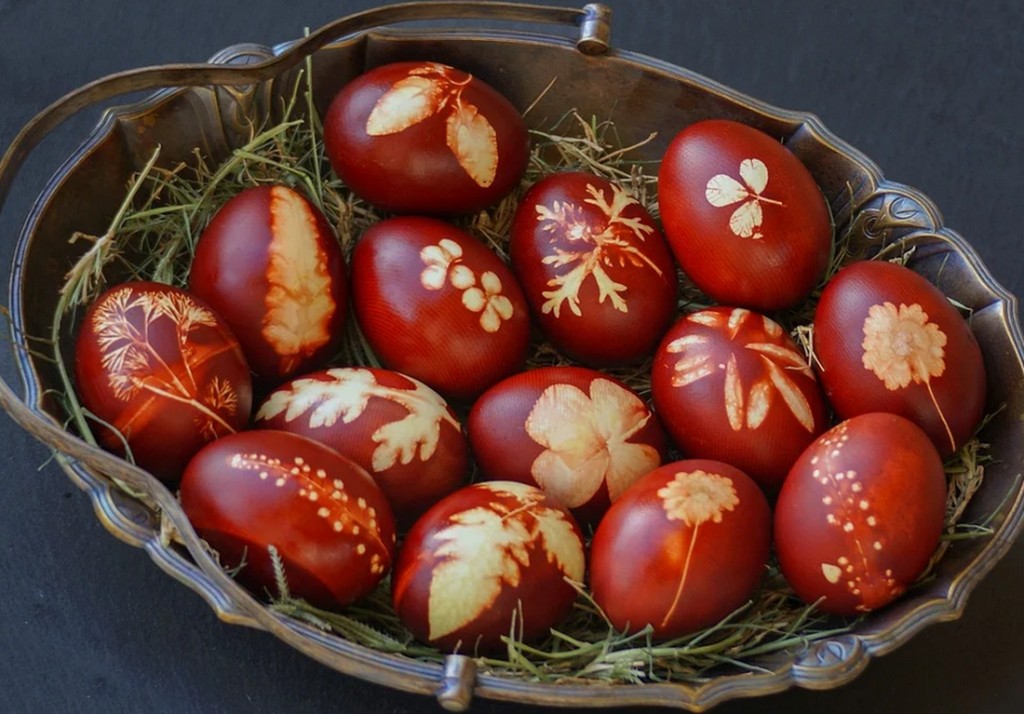
- Families dyeing red eggs, symbolizing Christ’s blood and renewal.
- Bakeries are leaning into Easter production, tsoureki everywhere, and the smell is basically following us down the street.
- A major evening service often referred to as the Twelve Gospels.
If we want a powerful church experience without the extreme midnight crowds, Holy Thursday night is a smart choice.
Good Friday: Epitaphios Processions And Mourning Customs
Good Friday is the most moving day for many Greeks. The mood is mournful, bells toll differently, people speak a bit softer, and you’ll feel that the country is collectively “inside” the story.
The centerpiece is the Epitaphios: a flower-covered bier representing Christ’s tomb. In the evening, it’s carried through the streets in a procession.
What makes it unforgettable:
- Candlelit crowds moving slowly behind the Epitaphios
- Hymns that echo through narrow streets
- In some places, young girls (often called Myrrhofores) scatter flower petals
In many communities, people pass under the Epitaphios for blessing when it returns to the church. We can follow along and do the same, quietly, respectfully, no drama.
Holy Saturday: Midnight Resurrection Service And Fireworks
Holy Saturday is the hinge: the day starts calm and ends with an explosion of joy.
Many places have a First Resurrection service earlier in the day, and then the main event is late at night.
At midnight, the priest announces: “Christos Anesti.” (Christ is Risen.) The response: “Alithos Anesti.” (Truly He is Risen.)
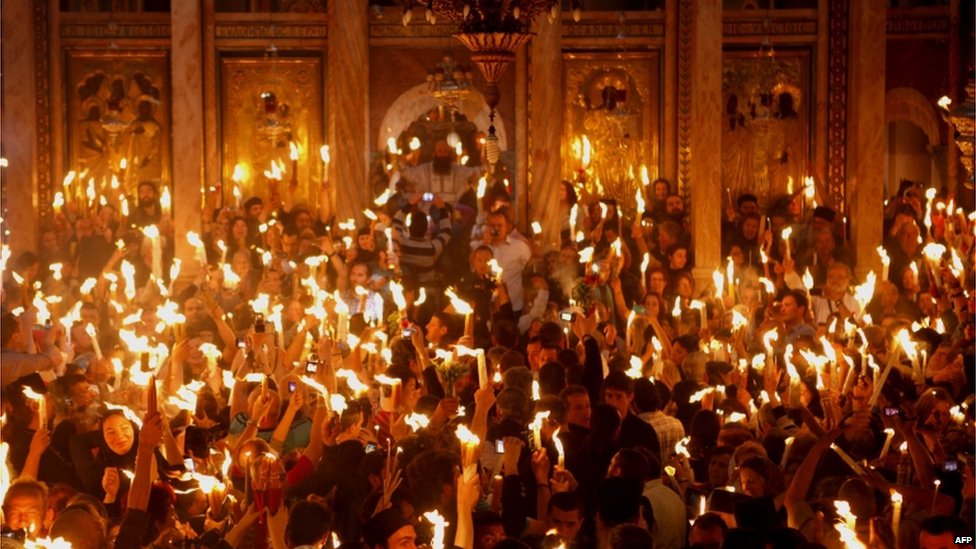
Then it happens: the Holy Light spreads as people light their candles from one another. It’s a chain reaction; one flame becomes hundreds.
Outside, fireworks crack. Some neighborhoods go hard. Others keep it restrained. Either way, it’s electric.
A practical tip we learned the hard way: protect your candle flame from wind (especially on islands) and watch for dripping wax in packed crowds.
Easter Sunday: Lamb On The Spit, Music, And Open-Home Hospitality
Easter Sunday is joy, food, music, and generosity that can catch visitors off guard.
Traditional highlights:
- Lamb on the spit (or baked lamb, depending on the household)
- Kokoretsi (for the adventurous and the traditionalists)
- Egg-cracking game with red eggs
- Tables filled with tsoureki, salads, cheeses, wines, and whatever else the family insists is “not much.”
This is also the day when Greece’s “open-home” culture really shows. If we’ve chatted with locals even a little during the week, we might get an invitation. If we do, it’s usually genuine. We should accept if we can, and bring something small (wine, sweets, flowers).
Easter Monday: Local Festivals And Low-Key Exploring
Easter Monday often feels like a long exhale. Some families keep visiting, some towns host local festivals, and many people take it easy.
For us, it’s a great day to:
- Explore with fewer time pressures
- Do a scenic drive or a gentle hike
- Visit a quieter monastery or viewpoint
If we’ve done the midnight service and the big Sunday meal, Monday is permission to slow down, coffee, sea air, and a bit of wandering.
Follow Church Etiquette So You Feel Comfortable
We don’t need to be Orthodox (or religious at all) to attend Holy Week services in Greece. But we do need to understand the vibe. Greek churches during Pascha are not performances: they’re living rituals for families who may have been coming to the same parish for generations.
A little etiquette goes a long way, and it helps us feel relaxed rather than awkward.
How To Participate Respectfully During Services
We can participate as much or as little as we want. The basics:
- Enter quietly, move to the side if it’s crowded.
- Follow the crowd’s cues: standing, sitting, crossing themselves.
- If we’re not sure what to do, we simply stay still and observant.
It’s also normal in Greece for people to drift in and out during long services, especially if the church is packed. We don’t have to be perfect: we just have to be respectful.
Candles, The Holy Light, And Midnight Crowds
At the midnight Resurrection service, candles are central. We’ll usually buy one outside the church from a stand (often supporting the parish).
A few practical and polite habits:
- Keep our candle upright: wax drips happen fast.
- When sharing flame, lean in carefully and avoid jostling.
- Don’t push for a “front” view; there often isn’t one, and the crowd is the experience.
Some locals try to bring the Holy Light home without it going out. It’s part devotion, part tradition, part challenge. If we want to do it too, we can, but it’s also okay to let the candle go out and simply keep the moment.
Photography, Silence, And Personal Space Norms
Greek Easter is beautiful, and yes, we’ll want photos. But we should treat churches like sacred spaces, not content backdrops.
Good rules:
- Avoid flash in churches.
- Do not steps in front of mourners during Good Friday.
- Don’t shove phones over people’s shoulders.
If we want a photo, we take it quickly and then put the phone away. The best “souvenir” is the feeling of the hymns and candlelight anyway.
Dress And Behavior Expectations In Churches And Monasteries
In most regular churches, modest clothing is enough:
- Covered shoulders
- Long pants or a skirt/dress around knee length (longer is safer)
- No beachwear
For monasteries (especially places like Meteora), expectations can be stricter. We plan for a conservative dress and keep a light scarf in our day bag. It saves us from being turned away and shows basic respect.
Eat And Drink Like It’s Easter In Greece
Greek Easter food isn’t a side feature; it’s half the story. The flavors of Pascha make more sense when we understand the lead-up: fasting first, then celebration. Even if we don’t follow the fast, we’ll see its impact everywhere, from tavern menus to what bakeries push to the front shelves.
Fasting Traditions And What You’ll See On Menus
Many Greeks follow a Lent fast (with different levels of strictness). During Holy Week, we’ll notice more dishes that avoid meat and dairy.
On menus, we’ll commonly find:
- Legumes (lentils, beans)
- Greens and vegetable stews (often with olive oil)
- Seafood options in some periods (like octopus or squid)
This is actually a great time to eat “classic Greek” that visitors sometimes skip in summer, when everyone’s chasing grilled fish and salads.
Classic Easter Foods To Try And When You’ll Find Them
Certain foods have a specific Easter timing. If we know when to look, we won’t miss them.
- Red eggs: Holy Thursday onward
- Roast lamb/lamb on the spit: Easter Sunday
- Kokoretsi: Easter Sunday (often alongside the lamb)
And don’t be shy about asking a taverna what they’re preparing for the weekend. In smaller towns, they’ll usually tell us with pride.
Tsoureki, Koulourakia, And Seasonal Sweets
Greek Easter bakeries are dangerous (in the best way). The big three:
- Tsoureki: sweet braided bread, often scented with mahleb/mastic: sometimes topped or filled
- Koulourakia: butter cookies, twisted shapes, perfect with coffee
- Chocolate eggs also appear, but the traditional heart of Easter sweets is baked, not candy-based
We’ll find these everywhere, supermarkets too, but the neighborhood bakery is worth it. Fresh tsoureki on a cool spring evening is one of those small Greek moments that sticks.
Magiritsa After Midnight And The Easter Sunday Table
Right after the midnight Resurrection service, the fast traditionally breaks with magiritsa, a soup made with lamb offal, greens, and lemon.
It’s a cultural marker: even people who skip most fasting sometimes show up for magiritsa because it feels like Easter has officially begun.
Then Easter Sunday arrives with the big spread:
- Lamb (spit-roasted or oven-roasted)
- Salads, cheeses, breads
- Wine, tsipouro, and endless toasts
- The red egg-cracking game: we tap eggs while exchanging “Christos Anesti” and “Alithos Anesti.”
If we’re guests at someone’s table, we pace ourselves. The meal isn’t a sprint: it’s an all-day event that just happens to include lunch.
How To Join A Local Celebration (Even If You’re Just Visiting)
Greek Easter can look “closed” from the outside because it’s so family-centered. But in practice, it’s one of the easiest times to connect, if we approach it with humility and a little social awareness.
We don’t need an insider contact. We just need to show up in the right places and behave like we’re sharing a moment, not consuming one.
Finding Processions, Service Times, And Neighborhood Events
Our best sources are simple:
- Church notice boards (service times are often posted outside)
- Asking our hotel host or a local café owner
- Following the crowd on Good Friday (seriously, listen for bells and hymns)
In Athens, each neighborhood parish will have its own Good Friday Epitaphios. On islands and villages, there may be one main church that everyone gathers around.
What To Bring: Candles, Matches, And Small Courtesies
A few small items make everything smoother:
- A candle (we can buy it outside the church)
- Matches or a lighter (helpful when the wind is strong)
- A drip guard for wax (often sold with candles)
If we’re invited anywhere, home, village feast, even “come by after the service”, we bring a small courtesy:
- A bottle of wine
- Sweets from a bakery
- Flowers
Nothing fancy. The gesture matters more than the price.
Social Customs: Greetings, Invitations, And Toasts
Learning two phrases changes everything:
- Christos Anesti (Christ is Risen)
- Alithos Anesti (Truly He is Risen)
People will say it to us in shops, on the streets, at tables. We say it back, and we’re instantly “in.”
At the Easter table, toasts are common. We don’t have to drink heavily, just participate lightly and warmly. And if someone insists we try a dish, we can take a small portion. In Greece, refusing too firmly can feel like pushing away hospitality.
Alternatives If You Prefer A Quieter Experience
Not everyone wants fireworks and packed midnight crowds. If we’re looking for something gentler, we can still experience Pascha beautifully:
- Attend an earlier Holy Week service (Holy Thursday is a great option)
- Choose a smaller village church instead of a central cathedral
- Visit monasteries or places like Meteora for a calmer atmosphere
- Watch Good Friday processions from the edge of the crowd rather than inside it
Greek Easter meets us where we are. We can go full immersion, or we can take it in quietly; either way, it’s powerful.
Conclusion
If we’re chasing the “real Greece,” Greek Easter is one of the most direct ways to find it, because it isn’t staged. It’s families returning home, neighborhoods moving together behind candlelight, and a country that still knows how to mark time with shared ritual.
To experience it well, we don’t need to do everything. We pick the place that matches our style (Athens energy, Corfu spectacle, Cretan feasting, island intimacy, or Meteora quiet), we plan the logistics early, and we show up for the moments that matter, Good Friday’s Epitaphios and Holy Saturday’s midnight “Christos Anesti.”
And then we do the simplest thing: we accept the rhythm of the week. Walk a little slower, listen a little more, and say the greeting back. That’s usually when Greek Easter opens up, and suddenly we’re not watching it anymore. We’re part of it.
See more about Greece Tours:
- How Much Does A Greece Tour Cost? A 2026 Price Guide By Style, Season, And Itinerary
- Greek Legends And Historical Sites: A Myth-To-Map Travel Guide
- Greek Holiday Customs And Traditions: A Season-By-Season Guide
- Greek Festivals To Experience: A Seasonal Guide To Culture, Food, Music, And Traditions
- Greek Ferry Booking Tips: How To Find The Best Routes, Seats, And Prices
- Greek Art And Museums Guide: What To See, Where To Go, And How To Plan
- Food Markets To Visit In Greece: A City-By-City Guide For Hungry Travelers
- Famous Greek Architecture Explained: Styles, Structures, And Lasting Influence
- What Is The Best Greek Island For Over 50s? A Practical, Evidence-Based Review
- Exploring Greece By Public Transport: A Practical Guide For Independent Travelers
Frequently Asked Questions About How to Experience Greek Easter
How to experience Greek Easter as a visitor (not just a quick midnight photo)?
To experience Greek Easter authentically, plan around the Orthodox Pascha date, choose a place that matches your style (Athens energy, Corfu spectacle, Crete feasting, islands, or quiet villages), and build your trip around Good Friday’s Epitaphios procession and Holy Saturday’s midnight Resurrection service.
Why does Greek Easter often fall on a different date than Western Easter?
Greek Easter (Pascha) follows the Orthodox Church calendar and an Easter calculation tied to the Julian calendar. Because the “first full moon after the spring equinox” is calculated differently than in the West, Orthodox Easter usually lands 1–5 weeks later than Catholic/Protestant Easter.
What are the must-see Holy Week moments when learning how to experience Greek Easter?
Two moments define Holy Week in Greece: Good Friday’s evening Epitaphios procession (a flower-covered bier carried through streets in a candlelit, mournful march) and Holy Saturday at midnight, when “Christos Anesti” is announced, candles share the Holy Light, and fireworks often erupt outside.
Where are the best places in Greece for Greek Easter celebrations—Athens, Corfu, Crete, or Meteora?
Athens offers many neighborhood churches and easy logistics; Corfu is famous for formal processions, bands, and a big Holy Saturday atmosphere; Crete is known for village hospitality, feasting, and fire customs; Meteora and mainland villages feel quieter and more contemplative, with candlelit services and fewer crowds.
What should I book early, and what closes during Greek Easter week?
Book flights, ferries, and hotels as soon as you know the Pascha date—demand spikes from Holy Thursday through Easter Monday, especially on islands and in Corfu. Expect reduced shop hours and holiday closures for banks/offices, while many tavernas stay open with fasting-friendly menus until Saturday night.
What do people eat during Greek Easter, and what is magiritsa after midnight?
Food follows the fast-then-feast rhythm: earlier in Holy Week, you’ll see more meatless dishes, then red eggs appear from Holy Thursday, and Easter Sunday centers on lamb (often on the spit) and kokoretsi. After the midnight Resurrection service, many break the fast with magiritsa, a lemony soup with lamb offal and greens.