
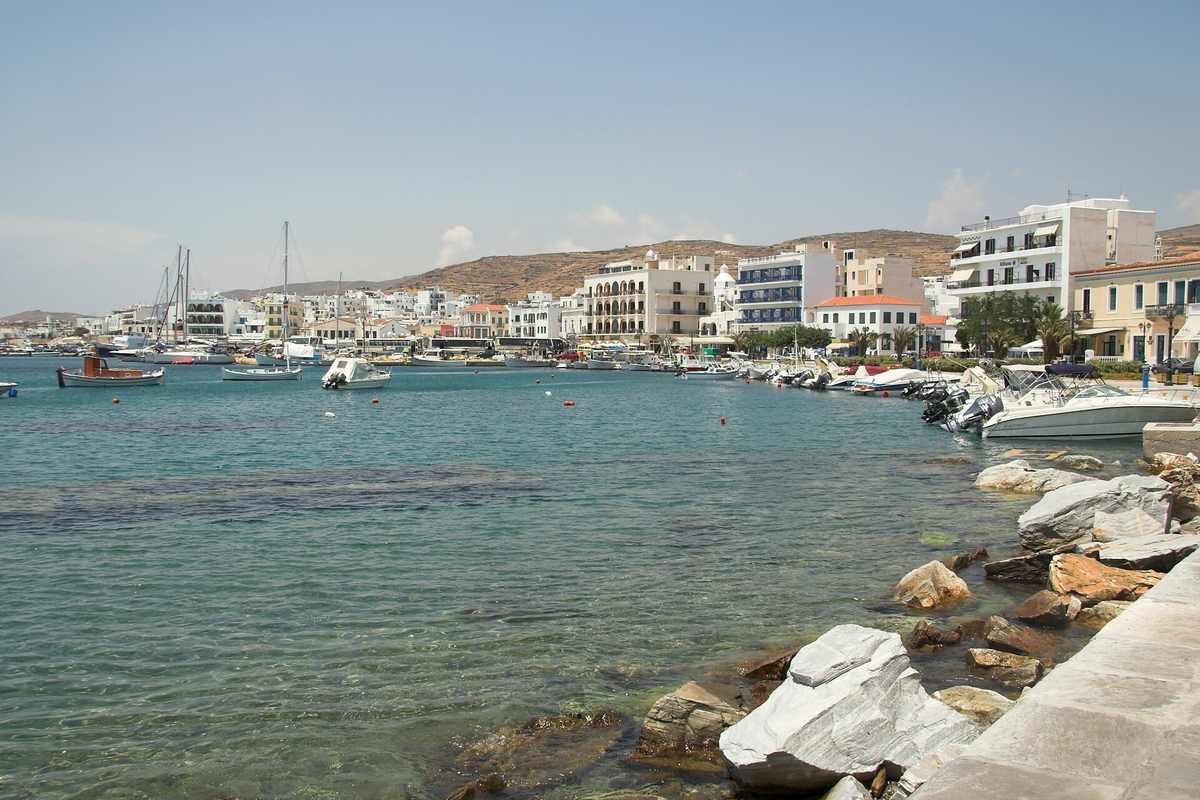
A Tinos itinerary sequences the island’s marble villages, beaches, pilgrimage church and food into short drives and free afternoons. Two days cover the highlights, four days add beaches and a food experience, and seven days fold in hiking and a boat trip. This guide lays out a day-by-day Tinos itinerary for each length, so the island reads as one plan rather than a list of scattered sights. Plan the whole trip with Greece Tours.
Tinos is compact, with every village and beach within a 40-minute drive of Tinos Town. That closeness lets a good itinerary mix a church, a mountain village and a swim in a single day without rushing. The Tinos itinerary options below run from a quick two-day taster to a full week, each built around the same core sights in a different order and depth.
How many days do you need in Tinos?
You need at least two days in Tinos for the church and one marble village, four days to add beaches, hiking and a food tour, and seven days to combine the whole island with a boat trip. Four days suits most visitors.
The right length depends on the traveller’s pace and interests. A two-day visit covers Tinos Town, the Church of Panagia Evangelistria and Pyrgos at a relaxed rhythm. Four days adds two beach afternoons, a village-hopping drive and a wine or cooking experience. Seven days opens the trails, the quieter northern coast and a day-trip sail to Delos or Mykonos. Each plan sequences the same attractions in a different order, which keeps drives short and afternoons free for swimming. The full menu of sights sits in the guide to things to do in Tinos. Travellers who only want the headline sights and a taste of the island manage in two days, while those who want to swim, hike, eat and explore at a Cycladic pace lean toward a week. The island’s small size works in any plan’s favour, since no drive between the main sights exceeds 40 minutes. Match the length to the trip’s purpose: a cultural stopover, a beach holiday, or a slow immersion in village life. The shortest plan starts with two days.
What is the best Tinos itinerary for 2 days?
The best 2-day Tinos itinerary covers Tinos Town and the pilgrimage church on the first day, then the marble village of Pyrgos and a north-coast swim on the second. Two days capture the island’s faith, craft and coast in a tight loop.
A two-day plan works best for travellers arriving from Mykonos or fitting Tinos into a wider Cyclades route. It prioritises the unmissable sights and one classic village, leaving the deeper exploration for a longer stay. Keep a rental car or scooter for the second day to reach Pyrgos and the northern beaches. The plan assumes a morning arrival and an evening departure, which gives almost two full days on the ground. Travellers with a late first boat should swap the order, saving the church for a quieter early morning on day two. The route stays close to Tinos Town on the first day and ventures north on the second, which keeps driving to a minimum while still covering the island’s signature craft and coast.
Day 1: Tinos Town and the pilgrimage church
Begin in Tinos Town, where the ferry docks on the central waterfront. Walk up the main avenue to the Church of Panagia Evangelistria, the holiest Marian shrine in Greece, and tour its marble basilica, courtyard and crypt. Wander the old town’s lanes, the marble fountains and the small museums behind the seafront. Spend the afternoon at Agios Fokas, the town beach a short walk south, then return for dinner at a waterfront taverna serving fresh fish and local louza. Inside the basilica, look for the silver-clad icon of the Annunciation, the miracle-working image that draws pilgrims from across Greece, and step down to the crypt that marks where it was found. The complex also holds a museum of offerings, an art gallery and several chapels, which reward an unhurried hour. Back in the old town, browse the marble workshops along the main avenue, where carvers sell fanlights, mortars and small sculptures. If time allows, drive the short distance to Kionia in the late afternoon for a quieter swim beside the ancient Sanctuary of Poseidon. This first day grounds the trip in the island’s identity before the villages, and the church history sits in the guide to Panagia Evangelistria of Tinos.
Day 2: Pyrgos marble village and Kolimbithra
Drive north to Pyrgos, the marble village that trained generations of sculptors. Walk the marble-paved square, visit the Museum of Marble Crafts and the Chalepas house, and watch a working studio shape the stone. Drop down to Panormos harbour for a seafood lunch by the water. In the afternoon, cross to Kolimbithra on the north coast for a swim or a surf lesson in its wide bay. On the way back, detour through Kardiani and Isternia, two villages clinging to the mountainside with sweeping sea views and a shaded marble footpath between them. If the meltemi blows hard, swap Kolimbithra for the sheltered south-coast sands of Agios Sostis instead. Time the drive to catch the sunset from a Kardiani terrace before returning to Tinos Town for the evening ferry or a final dinner. This day balances the island’s defining craft with its most scenic beach, drawing on the guide to the villages of Tinos.
What is the best Tinos itinerary for 4 days?
The best 4-day Tinos itinerary adds a north-village drive, a day in the central plateau with wine and dovecotes, and a full beach day to the two-day core. Four days let travellers slow down and reach the island’s quieter corners.
A four-day plan is the ideal length for most visitors, deep enough for the villages, beaches and food without rushing. It pairs the cultural highlights with relaxed afternoons and one organised experience. A rental car opens every day’s route across the island. The four days move outward from Tinos Town, covering the south coast, the northern marble villages, the central plateau and the sea in turn. Each day ends with a swim and a taverna dinner, which keeps the pace gentle despite the full schedule. Travellers can reorder the days freely around the wind and the weather, since the sights remain the same. This flexibility makes the four-day plan the most popular choice on the island.
Day 1: Tinos Town, church and Kionia
Settle into Tinos Town and tour the Church of Panagia Evangelistria and the old town. In the afternoon, drive three kilometres west to Kionia, where a sandy beach sits beside the ruins of the Sanctuary of Poseidon and Amphitrite. Swim, explore the ancient site, and eat at a beach taverna. Return for an evening stroll along the Chora waterfront and dinner at a seafront taverna. Take time inside the church to see the icon, the crypt and the marble courtyard, then explore the old town’s lanes, the marble fountains and the small art and folklore museums behind the seafront. At Kionia, the ancient sanctuary’s foundations sit right beside the sand, so a swim and a walk through history fill the same afternoon. This gentle first day sets the scene without a long drive, easing travellers into the island’s rhythm.
Day 2: North villages and the marble coast
Spend the day among the northern villages. Tour Pyrgos and its Museum of Marble Crafts, lunch at Panormos harbour, and detour to Kardiani and Isternia for terraces stacked above the sea. Finish with a swim at Kolimbithra or the shaded sands of Agia Thalassa in Panormos Bay. In Pyrgos, allow time for the Chalepas house museum and a working studio, where a sculptor shapes the marble by hand. Panormos, the sculptors’ old port, serves some of the island’s best seafood at tables right on the quay. The villages of Kardiani and Isternia, perched above the west coast, offer the day’s finest views and a gentle marble path for a short walk between them. The drive threads the island’s most dramatic scenery and craft heritage in one loop.
Day 3: Volax, dovecotes and wine
Explore the central plateau. Walk the moonscape of Volax among its giant granite boulders, watch the basket weavers, and view the ornate dovecotes of the Tarambados valley. Stop at the T-Oinos vineyard near Falatados for a tasting of granite-soil wines, then lunch in a mountain village known for its raki. Cool off in the afternoon at Agios Sostis on the south coast. Volax sits inside a natural amphitheatre of rounded boulders, and its tiny streets hide workshops where weavers still work local reeds by hand. The dovecotes of Tarambados, ornate stone pigeon houses decorated with marble latticework, line a short marked path through the valley below. At T-Oinos, the vines grow in pockets between giant granite rocks, and the cellar tasting pairs the wines with local cheese. This day blends the island’s strangest landscape with its food culture.
Day 4: Beach day or boat trip
Devote the final day to the sea. Relax at Agios Ioannis Porto or Pachia Ammos on the calm south coast, or join a boat trip to Delos and Mykonos. End with a sunset from Kardiani before the evening ferry. A boat day reaches the ruins of Delos, the mythological birthplace of Apollo, and pairs them with a few hours in Mykonos before the return. Travellers who prefer the sand can spend the morning at Pachia Ammos and the afternoon snorkelling the clear shallows of Lychnaftia. Either way, a final seafood dinner on the Tinos Town waterfront closes the trip. The boat options sit in the guide to Tinos boat tours and island-hopping day trips, and the best beaches in the guide to Tinos beaches.
What is the best Tinos itinerary for 7 days?
The best 7-day Tinos itinerary adds hiking, a boat trip, a cooking class and the quieter northern coast to the four-day plan. A full week lets travellers explore the island slowly and reach the corners that day-trippers miss.
A seven-day plan suits travellers who want to live the island rather than tick its sights. It spreads the highlights across relaxed days and leaves room for repeat beaches and spontaneous stops. The week below balances culture, activity, food and rest. With seven days, no single day feels rushed, and travellers can return to a favourite beach or village rather than seeing each only once. The plan alternates active days, such as hiking and boat trips, with restful beach days, which suits a true holiday rhythm. A full week also absorbs a windy or wet day without derailing the trip, since there is always time to reorder the schedule.
Day 1: Arrival and Tinos Town
Arrive, settle into a base in or near Tinos Town, and ease into the trip. Tour the Church of Panagia Evangelistria, wander the old town’s marble lanes, and watch the harbour at dusk. Dine on fresh fish and louza at a waterfront taverna. Use the afternoon to settle in and explore the capital on foot, from the marble workshops along the main avenue to the quiet back lanes and the small museums of the old town. A swim at Agios Fokas, the town beach a short walk south, rounds out the arrival without a drive. A slow first day absorbs the island’s pace and leaves the legwork for the days ahead.
Day 2: Pyrgos and the marble tradition
Head north to Pyrgos for a deep dive into marble. Visit the Museum of Marble Crafts, the Chalepas house and a working studio, then lunch at Panormos harbour. Swim at Kolimbithra or Agia Thalassa in the afternoon. Pyrgos rewards a slow morning: its marble-paved square, carved cemetery and café tables double as an open-air gallery, and a working studio shows the chisel in action. The Museum of Marble Crafts explains quarrying and technique, then links each method to objects you can spot across the village. Detour to Kardiani and Isternia for the day’s best views before dropping to the coast for a swim. The day traces the craft that shaped the island, detailed in the guide to the marble craft of Tinos.
Day 3: Volax, dovecotes and the plateau
Explore the central plateau on foot and by car. Walk Volax and its boulders, study the dovecotes of Tarambados, and taste wine at T-Oinos near Falatados. Lunch in Steni or Falatados among the raki distillers. Volax’s boulder-strewn setting and reed-weaving workshops make it the island’s strangest and most memorable village, while the Tarambados dovecotes show how marble craft turned farming into folk art. The plateau villages of Falatados and Steni anchor the island’s raki and cheese trade, and a long lunch here captures the rural heart of Tinos. A late swim at Agios Sostis closes the day on the south coast.
Day 4: South-coast beach day
Slow down with a full beach day. Choose Agios Ioannis Porto for facilities, Pachia Ammos for space, or Santa Margarita for calm. Snorkel at Lychnaftia, lunch at a beach taverna, and read away the afternoon. A relaxed day in the middle of the week recharges the legs for the days ahead. The south coast stays calm even when the meltemi blows, so a windy forecast simply moves the day from the exposed north to the sheltered bays. Pack water, shade and snacks for the quieter beaches, which carry few facilities. A long lunch at a beachfront taverna and an afternoon with a book turn this into the trip’s easiest, most restful day.
Day 5: Boat trip to Delos and Mykonos
Take to the sea for a cruise to Delos, the UNESCO archaeological island and mythological birthplace of Apollo, about an hour away. Tour the ruins with a guide, then continue to Mykonos for a few hours ashore before returning. Alternatively, charter a boat to the hidden coves of the north and east coasts for swimming and snorkelling. On Delos, a licensed guide leads a two-hour walk through the temples, mosaics and the famous Terrace of the Lions, one of the richest archaeological sites in Greece. A private charter trades the ruins for solitude, anchoring at beaches such as Livada that no road reaches. Either trip returns by late afternoon, leaving time for a quiet dinner back in Tinos Town. A day at sea adds a different dimension to a week on land.
Day 6: Hiking and the monastery
Spend the day on foot and in quiet corners. Climb Exomvourgo, the Venetian fortress hill with the island’s widest view, or walk the shaded marble path between Kardiani and Isternia. Visit the fortified Kechrovouni Monastery, home of Saint Pelagia. The climb up Exomvourgo, the rocky peak crowned by a ruined Venetian castle, takes about an hour and delivers a 360-degree view across the Cyclades. The shaded marble path between Kardiani and Isternia offers a gentler alternative, nearly level and rich in sea views. Kechrovouni, among the largest monasteries in Greece, preserves a fortified village of whitewashed lanes and the cell where the island’s patron saint lived. A taverna lunch in a nearby village rewards the morning’s effort. The trail network appears in the guide to hiking trails of Tinos.
Day 7: Food, Chora and departure
Close the week with the island’s food and a gentle pace. Join a cooking class or a food tour through the producers of cheese, louza and honey, then relax in Tinos Town for last-minute shopping in the marble workshops. Watch a final sunset from Kardiani before the evening ferry. A cooking class pairs a village kitchen with family recipes for artichoke pie, louza meze and seasonal vegetables, ending in a shared meal. A food tour instead visits a cheese maker, a charcuterie producer and a honey or raki workshop, tying each product to the village that makes it. Spend the last hours buying marble keepsakes, local cheese and wine to carry home. This day savours the flavours covered in the guide to the food and wine of Tinos.
How do you plan a Tinos itinerary from Mykonos?
You plan a Tinos itinerary from Mykonos around the 15-to-30-minute ferry, either as a day trip or a two-night stay. A day covers the church, Tinos Town and one beach, while two nights add the marble villages and a quieter pace.
Tinos sits a short hop from Mykonos, which makes it an easy add-on to a Cyclades holiday. A day trip leaves Mykonos in the morning, takes in the pilgrimage church, the old town and a swim at Agios Fokas or Kionia, and returns on an evening boat. A two-night stay unlocks the marble villages, a north-coast beach and a relaxed dinner away from the crowds. The frequent crossing, detailed in the guide to how to get to Tinos, makes either plan simple. Day-trippers should catch one of the early boats to maximise time ashore, since the church, the old town and a beach fill a full day comfortably. Travellers staying two nights gain an evening in the quieter Tinos Town, a contrast to the busier Mykonos waterfront, and a second day for Pyrgos and the marble villages. Booking the return ferry in advance avoids a sold-out evening boat in peak season. The short hop makes Tinos one of the easiest and most rewarding side trips in the Cyclades. First-time visitors benefit from a focused route.
What is the best Tinos itinerary for first-time visitors?
The best Tinos itinerary for first-time visitors is the four-day plan, which balances the church, the marble villages, two beaches and a food or wine experience. It covers the island’s identity without rushing or missing the highlights.
First-timers want the essential Tinos without overplanning. The four-day route delivers the pilgrimage church, Pyrgos and the marble tradition, the strange landscape of Volax, and the contrast of north and south beaches. One organised experience, such as a wine tasting or cooking class, adds depth and local contact. A base in or near Tinos Town keeps logistics simple, a choice the guide to where to stay in Tinos explains. First-timers should rent a car for at least two of the four days to reach the villages and northern beaches, and rely on the town and buses for the rest. Leaving one afternoon unplanned allows for a spontaneous swim or a longer lunch, which often becomes the trip’s highlight. Avoid cramming every village into the schedule; the island rewards a slower pace over a checklist. A balanced first visit mixes the church, two villages, two beaches and one guided experience. Families shape the same route around younger travellers.
What is a good Tinos itinerary for families?
A good family Tinos itinerary keeps drives short and mixes calm south-coast beaches with hands-on experiences like marble workshops and cooking classes. Agios Sostis, a jeep safari and a gentle village walk suit children across four days.
Families thrive on a flexible, beach-led plan. Base the days around the shallow, organised sands of Agios Sostis and Agios Ioannis Porto, with short drives to one village or sight each morning. Break up sightseeing with a marble or pottery workshop, a cooking class, or a jeep safari that turns the rough interior into an adventure. The island’s compact size keeps travel times low, which suits younger children. Choose accommodation with a pool or direct beach access to fill the downtime between outings, and plan one activity per day rather than several. The dovecotes, the boulders of Volax and the marble workshops all spark children’s curiosity without long explanations. Quiet south-coast beaches with shallow water and tavernas keep the family fed and safe through the afternoon. The island’s calm, traditional pace suits families better than the party islands nearby. These experiences appear among the wider Tinos tours and guided experiences. The season also shapes the ideal plan.
What is the best Tinos itinerary for couples?
The best Tinos itinerary for couples pairs slow village mornings, long taverna lunches and sunset terraces with a private boat charter and a wine tasting. Kardiani and Isternia offer the island’s most romantic views over four relaxed days.
Couples favour atmosphere and flexibility over a packed schedule. Build the days around scenic villages, leisurely meals and golden-hour viewpoints, with Kardiani and Isternia delivering the finest sunsets on the island. A private boat charter to a hidden cove and a tasting at the boulder-strewn T-Oinos vineyard add memorable, intimate experiences. Base in a boutique hotel in Tinos Town or a quiet northern village, and keep at least one day open for spontaneity. A cooking class for two brings local flavours and a shared activity into the trip. The pace, more than the route, makes a couple’s Tinos itinerary work.
How do you combine Tinos with other Cyclades islands?
You combine Tinos with other Cyclades islands by ferry, pairing it most easily with Mykonos, Syros or Andros. A common route spends two to three nights on Tinos within a wider one or two-week Cyclades trip.
Tinos slots neatly into a multi-island holiday thanks to its frequent ferry links. The classic pairing joins calm, traditional Tinos with lively Mykonos, 20 minutes away, for a contrast of pace within one trip. Syros, the elegant island capital, lies 40 minutes off and adds a neoclassical town. Andros, an hour north, brings green hills and waterfalls for hikers. A typical plan gives Tinos two to three nights, enough for the church, the marble villages and a beach, before moving on. The ferry network, set out in the guide to how to get to Tinos, makes these hops simple to chain. The season still shapes every plan.
How should you adjust a Tinos itinerary for the seasons?
You should adjust a Tinos itinerary for the meltemi wind and the heat. In July and August, swim on the sheltered south coast and tour villages in the morning. In spring and autumn, favour hiking and longer drives in the mild weather.
Season changes the rhythm of every plan. Summer brings heat and the strong meltemi wind, so itineraries front-load active sightseeing to the cooler mornings and reserve afternoons for the calm south-coast beaches. Spring and autumn deliver green hills, wildflowers and gentle seas, which favour hiking, long village drives and boat trips. The August 15 pilgrimage fills the island, so travellers near that date book early and expect crowds. The seasonal detail sits in the guide to the best time to visit Tinos. Late spring brings the greenest hills and the artichoke harvest, ideal for food-focused trips and gentle hikes. Early autumn keeps the sea warm into October while the crowds thin and hotel rates drop, which suits couples and beach lovers. Winter closes many tavernas and hotels, leaving a quiet island of pilgrims and residents, so a winter plan centres on the church and the town. Reading the wind forecast each morning lets travellers swap coasts and reorder the day with ease. A few practical choices make any itinerary run smoothly.
What do you need to follow a Tinos itinerary?
To follow a Tinos itinerary you need a rental car or scooter, a central base, and ferry tickets booked ahead in summer. A car reaches the inland villages and remote beaches that buses skip, which most itineraries require.
A few practical choices turn a plan into a smooth trip. A rental car or ATV is the single most useful tool, since the best villages and beaches sit off the limited bus routes. A base in or near Tinos Town keeps the ferry, the church and the tavernas within walking distance. Ferry tickets to and from the island sell out in July and August, so book early. Pack for the sun and the meltemi wind, and carry cash for the village producers. With these in place, every Tinos itinerary runs without friction, building on the complete Tinos travel guide. Pick up the rental car at the port on arrival to avoid a transfer, and download an offline map, since signal drops in the mountain interior. A light layer handles the meltemi breeze on high ground and on boat trips, even in midsummer. Keep the church visit for the morning, when it is cooler and quieter, and save the beaches for the windless afternoons. These small habits turn a good plan into a smooth one. The questions below cover the points travellers ask most.
Frequently Asked Questions
How many days do you need in Tinos?
You need four days in Tinos to cover the church, the marble villages, two beaches and a food or boat experience. Two days suit a short stopover from Mykonos, while seven days add hiking and an island-hopping day trip.
Is Tinos worth a multi-day visit?
Tinos is worth a multi-day visit for its marble villages, authentic food, uncrowded beaches and the largest Orthodox pilgrimage in Greece. The island rewards a slower pace than a single day allows, especially across four days or more. Travellers who give it time discover dovecote valleys, mountain tavernas and quiet coves that day-trippers never reach, which is why many return for longer on a second visit.
Can you see Tinos in one day?
You can see Tinos in one day from Mykonos, covering the pilgrimage church, Tinos Town and a single beach before the evening ferry. One day misses the marble villages and the quieter coast, which a two-night stay unlocks, so a day trip works best as a taster rather than a full visit.
What is the best base for a Tinos itinerary?
The best base for a Tinos itinerary is Tinos Town, which keeps the ferry, the church, dining and car rental within walking distance. Kionia and Agios Sostis suit beach-focused stays, while Pyrgos offers a quiet northern base.
Do you need a car for a Tinos itinerary?
You need a car or a guided tour for most Tinos itineraries, because the inland villages, dovecote valleys and quieter beaches lie off the limited bus routes. Tinos Town itself works on foot for the port, the church and tavernas.
What is the ideal Tinos itinerary length?
The ideal Tinos itinerary length is four days, long enough for the church, the marble villages, two beaches and a food or wine experience without rushing. Travellers with more time add hiking, a boat trip and the quieter northern coast, while those on a tight schedule still capture the island’s character in two well-planned days.