
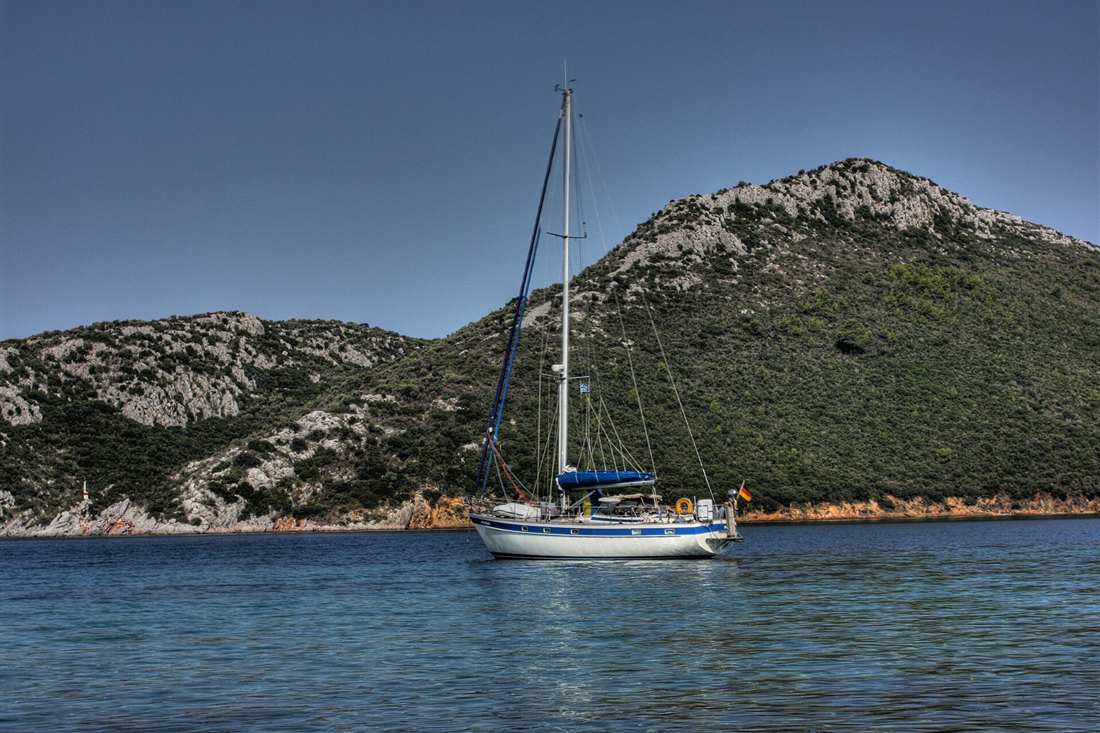
A Sithonia sailing tour is a half or full day on a yacht or catamaran out of Neos Marmaras, Vourvourou or Ormos Panagias, taking eight to twelve guests to Kelyfos island, the Blue Lagoon and Porto Koufo with lunch aboard, from 60 euros. Plan the rest of the trip with Greece Tours.
This page covers the day: what it costs, which harbour to leave from, Kelyfos, the Blue Lagoon, Mount Athos from the water, Porto Koufo, the boats, what is included, the season and how to book.
What does a Sithonia sailing tour cost?
From 60 to 110 euros a head for a shared day on a sailing yacht with lunch and drinks, 45 to 70 for a three-hour sunset sail, and 400 to 1,200 for a private charter of the whole boat with a skipper for the day.
The day price covers the skipper, the fuel, the food, the wine and the snorkelling gear, and the harbour fees are inside it. A sithonia sailing tour operator states this at booking and prints it on the voucher.
Catamaran seats cost 10 to 20 euros more than a monohull for the same route and buy space and stability. That is the sithonia sailing tour difference against a large party boat.
Private charters divide by the party, so six people split 700 euros rather than paying six fares. A sithonia sailing tour fills first on that count in early August.
Children go half price on most shared boats and the minimum age runs four to six. Skippers brief it on deck before a sithonia sailing tour leaves harbour.
Hotel pickup from Neos Marmaras, Nikiti and Porto Carras is included on many products and stated on the listing. The sithonia sailing tour fleet is prepared for it through the season.
Where do the boats leave from?
Neos Marmaras and the Porto Carras marina on the west coast, Ormos Panagias and Vourvourou on the east, Porto Koufo at the southern tip, and Nikiti at the neck of the peninsula.
Neos Marmaras is the main departure and the closest to Kelyfos island. Every sithonia sailing tour is planned around it before the lines come off.
Vourvourou is the base for the Blue Lagoon and the Diaporos island cluster. A sithonia sailing tour carries the lunch and the snorkels for it.
Ormos Panagias runs the long cruises down the Athos coast on the far side of the gulf. The sithonia sailing tour timetable is shaped by it more than by demand.
Porto Koufo is the deepest natural harbour in Greece and sits almost invisible behind its headlands. It decides which sithonia sailing tour format fits the party.
Porto Carras has the only full marina on the peninsula with 315 berths and the charter fleet. A sithonia sailing tour starts with this settled at the quay.
What is Kelyfos island?
The uninhabited islet two kilometres off Neos Marmaras, known as Turtle island because its profile from the shore is a turtle shell, with clear deep water, a small beach and a chapel on the ridge.
The crossing takes twenty minutes under power and an hour under sail with a decent breeze. A sithonia sailing tour is sold on that, and the listing says so plainly.
The anchorage on the sheltered side is the standard first swim stop of a Sithonia day. The sithonia sailing tour season turns on this more than on the calendar.
Water clarity around it runs 20 to 25 metres and the seabed is sand and rock. Guests on a sithonia sailing tour meet it within the first hour.
Nothing is built on it, and the chapel is reached by a rough path from the landing. The sithonia sailing tour price reflects it, hour by hour.
Sunset sails turn back past it with the Kassandra peninsula lit across the gulf. The sithonia sailing tour route is set by it rather than by the clock.
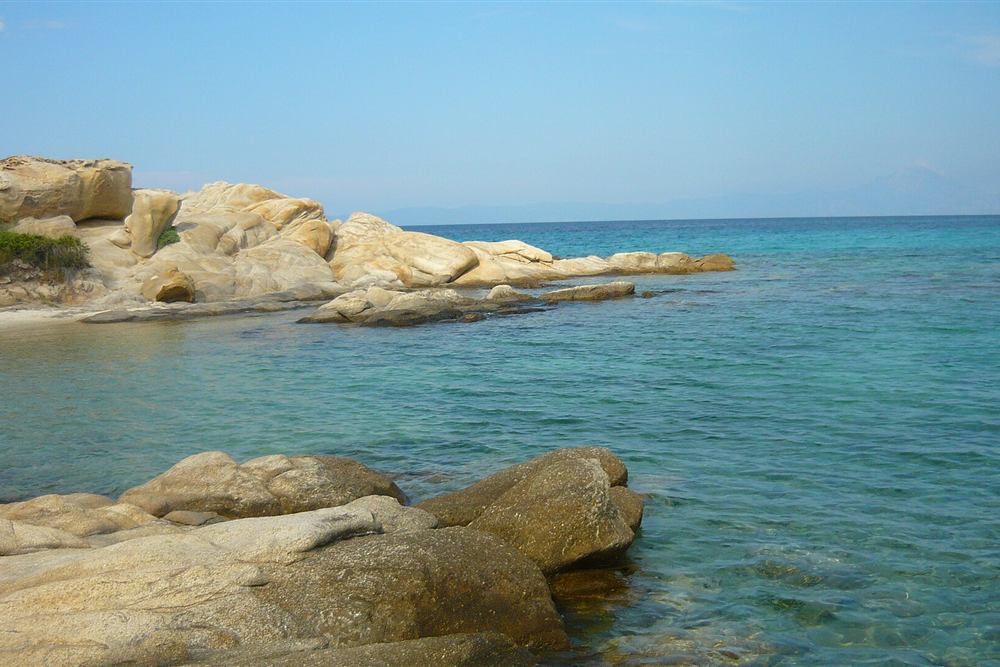
What is the Blue Lagoon at Vourvourou?
The shallow turquoise channel between Diaporos island and the Sithonia shore, a sheltered basin of sand and seagrass a metre or two deep, reached in 20 minutes from Vourvourou and flat in almost any weather.
The colour comes from white sand under shallow water rather than from anything unusual in the sea itself. This is what a sithonia sailing tour delivers inside the gulf.
Diaporos is privately owned in parts, with houses on the northern side and empty coast on the southern. A sithonia sailing tour operator states this at booking and prints it on the voucher.
The cluster holds nine islets and the boats thread between them through narrow channels. That is the sithonia sailing tour difference against a large party boat.
Anchoring on seagrass is discouraged and the skippers use the sand patches. A sithonia sailing tour fills first on that count in early August.
This is the stop that suits families, because the water is warm, shallow and still. Skippers brief it on deck before a sithonia sailing tour leaves harbour.
Can you see Mount Athos from the boat?
Yes. The Holy Mountain rises to 2,033 metres across the Singitic gulf and is visible from the east coast of Sithonia on any clear day. Cruises from Ormos Panagias run along the monastery coast at the legal 500-metre limit.
The monastic state has been self-governing since 883 and holds twenty ruling monasteries. The sithonia sailing tour fleet is prepared for it through the season.
The avaton rule bars women from the peninsula entirely, and it has stood for over a thousand years. Every sithonia sailing tour is planned around it before the lines come off.
A boat cruise is therefore the only way most visitors see the monasteries, and it is a real one. A sithonia sailing tour carries the lunch and the snorkels for it.
The coastal monasteries of Simonopetra, Dionysiou, Agiou Pavlou and Grigoriou stand directly above the water. The sithonia sailing tour timetable is shaped by it more than by demand.
These cruises run four to six hours and are a different product from a Sithonia sailing day. It decides which sithonia sailing tour format fits the party.
What is Porto Koufo?
A natural harbour at the southern tip of Sithonia, almost landlocked behind a narrow entrance, the deepest in Greece, used as a submarine base by the German navy in the Second World War and now a fishing port with tavernas.
The name means deaf harbour, because no sound of the open sea reaches inside it. A sithonia sailing tour starts with this settled at the quay.
The entrance is 300 metres wide and the basin beyond runs a kilometre and a half. A sithonia sailing tour is sold on that, and the listing says so plainly.
Fish tavernas line the quay and the catch comes off the boats in front of them. The sithonia sailing tour season turns on this more than on the calendar.
Full-day sails from Neos Marmaras round Cape Drepano and put in here for lunch. Guests on a sithonia sailing tour meet it within the first hour.
The cliffs on the outer coast beside it run 200 metres and hold sea caves. The sithonia sailing tour price reflects it, hour by hour.
What is the standard route?
West coast out of Neos Marmaras to Kelyfos, south past Toroni and Porto Koufo, round Cape Drepano, or east from Vourvourou through the Diaporos channels with Athos on the horizon. Three to four swim stops on a full day.
The skipper picks the coast by the wind on the morning rather than by the brochure. The sithonia sailing tour route is set by it rather than by the clock.
A north-westerly sends the boats down the sheltered west side and an easterly reverses it. This is what a sithonia sailing tour delivers inside the gulf.
Half-day trips cover two stops and the sunset sails one. A sithonia sailing tour operator states this at booking and prints it on the voucher.
Total distance on a full day runs 25 to 40 nautical miles. That is the sithonia sailing tour difference against a large party boat.
Lunch is served at anchor at the second stop rather than under way. A sithonia sailing tour fills first on that count in early August.
How much of it is under sail?
Two to four hours on a breezy day and less in flat August weather. The Singitic gulf is sheltered by three peninsulas, so the wind here is lighter than the open Aegean and the engine does more of the work.
The afternoon thermal from the north-west is the reliable breeze and it builds after one o’clock. Skippers brief it on deck before a sithonia sailing tour leaves harbour.
Morning departures motor out and sail back, which is the usual shape of a day here. The sithonia sailing tour fleet is prepared for it through the season.
Guests take the helm on most boats and nothing is required of anyone. Every sithonia sailing tour is planned around it before the lines come off.
Catamarans motor more and roll less, which is the trade for a nervous passenger. A sithonia sailing tour carries the lunch and the snorkels for it.
The listings that say motor-sailing are the honest ones. The sithonia sailing tour timetable is shaped by it more than by demand.
What boats work the peninsula?
Sailing yachts of 11 to 15 metres for eight to twelve guests, catamarans of 12 to 14 metres for twelve, motor-sailers and classic wooden boats for larger groups, and pirate-styled party boats running the Blue Lagoon route.
The monohull is the boat for an actual sailing day and the catamaran for a swimming day. It decides which sithonia sailing tour format fits the party.
Classic wooden hulls out of Neos Marmaras carry twenty to forty and cost half as much a head. A sithonia sailing tour starts with this settled at the quay.
The big themed boats out of Ormos Panagias take a hundred and are aimed at families. A sithonia sailing tour is sold on that, and the listing says so plainly.
Every licensed boat carries jackets, a radio, flares and a first aid kit, and the port authority inspects them. The sithonia sailing tour season turns on this more than on the calendar.
Shade is a bimini at best on a sailing yacht and a full awning on the wooden boats. Guests on a sithonia sailing tour meet it within the first hour.
What is included on board?
A welcome snack or breakfast, lunch at anchor, wine, beer, soft drinks and water, snorkelling gear, and a paddleboard on the newer yachts. Towels come with the better operators.
Lunch is a Greek salad, grilled meat or fish, dips and bread, prepared aboard. The sithonia sailing tour price reflects it, hour by hour.
The boats that grill on a stern barbecue do it during the long swim stop. The sithonia sailing tour route is set by it rather than by the clock.
Drinks are unlimited within reason on most listings and counted on a few. This is what a sithonia sailing tour delivers inside the gulf.
What is excluded is the transfer to the quay unless the product names a pickup. A sithonia sailing tour operator states this at booking and prints it on the voucher.
Crew tips run 5 to 10 percent and are handed over in cash. That is the sithonia sailing tour difference against a large party boat.
When does the wind make it rough?
Rarely. The gulf is protected by Kassandra, Sithonia and Athos, so the water stays workable when the open Aegean is not. A strong northerly builds chop on the east coast and the skippers move to the west.
Cancellations happen a handful of days a season and the refund is automatic. A sithonia sailing tour fills first on that count in early August.
Mornings are flat almost every day from June to September. Skippers brief it on deck before a sithonia sailing tour leaves harbour.
Thunderstorms in late August come fast and the boats run for harbour rather than riding them. The sithonia sailing tour fleet is prepared for it through the season.
The sea temperature runs 22 degrees in June and 26 to 27 in August. Every sithonia sailing tour is planned around it before the lines come off.
Seasickness is uncommon on these waters and the tablet still belongs in the bag. A sithonia sailing tour carries the lunch and the snorkels for it.
What else is on the water here?
Scuba diving from Sithonia and Ammouliani, snorkelling in the Diaporos channels, sea kayaking at Vourvourou, water sports at Sarti and Kalamitsi, and the Athos coastal cruise from Ormos Panagias.
Diving here works on reefs and drop-offs with visibility of 20 to 30 metres. The sithonia sailing tour timetable is shaped by it more than by demand.
Kayak trips through the Diaporos islets run three hours and suit anyone who wants the lagoon without an engine. It decides which sithonia sailing tour format fits the party.
Ammouliani is the only inhabited island in Halkidiki and the cruises stop at its beaches. A sithonia sailing tour starts with this settled at the quay.
Sarti and Kalamitsi on the east coast run the wind sports, since the east catches the breeze. A sithonia sailing tour is sold on that, and the listing says so plainly.
The regional list of departures sits at Halkidiki boat tours. The sithonia sailing tour season turns on this more than on the calendar.
How do you get to Sithonia?
Ninety minutes to two hours by road from Thessaloniki, 120 kilometres to Neos Marmaras, with buses from the KTEL Halkidikis station and a hire car the practical option for reaching the departure quays.
Thessaloniki airport is the arrival point and it takes European flights all summer. Guests on a sithonia sailing tour meet it within the first hour.
The road runs through Nea Moudania and Nikiti and is good asphalt the whole way. The sithonia sailing tour price reflects it, hour by hour.
Buses reach Neos Marmaras and Sarti and run on a thinner timetable than a sailing departure requires. The sithonia sailing tour route is set by it rather than by the clock.
Parking at the quays is free and fills at the peak departure hours. This is what a sithonia sailing tour delivers inside the gulf.
Day trips from Thessaloniki to the Blue Lagoon exist and spend four hours on the road. A sithonia sailing tour operator states this at booking and prints it on the voucher.
What is the season?
May to early October, with daily departures from mid-June to mid-September. Water reaches 26 degrees in August, and September gives warm water with the crowds gone.
Greek holidaymakers fill Halkidiki in the first fortnight of August and the boats sell out. That is the sithonia sailing tour difference against a large party boat.
May and June give empty boats, cool water and the pine forest at its greenest. A sithonia sailing tour fills first on that count in early August.
October runs weekend departures while the weather holds. Skippers brief it on deck before a sithonia sailing tour leaves harbour.
Nothing operates from November to April beyond private charters on a calm day. The sithonia sailing tour fleet is prepared for it through the season.
Prices drop 20 to 30 percent either side of the peak fortnight. Every sithonia sailing tour is planned around it before the lines come off.
What do you bring aboard?
Swimwear, a towel, reef-safe sunscreen, a hat with a strap, sunglasses, a light windproof, soft soles or bare feet, and a dry bag for the phone.
Hard-soled shoes stay in a bag at the gangway on every teak deck. A sithonia sailing tour carries the lunch and the snorkels for it.
A mask of your own fits better than the boat’s and turns the rock stops into something better. The sithonia sailing tour timetable is shaped by it more than by demand.
Cash covers the taverna at Porto Koufo and the crew tip. It decides which sithonia sailing tour format fits the party.
Shade is limited, so a long-sleeved shirt beats more sunscreen. A sithonia sailing tour starts with this settled at the quay.
Leave hard luggage ashore. Storage on a day boat is a locker and a bench. A sithonia sailing tour is sold on that, and the listing says so plainly.
How do you book a Sithonia sailing tour?
Book three to five days ahead from mid-July to the end of August and a day ahead in June and September. Shared boats cap at eight to twelve, so a departure sells out rather than thins.
Private charters need a week in the first half of August. The sithonia sailing tour season turns on this more than on the calendar.
Free cancellation up to 24 hours before is standard on the platform listings. Guests on a sithonia sailing tour meet it within the first hour.
Weather cancellations are decided by the skipper the evening before or at 07:30 on the day. The sithonia sailing tour price reflects it, hour by hour.
Walk-up booking at the Neos Marmaras quay works outside the peak weeks at the same price. The sithonia sailing tour route is set by it rather than by the clock.
Operators confirm the meeting point by message the evening before.
What is Sithonia and how is it different from Kassandra?
Sithonia is the middle of Halkidiki’s three peninsulas, 45 kilometres long, mountainous and forested to the waterline, with small villages and coves. Kassandra to the west is flatter, built up and organised, with large resorts and nightlife.
Itamos, the peninsula’s central ridge, rises to 811 metres and carries pine and chestnut forest down to the sea. A sithonia sailing tour operator states this at booking and prints it on the voucher.
The coast alternates between long sand bays such as Kalamitsi and Toroni and rock coves reached only by boat. That is the sithonia sailing tour difference against a large party boat.
Building here is low and dispersed, and the largest settlement, Neos Marmaras, holds a few thousand people. A sithonia sailing tour fills first on that count in early August.
Kassandra suits a resort holiday and Sithonia suits a boat, a car and a swim at a different cove each day. Skippers brief it on deck before a sithonia sailing tour leaves harbour.
The third peninsula is Athos, which is closed to visitors on land and visible from every east-facing beach here.
A sailing day is the natural way to see a coast whose best parts have no road.
What does the east coast look like from the water?
Pine slopes running into white rock, the Diaporos islet cluster off Vourvourou, the long bays at Sarti and Kalamitsi, the marble and limestone of Cape Drepano, and Mount Athos standing across the gulf behind all of it.
Sarti’s beach runs two kilometres of coarse sand with the Athos summit directly opposite. Every sithonia sailing tour is planned around it before the lines come off.
Kavourotripes, between Sarti and Armenistis, is a sequence of small sand coves between sculpted white rocks. A sithonia sailing tour carries the lunch and the snorkels for it.
Boats anchor off Kavourotripes because the road access is a scramble and the sea access is easy. The sithonia sailing tour timetable is shaped by it more than by demand.
The light on Athos changes through the day and the mountain is clear in the morning and hazy by afternoon. It decides which sithonia sailing tour format fits the party.
Sunset from the east coast lights the peninsula behind rather than the sea in front.
This is the coast the sailing trips out of Vourvourou and Ormos Panagias work.
What does the west coast offer?
Neos Marmaras and its harbour, the Porto Carras marina and vineyards, Kelyfos island offshore, the coves at Paradisos and Lagomandra, and the long crossing view to the Kassandra peninsula.
The west is the sheltered side when the meltemi blows and it holds the charter fleet for that reason. A sithonia sailing tour is sold on that, and the listing says so plainly.
Porto Carras runs a marina, a golf course and one of the largest organic vineyards in Greece. The sithonia sailing tour season turns on this more than on the calendar.
The vineyard produces Limnio and Assyrtiko and takes visitors for tastings, which pairs with a morning sail. Guests on a sithonia sailing tour meet it within the first hour.
Lagomandra and Paradisos are sand bays with organised beach bars and easy anchoring. The sithonia sailing tour price reflects it, hour by hour.
Sunset here goes down behind Kassandra and lights the whole western channel.
Most shared sailing days leave from this side and cross to the islets or run south.
What is the food on a Sithonia day?
Grilled fish and mussels at Porto Koufo, Halkidiki green olives, honey from the pine forest, tsipouro from the villages, and the salad and grilled meat lunch that comes aboard with the boat.
Halkidiki olives are the large green variety exported worldwide and they grow across the peninsula’s lower slopes. This is what a sithonia sailing tour delivers inside the gulf.
Mussels come from the Thermaic gulf farms west of here and appear on every taverna menu. A sithonia sailing tour operator states this at booking and prints it on the voucher.
Pine honey from Sithonia’s forest is darker and less sweet than flower honey and is sold at the roadside. That is the sithonia sailing tour difference against a large party boat.
Porto Koufo’s fish tavernas buy off the boats in front of them, which is the reason the full-day sails put in there. A sithonia sailing tour fills first on that count in early August.
Boats that include lunch cook aboard at anchor rather than stopping at a taverna.
Tsipouro is the local spirit and it arrives with the meze rather than after the meal.
Is it suitable for children and non-swimmers?
Yes on a catamaran or a large wooden boat, where the deck is flat and the Blue Lagoon water is a metre deep. A monohull heels under sail, which suits older children. Life jackets in child sizes are carried on every licensed boat.
The Vourvourou lagoon route is the one built for families, because the water is shallow, warm and enclosed. The sithonia sailing tour fleet is prepared for it through the season.
Non-swimmers use the jacket and the stern ladder and stay beside the hull. Every sithonia sailing tour is planned around it before the lines come off.
Shade matters on a long day and the wooden boats carry a full awning. A sithonia sailing tour carries the lunch and the snorkels for it.
Toilets exist on every boat over twelve metres. The sithonia sailing tour timetable is shaped by it more than by demand.
A three-hour sunset trip is the right first boat for a young family.
Operators set minimum ages of four to six on the shared sailing days and take babies on a private charter.
What does a day trip from Thessaloniki involve?
A 06:30 to 07:30 pickup, two hours on the road to Ormos Panagias or Vourvourou, four to five hours on the water including swim stops and lunch, and a return that reaches the city between 19:00 and 20:30.
These products bundle the coach and the boat and cost 70 to 120 euros a head. A sithonia sailing tour starts with this settled at the quay.
Four hours of the day are spent travelling, which is the trade for not staying on the peninsula. A sithonia sailing tour is sold on that, and the listing says so plainly.
The Athos coastal cruise is the version most day trips sell, since the monasteries are the draw. The sithonia sailing tour season turns on this more than on the calendar.
Staying two nights in Sithonia removes the drive and adds a second sailing day. Guests on a sithonia sailing tour meet it within the first hour.
Pickup points in Thessaloniki are the city centre hotels and the Aristotelous area.
The regional day-trip picture sits at Halkidiki day trip from Thessaloniki.
Where do you stay on Sithonia?
Neos Marmaras and Porto Carras on the west, Vourvourou and Sarti on the east, Nikiti at the neck, and Toroni and Porto Koufo in the south, from small apartments at 60 euros to the marina resorts at 250 and up.
Neos Marmaras suits a sailing stay because the quay, the tavernas and the shops are together. The sithonia sailing tour route is set by it rather than by the clock.
Vourvourou is quieter, greener and closest to the lagoon. This is what a sithonia sailing tour delivers inside the gulf.
Sarti fills with Serbian, Romanian and Bulgarian visitors in August and has the liveliest evening on the east coast. A sithonia sailing tour operator states this at booking and prints it on the voucher.
Camping is organised and widespread here, with pine-shaded sites along both coasts. That is the sithonia sailing tour difference against a large party boat.
August in the first fortnight is the one period that sells out entirely.
A car is needed for everything except a stay inside one village.
What is the Diaporos island cluster?
Nine islets off Vourvourou on the east coast, the largest being Diaporos at about two square kilometres, separated from the shore by shallow turquoise channels, with sand spits, a few private houses and coves reachable only by boat.
The channels between the islets run one to four metres deep, which produces the colour the area is known for. Skippers brief it on deck before a sithonia sailing tour leaves harbour.
Small boats thread the gaps and larger hulls stay outside, so the islet interiors belong to the day sailors. The sithonia sailing tour fleet is prepared for it through the season.
The islets are pine-covered down to the rock and three hold chapels. Every sithonia sailing tour is planned around it before the lines come off.
Anchoring is on sand rather than seagrass by rule, and the skippers know the patches. A sithonia sailing tour carries the lunch and the snorkels for it.
Self-drive boats hired in Vourvourou cover the same water at 90 to 200 euros a day.
Kayak trips through the same channels run three hours and are the quiet alternative.
What is on the southern tip?
Porto Koufo’s landlocked harbour, Cape Drepano at the point, the cliffs and caves of the outer coast, Toroni’s two-kilometre bay with its ruined Lekythos fortress, and Tristinika’s open sand beach on the western side.
Toroni was an important classical city and the Lekythos promontory carries the remains of its acropolis and an early Christian basilica. It decides which sithonia sailing tour format fits the party.
Cape Drepano is the turning point of a full-day sail and the water off it is deep and clear. A sithonia sailing tour starts with this settled at the quay.
The outer cliffs hold caves the small boats enter in calm weather. A sithonia sailing tour is sold on that, and the listing says so plainly.
Tristinika faces west and takes the afternoon wind, which makes it the peninsula’s surf beach. The sithonia sailing tour season turns on this more than on the calendar.
The southern run from Neos Marmaras takes 90 minutes under power and half a day under sail.
Full-day trips are the only ones that reach it, and the half-day sails stay north.
What sea life is in the gulf?
Dolphins in the open channel between the peninsulas, loggerhead turtles in small numbers, octopus and moray on the reefs, sea bream and sea bass around the islets, and seagrass meadows across the shallow bays.
Common and bottlenose dolphins follow boats in the Singitic gulf and the sightings run through the season. The sithonia sailing tour price reflects it, hour by hour.
The seagrass meadows are protected habitat and the reason anchoring is controlled. The sithonia sailing tour route is set by it rather than by the clock.
Snorkelling on the rock edges around Kelyfos and Diaporos produces the best fish density. This is what a sithonia sailing tour delivers inside the gulf.
Visibility runs 20 to 30 metres in settled weather and drops after a storm. A sithonia sailing tour operator states this at booking and prints it on the voucher.
Fish farms operate in parts of the gulf and the boats route around them.
Nothing here is dangerous to a swimmer beyond the sea urchins on the rock edges.
What is the Halkidiki sailing scene like?
Small and family-run. Two to six boats per operator, skippers who own their hulls, a season of five months, and a clientele that is mostly Greek, Serbian, Romanian and Bulgarian rather than western European.
Porto Carras marina holds the largest concentration of berths and the charter companies. A sithonia sailing tour fills first on that count in early August.
Bareboat charter is available from the marina for anyone holding a skipper licence. Skippers brief it on deck before a sithonia sailing tour leaves harbour.
Flotilla sailing is less developed here than in the Ionian or the Saronic. The sithonia sailing tour fleet is prepared for it through the season.
English is spoken on every commercial boat and the safety briefings are bilingual. Every sithonia sailing tour is planned around it before the lines come off.
The short season means the operators run daily from mid-June and part-time either side.
Booking direct with a skipper costs the same as the platform and loses the cancellation cover.
How does a sailing day compare with a big cruise boat?
A sailing yacht takes eight to twelve to quiet anchorages for 60 to 110 euros. The large pirate-styled boats take a hundred to the same lagoon for 25 to 45, with music, a bar and a fixed circuit.
The difference is the anchorage. Ten people in a cove is a different day from a hundred. The sithonia sailing tour timetable is shaped by it more than by demand.
The big boats win on price, on toilets and on a family with small children who want noise and space. It decides which sithonia sailing tour format fits the party.
Swimming time on a sailing day runs roughly double, because the stops are longer and the stops are the point. A sithonia sailing tour starts with this settled at the quay.
Groups of six or more get a better deal chartering a whole yacht than buying six seats. A sithonia sailing tour is sold on that, and the listing says so plainly.
Both leave from the same quays and the choice is a temperament question rather than a value one.
A first visit that wants the lagoon takes the small boat and a party group takes the large one.
What are the common mistakes?
Booking an afternoon departure in August when the thermal is up, expecting to land on Mount Athos, underestimating the drive from Thessaloniki, and taking an open inflatable with small children on a full-day run.
The afternoon breeze is what sailors want and what a nervous passenger does not. Guests on a sithonia sailing tour meet it within the first hour.
Athos cannot be landed on by anyone without a permit, and women cannot land at all. The sithonia sailing tour price reflects it, hour by hour.
Two hours each way from the city turns a four-hour boat trip into a twelve-hour day. The sithonia sailing tour route is set by it rather than by the clock.
The fourth is assuming every boat carries shade, which the open sailing yachts do not. This is what a sithonia sailing tour delivers inside the gulf.
The fifth is leaving the booking to the day in the first fortnight of August, when the peninsula is full.
Reading the listing for what is included solves all five before they happen.
Frequently Asked Questions
What does a Sithonia sailing tour cost?
From 60 to 110 euros a head for a shared day with lunch and drinks, 45 to 70 for a three-hour sunset sail, and 400 to 1,200 for a private charter of the whole boat with a skipper for the day.
Can you land on Mount Athos?
No. The monastic state requires a permit for men and bars women entirely under the avaton rule. Boats from Ormos Panagias cruise the monastery coast at the legal 500-metre limit, which is how visitors see it.
Where is the Blue Lagoon?
In the channels between Diaporos island and the shore at Vourvourou on the east coast, a sheltered basin of white sand one to two metres deep, twenty minutes from the quay and flat in almost any weather.