
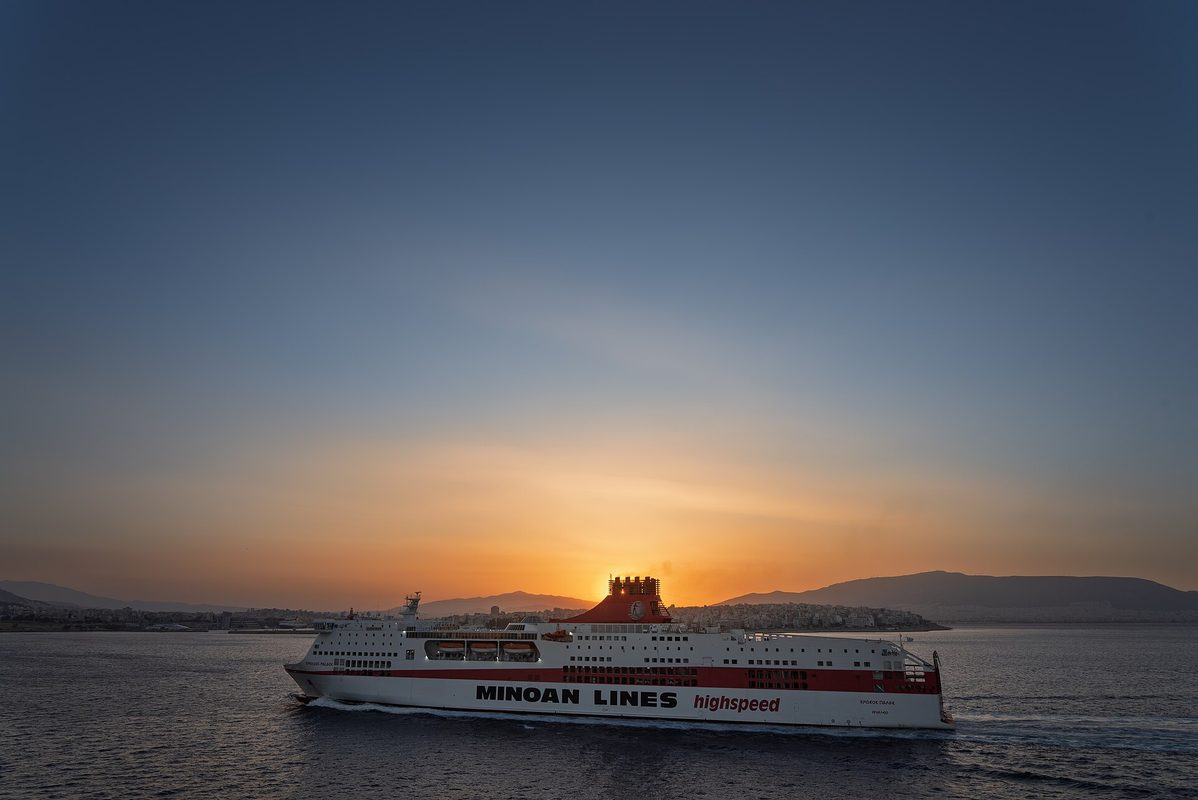
The Piraeus to Ikaria ferry is the main long crossing that carries travellers from the port of Athens out to the north Aegean island of Ikaria. This sailing links mainland Greece with a remote island that has no large commercial airport for direct international flights, so the boat matters. Departures leave from Piraeus and cross open water, calling at island stops along the way before docking on Ikaria. The journey rewards patience with deck views, sea air, and a gradual sense of arrival. Understanding duration, arrival ports, ticket types, and boarding gives you a calm trip. Book your route with My Greece Tours.
Ikaria sits east of the Cyclades and southwest of Samos, so ferry timings depend on the exact path each line follows. Some boats thread through Cycladic ports; others track a more direct eastern Aegean course. Our Ikaria travel guide frames the island and its two ferry ports, and this page focuses on the crossing itself. The sections below cover the overview and duration, which port you reach, conventional against high-speed and overnight against day sailings, booking with cabins and vehicles, and reaching Piraeus for a smooth boarding. Read each part to match a sailing to your base, your schedule, and your travel style.
How long does the Piraeus to Ikaria ferry take?
Conventional ferries from Piraeus to Ikaria take roughly seven to ten hours, depending on the vessel and the number of island stops. High-speed seasonal sailings run faster. The exact duration shifts with the route and weather conditions.
Crossing time depends on two factors: the class of boat and the ports it calls at along the way. A conventional ferry that pauses at Cycladic islands such as Syros, Mykonos, Naxos, or Paros stretches the schedule, since each stop adds loading and unloading time. A more direct eastern Aegean routing trims the total. High-speed craft cut the water time sharply, yet they run on a seasonal calendar and can be pulled from service on windy days. Travellers planning around a fixed arrival should treat the published time as a target rather than a guarantee. Reading the resource on how to get to Ikaria helps you compare the ferry against the small domestic airport for a full picture.
Sea conditions in the north Aegean shape real-world timing more than distance alone. The meltemi wind pushes hard through the peak summer months and slows heavy vessels, and it can force a captain to reduce speed for comfort and safety. A morning departure that runs smoothly may reach Ikaria in the lower part of the range, while a rough passage lands at the upper end. Plan onward transfers with a buffer of at least an hour beyond the timetable. Check the details on Agios Kirykos for the southern harbour, since arrival there sets a different onward drive than the northern port. A padded plan protects your first evening on the island.
Which port on Ikaria does the ferry arrive at?
Boats from Piraeus dock at either Agios Kirykos on the south coast or Evdilos on the north coast. Your ticket names the port, so choose the one nearest your accommodation before you book the crossing.
Agios Kirykos is the island capital and administrative harbour on the southern shore. It sits close to the Therma hot-spring area and gives quick access to the south and southeast. Evdilos faces north and opens onto the beach villages of the north coast, including Armenistis and the Nas area further west. The two ports are separated by a mountain road that takes a fair drive across the island’s spine. Booking a sailing to the wrong harbour adds a long transfer at the end of a tiring crossing. Match the port to your base first, then pick the departure. The overview on where to stay in Ikaria pairs each region with its natural landing port.
Not every departure serves both harbours, and the calling port can change by day and by line. A single vessel might reach Agios Kirykos on one rotation and Evdilos on another, so confirm the exact port on your specific ticket rather than assuming a fixed pattern. Travellers heading to the north-coast beaches usually target Evdilos, while those staying near the capital or the hot springs favour Agios Kirykos. Onward buses and taxis meet arriving boats, though frequency thins outside the summer peak. Arrange a transfer in advance for a late docking. Reading about Agios Kirykos clarifies what waits at the southern gateway and helps you judge whether it suits your route across Ikaria.
Should you take a conventional, high-speed, or overnight ferry?
Conventional ferries cost less and run year-round; high-speed sailings save hours but operate seasonally. Overnight departures let you sleep through the crossing, while daytime boats give you deck views and a clearer arrival routine.
Conventional ferries form the backbone of the Piraeus to Ikaria link. They carry vehicles, run through the low season, and offer open decks, seating lounges, and cabin options on longer sailings. High-speed vessels shorten the passage, yet they charge more, limit or exclude large vehicles on some services, and depend on calm water. A traveller on a tight schedule leans toward the fast option in high summer; a traveller with a car or a flexible plan leans toward the conventional boat. Comparing both against the domestic flight in the guide to how to get to Ikaria gives a balanced view of cost, comfort, and reliability across the whole journey to the island.
Timing splits into overnight and daytime departures. An overnight sailing turns transit time into sleeping time and lands you ready for a full day, and a booked cabin makes that rest genuine. A daytime crossing trades sleep for views of the Aegean and the passing islands, plus a simpler evening arrival when transfers still run. Consider a night boat when you want to save a hotel night and reach Ikaria at dawn. Choose a day boat when you value scenery and an easy first evening. The onward hop toward the eastern islands, covered in the note on the Ikaria to Samos ferry, connects naturally with a daytime arrival that leaves room to plan the next leg.
How do you book Ikaria ferry tickets, cabins, and vehicles?
Book Ikaria ferry tickets online or through an agent, well ahead in peak season. Reserve cabins early on overnight sailings, and secure vehicle space first, since car deck capacity fills fastest on busy summer crossings.
Tickets sell through official ferry operators, licensed agents, and travel platforms that aggregate the routes. Booking ahead matters most in the July and August window, when island demand peaks and popular sailings sell out. Cabins on overnight boats form a limited inventory, so a traveller wanting a private berth should reserve as soon as the schedule opens. Vehicle spaces are the tightest resource of all, and the car deck can close to new bookings long before the passenger allocation does. Drivers heading to the north-coast beaches near Evdilos should lock in both the crossing and the vehicle slot together.
The planning notes in where to stay in Ikaria help you decide whether a car is worth bringing at all.
Fare classes range from deck and standard seating to airline-style reclining seats and enclosed cabins. Keep confirmation details and any booking reference ready, and carry identification for the check-in desk. North Aegean weather adds a real variable: a strong meltemi can cancel a sailing, and operators then rebook or refund affected passengers under their published terms. Build a spare day into a tight itinerary so a cancelled boat does not wreck a connecting flight home. Travellers continuing east should map the follow-on Ikaria to Samos ferry before leaving Piraeus, since coordinating both legs early prevents an awkward overnight gap between two separate island crossings.
How do you reach Piraeus and board the Ikaria ferry?
Reach Piraeus from central Athens by metro, bus, or taxi, and from the airport by direct bus or metro connection. Arrive at the gate early, find your berth by the port zone number, and board before the posted cut-off.
Piraeus is the largest passenger port in Greece and connects tightly to Athens. The metro links the city centre and the port directly, and a rail and bus network feeds passengers in from across the capital. Travellers coming from Athens International Airport can take a direct airport bus to Piraeus or ride the metro with a change. Allow generous time in traffic-heavy periods, since the drive from the airport can run long. The port is large, and berths sit in numbered gates spread along the waterfront, so locate your specific gate on the ticket before you arrive. A clear head start removes the stress of a last-minute dash through an unfamiliar harbour.
Foot passengers should reach the gate at least an hour before departure, and drivers should arrive earlier still, since vehicle lanes queue and load ahead of walk-on travellers. Signage names the destination and the operator, and port staff direct boarding once the ramp opens. Have your ticket, booking reference, and identification within reach for a smooth check-in. Board when called, note your seat or cabin, and stow luggage in the marked areas. A calm, early boarding sets the tone for the long crossing to Ikaria. Confirming the arrival harbour once more, whether Agios Kirykos or Evdilos, ties the whole plan together before the boat pulls away from Piraeus and heads out into the open Aegean.
Frequently Asked Questions
How long does the ferry from Piraeus to Ikaria take?
The Piraeus to Ikaria ferry takes roughly seven to ten hours on a conventional vessel, and less on a seasonal high-speed service. The precise figure moves with the class of boat, the island stops on the route, and the sea state. A conventional ferry that calls at Cycladic ports such as Syros, Mykonos, Naxos, or Paros sits toward the upper end of that range, because each stop adds handling time. A direct eastern Aegean routing runs shorter. High-speed craft cut the water time, yet they follow a summer calendar and can be cancelled on windy days.
North Aegean wind is the biggest wildcard: the meltemi slows heavy boats through peak summer and pushes real timings toward the top of the band. Plan onward transfers with an hour of buffer beyond the printed schedule, and treat the timetable as a target rather than a fixed promise on any given crossing.
Which Ikaria port should I sail to from Piraeus?
Choose your Ikaria port by matching it to your accommodation, since the island has two ferry harbours on opposite coasts. Agios Kirykos sits on the south shore as the island capital and lands you near the Therma hot springs and the southeast. Evdilos faces north and opens onto the north-coast beach villages, including Armenistis and the Nas area to the west. A mountain road separates the two ports, and crossing from one to the other takes a real drive at the end of a long crossing. Not every sailing serves both harbours, and the calling port can change by day and by line, so confirm the exact port printed on your ticket.
Travellers based near the north beaches target Evdilos; those staying by the capital or the hot springs pick Agios Kirykos. Arrange onward transport in advance, especially for a late arrival outside the summer peak.
Do I need to book the Ikaria ferry in advance?
Book the Ikaria ferry ahead in the peak July and August window, when demand climbs and popular sailings sell out. Advance booking matters most for two things: cabins on overnight boats and vehicle space on the car deck. Cabin inventory is limited, so reserve a private berth as soon as the schedule opens if you want to sleep through the crossing. Car deck capacity is the tightest resource of all and can close to new bookings well before passenger seats fill, so drivers should secure the vehicle slot with the ticket. Outside the summer peak, the passenger allocation is easier, though sailings run less often and weather cancels crossings more readily.
North Aegean wind can pull a boat from service, and operators then rebook or refund under their terms. Build a spare day into a tight itinerary so a cancelled sailing does not threaten a connecting flight or a follow-on island crossing east.