
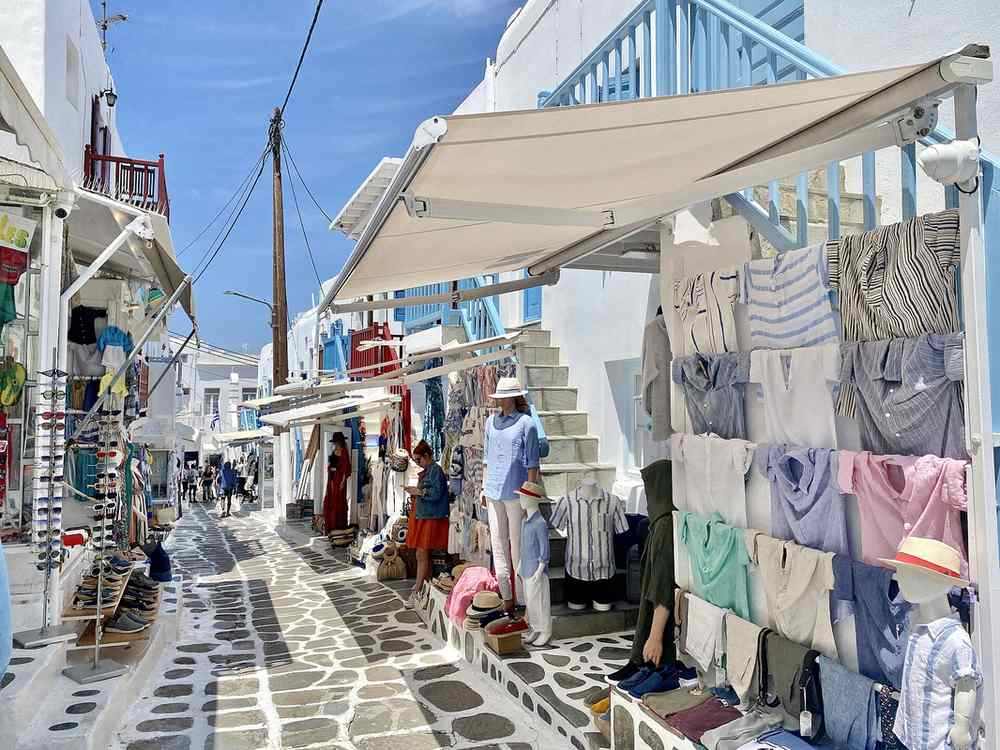
A Mykonos walking tour explores the old town of Chora on foot, the only way to experience its maze of whitewashed lanes. The route takes in the windmills, Little Venice, the Paraportiani church, the Old Port and the museums. This guide covers the route, guided versus self-guided tours, the timing, what to see and tips.
Exploring the car-free old town on foot is the heart of any visit in the Mykonos travel guide. The sections below cover the walking tour in full.
What is a Mykonos walking tour?
A Mykonos walking tour is an exploration of the old town, Chora, on foot. Guided or self-guided, it takes in the windmills, Little Venice, the Paraportiani church, the Old Port and the museums, all in a compact pedestrianised area.
A walking tour is the way to experience Mykonos Town, the Chora, the beating heart of the island. The old town is pedestrianised, and cars are banned from its maze of narrow whitewashed lanes. Walking is therefore the only way to get around it. On foot you absorb its charm, atmosphere and hidden corners at your own pace. A walking tour can be a guided one with a local expert or a self-guided wander. Either way it leads through the labyrinth of white alleys draped in bougainvillea, past the famous sights and into the photogenic backstreets. The whole area is surprisingly compact.
Highlights include the windmills, the waterfront houses of Little Venice, the sculptural Paraportiani church, the Old Port, the Tria Pigadia wells and the small museums. Shops, cafes and churches line the way. A walking tour reveals the history, architecture and everyday beauty of the town in a way no other approach can, set out alongside the guide to Mykonos Town. The route covers the key sights.
What landmarks does a Mykonos walking tour include?
A Mykonos walking tour includes the Old Port, the Kato Mili windmills, the Paraportiani church, Little Venice, the Tria Pigadia wells, Matoyianni Street, and the Aegean Maritime and Folklore museums, all linked by the labyrinthine lanes of Chora.
The Kato Mili windmills stand in a row on a low hill above the town, their round white forms overlooking the sea. Below them, Panagia Paraportiani is a cluster of five chapels merged into one sculptural white mass, one of the most photographed churches in Greece. The Old Port anchors the northern edge of Chora, lined with fishing boats and cafes. Matoyianni Street is the main artery for boutiques, bars and people-watching.
Little Venice runs along the western shore, where old merchant houses hang directly over the water. Their wooden balconies once let sea captains and merchants load goods straight from boats. Today the ground floors hold bars and cafes that fill for sunset. The Tria Pigadia, or Three Wells, sit inland as a reminder of the town’s old water supply. Local lore once tied the three wells to marriage superstitions, and they remain a quiet landmark away from the busiest lanes.
The Aegean Maritime Museum and the Folklore Museum tell the island’s seafaring and domestic history in a compact space. Between them, tiny chapels and bougainvillea-draped alleys fill the gaps, so wandering rewards you at every turn. The Archaeological Museum near the Old Port adds ancient finds from nearby Delos and Rhenia to the mix, set out alongside the guide to the Paraportiani church. You can visit these guided or self-guided.
Should you take a guided or self-guided walking tour?
A guided walking tour brings the history and stories of the old town to life and helps you navigate the maze, typically lasting three to four hours. A self-guided walk is free and gives complete freedom. Both are rewarding.
You can explore Mykonos Town on a guided tour or independently, and each has its merits. A guided walking tour is led by a local guide. It brings alive the history, legends, architecture and culture behind the sights. The guide explains the story of the Paraportiani church, the windmills and the old town. A guide also helps you navigate the confusing but beautiful maze without missing the highlights. Organised guided tours typically last around three to four hours. They stop at the monuments, museums and viewpoints, and some include museum visits.
A self-guided walk, by contrast, costs nothing and gives complete freedom. You wander at your own pace, linger where you like, get pleasantly lost and discover hidden corners. This suits independent travellers and those with more time. Ideally you dedicate a half-day to it. Many visitors do both, taking a guided tour for context and then returning to explore alone. Choosing between depth and flexibility depends on what you want, set out alongside the guide to a 3 day itinerary. Timing makes a big difference.
When is the best time for a Mykonos walking tour?
The best time for a Mykonos walking tour is early morning, around 9am when the town is quietest, or late afternoon from about 5pm into sunset. Avoid the midday crowds and heat. The shoulder months are ideal.
Timing your walking tour well improves the experience, given how busy and hot the old town can get. Within the day, the best times are the early morning and the late afternoon into sunset. Start around 9am, before the shops open and the day-trippers and cruise passengers arrive. The lanes are then empty and atmospheric, lit in soft light, ideal for photos. The late afternoon, from around 5pm, is also lovely, cooler and beautifully lit. It leads naturally into the sunset at Little Venice and the windmills. The middle of the day is the busiest and hottest, so it is best avoided for serious exploring.
Across the year the town is enjoyable in every season, but conditions vary. The shoulder months of April to early June and late September to October offer the most pleasant walking. Crowds are thinner and the weather is milder. High summer, by contrast, is very busy and hot. Choosing a quiet hour and, ideally, a shoulder-season visit makes the walk far more rewarding, set out alongside the guides to when to visit and photo spots. The tips below help you prepare.
Where does a Mykonos walking tour start and end?
Most Mykonos walking tours start at the Old Port on the northern waterfront, an easy meeting point, then wind south through Chora past the church, Little Venice and the windmills, often ending near Manto Mavrogenous Square or the windmill hill.
The Old Port is the natural starting point for a walk through Chora. It sits on the northern edge of the town, easy to find, with cafes and the fishing harbour as landmarks. From there a route usually threads inland through the lanes towards Panagia Paraportiani and the Little Venice waterfront. The Old Port also links the town to the New Port, where most ferries and cruise tenders arrive, so many visitors begin here after stepping off a boat.
From Little Venice the path climbs the short slope to the Kato Mili windmills, the usual high point and a common finishing spot for sunset. Alternatively, walks end back in the centre near Manto Mavrogenous Square, close to Matoyianni Street and its cafes. The exact loop varies, but the compact scale of Chora means the start and end are rarely more than a short stroll apart, set out alongside the Mykonos private tour guide. Knowing the anchor points helps you plan your own route.
What should you wear for a Mykonos walking tour?
Wear comfortable flat shoes with good grip for the cobbled, uneven lanes of Chora. Add sun protection, a hat and sunglasses, and a light windproof layer against the meltemi wind near the windmills and Little Venice.
The old town’s lanes are cobbled, uneven and sometimes slippery, and you spend hours on your feet. Flat shoes with a good grip are the sensible choice. Sandals and flip-flops are less comfortable for serious walking. The Cycladic sun is strong for much of the year, so a hat, sunglasses and sunscreen matter. Carry water to stay hydrated between cafes. Light, breathable clothing keeps you cool in the narrow, sun-trapped lanes. A small bag leaves your hands free for photos and for steadying yourself on the steps.
A light windproof layer is useful too, because the meltemi wind can make the town breezy, especially near the exposed windmills and the Little Venice waterfront. Dress for comfort rather than style, and the walk stays pleasant, set out alongside the guide to the best photo spots. A little preparation goes a long way.
What tips help for a Mykonos walking tour?
Start early or late to avoid the midday crowds and heat, and do not worry about getting lost, as the maze is part of the charm. Allow at least a half-day, keep your camera ready, and follow the lanes back.
A few practical tips make a walking tour of Mykonos Town more enjoyable. Time your walk for the early morning or late afternoon to avoid the midday crowds and the fierce sun. Do not worry about getting lost in the famous maze of lanes. Wandering and discovering hidden corners, tiny chapels and photogenic alleys is part of the charm.
The town is small, so you will always find your way back to the harbour or a main street. Allow at least a half-day to explore properly, and keep your camera or phone ready, because almost every corner is photogenic. A refillable water bottle saves you buying drinks in the pricier waterfront cafes. With these tips a walking tour reveals the full beauty of the town, set out alongside the guides to photo spots and Mykonos Town. Good timing and comfortable feet are the keys.
Why is a walking tour the best way to see Mykonos Town?
A walking tour is the best way to see Mykonos Town because the old town is pedestrianised. Cars cannot enter its maze of lanes, so walking is the only way to the sights, hidden corners and atmosphere.
There is a simple reason a walking tour is the ideal way to experience Mykonos Town. The old town, the Chora, is entirely pedestrianised. Motor vehicles are banned from its labyrinth of narrow whitewashed lanes, so you cannot drive into it and must explore on foot. This is no hardship but a delight, because the town is compact and made for wandering. Walking lets you reach all the main sights, which cluster close together within easy strolling distance. Crucially, it also lets you discover the hidden corners, tiny chapels, photogenic alleys and shopfronts that you would miss any other way.
Above all, walking lets you absorb the atmosphere of the place at your own speed. You take in the dazzling white walls, the bougainvillea, the blue doors, the sea glimpses and the unhurried pace. The famous maze, far from being a problem, invites you to get pleasantly lost. Whether guided or self-guided, exploring on foot is the essence of a Mykonos Town visit. No bus, taxi or scooter can take you into the pedestrian core, so every visitor becomes a walker, set out alongside the guides to Mykonos Town and Little Venice. On foot is the only way to feel the town.
Frequently Asked Questions
What does a Mykonos walking tour cover?
A Mykonos walking tour typically covers the Old Port, the Kato Mili windmills, the Paraportiani church, Little Venice, the Tria Pigadia wells and the museums like the Aegean Maritime and Folklore Museums, plus Matoyianni Street and the maze of lanes. The compact old town packs the island’s main sights into a walkable area.
Should you take a guided or self-guided walking tour of Mykonos?
A guided walking tour brings the history and stories of the old town to life and helps you navigate the maze, lasting three to four hours, while a self-guided walk is free and gives freedom to explore at your own pace. Both are rewarding, depending on whether you want context or flexibility.
When is the best time for a Mykonos walking tour?
The best time is early morning, around 9am when the town is quietest, or the late afternoon from about 5pm into sunset, avoiding the midday crowds and heat. The shoulder months of April to early June and late September to October are ideal for exploring without the peak crush.
How long does a Mykonos walking tour take?
A guided walking tour of Chora typically lasts three to four hours, covering the main landmarks and a museum or two. A self-guided walk can take as long as you like, but allow at least a half-day to see the Old Port, windmills, Paraportiani church, Little Venice and Matoyianni Street without rushing.