
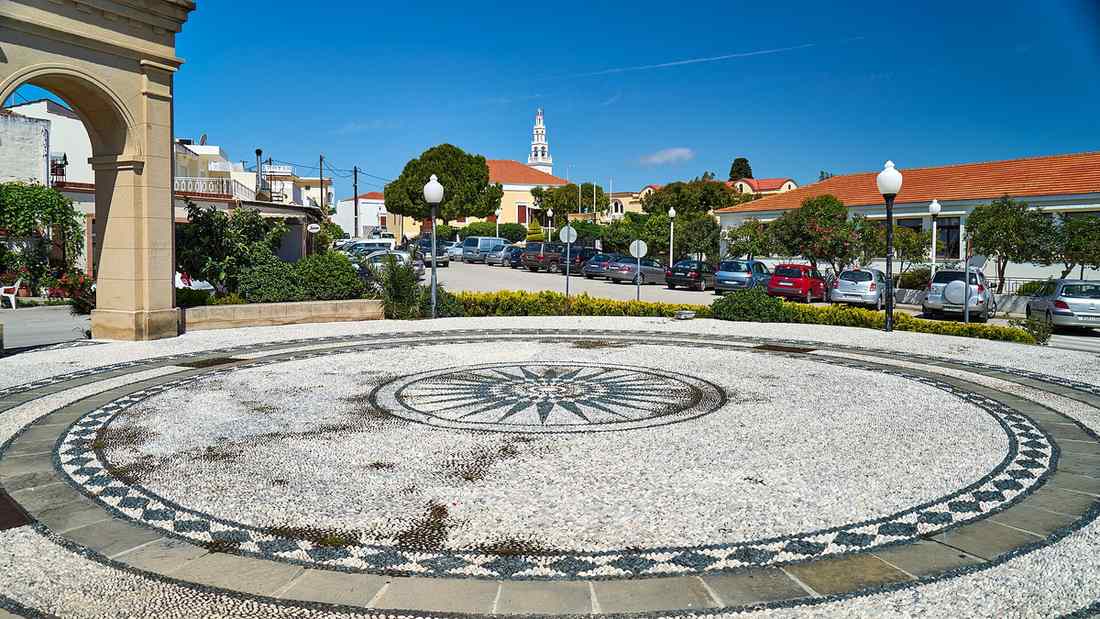
Koskinou is a traditional village a short distance south of Rhodes town, set just inland of the coast near the Kallithea area and famous for its picturesque, brightly painted houses and flower-filled lanes. Rather than a purpose-built resort, it is a lived-in Rhodian settlement where narrow cobbled streets, colourful doors and ornate carved wooden doorways give the place an authentic, everyday character. Its position close to both the capital and the coast makes it an easy and rewarding stop on any island itinerary. Plan tickets and tours through My Greece Tours.
This page sits within our wider Rhodes travel guide and focuses on one of the island’s most charming inland villages. The sections below cover what Koskinou is, where it is and how you reach it, what makes its houses and streets so distinctive, what you can see and do there, and the practical tips that help you get the most from a visit.
What is Koskinou?
Koskinou is a traditional village a short distance south of Rhodes town, near the coast and the Kallithea area, famous for its picturesque, brightly painted houses, flower-filled lanes and an authentic, lived-in feel rather than a resort atmosphere.
Koskinou is one of the older settlements on the island of Rhodes, sitting just inland of the eastern coast and only a short drive from the capital. It is best known for its colour: house walls, doors, window frames and shutters are painted in vivid blues, greens, reds and ochres, and pots of flowers spill across the lanes. The village is residential and working rather than a holiday complex, so cafes and tavernas serve locals alongside visitors, and neighbourhood churches anchor each quarter. This combination of strong traditional architecture and genuine daily life is what gives Koskinou its enduring appeal.
Because it remains a real community, Koskinou rewards slow, curious exploration on foot. The atmosphere shifts through the day, from quiet mornings to lively evenings around the cafes, and the village keeps a calm, unhurried rhythm even in high season. Visitors come chiefly to wander, photograph the painted facades and enjoy a meal rather than to tick off major monuments, which makes it a gentle contrast to the busier coast. Our guide to things to do in Rhodes covers the wider island, and the next section covers where Koskinou is and how you get there.
Where is Koskinou and how do you get there?
Koskinou lies a short distance south of Rhodes town, just inland of the coast and close to the Kallithea area. You can reach it easily by car or by local bus, a short drive from the capital, which makes it a simple half-day or evening trip.
The village sits inland from the eastern shore, only a short drive from Rhodes town, with the Kallithea area and its coastline immediately nearby. This central position means Koskinou is rarely a destination on its own; instead it slots neatly into a day that also takes in the capital and the coast. Reaching it is straightforward. A hire car gives you the most flexibility for combining stops, while the island’s local bus network connects Rhodes town with the village for those travelling without their own transport. The roads are good and the journey from the capital is short.
Once you arrive, the practical centre of a visit is the network of lanes rather than a single car park or gate, so it helps to park at the edge of the village and continue on foot. The compact layout means most of what you will want to see is within easy walking distance. Combining Koskinou with the nearby coast is the natural approach, since the two sit so close together. Our guide to Kallithea Springs covers the neighbouring coastal attraction, and the next section covers what makes Koskinou’s houses and streets special.
What makes Koskinou’s houses and streets special?
Koskinou is defined by narrow cobbled streets, brightly painted walls, doors and window frames, and ornate carved wooden doorways. Traditional homes feature interior courtyards floored with black-and-white pebble mosaic, known as choklakia, and decorated front rooms called the kala kamara.
The architecture of Koskinou is the heart of its character. The streets are narrow and cobbled, twisting between houses whose walls, doors, shutters and window frames are picked out in strong colours, so that almost every corner offers something photogenic. Many homes are entered through ornate carved wooden doorways, a craft tradition that signals the pride taken in each house. Behind these entrances, the older properties traditionally open onto interior courtyards floored with choklakia, the black-and-white pebble mosaic found across the Dodecanese, creating cool, decorative spaces at the centre of family life.
Inside, the traditional Koskinou home is organised around the kala kamara, the decorated front room used to receive guests and display the household’s finest furnishings, ceramics and textiles. This blend of carved doorways, pebble-mosaic courtyards and ornamented interiors reflects a distinctive local style rather than generic island decoration, and it is best appreciated slowly as you walk. Even from the street, the layering of colour, flowers and worked timber tells you a great deal about the village’s heritage. Our guide to Rhodes Old Town covers the island’s medieval core, and the next section covers what you can see and do in Koskinou.
What can you see and do in Koskinou?
In Koskinou you can wander the painted lanes, admire the carved doorways and flower-filled streets, visit neighbourhood churches, and relax at the village cafes and tavernas. It pairs naturally with the nearby Kallithea Springs and a trip into Rhodes town.
The main pleasure of Koskinou is simply walking. You move slowly through the cobbled lanes, taking in the colourful facades, the carved wooden doors and the flowers that decorate so many corners, pausing wherever a view or detail catches your eye. The village’s neighbourhood churches give structure to a wander and offer quiet places to step inside, while the cafes and tavernas provide natural rest stops where you can sit, watch village life and enjoy local food and drink. Because the place is authentic rather than commercialised, the experience feels relaxed and unforced.
Beyond the village itself, Koskinou’s position makes it easy to build a fuller day. The Kallithea area and its springs lie immediately nearby on the coast, so many visitors combine the two, and the capital is only a short drive away for those who want to add the medieval old town and harbour. Whether you treat Koskinou as a gentle morning stroll, an evening meal out or a stop between coast and city, it works well as part of a varied itinerary. Our guide to where to stay in Rhodes covers your basing options, and the next section covers the tips that help you visit Koskinou.
What tips help you visit Koskinou?
Wear comfortable shoes for the cobbled lanes, explore on foot after parking at the edge of the village, and allow time to wander rather than rush. Combine Koskinou with the nearby coast and Rhodes town, and respect that it is a lived-in residential community.
A few simple habits make a visit to Koskinou more enjoyable. The streets are cobbled and uneven, so comfortable, flat shoes are sensible, and because the centre is best seen on foot it helps to leave your car at the edge of the village. Allow more time than the small size suggests, since the appeal lies in slow wandering, photography and a leisurely coffee or meal rather than in covering ground quickly. Visiting in the calmer parts of the day, such as the morning or early evening, tends to give the most pleasant light and atmosphere among the painted houses.
It is also worth remembering that Koskinou is a genuine residential village, so the colourful doorways and courtyards belong to people’s homes; admiring and photographing from the public lanes is welcome, but stepping into private property is not. Plan around combining the village with the neighbouring coast and the capital to make the most of its central location, and travel with a relaxed mindset that matches the village’s unhurried character. Plan your visit and tours through our Rhodes travel guide.
Frequently Asked Questions
Is Koskinou worth visiting on a trip to Rhodes?
Yes, Koskinou is well worth a visit for anyone who enjoys traditional architecture and a genuine sense of place. The village is famous for its brightly painted houses, narrow cobbled lanes, carved wooden doorways and flower-filled streets, and unlike many coastal resorts it remains a lived-in community with its own churches, cafes and tavernas. This authentic character makes it a refreshing contrast to busier parts of the island. Because it sits only a short drive south of Rhodes town and just inland of the Kallithea coast, it is easy to include without disrupting a wider itinerary. Many visitors spend a relaxed couple of hours wandering, photographing the colourful facades and enjoying a coffee or meal. If your idea of a good day blends scenery, local culture and unhurried exploration rather than major monuments, Koskinou is an ideal addition, especially when combined with the nearby springs and the medieval old town of the capital.
How do you get to Koskinou from Rhodes town?
Getting to Koskinou from Rhodes town is straightforward because the village lies only a short distance south of the capital, just inland of the coast near the Kallithea area. The most flexible option is to drive, as a hire car lets you combine the village with the nearby coast and other stops on the same day, and the roads from the capital are good and the journey short. For those without a car, the island’s local bus network connects Rhodes town with the village, making it accessible on public transport as well. Once you arrive, it is best to park at the edge of the village and continue on foot, since the heart of Koskinou is a compact network of narrow cobbled lanes rather than a place designed around vehicles. This central, easily reached position is one of the reasons Koskinou pairs so naturally with a visit to Kallithea and a trip into the old town of the capital.
What is special about the houses in Koskinou?
The houses are the defining feature of Koskinou and the main reason visitors come. They are known for their vivid colour, with walls, doors, shutters and window frames painted in strong blues, greens, reds and ochres and framed by pots of flowers along the lanes. Many are entered through ornate carved wooden doorways, a local craft tradition that reflects the care taken over each home. Behind the entrances, the older traditional houses often open onto interior courtyards floored with choklakia, the black-and-white pebble mosaic found across the Dodecanese, which creates cool, decorative spaces at the centre of the home. Inside, the kala kamara is the decorated front room used to receive guests and display the family’s best furnishings, ceramics and textiles. Together these elements form a distinctive local architectural style, and even a walk through the public streets reveals the layering of colour, flowers and worked timber that makes the village so memorable.