
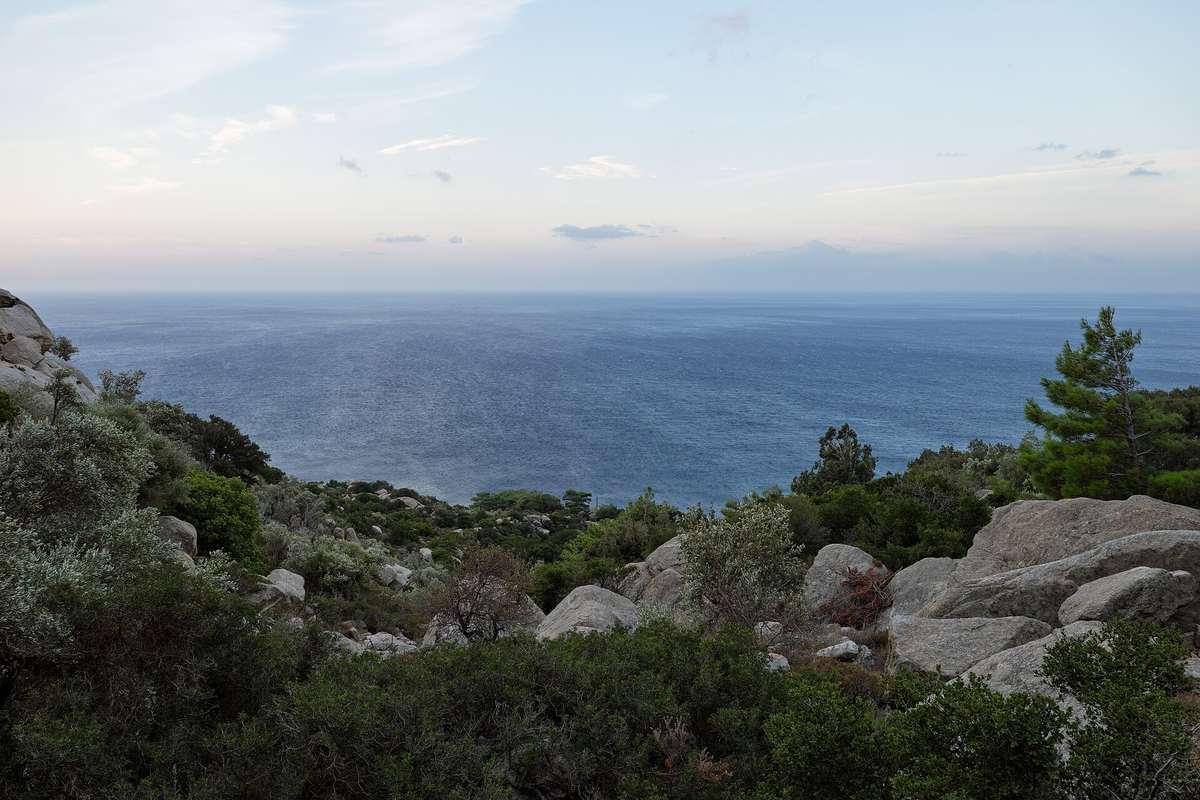
Frantato is a small mountain village in the granite-strewn interior of Ikaria, set on the road that climbs inland from the north coast. The settlement draws visitors for one clear reason: it opens the way to the island’s astonishing boulder-built religious sites. Enormous rounded granite rocks frame the houses, gardens and springs, giving the place a raw, elemental feel. Travelers reach it as part of a slow loop through the mountainous heart of the island. The village rewards those who pause, wander its lanes and step inside chapels wedged among the rocks. Plan an unhurried visit to Frantato and the surrounding highlands with My Greece Tours.
Frantato marks the threshold to two remarkable structures: the chapel of Theoskepasti, roofed by a single vast boulder, and the nearby Monastery of Theoktisti among oak woods and granite. This detailed Ikaria travel guide places the village within the wider network of interior settlements, footpaths and mountain roads. The sections below cover what Frantato is, the boulder churches close by, the granite landscape, village life and dining, plus practical routes for combining the stop with the rest of the interior. Each part builds a full picture of one of the island’s most distinctive corners.
What and where is Frantato in Ikaria?
Frantato is a small village in the granite interior of Ikaria, set on the mountain road inland from the north coast. It serves as the gateway to the island’s boulder-built churches and highland footpaths.
Frantato lies in the rugged central highlands of Ikaria, reached by a winding road that climbs from the northern shore. The village occupies a shelf of land among granite outcrops, oak woods and terraced gardens. Springs feed its plots, and low stone houses cluster along quiet lanes. Drivers pass it on the loop that links the north-coast settlements with the mountainous interior. The elevation gives cooler air and long views across the folded landscape. Frantato belongs to a chain of small communities that share the island’s remote inland character.
Visitors treat it as a natural pause point between the coast and the higher villages, a place to stretch, drink from a spring and turn toward the famous rock-built chapels that draw people up the mountain.
The village anchors a district defined by scattered granite boulders, some the size of small buildings. Roads here twist through the rocks rather than around them, and the terrain shapes every settlement. Frantato sits close to the paths and lanes that thread the interior, making it a convenient base for exploring on foot. Many travelers combine it with a broader tour of things to do in Ikaria, folding the boulder churches into a day among mountain villages. The location keeps it away from the busy beaches, so the pace stays slow.
People come for the atmosphere, the shade of the oaks and the sense of a place built in dialogue with the stone that surrounds it on every side.
What are the boulder churches near Frantato?
Two sites define Frantato: Theoskepasti, a tiny chapel roofed by one giant granite boulder, and the Monastery of Theoktisti nearby. Both nestle among enormous rocks and oak woods on the mountain above the village.
Theoskepasti stands as the most striking sight around Frantato. The chapel shelters beneath a single colossal granite boulder that forms its entire roof. Builders wedged the small structure directly against the rock, so stone and shrine merge into one form. Visitors duck through a low entrance into a dim, cool interior lit by candles and a narrow window. The effect feels intimate and elemental, a place of worship carved into the mountain’s own architecture. The surrounding boulders lean and pile in dramatic shapes, and footpaths wind between them. The site rewards a slow, careful visit, with attention to the way the roof-rock hangs overhead.
Many travelers pair the chapel with a short walk, linking it to routes for hiking in Ikaria across the granite terrain.
The Monastery of Theoktisti, dedicated to Panagia Theoktisti, sits close by among towering rocks and oak groves. The complex blends built walls with the natural boulders that frame and shelter it. Courtyards, a small church and quiet cells give the place a contemplative air, and the setting among the trees keeps it cool through the warmer months. Pilgrims and walkers reach it along the same mountain lanes that pass Frantato. The dedicated page on the Theoktisti Monastery details its layout and how it fits the surrounding landscape.
Together the chapel and the monastery form a compact pilgrimage circuit, both born from the same instinct to build within the granite rather than clear it away, an approach that defines this whole part of the island.
Why is the granite landscape around Frantato so distinctive?
Frantato sits amid Ikaria’s granite backbone, where wind and weather have rounded huge boulders into surreal shapes. The rocks scatter across slopes and woods, framing villages, chapels and paths throughout the mountainous interior.
The interior of Ikaria rests on a granite mass shaped over immense spans of time. Weathering has smoothed and split the stone into rounded boulders, some balanced in improbable stacks. Around Frantato these rocks dominate the view, rising among oaks, gardens and terraces. The landscape looks sculpted, with grey-brown domes catching the light across the folded slopes. Paths thread between the boulders, and builders long ago learned to set homes and chapels against them. The granite stores and releases water through hidden fissures, feeding the springs that sustain the village. This geology explains the setting of the boulder churches and the whole character of the highlands.
Walkers moving through the area sense a terrain that shapes every road, wall and building around them.
The granite country stretches well beyond Frantato, running through the island’s mountainous spine. Villages perch among the rocks, and footpaths follow ancient lines between them. The terrain shelters the interior from the wind and gives shade beneath the oaks. Wildflowers, herbs and moss soften the stone in the cooler seasons, adding color to the grey. Travelers exploring this landscape often plan around the network of trails, and the guide to hiking in Ikaria maps the routes that cross this rocky heartland. The boulders act as landmarks, guiding walkers between chapels, springs and hamlets.
This is a place where geology and settlement blur, and Frantato stands as a clear window onto how people have lived among these stones for a very long time.
What is village life and dining like in Frantato?
Frantato keeps a quiet, authentic feel, with springs, gardens and small tavernas serving local dishes. The village follows the slow rhythm of the interior, where hospitality, home cooking and simple pleasures shape everyday life.
Life in Frantato moves at an unhurried pace set by the mountains. Gardens and small plots surround the houses, fed by springs that flow year round. Residents tend vegetables, keep animals and gather in the shade during the heat of the day. The village belongs to the interior’s tradition of long, relaxed meals and easy conversation. Tavernas and family-run kitchens serve dishes rooted in the land: greens, pulses, goat and honey, washed down with local wine. Meals here favor fresh, seasonal produce over anything elaborate. Visitors who slow down and share a table sense the warmth that defines these highland communities.
The atmosphere stays genuine, far from the polish of resort areas, and the food reflects the same honest, homegrown spirit that runs through the whole settlement.
Dining around Frantato rewards those who embrace the mountain style of eating. Plates arrive when they are ready, portions run generous, and the emphasis falls on local flavor. Wild greens, garden vegetables and slow-cooked meat feature strongly, alongside cheese and bread made nearby. The broader picture of island cooking appears in the guide to Ikaria restaurants, which sets village kitchens within the island’s wider food culture. Springs and cool air make the village a pleasant place to linger after a walk among the boulders. Evenings bring gatherings, music on occasion and the easy sociability the interior is known for.
A meal at Frantato pairs naturally with a visit to the chapels, turning a short stop into an unhurried afternoon among rocks, gardens and good, plain cooking.
How do you visit Frantato and combine it with Ikaria’s interior?
Reach Frantato by car on the mountain road inland from the north coast, then explore on foot. Combine the boulder churches with nearby villages, springs and trails for a full day in the Ikaria interior.
A visit to Frantato works best by car, following the mountain road that climbs inland from the northern shore. The route twists through granite country, so drive slowly and allow time for the bends. Park near the village and continue on foot to the chapels, since paths and lanes handle the final approach to Theoskepasti and the monastery. Sturdy shoes help on the rocky ground. Plan the trip as part of a loop through the interior, linking Frantato with other highland villages and their springs. The stop suits a half day at least, longer if a meal or a walk is added.
Early or late hours bring softer light and cooler air, ideal for exploring the boulders and stepping inside the shaded, rock-roofed chapel above the settlement.
Frantato fits neatly into a wider itinerary across the mountainous center of the island. Drivers can chain together the boulder churches, forest paths and neighboring communities in a single unhurried day. The village pairs well with the trails described for hiking in Ikaria, letting walkers reach the chapels on foot and return through the oaks. A planned route helps, since interior roads are winding and distances feel longer than the map suggests. Travelers building a broader plan can draw on the full list of things to do in Ikaria to balance mountain stops with coast and coves.
Frantato stands as the anchor of any interior day, the point from which the island’s most memorable rock-built shrines come within easy reach.
Frequently Asked Questions
What is Frantato known for?
Frantato is known as the gateway to Ikaria’s boulder-built churches in the granite interior. The village guards two remarkable sites: the tiny chapel of Theoskepasti, roofed by a single enormous granite boulder, and the nearby Monastery of Theoktisti, set among towering rocks and oak woods. Travelers come to Frantato to reach these shrines, which merge built structures with the natural stone around them. The village itself adds to the appeal with springs, gardens, tavernas and a quiet, authentic atmosphere. Dramatic granite outcrops frame the houses and lanes, giving the settlement a raw, elemental character. Frantato sits within the walking country of the interior, so footpaths link it to the chapels and to neighboring highland villages.
People value the place for its slow pace, its home cooking and its role as the starting point for one of the island’s most distinctive experiences among the mountain rocks.
What are the boulder churches near Frantato?
The boulder churches near Frantato are religious sites built into the island’s granite terrain. Theoskepasti is a tiny chapel whose entire roof is one massive granite boulder, wedged so that stone and shrine become a single form. Visitors enter through a low doorway into a dim, cool interior lit by candles. The Monastery of Theoktisti, dedicated to Panagia Theoktisti, stands nearby among huge rocks and oak groves, blending built walls with the surrounding boulders. Both sites share the same instinct to construct within the mountain rather than clear the stone away. Footpaths connect them, and walkers reach them along lanes that pass through Frantato.
The setting among the granite and the trees gives each place a contemplative, sheltered feel. Together they form a compact circuit that captures the character of Ikaria’s rocky heartland and rewards a slow, careful visit on foot from the village.
How do you get to Frantato?
Reach Frantato by car along the mountain road that climbs inland from the north coast of Ikaria. The route winds through granite country, so allow extra time for the bends and the slower interior pace. Park near the village and continue on foot to reach the chapels, since paths handle the final approach to Theoskepasti and the Monastery of Theoktisti. Sturdy shoes help on the rocky ground around the shrines. A rental car gives the most flexibility for exploring the interior, letting travelers chain Frantato with nearby villages, springs and trails in one loop. Plan the visit as at least a half day, and longer with a meal or a walk added.
Early or late hours bring cooler air and softer light for exploring the boulders. Frantato works best as the anchor of a wider mountain itinerary rather than a quick, isolated stop on the island.