
Athens’s Benaki Museum of Islamic Art holds one of the world’s finest collections of Islamic art, from dazzling ceramics and metalwork to a complete 17th-century Cairo reception room, near the Kerameikos cemetery. Combine it with the city’s headline sights using skip-the-line tickets and tours from My Greece Tours for a richer cultural day.
This world-class collection is a cultural highlight of the Athens travel guide. The sections below cover what it is, its history, the collection, the highlights, the building and rooftop, practical details and how to get there.
What is the Benaki Museum of Islamic Art?
Home to one of the planet’s finest collections of Islamic art, this dedicated branch of the wider Benaki Museum opened near the Kerameikos cemetery, it displays more than 8,000 works, spanning the 7th to the 19th centuries and stretching from Spain and North Africa to India, including ceramics, metalwork, textiles, glass and a Cairo reception room.
One of the unexpected cultural treasures of Athens, this remarkable museum houses a collection of genuinely world-class importance, ranking among the finest of its kind anywhere. It is a dedicated branch of the wider Benaki Museum network, the cultural foundation built on the collections of the Greek collector Antonis Benakis, and it opened in a pair of restored neoclassical buildings on the edge of the historic Kerameikos district, close to the ancient cemetery and a short walk from the Acropolis. The museum’s holdings are vast and geographically sweeping, comprising more than eight thousand works of Islamic art that span both an enormous range of time, from the seventh century, the dawn of Islam, through to the nineteenth century, and an equally broad expanse of geography, with objects originating from across the Islamic world, including Spain, North Africa, the Middle East, Asia Minor, Persia and India.
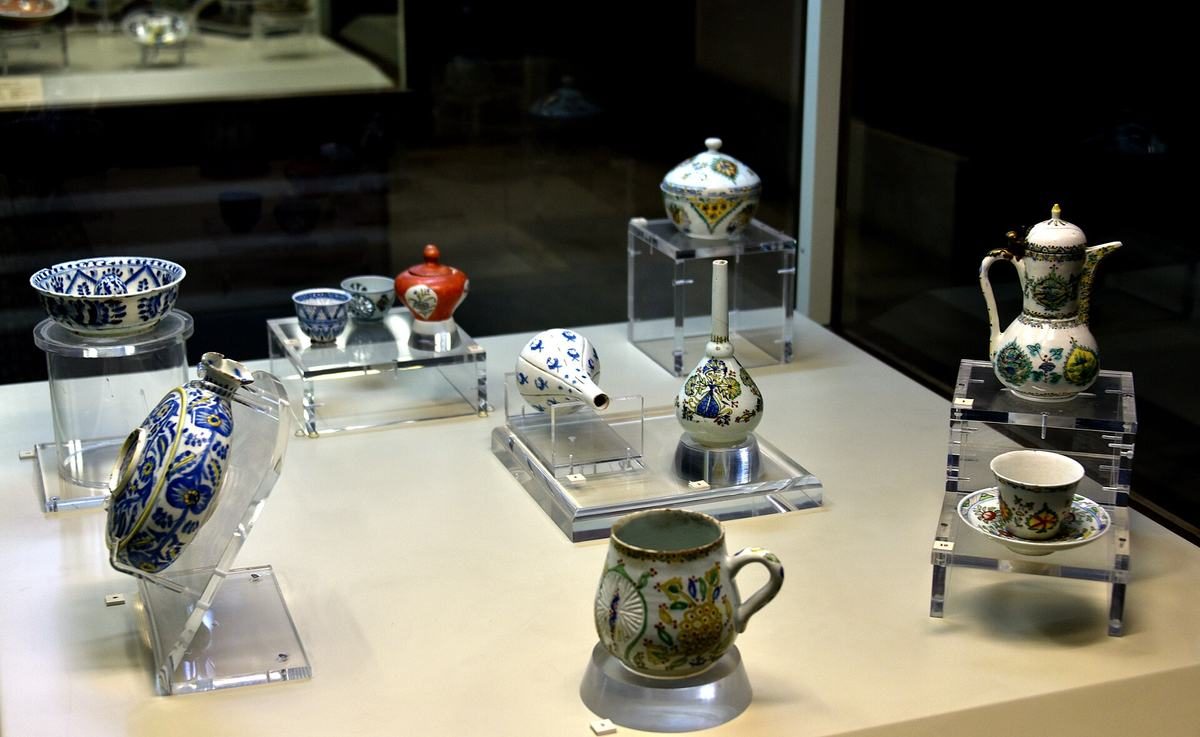
The collection embraces ceramics, metalwork, gold and jewellery, woodcarving, glass, textiles, weapons and more, offering a dazzling panorama of Islamic craftsmanship and artistry. For lovers of art and history, it is a remarkable and often overlooked destination. Please note that the museum has at times closed for works, so checking before you go is essential. It belongs to the wider network in the Benaki Museum guide. Its origins lie with a great collector.
What is the history of the museum?
The Benaki Museum of Islamic Art grew from the personal collection of Antonis Benakis, the founder of the Benaki Museum, who assembled Islamic art during his years in Egypt. The dedicated museum opened in restored neoclassical buildings near Kerameikos to display this important collection separately. It is part of the Benaki Museum’s network of specialised branches across Athens.
The museum’s existence is owed to the wide-ranging passion of Antonis Benakis, the wealthy and cultured Greek collector whose holdings form the basis of the entire Benaki Museum network. Born into a prominent Greek family of Alexandria in Egypt, Benakis spent much of his early life in the Islamic world and developed a deep appreciation for its art, assembling over the years a superb personal collection of Islamic objects alongside his celebrated collections of Greek and other art. While the flagship Benaki Museum of Greek Culture, in the family mansion on Vasilissis Sofias Avenue, tells the story of Greek civilisation, the institution eventually chose to give this outstanding Islamic collection a home and a stage of its own.
the Benaki Museum of Islamic Art duly opened in a pair of carefully restored nineteenth-century neoclassical buildings on the edge of the Kerameikos and Gazi area, allowing the rich and distinctive collection to be displayed in its own dedicated setting rather than competing for space within the main museum. It thus became one of several specialised branches that make up the broader Benaki Museum across the city, each devoted to a particular field. This thoughtful separation lets the Islamic collection shine. The collection itself is its glory. The treasures are remarkable.
What is in the collection?
The collection holds more than 8,000 works of Islamic art from the 7th to the 19th centuries, including ceramics, gold and metalwork, glass, woodcarving, textiles, carpets, weapons, jewellery, scientific instruments, inscribed funerary steles and illuminated manuscripts. Arranged chronologically and by region, it represents the great periods and lands of Islamic civilisation, from early Islam through the Ottoman, Persian and Mughal eras.
The richness and breadth of the collection are what make this museum so significant, offering a comprehensive and beautifully presented overview of more than a thousand years of Islamic art and craftsmanship. With over eight thousand works on show or in store, the displays are arranged to guide the visitor chronologically and geographically through the great periods and regions of the Islamic world. Among the many categories of object are exquisite glazed ceramics and lustreware, finely worked gold and metalwork inlaid with silver, delicate glassware, intricately carved and inlaid woodwork, sumptuous textiles and carpets, jewellery, arms and armour, and scientific and astronomical instruments that reflect the celebrated achievements of Islamic science.
The collection also includes smaller groupings of carved bone objects, inscribed funerary steles bearing elegant Arabic calligraphy, and illuminated manuscripts and pages of the Qur’an. Spanning from the earliest centuries of Islam through the brilliant courts of the Abbasids, Fatimids, Mamluks, Persians, Ottomans and Mughals of India, the objects together convey the extraordinary diversity, sophistication and beauty of Islamic art across continents and centuries. For anyone interested in world art, it is a revelation. Certain pieces stand out above the rest. The highlights are unforgettable.
What are the highlights of the museum?
The standout highlight is the marble-faced reception room taken from a 17th-century mansion in Cairo, reconstructed inside the museum with its inlaid marble floor, carved wooden window screens (mashrabiya) and stained glass. Other highlights include early Islamic ceramics, lustreware, fine metalwork, illuminated Qur’an pages, calligraphic steles and exquisite glass, all displayed across the museum’s elegant floors.
Among the museum’s thousands of treasures, a few exhibits stand out as unmissable highlights that draw visitors from around the world. The single most spectacular is the complete reception room transported from a grand seventeenth-century mansion in Cairo, said to come from the palace of an Ottoman official, which has been painstakingly reconstructed within the museum. Stepping into it, you are surrounded by an inlaid marble floor of geometric brilliance, walls faced in coloured marble, beautifully carved wooden window screens, the latticed mashrabiya through which the inhabitants once looked out unseen, and jewel-like stained glass, recreating the cool, refined luxury of a wealthy Egyptian home of the period.
It is an immersive and breathtaking experience. Beyond this showpiece, the museum’s highlights include superb early Islamic ceramics and lustreware glowing with metallic sheen, finely inlaid metalwork, pages of illuminated Qur’ans and other manuscripts displaying masterful calligraphy, elegantly carved funerary steles, and delicate enamelled and gilded glass. Each gallery offers objects of exceptional beauty and craftsmanship. Together these highlights make even a short visit deeply rewarding for art lovers. The setting enhances the treasures. The building and its views are a bonus.
What is the building and rooftop like?
The museum occupies two restored neoclassical buildings on the edge of Kerameikos, with the collection displayed over several floors. A particular pleasure is the rooftop café and terrace, which offers fine views over the ancient Kerameikos cemetery and toward the Acropolis. Sections of the ancient city wall, uncovered during construction, are even visible in the basement, adding a layer of Athenian history.
The setting of the Benaki Museum of Islamic Art adds considerably to its appeal, combining elegant architecture with unexpected views and a touch of ancient Athens. The collection is housed in a pair of handsome restored neoclassical buildings on the corner of the Kerameikos and Gazi district, their interiors adapted into bright, well-designed galleries spread over several floors that lead the visitor logically through the chronological and regional displays. A particular delight is the museum’s rooftop, where a café and terrace offer a peaceful spot to relax with a coffee while enjoying lovely views over the green expanse of the ancient Kerameikos cemetery directly below and across the rooftops toward the Acropolis in the distance, a wonderful reward after exploring the galleries.
Adding a further layer of history, a substantial stretch of the ancient city wall of Athens, uncovered during the building’s construction, has been preserved and is visible in the basement of the museum, so that the home of an Islamic art collection literally rests upon the fortifications of classical Athens. This blend of fine art, architecture, views and archaeology makes the museum a uniquely rewarding place. The ancient cemetery below is covered in the Kerameikos guide. Planning a visit needs a little care.
How do you visit the Benaki Museum of Islamic Art?
Standing on the edge of Kerameikos, the museum is a short walk from Thissio or Kerameikos metro stations and the Acropolis. It is part of the Benaki Museum, with modest admission, and a Benaki combined ticket can cover several branches. Note it has at times closed temporarily, so always check it is open before visiting. Allow about an hour to an hour and a half.
A visit to the Benaki Museum of Islamic Art is easy to combine with sightseeing in the historic centre, but it does require one important precaution. The museum stands on the edge of the Kerameikos district, close to the Gazi neighbourhood, and is easily reached on foot from Thissio station on metro line 1 or Kerameikos station on line 3, each a short walk away, while the Acropolis and the ancient sites lie only about fifteen minutes’ walk distant. As a branch of the Benaki Museum, it charges a modest admission, with reduced rates for students, seniors and the young, and a Benaki combined ticket can give access to several of the museum’s branches if you plan to visit more than one.
The crucial point to note, however, is that this branch has at times been closed to the public, whether for renovation, reorganisation or other reasons, so it is absolutely essential to check the museum’s current status and opening hours before making a special trip, to avoid disappointment. When open, the collection can be enjoyed at a relaxed pace in around one to one and a half hours, with time for the rooftop café. Confirming it is open is the single most important step. The wider routes appear in the getting around Athens guide. The questions below cover the points visitors ask most.
Frequently Asked Questions
What is the Benaki Museum of Islamic Art known for?
This museum is known for holding one of the world’s finest collections of Islamic art, with more than 8,000 works from the 7th to 19th centuries spanning Spain to India. Its standout highlight is a fully reconstructed 17th-century reception room from a Cairo mansion, with inlaid marble, carved screens and stained glass.
Where in Athens is the Benaki Museum of Islamic Art?
It stands on the edge of the Kerameikos district in central Athens, near the ancient cemetery and the Gazi neighbourhood. It is a short walk from Thissio and Kerameikos metro stations and about 15 minutes on foot from the Acropolis, with a rooftop café overlooking the ruins.
Is the Benaki Museum of Islamic Art open?
This museum has at times closed temporarily to the public, for renovation or reorganisation, so it is essential to check its current status and opening hours before planning a visit to avoid disappointment. When open, it can be enjoyed in around one to one and a half hours, including the rooftop café.