
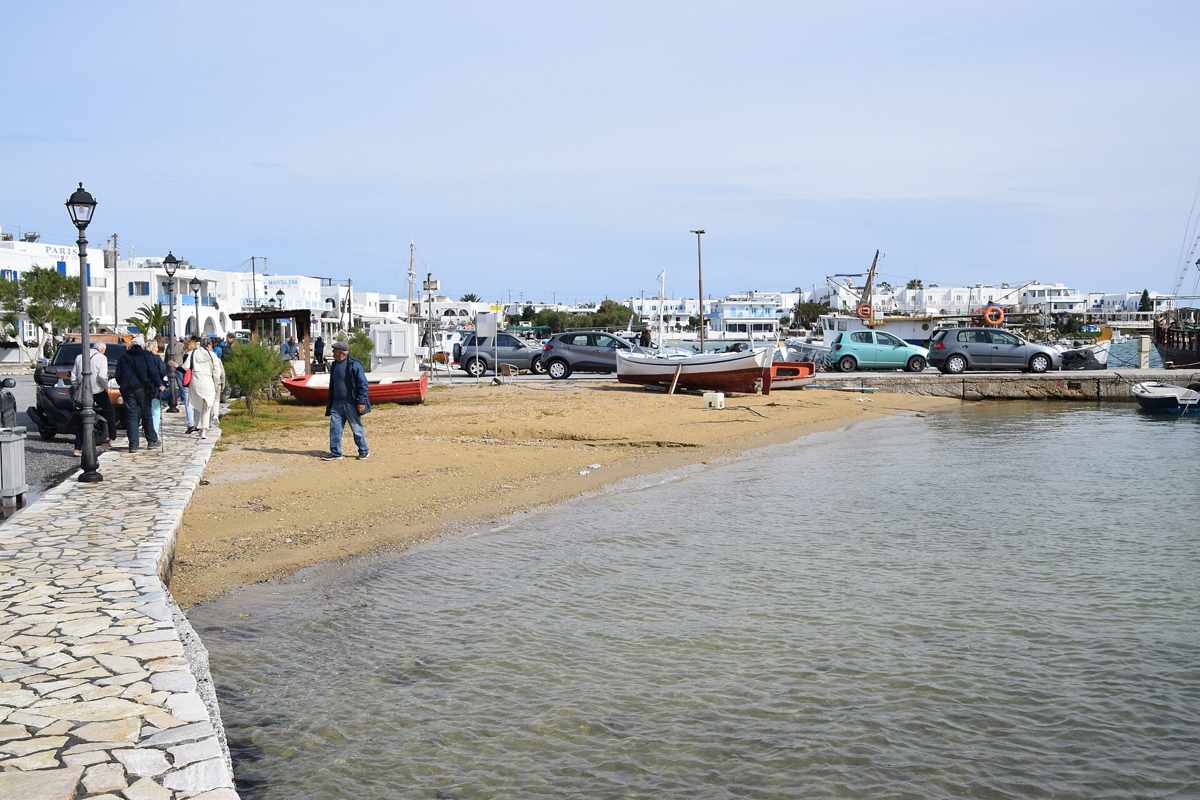
Antiparos keeps its settlements few and small, with one main town and a scattering of quiet places spread across the island. The Chora, the town, is the whitewashed heart, built around the Venetian Kastro and set by the port where the ferries arrive, and it holds the hotels, shops, tavernas and bars. Away from it lie Agios Georgios and Soros on the coast to the south, and Kampos in a green inland valley. Each keeps a calm, unspoilt character and sits within a short drive of the town. Get to know these low-key places and plan your route between them with My Greece Tours.
The pattern here is simple: one lively town and a handful of small, seasonal settlements linked by a single main road. This makes the island easy to grasp and easy to travel, whether you stay in the Chora or base yourself by a southern beach. The sections below cover the whitewashed town and its Kastro, the seaside settlements of Agios Georgios and Soros, the quiet inland valley of Kampos, and how the places connect. Set these villages in context, and see where each fits into a wider trip, with our Antiparos travel guide.
What are the villages of Antiparos?
Antiparos has one main town, the Chora, plus a scattering of smaller settlements. Agios Georgios and Soros sit by the sea to the south, and Kampos lies inland. All are small and low-key.
The map of settlements on Antiparos is short and clear. The Chora, the town, is the whitewashed heart of the island, built around a Venetian Kastro and set by the port where the ferries arrive. It holds most of the hotels, shops, tavernas and bars, and it is the place travellers picture when they think of the island. Around it lie a handful of smaller settlements, each with its own character and setting. Agios Georgios and Soros sit on the southern coast by the sea, while Kampos occupies a green inland valley away from the water. The seaside campsite lies just north of the town.
Together these places make up the whole inhabited fabric of the island, and none of them is large or heavily built up.
What links these settlements is scale and mood rather than size. Each is small, low-key and seasonal, and each shares the calm, unspoilt character that runs through the island. The Chora is the one exception in liveliness, with its bars and tavernas, yet even it stays relaxed by the standard of busier Cycladic ports. The others are quieter still: a taverna and rooms here, a cluster of houses there, and the sea or the fields close at hand. This gentle, understated feel is a large part of what draws travellers to the island in the first place.
Those weighing up which base suits them best can turn to our guide on where to stay in Antiparos, which sets out what each area offers.
The other thing these settlements have in common is closeness. They all lie within a short drive of the town along the single main road that runs down the island, so no place feels remote or hard to reach. This tight geography means you can base yourself in one settlement and still dip easily into the others through the day. A morning by a southern beach, an afternoon back in the Chora, and an evening meal by the water are all within comfortable range. The compact layout is one of the island’s quiet strengths, turning a small collection of places into an easy, joined-up trip.
It also keeps distances honest, so a drive between any two settlements is a matter of minutes rather than a long haul across the island.
What is the Chora, the main town of Antiparos, like?
The Chora is the whitewashed heart of the island, built around a Venetian Kastro and set by the port. It holds most of the hotels, shops, tavernas and bars, and it is where the ferries arrive.
The Chora is the island’s town and its clear centre of gravity. It is whitewashed and low, laid out around the Venetian Kastro, the fortified core that gives the old town its shape and name. The settlement sits right by the port, so the first thing travellers see on arrival is the town itself rising just beyond the quay where the ferries dock. This makes the Chora both the gateway and the hub of any visit. Its lanes hold most of the hotels, shops, tavernas and bars on the island, gathered into a compact, walkable centre.
The result is a town that feels lively and complete without ever sprawling, keeping everything a visitor needs within a few minutes on foot of the harbour.
Daily life in the Chora runs through its main street and the little squares that open off it. The whitewashed houses, the Kastro at the core and the tavernas spilling onto the lanes give the town its character, and the pace stays gentle even when the island is at its liveliest. It holds the bulk of the shops and services, so the town is the natural place to eat out, buy supplies and spend an evening, whether or not you sleep there. Travellers based in the quieter southern settlements come here for dinner and drinks and drive back afterwards.
For a fuller picture of the harbour, the Kastro and the lanes, see our detailed overview of Antiparos town and how to make the most of a stay in it.
The Chora also works as the launch point for the rest of the island. From here the single main road runs south toward the beaches and the smaller settlements, so trips out and back all pass through the town in one direction or another. This central role makes it a practical base as well as an attractive one, since supplies, rooms and transport all cluster in the same compact centre. Travellers who want plenty to occupy them can find their bearings here first, before heading out to explore. The town sets the tone and gives every outing a clear starting point.
Our roundup of things to do in Antiparos starts in and around the Chora and fans out from there, tying the town’s offerings to the beaches and the fields beyond.
What are the seaside settlements of Agios Georgios and Soros on Antiparos?
Both are small seaside settlements on the southern coast. Agios Georgios lies at the southwest tip, facing Despotiko and serving as its boat departure point. Soros sits by a fine sandy beach, ideal for a relaxed stay.
Agios Georgios lies about twelve kilometres south of the town, at the island’s southwest tip. It is a small, seasonal settlement of tavernas and rooms gathered by the sea, low-key and quiet in keeping with the island’s character. What sets it apart is its outlook and its role: it faces the islet of Despotiko across a narrow stretch of water and serves as the departure point for boats across to it. Travellers who want to reach the uninhabited islet and its ancient site come to Agios Georgios to make the short crossing. Between boats the settlement offers a taverna meal and a swim by a calm shore.
Our guide to Agios Georgios covers the tavernas, the rooms and the crossing to Despotiko in full.
Soros sits about eight kilometres south of the town, closer to the Chora than Agios Georgios and set by a fine sandy beach. It is a small settlement with a taverna and rooms, ideal for a relaxed stay right by the water. The draw here is the beach itself, a stretch of good sand that makes the settlement a natural choice for travellers who want to wake up near a swim and keep their days simple and slow. Soros stays quiet and low-key, in the same gentle mould as the island’s other small places.
For the shore that gives the settlement its name and its appeal, our guide to Soros beach describes the sand, the sea and the feel of a day spent there.
Between them, Agios Georgios and Soros give the southern coast two contrasting bases, both small and both by the sea. Soros suits travellers who want a fine sandy beach on their doorstep and an easy, restful stay close to town. Agios Georgios suits those drawn to the far southwest tip, the view across to Despotiko and the boats that leave from its shore. Each has a taverna and rooms rather than a full spread of services, so both keep the quiet, seasonal character that runs through the island.
Choosing between them comes down to whether you prize the beach or the crossing, and either way you stay within an easy drive of the Chora for supplies, dinner and anything the small settlements do not provide themselves.
What is Kampos, the inland village on Antiparos?
Kampos is a green inland valley about four kilometres from the town, without sea views. It is quiet and increasingly bohemian, a settlement of fields and countryside rather than beaches, set away from the coast.
Kampos stands apart from the island’s other settlements by turning its back on the sea. It lies roughly four kilometres from the town, inland in a green valley rather than by a beach, so it has no sea views to speak of. This gives it a different feel from the coastal places: fields, greenery and a countryside calm in place of a shoreline and boats. The valley setting keeps it cooler and quieter than the busier port, and it appeals to travellers who want a rural base rather than a seaside one.
The settlement is small and low-key, in the same gentle mould as the rest of the island, but its landscape of cultivated ground and open country marks it out clearly from the whitewashed town and the seaside hamlets to the south.
The character of Kampos has been shifting in a quiet, bohemian direction. It has grown increasingly bohemian in feel, drawing travellers who prefer a green, unhurried inland retreat to the livelier port or the busier beaches. This is a place for slow days among the fields, a change of pace from the coast that suits people happy to drive down to the water when they want a swim. The valley stays calm and unspoilt, sharing the island’s overall restfulness while offering a distinct, land-facing version of it.
For travellers who like the idea of a rural base but still want beach days, Kampos works well because the coast is only a short drive away, and our roundup of Antiparos beaches maps out which shores lie within easy reach of an inland stay.
Practically, Kampos rewards travellers who value greenery and quiet over an immediate sea view. The four-kilometre distance to the town is short enough that supplies, tavernas and the harbour stay within an easy drive, so an inland base does not cut you off from anything the island offers. You trade a beachfront setting for fields, open country and a calmer, more private feel, and for many that trade is an easy one to make. The single main road ties the valley back to the town and on to the southern coast, so beach mornings and countryside evenings sit comfortably in the same day.
Kampos suits a traveller who wants the island’s calm distilled into its most rural form, with the coast always close enough to reach whenever the mood for a swim arrives.
How are the villages of Antiparos connected and how do you get around?
A single main road ties the settlements together, running from the town down the island. All lie within a short drive of the Chora, so you can base anywhere and reach the others easily by car or scooter.
The settlements of Antiparos are joined by one main road that runs from the town down the length of the island. This single route ties the Chora to Soros, Agios Georgios and the southern coast, with Kampos reached on its own short inland turn. The simplicity of the layout makes the island easy to travel: there is essentially one direction to head in from town, and the smaller places branch off it in turn. Every settlement lies within a short drive of the Chora, so no part of the island feels cut off or hard to reach.
This joined-up geography is one of the island’s quiet advantages, turning a scattering of small places into a single, easy-to-navigate whole that a visitor can learn in a day or two.
Getting around is straightforward once you understand this compact layout. A car or scooter lets you move freely between the town and the smaller settlements, covering the short distances in minutes and leaving the day open for beaches, meals and exploring. The single road means navigation is simple, with little chance of getting lost between one place and the next. This ease of movement is what lets travellers base themselves in a quiet settlement yet still enjoy the town’s tavernas and shops, or stay in the Chora and range out to the southern beaches at will.
For advice on hiring a vehicle and the practicalities of driving the island, our guide covers the options and helps you pick the right way to get around during your stay on the island.
The short distances shape how a trip on the island tends to unfold. With the town roughly four kilometres from Kampos, eight from Soros and twelve from Agios Georgios, no journey between settlements is long or tiring. This makes it easy to string several places into one day: a morning swim in the south, a lunch by the water, and an evening back in the Chora among its lanes and tavernas. The seaside campsite just north of the town adds another low-cost base within the same easy reach.
Whichever settlement you choose as your anchor, the rest of the island stays close at hand, and the single main road keeps the whole small network of places within a comfortable, unhurried drive from start to finish of any day.
Frequently Asked Questions
How many villages does Antiparos have?
Antiparos has one main town, the Chora, and a scattering of smaller settlements around it. The Chora is the whitewashed heart of the island, built around a Venetian Kastro by the port. Beyond it, the notable settlements are Agios Georgios at the southwest tip, Soros on the southern coast by a sandy beach, and Kampos in a green inland valley. A seaside campsite lies just north of the town as well. None of these places is large, and each stays small, low-key and seasonal in keeping with the calm, unspoilt character that runs through the whole island.
Rather than a spread of busy villages, the island offers one lively town and a handful of quiet places, each with its own setting by the sea or among the fields. All of them lie within a short drive of the Chora along the single main road, so the island reads as a compact, joined-up whole rather than a scatter of distant settlements you must work to reach.
Which village on Antiparos is best to stay in?
The right base depends on the kind of stay you want. The Chora, the town, suits travellers who want hotels, shops, tavernas and bars within walking distance and the ferries close at hand. Soros suits those who want a fine sandy beach on their doorstep and a relaxed, restful stay by the water, with a taverna and rooms nearby. Agios Georgios appeals to travellers drawn to the far southwest tip, the view across to Despotiko and the boats that leave from its shore. Kampos suits people who prefer a green, quiet inland valley to a seaside setting, with the coast still a short drive away.
Every settlement lies within a short drive of the town along the single main road, so no base leaves you cut off from the rest of the island. The choice comes down to mood and setting more than practicality, since each base gives the same short drive to everything the others offer.
Is Agios Georgios on Antiparos worth visiting?
Agios Georgios rewards a visit, especially if you want to reach the islet of Despotiko. The settlement lies about twelve kilometres south of the town, at the island’s southwest tip, and it is a small, seasonal place of tavernas and rooms gathered by the sea. Its defining feature is its role as the departure point for boats across to Despotiko, the uninhabited islet it faces across a narrow strait. Travellers come here to make the short crossing to the islet and its ancient site, and to combine it with a taverna meal and a swim by a calm, low-key shore.
Even without the crossing, Agios Georgios offers a quiet corner of the island with a fine outlook across the water. It stays small and unspoilt, sharing the island’s gentle character, so a visit here is about slow time by the sea as much as the boat trip itself. Our full guide covers the tavernas, the rooms and the practicalities of the crossing to the islet.
What is there to do in the villages of Antiparos?
Each settlement offers something a little different, tied to its setting. In the Chora you can wander the whitewashed lanes around the Venetian Kastro, browse the shops, and eat and drink in the tavernas and bars that cluster near the port. Soros is about the beach: a fine sandy shore for swimming and slow days by the water, with a taverna close at hand. Agios Georgios pairs a seaside meal with the boat crossing to the islet of Despotiko, so it blends a quiet swim with a short excursion. Kampos offers green, unhurried days inland, away from the sea, for travellers who like a rural change of pace.
Tying it all together, the short distances mean you can sample several settlements in a single day. A morning by a southern beach, a lunch by the water, and an evening among the whitewashed lanes of the Chora fit comfortably into one unhurried day.