
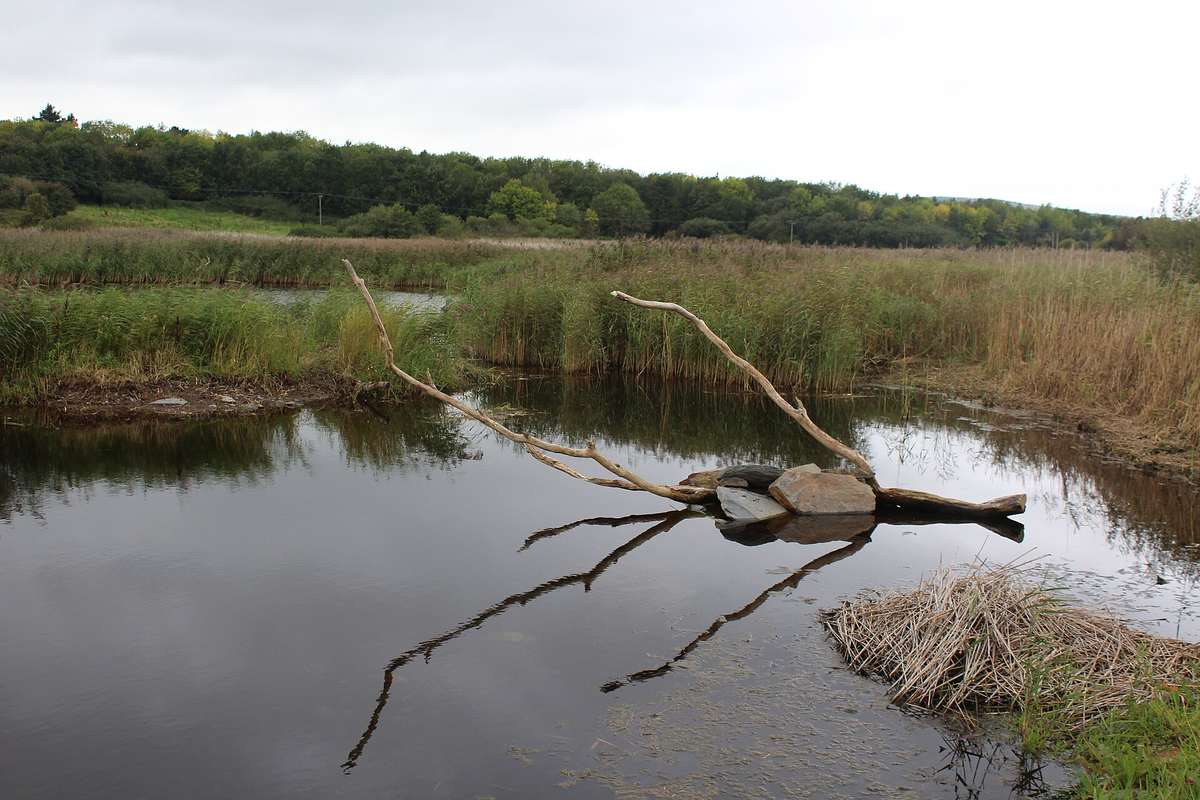
Pezi plateau sits high in the western uplands of Ikaria, an island better known for dry granite ridges than for standing water. The plateau holds something rare here: a small reservoir and wetland fed by mountain streams and rain. Reeds, oak woodland and grey granite ring the water, and the basin draws frogs, dragonflies and water birds that struggle to find such habitat elsewhere on the island. Walkers reach Pezi on mountain roads and trails from the Rahes region, and many pair it with the wider network of highland paths. This guide maps the plateau, its wildlife and its practical logistics for travellers planning quiet time in Ikaria’s interior with My Greece Tours.
Pezi rewards a slow visit, and it pairs naturally with the villages and forests of the Rahes plateau. This page fits inside our wider Ikaria travel guide, which frames how the highland interior connects to the coast and the island’s cultural rhythm. Pezi is a node in that network: a wetland island within an arid landscape, valued for conservation and loved by walkers who want stillness over spectacle. The sections below cover what and where Pezi is, how the reservoir and wetland form, the wildlife and habitat, the walking and birdwatching setting around Rahes, and the practical detail of reaching the plateau and choosing the right season.
What and where is the Pezi plateau in Ikaria?
Pezi is a small upland plateau in the western highlands of Ikaria, near the Rahes region and the Randi Forest. It holds a reservoir and wetland ringed by reeds, oak woodland and granite, reached by mountain roads and trails.
Pezi lies in the mountainous western third of Ikaria, on the broad upland shelf above the Rahes villages. The plateau sits among granite outcrops and oak stands, at an elevation that keeps it cooler and greener than the coastal fringe. A modest reservoir occupies the basin, and its margins hold reeds and damp meadow. Mountain roads climb toward the plateau from the Rahes settlements, and marked footpaths thread the same ground. Walkers arriving on foot often approach through terrain used for hiking in Ikaria, since the western highlands carry the island’s densest trail network. The setting feels remote yet remains a short drive from village life, which is part of its appeal for a half-day out.
The plateau earns its distinction from contrast. Ikaria is a long spine of dry ridges, and standing water is scarce across most of the island. Pezi breaks that pattern with a genuine wetland basin. The nearby Randi Forest shades much of the surrounding slope, one of the largest oak woodlands left in the Aegean. Together the forest and the wetland form a linked highland ecosystem, with the trees feeding leaf litter and shade into the damp ground below. Granite bedrock holds rainwater in shallow depressions and channels it toward the basin. The result is a small green pocket, distinct in character from the sun-bleached coast that most visitors picture when they think of the island.
How do the reservoir and wetland at Pezi form?
Mountain streams and rainfall feed a shallow reservoir set in a granite basin. Bedrock holds water in low hollows, reeds fringe the margins, and oak woodland shelters the catchment, sustaining a wetland through the wetter months of the year.
The wetland depends on the plateau’s geology and its weather. Granite forms much of the western highlands, and the rock resists drainage in places, letting rainwater pool in shallow depressions rather than sinking away. Winter and spring rain fill the basin, and small mountain streams carry runoff from the surrounding slopes toward the reservoir. Reeds and rushes colonise the shifting waterline, and damp meadow spreads where the ground stays saturated. The reservoir also serves a practical role for the highland area, storing water that would otherwise run quickly off the steep terrain.
Oak cover from the Randi woodland reduces evaporation and steadies the flow, so the catchment holds moisture longer than open ground of the same elevation would manage on its own.
Water level at Pezi shifts with the seasons, and the wetland reads differently across the year. Rain-fed pools stand highest in late winter and spring, when the basin looks most like a lake and the surrounding meadow greens. Summer draws the margins back, exposing mud and reed beds as the water shrinks under heat. This rhythm shapes the habitat, since amphibians and insects time their life cycles to the wetter window. The reservoir’s presence in an otherwise arid island makes even a modest pool ecologically valuable. Villages of the Rahes plateau, including Christos Raches, sit within reach of the basin, and the highland community has long depended on such upland water sources through the dry Aegean summer.
What wildlife and rare habitat does Pezi support?
The wetland supports water birds, amphibians such as frogs and newts, dragonflies and varied flora. This rare habitat on a dry island holds conservation value, offering breeding and feeding ground scarce elsewhere across Ikaria’s granite ridges.
Pezi functions as a refuge for creatures tied to water. Amphibians such as frogs and newts breed in the pools and damp margins, using the wetter months to complete their life cycles. Dragonflies and damselflies patrol the reed beds, and the standing water draws insects that in turn feed birds. Water birds visit to feed and rest, finding open water that the surrounding dry country cannot offer. The reed fringe, oak woodland and meadow layer the habitat, giving different species their own niche within a compact area. This variety is unusual for Ikaria, where most ground is arid ridge and terraced slope.
The plateau therefore concentrates biodiversity into a small footprint, which is a large part of why naturalists rate it so highly.
The habitat carries recognised conservation importance, valued for exactly the reasons that make it uncommon. Wetlands are scarce across the drier Aegean islands, and every functioning one matters for regional wildlife. Pezi’s flora spans reeds, damp-meadow plants and the oak and understorey of the adjoining forest, and the mix sustains pollinators and small fauna through the seasons. The plateau rewards quiet, patient visitors more than crowds, so keeping disturbance low protects the very wildlife that draws people. Travellers building a nature-focused itinerary often place Pezi among the top things to do in Ikaria for those who value habitat and stillness over beaches.
Respecting the margins, keeping to paths and avoiding the water’s edge all help preserve the basin’s fragile balance.
What is walking and birdwatching like around Pezi and Rahes in Ikaria?
Walking around Pezi is gentle and quiet, set among oak woodland and granite on the Rahes plateau. Birdwatchers scan the reservoir and reed beds, and the site links naturally with the region’s Round of Rahes footpaths.
The plateau suits unhurried walking rather than hard climbing. Paths cross rolling upland between granite and oak, and the reservoir provides a natural focus for a loop or an out-and-back stroll. The wider Rahes region carries a celebrated network of restored footpaths, and Pezi connects into it. Many walkers reach the plateau as a spur off the Round of Rahes routes, the signed circuit that ties the highland villages together through forest and stone. The ground overlaps with the terrain prized for hiking in Ikaria, and the same trail markers guide visitors between water, woodland and settlement. A morning or afternoon suffices to walk the plateau, watch the water and return to a village for a meal.
Birdwatching is the plateau’s quiet reward. The reservoir and its reed beds attract water birds that are hard to find elsewhere on Ikaria, and patient observers scanning from the margins tend to see the most. Early morning and late afternoon bring the best light and the most activity, when birds feed and dragonflies work the shallows. The setting stays peaceful, and the villages of the Rahes plateau anchor the experience, with Christos Raches serving as a natural base for coffee, supplies or an overnight stay. Walkers pass through the shade of the Randi Forest on many approaches, so a Pezi outing often bundles wetland, woodland and village into one satisfying highland day.
How do you visit Pezi plateau and when should you go?
Reach Pezi by car or on foot from the Rahes villages in western Ikaria, following mountain roads and marked trails. Late winter through spring shows the fullest water and greenest meadow, ideal for birdwatching and walking.
Access to Pezi runs through the Rahes region of western Ikaria. Drivers follow mountain roads uphill from the Rahes villages, and the final approach is quiet, narrow highland driving with limited services near the plateau itself. Walkers reach the basin on marked footpaths, often as part of a longer route through the highlands. A visit slots easily into a broader plan of things to do in Ikaria, especially for travellers drawn to nature over nightlife. Carry water, sturdy shoes and a hat, since the upland sun stays strong even at height. Villages such as Christos Raches provide the practical base for supplies, food and a place to leave the car before setting out on foot.
Season shapes the visit more than anything else. Late winter and spring bring the fullest reservoir, the greenest meadow and the peak of amphibian and insect activity, making that window the strongest for wildlife and photography. Summer shrinks the pools and hardens the light, though the shaded approach through the Randi Forest keeps the walk comfortable even in heat. Autumn rain begins to refill the basin and cools the air for walking. Whatever the month, keep to marked paths, avoid trampling the reed margins and give wildlife space at the water’s edge. Pezi is a fragile pocket, and its charm depends on the light footprint of the people who come to enjoy its quiet highland calm.
Frequently Asked Questions
What is the Pezi plateau in Ikaria?
Pezi is a small upland plateau in the western highlands of Ikaria, close to the Rahes region and the Randi Forest. It holds a reservoir and a rare wetland, fed by mountain streams and rain and set within a basin of granite. Reeds, oak woodland and damp meadow ring the water, forming a green pocket in a landscape otherwise defined by dry ridges. The plateau matters because standing water is scarce across most of Ikaria, so this basin concentrates habitat and life into a compact area. Walkers reach it by mountain roads and trails from the Rahes villages, and it links to the wider highland footpath network.
Pezi is prized for conservation value and loved as a quiet spot for walking and birdwatching. Travellers seeking stillness and nature find it a rewarding counterpoint to the island’s beaches and coastal villages, and it sits within easy reach of the Rahes settlements.
What wildlife lives at Pezi plateau?
Pezi supports wildlife tied to water, a rarity on an island of dry granite ridges. Amphibians such as frogs and newts breed in the pools and damp margins during the wetter months. Dragonflies and damselflies patrol the reed beds, and the standing water draws insects that feed a range of birds. Water birds visit the reservoir to feed and rest, finding open water that the surrounding arid country cannot provide. The habitat layers reeds, damp meadow and adjoining oak woodland, giving different species their own niche within a small footprint. Flora spans reeds, meadow plants and the forest understorey, sustaining pollinators and small fauna through the seasons.
This variety is unusual for Ikaria and gives Pezi recognised conservation importance. Naturalists rate the plateau highly for exactly this reason, and quiet, respectful visitors who keep to the paths and away from the water’s edge help protect the fragile balance that supports it all.
How do you get to Pezi plateau in Ikaria?
Reach Pezi through the Rahes region of western Ikaria. Drivers follow mountain roads uphill from the Rahes villages, and the final stretch is quiet, narrow highland driving with few services near the plateau. Walkers arrive on marked footpaths, often as a spur off the Round of Rahes circuit that ties the highland villages together through forest and stone. A village such as Christos Raches makes a practical base, offering food, supplies and somewhere to leave the car before setting out on foot. Carry water, sturdy shoes and sun protection, since the upland sun stays strong even at height and services are limited once you leave the villages.
Late winter and spring show the fullest water and greenest meadow, the strongest window for walking and birdwatching. The shaded approach through the Randi Forest keeps the walk comfortable in warmer months. Keep to marked paths and give the reed margins and wildlife plenty of space throughout your visit.