
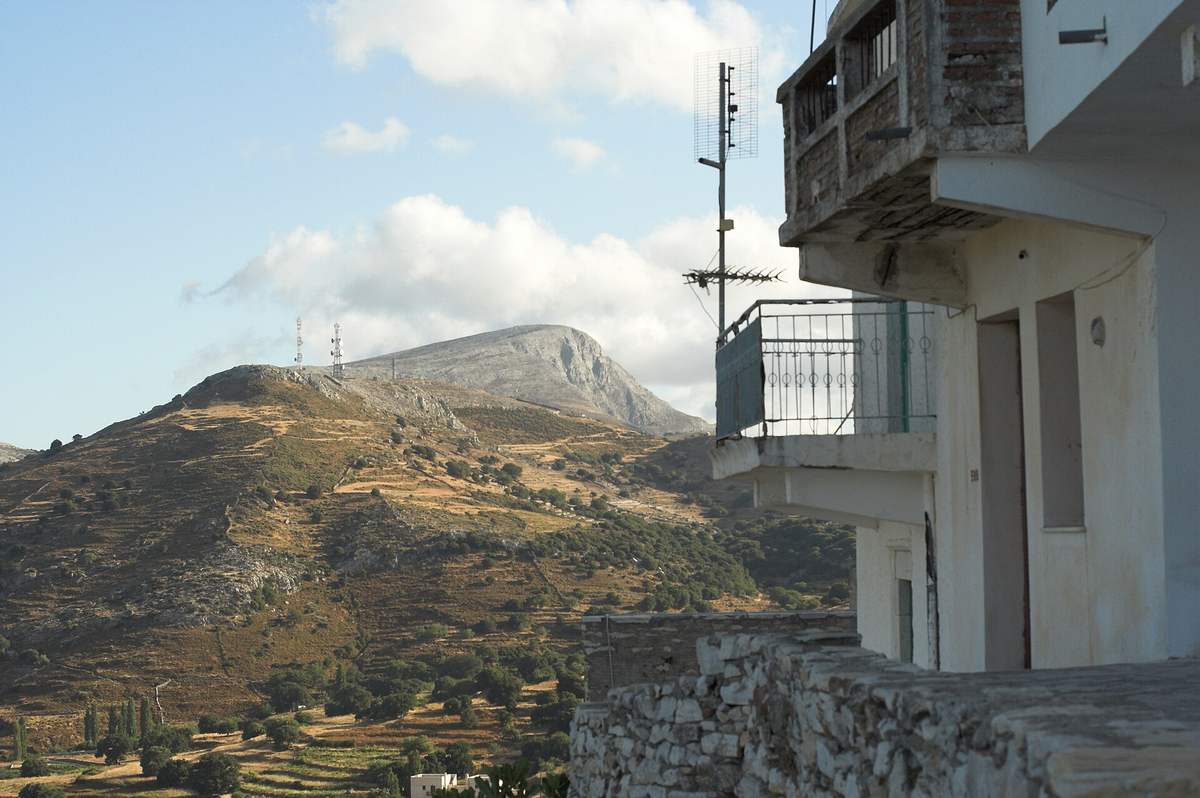
The emery mines of Naxos carved an industrial world into the island’s northern mountains, far from the beaches most travellers picture. Naxos held one of the planet’s richest deposits of emery, a stone so hard it dressed grindstones and polished glass across Europe. Smyrida, as locals call it, turned villages like Koronos and Apeiranthos into working communities of miners rather than farmers. The state ran the trade as a monopoly for generations, and the ore rode a dramatic aerial ropeway to the sea. This heritage sits within easy reach today, and you can trace the whole story with My Greece Tours.
This guide reads as a companion to our wider Naxos travel guide, focused on the industrial mountains rather than the coast. The sections below cover what emery actually is and why the island mattered to global industry, the mining villages and their dark galleries, the aerial ropeway that dropped ore to the eastern shore, the heritage preserved today, and practical ways to explore the whole route on foot or by car.
What is emery and why did Naxos matter?
Emery is a very hard, dark rock rich in corundum, prized as a natural abrasive for grinding and polishing. Naxos held Europe’s finest deposits, making the island a strategic industrial supplier for well over a century.
Emery, or smyrida, is a dense granular rock built mainly from corundum, an aluminium oxide almost as hard as diamond. That hardness made it the abrasive of choice long before synthetic grits arrived. Craftsmen used Naxian emery to sharpen tools, dress millstones, grind lenses and finish metal across the workshops of Europe. The deposits around the northern mountains ranked among the purest known anywhere. This quality raised the island from an agricultural backwater into a named industrial supplier. The trade shaped how the wider world saw Naxos, a reputation you can trace through the history of Naxos.
Demand stayed strong through the 19th century and deep into the 20th, tying remote mountain villages directly to distant factories and export markets far beyond the Aegean.
The Greek state understood the value of these deposits and held emery extraction as a public monopoly. Ownership of the ore belonged to the nation, while local families held hereditary rights to dig and sell agreed quotas. This unusual arrangement bound entire communities to the mineral for their livelihoods. Payment came through a state buyer at a fixed structure, which brought a rare cash income to isolated highland households. The monopoly also made the trade a matter of national policy rather than private enterprise. Records of production, transport and export were kept with bureaucratic care. That documentation now helps historians reconstruct the scale of the industry.
The Naxos travel guide places this mineral wealth within the island’s broader economic story across the centuries.
Which villages held the mining galleries?
The mining heartland lay in the northern mountains around Koronos, Apeiranthos and Skado. Miners cut galleries into steep slopes near these villages, and their populations grew directly on emery rather than farming.
Koronos sits in a green amphitheatre of terraces high in the north, and it became the industry’s beating heart. Its men descended into galleries bored straight into the mountainside, following veins of dark ore through the rock. Whole families organised their year around the digging seasons and the state buyer’s schedule. The village kept a distinct identity, proud and slightly apart, shaped by generations of underground labour. You can still read that character in its steep lanes and its tavernas. Our page on Koronos sets out how to reach the village and what remains to see.
Nearby Skado shared the same rhythm, a smaller settlement whose fortunes rose and fell with the ore, described further on our Skado page.
Apeiranthos, the marble-paved village on the eastern flank of Mount Fanari, stood as the cultural capital of the emery country. Its people, proud of a fiercely local dialect, supplied miners and mine officials alike. The village grew wealthy enough to build a cluster of small museums, including one devoted to geology and mining. Walking its arched alleys, you sense a community that lived by the mineral yet cultivated learning and music. Details on visiting sit on our Apeiranthos page. The galleries themselves scatter across the slopes between these settlements, marked by rusting rails, timber props and dark portals.
Signs of the miners’ labour remain etched into the landscape, and the surrounding trails now draw walkers exploring the industrial past on foot.
How did the aerial ropeway carry ore to Moutsouna?
An aerial ropeway, a cable railway strung on pylons, carried buckets of ore from the mountain villages down to the port of Moutsouna. There cranes loaded the emery onto ships bound for foreign markets.
Moving heavy ore off steep mountains once meant mules on rough tracks, slow and costly. Engineers answered with an aerial ropeway, a continuous cable line hung on tall pylons that marched over ridges and ravines. Iron buckets clipped onto the moving cable, each swaying load of emery gliding downhill toward the coast. The line ran kilometres from the galleries above Koronos and Apeiranthos to the little harbour of Moutsouna on the east coast. Gravity did much of the work, the descending full buckets helping haul the empties back up. The system transformed the economics of the trade, cutting transport time dramatically. Our page on Moutsouna describes the terminal and the quiet bay it served for decades of shipping.
At Moutsouna the ropeway ended in a loading station beside the sea, where the ore tipped from buckets into storage and then onto waiting cargo ships. The once-sleepy fishing anchorage became a working export port dedicated almost entirely to emery. Concrete pylons and rusted towers from the line still stride across the hills, some standing sentinel over hiking trails. These skeletal structures rank among the most striking industrial monuments in the Cyclades. Walkers following the old route pass beneath them, tracing the buckets’ vanished journey. The surviving pylons make superb waypoints for anyone combining heritage with the trails covered under hiking in Naxos.
The ropeway stands as the single most photogenic relic of the whole vanished industry, framing the mountains against the Aegean below.
What was life like for the emery miners?
Emery mining meant brutal, dangerous work in cramped galleries lit by oil lamps. Miners hauled hard ore by hand for meagre pay, faced cave-ins and dust, and organised early to defend their rights.
Life underground was harsh beyond the imagining of most visitors relaxing on the coast. Miners crawled into low galleries, breaking the stubborn ore with hammers, chisels and later drills by the light of oil lamps. Dust filled their lungs, and the constant threat of rockfall shadowed every shift. Pay came by weight and quota, so families lived close to the margin through lean seasons. Children and women often shared the surface work of sorting and carrying. The hardship forged a strong collective spirit among the mountain communities. Miners here organised early, forming one of the first rural labour movements in the country to press the state for fairer terms.
That proud, combative culture still colours the identity of villages like Koronos, and it threads through the broader history of Naxos.
The rhythm of mining shaped every season in these highland villages. Men descended for long stretches, then emerged to farm terraces of vines and walnuts between digging periods. The state buyer’s arrival was a pivotal event, setting the cash income for a whole community. Songs, stories and a distinctive dialect grew out of this shared underground labour, preserved most vividly in Apeiranthos. Emigration rose as the industry declined, and many miners’ descendants left for Athens or abroad. The memory endures in family names, tavern conversation and the small museums that record the trade. Visiting the villages, you meet a heritage of endurance rather than a tourist spectacle.
Our Apeiranthos page points to the collections that keep these miners’ stories alive today.
How can you explore the emery heritage today?
Explore the emery country by basing yourself in the northern villages, walking the ropeway trails, and visiting the small museums. Combine Koronos, Apeiranthos and Moutsouna into a rewarding day of industrial heritage.
A rewarding circuit begins in the marble lanes of Apeiranthos, where the geology and natural-history museums explain the mineral and its extraction. From there a mountain road winds toward Koronos, passing gallery portals and the first ropeway pylons striding across the slopes. Sturdy walkers can leave the car and follow marked paths beneath the towers, tracing the buckets’ descent toward the coast. The route rewards you with sweeping views over ravines that few beach-focused visitors ever see. Spring and autumn bring the kindest walking weather, with wildflowers softening the industrial ruins. Plan the trails with our page on hiking in Naxos, which grades the routes by effort.
The northern villages also serve honest mountain food, a welcome reward after a morning among the galleries and rusting cables.
The circuit ends best at Moutsouna on the east coast, where the ropeway terminal met the sea and cargo ships once loaded ore. Today the bay is a quiet resort with a sheltered beach, an easy place to swim after a heritage-heavy morning. The surviving loading structures and the line of pylons climbing inland make the industrial story tangible against the water. Base yourself in the north for a night to catch the villages without the day-tripper crowds, then return to Chora refreshed. The Moutsouna page covers where to eat and stay along this shore. This mining landscape ranks among the most distinctive experiences the island offers. Plan your visit and tours through our Naxos travel guide.
Frequently Asked Questions
Where exactly are the emery mines on Naxos?
The emery deposits and their galleries lie in the northern mountains of Naxos, centred on the villages of Koronos, Apeiranthos and Skado. This upland region, part of the Fanari and Koronos massif, holds the richest ore veins on the island. Miners cut galleries directly into the steep slopes above and around these settlements, following the dark emery through the rock. The ore then travelled east by aerial ropeway to the port of Moutsouna on the coast. To reach the area, drive north from Chora, the main town, on the mountain road toward Apeiranthos, then continue to Koronos. The journey takes around an hour of winding but scenic driving.
Gallery portals, rusting rails and the concrete ropeway pylons scatter across the slopes between the villages and the sea. Our Koronos and Apeiranthos pages give directions, parking notes and the practical detail needed to plan a heritage day in the mining country.
Can visitors go inside the mining galleries?
Most of the old emery galleries are disused and unsecured, so entering them is unsafe and not recommended. Timber props rot, roofs weaken, and passages flood or collapse without warning. The rewarding and responsible way to experience the industry is from the surface, where the heritage remains fully visible. Gallery portals, ore chutes, rusting rails and abandoned tools sit along marked trails around Koronos and Apeiranthos, and you can study them safely from outside. The small museums in Apeiranthos display mining equipment, ore samples and photographs that explain what the underground work involved. The aerial ropeway pylons striding across the hills offer the most dramatic and accessible relics of all, easily reached on foot.
Guided walks led by locals sometimes open a wider understanding of specific sites and their stories. Respect any barriers or warning signs, keep children clear of open shafts, and treat the galleries as fragile monuments rather than an adventure playground to enter.
Why did the Naxos emery industry decline?
The Naxos emery industry declined mainly because synthetic abrasives replaced natural stone across global industry. Manufactured grits such as silicon carbide and aluminium oxide could be produced cheaply, consistently and in any grade, undercutting the natural product. Demand for Naxian emery shrank steadily through the 20th century as factories switched to the synthetics. The rigid state monopoly, slow to modernise, struggled to compete on price or flexibility. Rising labour costs and the sheer difficulty of mountain extraction added further pressure. Younger islanders looked to tourism, shipping and city jobs rather than the harsh galleries their fathers worked. Emigration drained the northern villages of the workforce the mines needed.
Production dwindled to a token level, and the aerial ropeway fell silent. The state formally wound the operation down, leaving the pylons, galleries and loading station as monuments. Today the story survives as heritage, preserved in the museums of Apeiranthos and read across the surviving industrial landscape of the north.