
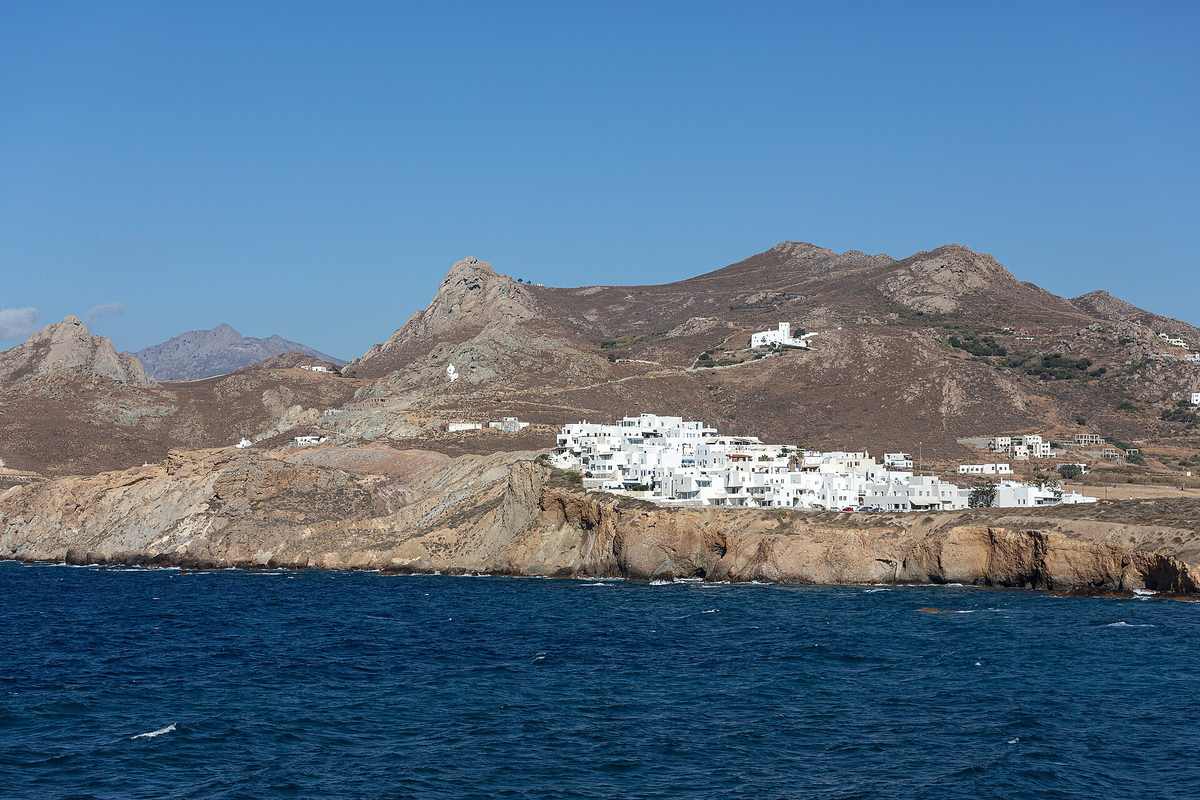
Grotta forms the rocky northern seafront of Naxos Town, and it holds one of the oldest secrets on the island. Beneath its shallow water and along its exposed rocks lie the remains of a Mycenaean and Cycladic acropolis, walls and foundations that mark the earliest settled heart of Naxos. The name means cave, a nod to the hollows the sea has carved into this wind-scoured coast. Waves break hard here, and the ruins surface and vanish with the tide. This guide maps the ancient site, the prehistoric settlement, the churches and hotels above the shore, and the nearby Metropolis excavation. Plan the whole trip with My Greece Tours.
Grotta sits a short walk north of the harbour and the old quarter, so it pairs naturally with the rest of the town. Read our Naxos travel guide for context on the island, then use this page to focus on the archaeology and the coastline itself. The sections below cover what Grotta is, the submerged acropolis, the Metropolis site, the neighbourhood above the rocks, and practical viewing advice for the ruins and the sea.
What is Grotta in Naxos?
Grotta is the northern seafront district of Naxos Town, built over the island’s prehistoric acropolis. Its rocky, wave-lashed coast hides submerged Mycenaean and Cycladic ruins, and the neighbourhood above holds hotels, churches and quiet lanes.
Grotta occupies the exposed northern edge of Naxos Town, facing open sea rather than the sheltered harbour. The name comes from the Italian word for cave, describing the hollows waves have cut into the low rocks. This coast catches the meltemi wind head-on, so surf breaks across the shallows even on calm summer mornings. Beneath that water sits the acropolis of ancient Naxos, the fortified core of the Bronze Age town. The district connects directly to the old Naxos Town quarter, a five-minute walk from the port and the base of the Kastro hill.
Visitors reach it along a paved seafront promenade lined with tavernas, small chapels and family-run guesthouses that look straight out over the ruins and the breaking waves.
Grotta is both an archaeological zone and a living residential area, and the two overlap on the same rocks. Excavations here revealed continuous habitation from the Late Neolithic period through the Mycenaean age, making this the founding settlement of the island. The history of Naxos begins on this shore, long before the marble temples and the medieval town. Wall lines, house foundations and burial remains have surfaced across the district, some now protected under modern buildings. The coast stays raw and undeveloped compared with the harbour front, giving the ruins an unusually direct setting.
Waves wash over stone that people first laid more than three thousand years ago, and the sea itself acts as the site’s roof and its slow destroyer.
What are the submerged ruins at Grotta?
The submerged ruins are the acropolis of prehistoric Naxos, a Mycenaean and Cycladic citadel now partly underwater. Wall foundations, streets and structures lie in the shallows and on the rocks, visible when the sea is clear and calm.
The acropolis at Grotta was the fortified summit of Bronze Age Naxos, occupied intensively during the Mycenaean period around the 13th century BC. Rising sea levels and coastal erosion have since drowned part of the settlement, leaving foundations a short distance offshore. On a windless day with clear water, snorkellers and shore-walkers can trace stone wall lines and rectangular structures beneath the surface. Archaeologists have documented Cycladic-era phases here too, pushing occupation back into the Early Bronze Age. The finds from these digs, including pottery, figurines and tools, sit in the Naxos Archaeological Museum up in the Kastro. The submerged remains are fragile and protected, so nothing may be moved or disturbed.
Even so, they offer a rare chance to look at a prehistoric town through seawater.
The Grotta settlement mattered because it controlled a natural landfall on the northern Cyclades sea routes. Bronze Age Naxos traded obsidian, marble and emery across the Aegean, and its acropolis guarded the safest approach to the island. Mycenaean chamber tombs and a fortification wall have been identified in and around the district, confirming a substantial, organised community. The site links the island’s deep past to its famous later landmark, the Portara, which stands on the islet just south of Grotta. Together they frame the ancient waterfront of Naxos across two thousand years. The ruins are best appreciated with a little knowledge in advance, because much lies below waterline or under later stone.
Reading about the excavations first turns a scatter of rocks into a legible drowned town.
What is the Metropolis archaeological site near Grotta?
The Metropolis site is a protected excavation beside Grotta, in the square before the Orthodox cathedral. A glass-roofed shelter displays Mycenaean and Geometric-era buildings, graves and streets uncovered during modern works, open to visitors.
The Metropolis archaeological site sits in Plateia Mitropoleos, the square in front of the Orthodox Metropolis cathedral, a two-minute walk inland from the Grotta rocks. Rescue excavations there exposed layers running from the Mycenaean period through the Geometric and later Greek phases. Roofed walkways and glass panels let visitors look down onto house foundations, a burial ground and paved lanes without touching them. The display forms an open-air annexe to the main collections and complements a visit to the Naxos Archaeological Museum nearby. Entry is straightforward, and information boards explain each stratum in Greek and English.
This site makes the abstract idea of a buried acropolis concrete, showing exactly how the ancient town stacked up beneath the modern one. It anchors Grotta firmly within the longer story of settled Naxos.
The Metropolis excavation reveals that the sacred and civic core of ancient Naxos stood right here, beside the acropolis at Grotta. Graves within the shelter belong to prominent families, and the pottery recovered spans centuries of continuous use. The cathedral above was raised on the same spot, reusing ancient marble and continuing the site’s role as a focal point. This layering repeats a pattern seen across the old town, including up at the Kastro, where Venetian walls sit on far older foundations. The Metropolis site and Grotta together let a visitor read the town vertically, era by era.
Guided walks often combine the two with the museum, building a clear sequence from Cycladic origins to the classical port. It is among the most rewarding stops for anyone curious about how Naxos Town grew.
What is the Grotta neighbourhood like above the rocks?
Above the rocks, Grotta is a calm residential and hotel district with sea-view guesthouses, small churches and a breezy promenade. It offers open sunset views, gentle waves and easy access to the old town lanes.
The neighbourhood above the Grotta shore is a quiet counterpoint to the busy harbour front. Family-run hotels and studios line the seafront road, chosen by visitors who want the sound of surf and an unobstructed horizon. Small chapels stand among the houses, including whitewashed churches that face directly onto the exposed coast. The promenade catches strong breezes off the sea, keeping it cooler than the sheltered port on hot afternoons. Because the water here is rocky and the waves lively, the area draws walkers and photographers rather than beach crowds. Sunset over the water, with the Portara silhouetted to the south, ranks among the finest views on the island.
The district rewards a slow evening stroll far more than a rushed sightseeing tick.
Staying in Grotta puts a visitor within a short walk of the port, the market lanes and the museum, yet apart from the crowds. Mornings bring locals swimming off the flat rocks where the sea calms, a long-standing town habit. The exposed coast means swimming suits confident swimmers on settled days rather than families with small children. There is plenty to fill the surrounding streets, and our guide to things to do in Naxos covers day trips, beaches and food beyond the town. Grotta works best as a base that blends archaeology, sea views and easy access to everything Naxos Town offers.
The neighbourhood keeps a residential rhythm year-round, so even in high season it feels lived-in rather than staged for tourists.
How do you visit and view the ruins at Grotta?
Visit Grotta on foot from Naxos Town, arriving on a calm, wind-free morning for the clearest water. Walk the seafront, view the submerged acropolis from the rocks, then see the Metropolis site and museum inland.
Reaching Grotta takes a five-minute walk north from the Naxos port along the seafront. The submerged ruins show best on windless mornings, when clear, still water lets you trace wall lines from the flat rocks at the shore. Calm days matter, because the meltemi churns the shallows and hides everything under white water. Bring shoes with grip, since the rocks are uneven and slick where the sea washes over them. Combine the shore with the roofed Metropolis site in the cathedral square and the collections that tell the town’s full arc. For deeper background before you go, the history of Naxos sets the acropolis in its Bronze Age context.
A local guide can point out features that are easy to miss from the surface.
Time the visit for early morning or late afternoon to avoid glare on the water and the midday heat on the open coast. Respect the protected status of the site, and take nothing from the seabed or the rocks. Do not attempt to walk on or disturb the submerged foundations, which are fragile and legally safeguarded. Pair Grotta with a wider walk through the old Naxos Town quarter and up to the Kastro for the museum. A half-day covers the shore, the Metropolis square and the collections at an unhurried pace. This corner of the island rewards curiosity and patience over speed, so build in time to simply watch the sea break over three thousand years of history.
Plan your visit and tours through our Naxos travel guide.
Frequently Asked Questions
Why are the ruins at Grotta underwater?
The ruins at Grotta lie partly underwater because sea levels rose and the coastline eroded over the three thousand years since the acropolis was built. The Mycenaean and Cycladic settlement stood on a shore that has since retreated, drowning the outer edge of the ancient town. Coastal subsidence along this stretch of the northern Cyclades added to the effect, gradually submerging wall foundations and structures that once sat on dry land. The exposed position made things worse, because the meltemi wind drives waves straight onto the rocks and grinds down anything above the surface. What survives now rests just offshore and in the shallows, protected from casual damage by the water itself.
Archaeologists map these remains through careful underwater survey rather than excavation. The sea acts as both preserver and destroyer here, hiding the acropolis from view yet keeping its drowned foundations largely undisturbed by human hands across the centuries.
Can you swim or snorkel at Grotta?
Swimming and snorkelling are possible at Grotta on calm days, though this is a rocky, exposed coast rather than a sandy beach. Locals swim off the flat rocks where the water settles, a tradition that goes back generations in the town. Snorkellers on a clear, windless morning can float over the submerged wall lines and structures of the ancient acropolis, which makes the swim genuinely memorable. The exposed setting means the sea turns rough quickly when the meltemi rises, so the coast suits confident swimmers rather than young children or nervous paddlers. Grip footwear helps on the uneven, slippery rocks at the water’s edge.
The submerged ruins carry legal protection, so nothing may be moved, stood on or taken from the seabed. Treat the site as a place to look and not to touch. For sheltered family swimming, the long sandy beaches south of Naxos Town, such as Agios Georgios, suit smaller children far better.
How far is Grotta from Naxos Town centre and the port?
Grotta sits directly next to Naxos Town centre, a five-minute walk north of the port and the harbour front. The district begins where the paved seafront curves away from the sheltered harbour towards the open, wave-battered northern coast. From the ferry quay, walkers reach the Grotta rocks and the seafront hotels in under ten minutes at an easy pace. The Metropolis archaeological site and the Orthodox cathedral square lie just inland, two minutes from the shore, and the Naxos Archaeological Museum stands a short climb up into the Kastro above. This tight clustering means a visitor can cover the submerged acropolis, the roofed Metropolis excavation, the museum and the old town lanes in a single unhurried half-day.
No transport is needed, since everything sits within walking distance of the port. The closeness of the ancient shore to the modern centre is exactly what makes Grotta such a rewarding and easy stop on any Naxos itinerary.