
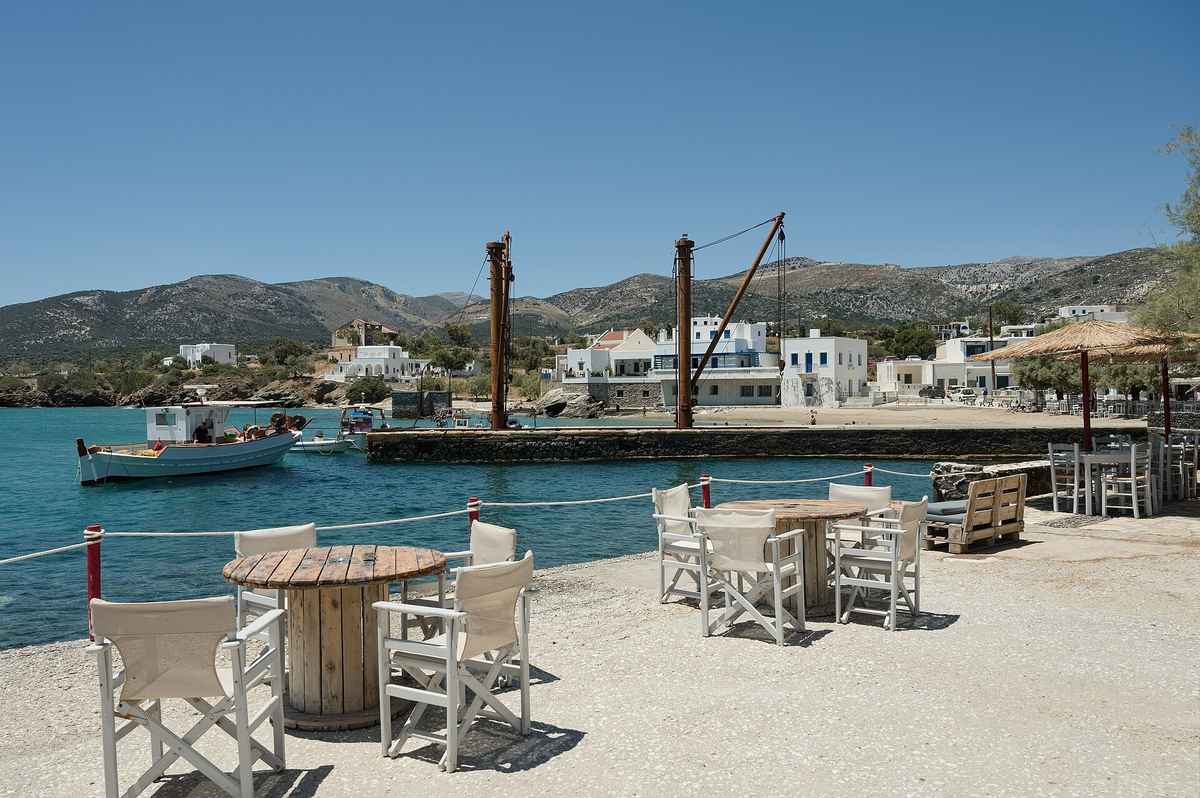
Moutsouna sits on the wild, unspoilt east coast of Naxos, a small fishing village that most visitors reach only after a slow, scenic drive over the island’s mountains. It faces the open Aegean, with a sheltered bay, a handful of houses, a short beach and a couple of tavernas serving the day’s catch. Once the busy harbour that shipped emery from the mountains above, it now feels quiet and remote, a place where the pace slows and the water stays clear. You can arrange a private day out with My Greece Tours if you want to explore this corner of the island without the crowds.
This page is part of our wider Naxos travel guide and focuses on one of the island’s most peaceful eastern corners. The sections below cover what Moutsouna is, its emery-mining history and surviving cableway, the beach and village as they are today, the remote coves that string south along the coast, and the practical route you take to reach the village from the mountains.
What is Moutsouna on Naxos?
Moutsouna is a small fishing village on the wild east coast of Naxos, set around a sheltered bay with a short sandy beach, a handful of tavernas and clear water. It is quiet, remote and far removed from the busier western resorts.
Moutsouna lies on the far eastern side of Naxos, facing the open Aegean rather than the calmer, more developed west coast where most visitors stay. The village is compact: a scatter of low houses along the shore, a small harbour where fishing boats tie up, a short stretch of sand and a couple of tavernas. There are no large hotels and no organised resort atmosphere. What you find instead is a working coastline where the rhythm still follows the boats and the seasons.
Moutsouna stays off the main tourist circuit, and even in high season it keeps a slow, unhurried feel that a wide range of travellers come specifically to seek out because the drive here crosses the island’s mountainous interior.
The village belongs to the eastern edge of Naxos, a part of the island shaped as considerable by mining and farming as by the sea. It sits below Apeiranthos and the marble-and-emery country of the interior. This connection runs through everything here, from the old harbour infrastructure to the mountain road that links it to the highland settlements. To understand Moutsouna, it helps to see it within the wider network of villages of Naxos, each with its own character and history. Moutsouna’s identity was forged by its role as a port, which is exactly what its emery-mining past reveals in more detail.
What is its emery-mining history?
Moutsouna was once the busy export harbour for the emery mines of the Naxos mountains. Emery, a hard abrasive rock, was carried down to the coast by an overhead cableway and loaded onto ships here, giving the small village real economic importance for decades.
The mountains inland from Moutsouna hold rich deposits of emery, a dense, dark rock prized as a natural abrasive long before synthetic materials existed. For a long stretch of the island’s history, mining this stone was one of the most important activities in eastern Naxos. Moutsouna served as the harbour where the finished product left the island. Miners cut and gathered the emery high in the hills around Apeiranthos and other highland areas. The whole operation depended on moving that heavy load down to the sea efficiently. The village’s quiet appearance today hides the fact that it was once an industrial gateway, alive with the traffic of loading, weighing and shipping the region’s most valuable export.
The most striking survivor of that era is the overhead cableway that carried the emery down from the mountains to the harbour. Suspended buckets ran on cables strung across the rugged terrain, ferrying the ore over ground that would have been slow and punishing to cross by cart or mule. Sections of this system, with their pylons and stations, can still be seen along the slopes above the village, standing as quiet monuments to a demanding industry. Walking near them gives a real sense of the effort involved and of how central the harbour once was. That industrial heritage sits in sharp contrast to the calm, easygoing village you find on the shore today.
The harbour is a base for fishing trips on Naxos aboard local caiques.
What is the beach and village like today?
Moutsouna is today a calm, low-key village with a small sandy beach, clear water and a handful of fish tavernas by the shore. It keeps a relaxed, off-the-beaten-track mood far from the west-coast resorts.
The beach at Moutsouna is small and sandy, curving gently around the sheltered bay so the water stays calm and remarkably clear. The shore never feels crowded, and you can usually find no shortage of space to lay out a towel even in the warmer months because the village is remote and undeveloped. The sea here is clean and inviting, shading from pale turquoise near the sand to deeper blue further out. The setting is framed by bare hills that keep the whole scene simple and unspoilt. It is an easy place to spend a slow day: swim, dry off, walk the short waterfront, then swim again as the light shifts across the bay.
The village tavernas make the most of what the local boats bring in, serving fresh fish and simple seafood alongside classic Greek dishes when it is time to eat. Sitting at a table by the water, watching the fishermen come and go, is very a great deal of part of the appeal. This is a corner of the island where a meal can stretch comfortably into the afternoon. Moutsouna’s quiet beach is only the beginning, though: the same wild east coast continues south in a string of even more remote coves.
For a fuller picture of where to swim across the island, see our guide to the beaches of Naxos, then read on for what lies just beyond the village.
What remote east-coast beaches are nearby?
South of Moutsouna, a string of quiet coves lines the wild east coast, most of them small, undeveloped and reached by rough tracks. Beaches such as Psili Ammos and Klidos offer clear water and near-total solitude for those willing to make the effort.
Following the coast south from Moutsouna leads to a succession of secluded coves that see very limited visitors. These beaches are the reward for going off the beaten path: small crescents of sand and pebble backed by empty hillsides, with clear, calm water and often not another soul in sight. Names like Psili Ammos and Klidos appear on this stretch, each a self-contained little bay with its own quiet charm. There are no sunbeds, no bars and usually no shade beyond what you bring, so this is wild, self-sufficient swimming rather than an organised beach day. For travellers who value solitude and unspoilt scenery, this eastern coastline is one of the most rewarding parts of Naxos.
Reaching these coves takes certain planning, as a wealth of lie at the end of unpaved tracks that are slow going and best tackled with a suitable vehicle and a full tank of water and supplies. The reward is a coastline that feels genuinely remote, where the only sounds are the sea and the wind. It is worth checking your route and conditions before setting out, since services are almost nonexistent once you leave the village. All of this begins from Moutsouna itself, which makes understanding how to get there the natural next step, whether you plan to stop at the village or push on to the wilder beaches beyond.
How do you visit Moutsouna?
You reach Moutsouna by driving east across the mountains from Chora, usually via Apeiranthos, on a scenic road that descends to the coast. A rental car is by far the easiest option, and the drive itself is a highlight of the trip.
The classic approach to Moutsouna is the mountain road east from Naxos Town, climbing through the interior to the highland village of Apeiranthos before winding down toward the sea. From there the route drops steadily through bare, dramatic scenery, with wide views over the eastern slopes and the blue Aegean opening up ahead as you near the coast. The descent follows the same country the emery once travelled, and the road is genuinely part of the experience rather than just a means to an end. Allow a wealth of time, drive carefully on the bends. Stop at the viewpoints along the way, because the crossing of the island is one of the most memorable drives Naxos offers.
A rental car gives you the freedom to time the journey as you like, linger in Apeiranthos, and continue south to the remote coves if you wish, so it is the most practical way to reach this side of the island. Bring water, sun protection and enough fuel, as facilities on the east coast are limited and far apart. Set out in the morning to enjoy the drive, a swim and a long taverna lunch without rushing the mountain road back. A guided outing can handle the logistics for you if you would rather leave the driving and route-finding to someone else. Plan your visit and tours through our Naxos travel guide.
Frequently Asked Questions
Is Moutsouna worth visiting?
Moutsouna is well worth visiting if you enjoy quiet, unspoilt places and want to see a different side of Naxos from the busy western resorts. The village offers a small sandy beach with clear, calm water, a relaxed atmosphere and fish tavernas serving the local catch, all in a remote setting that rarely feels crowded. The journey there is a highlight in itself, crossing the island’s mountains through dramatic scenery and the highland village of Apeiranthos before descending to the coast. Beyond the swimming and the food, Moutsouna carries a fascinating industrial past as the old emery-export harbour, and the surviving cableway on the slopes above adds real historical interest.
It also serves as the gateway to a string of even more remote coves along the east coast. For travellers seeking calm, character and scenery rather than nightlife and facilities, it is one of the most rewarding corners of the island.
What is emery and why was it important to Naxos?
Emery is a very hard, dark, granular rock used as a natural abrasive for grinding, polishing and sharpening. Naxos holds part of the finest emery deposits, concentrated in the mountains of the island’s eastern interior. For a long period this stone was one of the region’s most valuable resources. Extracting it was demanding work carried out high in the hills, and the mined rock then had to be moved down to the sea for shipping. Moutsouna was the harbour where that export took place, which gave the small coastal village considerable importance beyond its size.
The most remarkable relic of the trade is the overhead cableway that carried the emery down from the mountains to the port, with suspended buckets running on cables across the rugged terrain. Parts of this system still stand on the slopes above the village. Understanding emery explains why a remote fishing village once had a busy working harbour and why its landscape is dotted with industrial remains.
How do you get from Naxos Town to Moutsouna?
The usual way to get from Naxos Town, or Chora, to Moutsouna is to drive east across the island’s mountainous interior. The scenic route heads inland and climbs toward the highland village of Apeiranthos, then descends through bare, dramatic hills to reach the east coast where Moutsouna sits by its bay. The drive covers a good distance of winding mountain road. It is best to allow ample time and to take the bends carefully; the crossing itself is one of the most memorable parts of a trip to this side of the island.
A rental car is by far the most practical choice, giving you the freedom to stop at viewpoints, explore Apeiranthos and continue on to the remote southern coves if you wish. Public transport to this remote coast is very limited, so independent transport or a guided outing is strongly recommended. Bring water, sun protection and enough fuel, since services on the east coast are sparse, and set out early to enjoy the day without rushing back.