
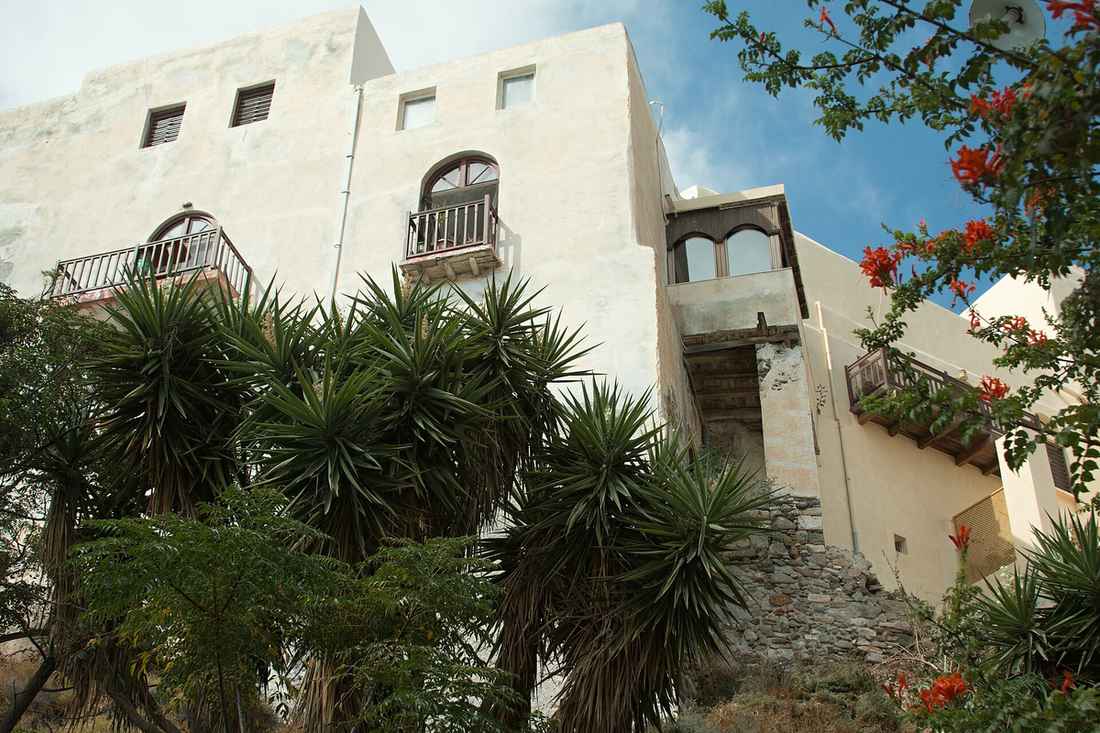
Naxos is the largest island in the Cyclades, and three days is enough to feel its range: a lively harbour town, certain of the finest beaches in Greece, and a green mountainous interior dotted with marble villages. This itinerary is built for a first visit, pairing the essential sights with room to relax between them. It assumes you base yourself in or near Naxos Town and move outward each day, keeping travel time short and swimming time long. You will see the Portara at sunset, float in turquoise shallows on the west coast, and hike toward the highest peak in the islands. You can explore the island on a private day trip with My Greece Tours if you would rather have a local handle the logistics.
For deeper background on the island, its history and its practicalities, see our full Naxos travel guide, which complements the day-by-day plan below. The sections below cover how to plan three days on Naxos, Day 1 in Naxos Town with the Kastro and the Portara, Day 2 on the west-coast beaches, Day 3 in the mountain villages and on Mount Zas, and finally how to adapt or extend the itinerary.
How should you plan 3 days in Naxos?
Base yourself in or near Naxos Town and split the three days by theme: town and old-quarter sights on Day 1, west-coast beaches on Day 2, and the mountain villages with Mount Zas on Day 3.
The smartest structure for a short stay is to keep Naxos Town as your anchor. The port, the bus station, most restaurants and the sunset at the Portara are all within walking distance, and the long town beaches begin just south of the harbour. From this base the three main faces of the island fan out logically: the old quarter and waterfront on your doorstep, the golden west-coast beaches a short ride south. The marble villages of the interior a scenic drive into the hills. Treating each day as one theme stops you from criss-crossing the island and losing hours in transit, which matters when you only have seventy-two hours to work with.
Transport is the other early decision. Naxos has a reliable bus network linking Chora with the west-coast beaches and the main mountain villages, so a car is optional if you keep to those routes. To reach Mount Zas, quieter coves or a cluster of villages in one day, though, a rental car or scooter pays for itself in freedom and flexibility. Book any car in high summer well ahead, carry cash for village tavernas, and start hot-weather activities early. With the base chosen and wheels sorted, Day 1 begins on foot in the atmospheric heart of Naxos Town.
What fills Day 1 in Naxos Town, the Kastro and the Portara?
Spend your first day on foot in Chora: wander the whitewashed lanes up to the Venetian Kastro and its museum, browse the harbour shops, then walk out to the Portara for sunset.
Begin in Naxos Town, whose old quarter climbs from the waterfront in a maze of arched alleys, bougainvillea and small shops. At the top sits the Kastro, the fortified Venetian settlement whose walls, towers and coats of arms recall the island’s Frankish rulers. Inside you will find the Archaeological Museum, housed in a former Jesuit school, with Cycladic figurines and finds that set the historical scene for the rest of your trip. Take your time here in the cool of the morning; the narrow streets are shaded and far quieter before the day-trippers arrive. A slow coffee in a courtyard cafe is the right pace for a first morning.
Drift down to the harbour for lunch and a look at the fishing boats and ferries as the afternoon eases. The unmissable finale is the Portara, the giant marble doorway of an unfinished temple to Apollo, standing alone on the islet of Palatia at the harbour mouth. It is a short causeway walk from town and the classic spot to watch the sun drop into the Aegean, framing the sky through its ancient frame. Afterwards, cool off with a swim at Agios Georgios, the long sandy beach right beside town. That gentle first taste of Naxos sand sets up Day 2, which is devoted entirely to the west coast.
What does Day 2 on the west-coast beaches cover?
Devote your second day to the famous west-coast beaches south of town: Agios Prokopios, Agia Anna and the long sweep of Plaka. Swim in shallow turquoise water, relax on soft sand, and try watersports such as windsurfing or kitesurfing where conditions allow.
The beaches of Naxos are the reason a wide range of travellers return, and the string along the west coast is the most accessible. Just south of Chora, Agios Prokopios opens with fine pale sand and calm, clear shallows that shelve gently, making it a comfortable choice for families and casual swimmers. A short walk on, Agia Anna is smaller and lined with tavernas where you can lunch with your feet almost in the water. Its small harbour adds a village feel to the day. Regular buses connect all of these from the town station. You can hop between them without a car and simply choose the stretch of sand that suits your mood that morning.
Beyond Agia Anna, Plaka unrolls for kilometres of soft dunes and shallow sea, wide enough that it never feels crowded even in peak season, with quieter naturist and back-to-nature sections toward its far end. The steady summer meltemi wind that funnels down this coast also makes Naxos a genuine watersports hub. A handful of bays run schools for windsurfing and kitesurfing, along with paddleboard and gear rental for calmer days. Pack water, shade and a picnic, and let the day drift by the sea. Once you have had your fill of sand and salt, Day 3 turns inland to a completely different Naxos of green valleys and marble villages.
What does Day 3 in the mountain villages and Mount Zas include?
Head into the interior on your third day to see the marble villages of Halki, Filoti and Apeiranthos, taste local kitron and cheese, and visit ancient sites such as the kouros statues. The energetic can hike Mount Zas, the highest peak in the Cyclades.
The heart of the island rewards anyone who climbs into it, and the drive up to Mount Zas passes through the loveliest villages on Naxos. Halki, in the fertile Tragaea valley, is a graceful old settlement of neoclassical houses, Byzantine churches and the Vallindras distillery. The citrus liqueur kitron has been made in the traditional way for generations. Further up, Filoti spreads across the mountainside beneath plane trees and is the usual starting point for the walk to the summit. Higher still, Apeiranthos feels almost carved from stone, its marble-paved lanes, small museums and mountain air giving it a character quite unlike the coastal towns.
Between them lie olive groves, terraced fields and views that stretch back to the sea.
Mount Zas, at just over a thousand metres, is the highest peak in the Cyclades. The marked trail from the spring near Filoti climbs past the cave where legend says Zeus was raised. Allow roughly three to four hours for the return hike, start early, and carry water, a hat and proper shoes. The ancient kouroi of Melanes and Apollonas, huge unfinished marble statues left lying in old quarries, offer an easier and memorable half-day instead if a summit day feels like too a great deal of. Wherever you turn in the interior, taverna tables groan with local cheese, honey and meat.
With the three core days mapped, the final question is how to bend the plan to your own trip.
How do you adapt or extend the itinerary?
Adapt the plan to your pace: slow it down with children, add days for more beaches and villages, or extend with a boat trip to the Small Cyclades. Even one extra day lets you explore the island’s quieter corners and reduce daily travel.
This itinerary flexes easily. Families with young children can trim the walking on Day 1, favour the shallow, calm sands of Agios Prokopios and Agia Anna. Swap the Mount Zas hike for the gentler kouros statues or a short valley stroll. Travellers who want more depth can find no shortage of extra things to do in Naxos, from the Temple of Demeter at Sangri and the emery-mining villages of the northeast to horse riding, sea kayaking and cooking classes. Spread the beaches and villages over more time rather than rushing. Add the quieter southern coves such as Alyko and its cedar forest, which reward those with a car if you have a fourth or fifth day.
With extra days, the sea opens up too. Naxos is the gateway to the Small Cyclades, and day boats run in season to islets like Koufonisia, Iraklia and Schinoussa, where you can swim in certain of the clearest water in Greece and lunch in a sleepy harbour before returning by evening. A trip to nearby Paros or a caldera cruise are also within reach. Keep a light touch on the schedule, leave room for a long lunch and an unplanned swim, and let the island set the rhythm. Plan your visit and tours through our Naxos travel guide.
Frequently Asked Questions
Is 3 days enough for Naxos?
Three days is enough to enjoy the highlights of Naxos without feeling rushed, provided you structure them by theme. With one day for Naxos Town and its old quarter, one for the west-coast beaches and one for the mountain villages and Mount Zas, you cover the island’s three distinct characters and still have time to swim and eat well. What three days will not give you is the full extent of Naxos. This is the largest of the Cyclades and holds far more beaches, villages and ancient sites than a short stay can absorb.
You can slow the pace, add quieter southern coves, or take a boat trip to the Small Cyclades if your schedule allows a fourth or fifth day. For a first visit, though, a well-planned three-day itinerary based in or near the town gives a satisfying, balanced taste of the island and a clear sense of whether you want to return for longer.
Do you need a car to follow this Naxos itinerary?
You do not strictly need a car, but it widens your options considerably. Naxos has a dependable bus network that links the town with the main west-coast beaches such as Agios Prokopios, Agia Anna and Plaka. With a cluster of the larger mountain villages including Halki, Filoti and Apeiranthos. For a beach-focused stay, buses cover almost everything you need. The interior is where a car or scooter earns its keep: reaching the Mount Zas trailhead, linking a series of villages in one day, or finding the quieter southern coves and the scattered kouros statues is far easier with your own wheels.
Book ahead in the peak summer months, when demand is high and vehicles sell out if you plan to rent. Carry cash for village tavernas and small distilleries, keep the fuel topped up, and set off early to beat both the heat and the busiest stretches of road.
What is the best time of year to visit Naxos?
Late spring and early autumn are widely considered the sweet spot for visiting Naxos. In the late spring and early autumn windows the sea is warm enough for comfortable swimming, the days are long and sunny. The crowds and prices sit well below the summer peak. Spring also brings a green, flower-filled countryside that makes the mountain villages and the Tragaea valley especially beautiful for walking and for the Mount Zas hike. High summer delivers guaranteed heat and a lively atmosphere, along with the strong meltemi wind that turns the west coast into a windsurfing and kitesurfing draw. It is also the busiest and hottest period, so start activities early and reserve accommodation and cars well in advance.
Winter is quiet and mild, with dozens of seasonal businesses closed, best suited to travellers seeking solitude rather than a full beach-and-boat holiday. For this three-day itinerary, the shoulder seasons offer the easiest balance of good weather and space to enjoy the island.