
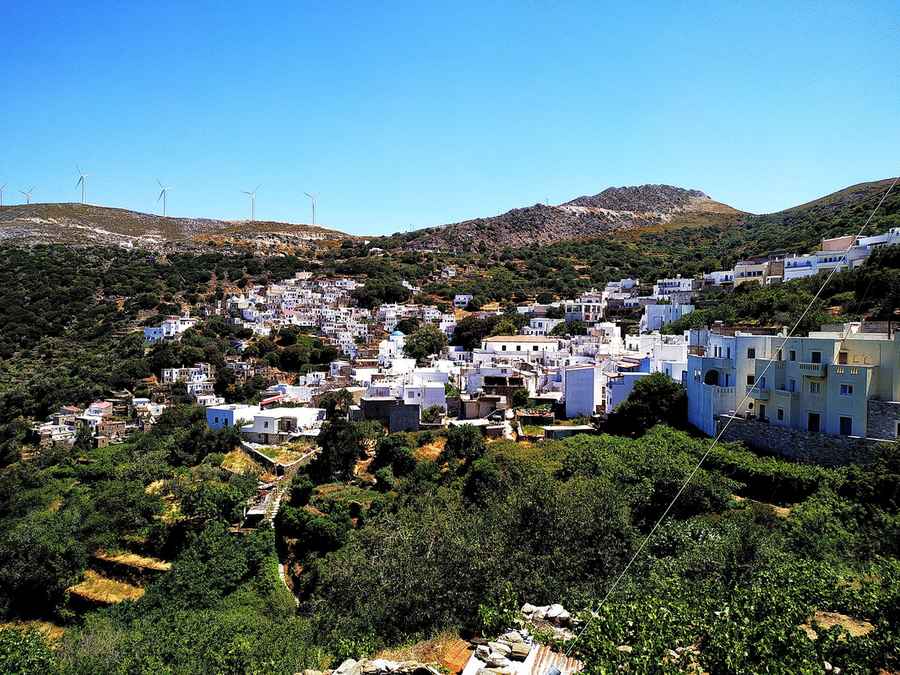
Koronos is one of the most enchanting inland settlements on Naxos, a traditional mountain village that spills down a steep, green ravine in the northern highlands of the island. Whitewashed houses cling to the slopes in tiers, terraced vineyards ribbon the hillsides, and narrow stepped lanes thread between them toward a shaded central square. Far from the beaches, Koronos preserves an older, slower rhythm of island life shaped by wine-making and the region’s storied emery mines. Travellers who venture here find cool mountain air, warm hospitality and views that stretch across the ravine. It is an unforgettable stop, and one you can reach comfortably on a guided tour with My Greece Tours.
This guide sits within our wider Naxos travel guide and focuses squarely on what makes Koronos special, so you can plan a visit that fits your pace and interests. The sections below cover what Koronos is and where it sits, what the village and its square are like to wander, why it is known for wine and emery, the traditions and atmosphere that define daily life here, and exactly how to visit by the scenic mountain road.
What is Koronos on Naxos?
Koronos is a traditional mountain village in northern Naxos, built dramatically down the sides of a steep, green ravine. It lies inland among the island’s highest slopes, surrounded by terraced vineyards, and is one of Naxos’s most scenic and authentic settlements.
Koronos sits in the mountainous heart of northern Naxos, roughly midway along the winding road that climbs from the central highlands toward the northern tip of the island. Unlike the coastal resorts, it is a highland community set at altitude, where the air stays cool even in high summer and morning mist can gather in the ravine below. The village occupies both flanks of a deep gorge, so houses appear stacked one above another, connected by footpaths and stone steps rather than roads. Springs and small streams feed the greenery that gives the surrounding slopes their unusual lushness for a Cycladic island.
This dramatic natural setting is the first thing visitors notice, and it explains why Koronos feels so different from the seaside Naxos most travellers know first.
Historically, Koronos grew as a farming and mining community, and its remote position helped it hold onto customs that have faded elsewhere. It is counted among the traditional inland villages of Naxos, a cluster of highland settlements that together preserve the island’s mountain culture. Families here have worked the land for generations, tending vines, olives and small terraced gardens carved into the steep hillsides. The population swells in summer as people with village roots return, and thins in winter to a hardy year-round community.
Understanding this setting and its people is the key to appreciating everything else, because the physical shape of the village directly shaped the layout of its lanes and the character of its beloved central square.
What is the village and its square like?
Koronos is amphitheatrical, its whitewashed houses rising in tiers along both sides of the ravine, linked by narrow stepped lanes. At its heart lies a shaded central square with plane trees, running water and traditional cafes where village life gathers.
Walking through Koronos means climbing and descending constantly, because the village is built vertically into the slopes. Its lanes are largely stepped alleys too narrow for cars, paved with stone and shaded by overhanging balconies, flowering vines and the walls of neighbouring houses. Doorways open directly onto the steps, and cats doze in patches of sun. This amphitheatrical layout, with homes rising in rows so each has a view over the roofs below, is one of the most photogenic in the Cyclades. The whitewash is broken by blue shutters, timber doors and the occasional stone archway spanning the lane.
Exploring on foot rewards the curious, since the most beautiful corners are tucked away from the main path and reveal themselves only to those willing to wander the steps.
The social centre of Koronos is its shaded central square, set beside running spring water and canopied by tall plane trees that keep it cool through the hottest afternoons. Here the traditional cafes and tavernas set out their tables, and locals gather to talk, play cards and watch the day pass. It is the natural place to pause, order a coffee or a glass of the local wine, and absorb the unhurried atmosphere. The square feels timeless, a genuine village gathering place rather than a staged attraction. This same lived-in authenticity connects Koronos to its highland neighbour Apeiranthos, though each village guards its own distinct character.
From this square, the story of the surrounding vineyards and old mines comes naturally into focus.
Why is Koronos known for wine and emery?
Koronos is renowned for the terraced vineyards ribboning its slopes and the local wine they produce, a long tradition of highland viticulture. It is equally tied to emery mining, as northern Naxos holds part of the world’s richest deposits of the abrasive mineral.
The steep hillsides around Koronos are sculpted into a wealth of stone-walled terraces, and most of these support vines that thrive in the cool mountain climate and stony soil. Wine-making is woven deep into local life, and the village is celebrated for its home-produced local wine, often pressed by families for their own tables and shared generously with visitors. The terracing itself is a feat of patient labour, each low wall built to hold soil and moisture on ground that would otherwise wash away. Vineyards share these terraces with olive trees and small orchards, creating the green, cultivated slopes that make the ravine so lush.
Tasting a glass of the village wine in a square-side cafe is one of the most authentic experiences Koronos offers, connecting you directly to the land around you.
Koronos is also inseparable from the history of emery, the extremely hard mineral used as an abrasive, since northern Naxos holds deposits among the finest anywhere. For generations the men of the village and surrounding highlands worked the emery mines scattered across these mountains, extracting the dark rock and hauling it along mountain routes toward the coast for export. This mining heritage shaped the local economy, forged tight-knit communities and left behind old galleries, tracks and aerial cableway remnants still visible in the landscape. The hard, demanding work of the mines became part of the village identity and lives on in songs and stories.
That deep well of shared experience feeds directly into the music, festivals and customs that give Koronos its unmistakable atmosphere.
What traditions and atmosphere define it?
Koronos is defined by living tradition: heartfelt music and song, lively festivals, and traditional cafes where authentic mountain life carries on. Its remote setting preserved customs, folk melodies and a strong communal spirit that visitors feel immediately.
Music is central to the soul of Koronos, and the village is known across Naxos for its singers and its love of traditional melody. Gatherings often turn into spontaneous sessions of song, with verses passed down through generations and improvised couplets exchanged among friends. The traditional cafes around the square double as informal stages, where an evening can drift into music, storytelling and shared bottles of local wine. This is authentic mountain life rather than performance for tourists, and its sincerity is exactly what makes it memorable. The rhythms of the year still follow farming, wine-making and the old mining calendar.
The community’s tight bonds are palpable in the easy way neighbours greet one another and welcome the occasional traveller into their circle.
Festivals mark the Koronos calendar and draw villagers home from across Greece and beyond, filling the square with food, dancing and music that can last deep into the night. Religious feast days for the local churches are especially important, blending devotion with celebration in a way that has changed little over time. These gatherings reveal the village at its most vibrant, when the whole community comes together and visitors are swept up in the warmth. Even on an ordinary day, though, the atmosphere is unhurried and genuine, an antidote to the busier corners of the island.
To experience it for yourself, the final piece of the puzzle is simply knowing how to reach this highland village and how to weave it into a wider tour of northern Naxos.
How do you visit Koronos?
Reach Koronos by the scenic mountain road that climbs north from Chora and the central villages toward Apollonas. Most visitors come by car or on a guided day tour, pairing the village with other highland stops along the northern route.
Getting to Koronos is part of the pleasure, because the journey follows one of the most dramatic drives on Naxos. From the island’s capital, the road climbs steadily into the mountains, curving past highland settlements before descending toward the ravine where Koronos appears, seemingly poured down the green slopes. The route is paved but winding, so allow extra time and drive carefully around the bends, which reward you with sweeping views at every turn. A car or an organised tour is the most practical way to arrive, as public transport to the northern villages is limited.
Park at the edge of the village, since the stepped lanes within are for walking only, then set off on foot toward the central square to begin exploring at a relaxed pace.
Koronos sits naturally on the classic northern villages loop, which continues down to the coastal village of Apollonas at the island’s northern tip, famous for its giant unfinished kouros statue and its seaside tavernas. A wide range of travellers combine Koronos with Apollonas and other highland stops in a single memorable day, driving up through the mountains and returning along the coast. Wear comfortable shoes for the steps, bring a light layer for the cooler mountain air, and set aside time to linger over a coffee or a meal in the square rather than rushing through. This inland gem rewards a slow, curious visit far more than a quick photo stop.
Plan your visit and tours through our Naxos travel guide.
Frequently Asked Questions
Where is Koronos located on Naxos?
Koronos lies in the mountainous interior of northern Naxos, built into the sides of a steep, green ravine among the island’s highest slopes. It sits inland, well away from the coast, roughly along the winding mountain road that climbs from the central highlands toward the northern village of Apollonas. The village enjoys noticeably cooler air than the beaches, and mist sometimes gathers in the gorge below in the early morning because it is set at altitude. Its remote highland position is exactly what preserved its traditional character, keeping it apart from the resort development found on the coast.
The most practical way to reach Koronos is by car or on a guided tour along the scenic northern route, since the drive itself, threading through terraced slopes and other mountain villages, is one of the highlights of visiting this beautiful and unspoiled corner of the island.
What is Koronos famous for?
Koronos is famous above all for its dramatic amphitheatrical setting, tumbling down a lush green ravine in tiers of whitewashed houses linked by narrow stepped lanes. It is celebrated for its terraced vineyards and the local wine they produce, a proud highland wine-making tradition. For its deep connection to emery mining, as northern Naxos holds certain of the richest deposits of that hard abrasive mineral anywhere. The village is equally known for its living culture of music and song, its lively festivals, and its shaded central square lined with traditional cafes beside running spring water. Together these give Koronos a reputation as one of the most authentic and scenic inland villages on the whole island.
Visitors come for the atmosphere of genuine mountain life, the striking architecture and views. The warm hospitality that has made the village a beloved stop for those exploring the traditional heart of Naxos.
How much time should you spend in Koronos?
Most visitors spend a relaxed half day in Koronos, though the village rewards anyone who lingers longer. Allow at least a couple of hours to wander the stepped lanes, climb between the tiers of houses for the best views over the ravine. Settle into the shaded central square for a coffee, a meal or a glass of the local wine. It pairs beautifully with a wider day exploring the highlands. A wealth of travellers combine it with the coastal village of Apollonas and other mountain stops in a single memorable outing because Koronos sits on the scenic northern route.
Immersive travel, staying for lunch and an unhurried afternoon lets you feel the true rhythm of village life, especially as the cafes fill and conversation flows if you enjoy slow. During a festival, plan for considerably longer, as celebrations of food, music and dancing can carry on late into the night and are well worth experiencing in full.