
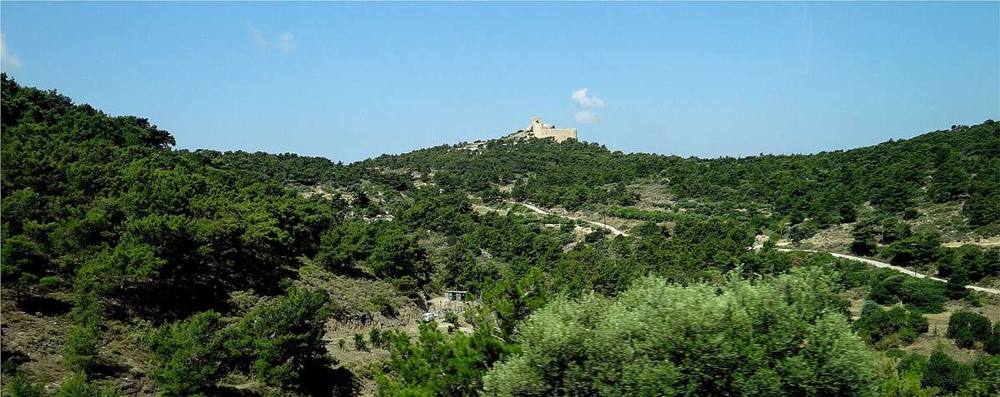
Kalavarda is a quiet farming village on the north-west coast of Rhodes, sitting on the flat agricultural plain between Fanes and Soroni to the north and the ancient site of Ancient Kamiros to the south. It is a working settlement rather than a resort: vineyards, vegetable plots and grazing land spread inland from a long, wind-exposed pebble beach, and the rhythm of the place follows the fields rather than the tour buses. Most visitors pass straight through on the coast road, yet Kalavarda rewards a slower look, offering fish tavernas, an unhurried seafront and an honest sense of rural island life only twenty-odd kilometres from Rhodes Town. For practical planning, area context and tours, start with My Greece Tours.
This guide treats Kalavarda as a real place to base yourself, not a name to skim past, and it sits inside our wider Rhodes travel guide for context on the rest of the island. The sections below cover where the village sits and how to reach it, the long pebble beach and its breezy west-coast water, the food and farming character, the crucial junction that climbs inland to the mountains, and how to use it all as a low-key base.
Where is Kalavarda and how do you get there?
Kalavarda lies on the north-west coast of Rhodes, roughly twenty-five kilometres from Rhodes Town, on the main west-coast road between Fanes and Soroni to the north and Ancient Kamiros to the south. A hire car is the practical way to reach it and explore the surrounding plain.
The village sits on the flat coastal plain where the north-west shoulder of Rhodes begins to soften into farmland, with the open Aegean on one side and rising interior hills on the other. Coming from Rhodes Town you follow the western coast road past the airport at Paradisi, through Kremasti and Fanes, and Kalavarda appears as a low, spread-out settlement of houses, churches and farm buildings rather than a tight tourist core. The drive is straightforward and scenic, hugging the breezy west coast where the sea is rarely calm and the light has a clean, exposed quality. Soroni, with its larger village amenities, lies just to the north, making the immediate area easy to navigate once you have your own wheels.
Public buses do run along this western coast, but they are timed for residents rather than sightseers, so a hire car remains the sensible choice for reaching Kalavarda and the sites around it. From the village you are well placed for the beaches to the north around Fanes, the ruins to the south and the mountain road that climbs inland. Parking is informal and easy, the roads are quiet outside the morning farm traffic, and distances are short enough that Kalavarda can anchor a day of unhurried exploring. Our guide to Fanes covers the neighbouring coast and its quieter beaches, and the next section covers the village’s own long pebble beach.
What is Kalavarda beach like?
Kalavarda beach is a long, wind-exposed stretch of grey pebbles and coarse sand on the open west coast, with cool, refreshing, often choppy water. It is breezy and uncrowded, popular with windsurfers and anyone who prefers nature over sunbeds, and water shoes are strongly advised for the stones.
The shoreline at Kalavarda runs for a considerable distance, backed by low scrub and farmland rather than hotels, so the beach keeps an open, slightly wild feel even in high summer. The pebbles are smooth but firm underfoot, which is exactly why water shoes make the difference between a relaxed swim and an awkward hobble across the stones. Because this is the windward west coast, the sea here is cooler and more active than the sheltered eastern bays around Rhodes Town, with a steady afternoon breeze that whips up small waves and keeps the air fresh on the hottest days. That same wind is the beach’s calling card for board sports, drawing windsurfers and kitesurfers who value the reliable cross-shore conditions.
Facilities are deliberately minimal, which is part of the appeal: you come to Kalavarda beach for space, clean water and the sound of the surf rather than for organised loungers and beach bars. The refreshing temperature suits a bracing swim after a hot drive inland, and the long sightlines along the coast make it a fine spot for an evening walk as the light drops over the Aegean. Pack shade, water and your water shoes, since the exposed setting offers little natural cover. Our guide to Rhodes beaches covers how this windward coast compares with the island’s sheltered bays, and the next section covers the food and farming character of the village.
What is there to eat and experience in the village?
Kalavarda offers honest fish tavernas and a genuine agricultural village atmosphere, with vineyards, fields and grazing land surrounding the houses. You come here for fresh seafood, local produce and an unhurried, authentic slice of rural Rhodian life rather than for nightlife or resort dining.
The food in Kalavarda reflects its setting between farmland and the sea, so menus lean on fresh fish landed along this coast alongside vegetables, cheese and wine produced on the surrounding plain. A handful of family-run fish tavernas serve the kind of straightforward, well-priced meals that locals actually eat, and the lack of a tourist strip means the atmosphere stays calm and neighbourly even in peak season. Vineyards are a real part of the landscape here, part of the wider wine country that climbs into the interior, and the agricultural rhythm of planting, tending and harvesting gives the village a working pulse that resort towns simply do not have.
Beyond the table, the experience of Kalavarda is the experience of a normal Greek farming village going about its day: tractors on the lanes in the morning, old men at the kafeneio, churches scattered among the fields, and the smell of dust, herbs and salt in the air. There is little to tick off and a lot to absorb, which is precisely the point for travellers who have had their fill of crowded sights. It also pairs naturally with the ruins just down the coast at Ancient Kamiros, letting you balance culture with quiet village time. Our guide to Ancient Kamiros covers the great Doric city-state nearby, and the next section covers the mountain junction that climbs inland from the village.
Why is the Kalavarda junction important for the mountains?
Kalavarda marks the key junction where the coast road meets the inland route that climbs to Salakos and Mount Profitis Ilias. Turning inland here takes you off the windswept shore and up into the forested wine country and the cool, pine-clad heart of the island.
The single most strategic thing about Kalavarda is its position as a gateway, because this is where you leave the flat coastal plain and turn east into the rising interior. The road that branches inland from the village climbs steadily through farmland and then forest towards Salakos, a green mountain village set among springs and plane trees, before continuing up to the slopes of Mount Profitis Ilias, the wooded high ground that crowns this part of Rhodes. That short turn transforms the landscape within minutes, swapping sea wind and pebbles for the shade, scent and cooler air of the pine forest.
This junction makes Kalavarda far more useful than its size suggests, since it links the coast, the ruins and the mountains in one tidy hub. From the village you can swim in the morning, visit the ancient site at midday and be among the trees by afternoon, all within a compact triangle of road. Our guide to Salakos covers the spring-fed mountain village along this inland route, and the next section covers how to use Kalavarda as a low-key base for the whole north-west.
Is Kalavarda a good base for exploring north-west Rhodes?
Kalavarda works well as an authentic, low-key base for travellers who want quiet over nightlife. Its central position near Ancient Kamiros, the west-coast beaches and the mountain road puts the ruins, the forest interior and several villages within easy reach, provided you have a hire car.
As a base, Kalavarda trades resort comforts for location and calm, which suits a particular kind of visitor very well. You are within a short drive of the ancient city of Kamiros, the long beaches of the windward coast, the neighbouring villages of Fanes and Soroni, and the spectacular climb into the wine-and-forest interior. Accommodation here is modest and scattered rather than concentrated in big hotels, so you wake to fields and roosters rather than pool music, and the absence of crowds means the surrounding roads and beaches stay genuinely peaceful. For independent travellers happy to self-cater and drive, it offers a rare authenticity this close to Rhodes Town.
A hire car is essential to make the most of the position, since the appeal of Kalavarda lies entirely in radiating out to the coast, the ruins and the mountains rather than in the village itself. Pack water shoes for the pebble beach, plan a forest excursion via the inland junction, and use the fish tavernas for unhurried evenings after a day of exploring. The mountain heights are easily reached from here, and our guide to Mount Profitis Ilias covers the forested summit and its cool retreat from the coast. Plan your visit and tours through our Rhodes travel guide.
Frequently Asked Questions
Do you need a car to visit Kalavarda?
A hire car is by far the best way to visit Kalavarda and the surrounding north-west coast of Rhodes. While buses do run along the western coast road between Rhodes Town and the villages, they are scheduled around residents and farm life rather than sightseeing, so they leave you with little flexibility for the beach, the ancient site and the mountain road. The whole point of Kalavarda is its position as a hub linking the coast, the ruins at Ancient Kamiros and the inland climb to Salakos and the forest, and you can only join those up with your own wheels. Distances are short and the roads are quiet outside the morning agricultural traffic, so driving here is easy and relaxed. Parking in and around the village is informal and rarely a problem, which makes a hire car the simple, sensible choice for getting the most from this corner of the island.
Is Kalavarda beach suitable for families and swimming?
Kalavarda beach is a fine choice for confident swimmers who enjoy fresh, lively water and open space, though families should arrive prepared. The shore is a long stretch of grey pebbles and coarse sand on the exposed west coast, so the water is cooler and choppier than the sheltered eastern bays, with a steady afternoon breeze and frequent small waves. That makes it bracing and refreshing rather than bath-warm, and wonderful on a hot day, but it is less forgiving for very small children than a calm, shallow sandy cove. Water shoes are genuinely important here, as the pebbles are awkward on bare feet both in and out of the sea. Facilities are minimal, so bring your own shade, water and supplies. For families who like nature, swimming and a real sense of the open Aegean, with the right footwear and a little caution about the wind, Kalavarda beach can be a rewarding and uncrowded day out.
What can you combine with a visit to Kalavarda?
Kalavarda sits at the heart of an easy and varied day on north-west Rhodes, which is its great strength. Just south along the coast lies the ancient city-state of Kamiros, one of the island’s most impressive archaeological sites, perfect for a midday culture stop. To the north, the villages and quieter beaches around Fanes and Soroni extend the windward coast for swimming and seafood. The real magic, though, is the inland turn at the Kalavarda junction, which climbs through farmland and forest to the spring-fed mountain village of Salakos and on towards Mount Profitis Ilias, the cool, pine-clad high ground of central Rhodes. A typical itinerary might pair a morning swim, an ancient site at midday and a forest afternoon, all within a compact triangle of road. Add the village’s own fish tavernas for an unhurried evening, and Kalavarda becomes a genuinely satisfying base that combines beach, history, mountains and authentic rural life in a single, low-key package.