
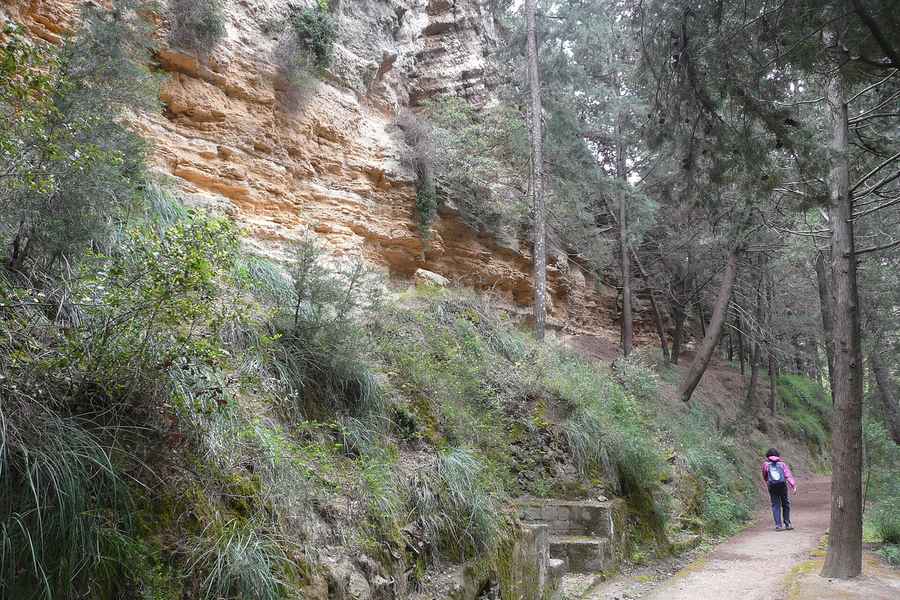
Rodini Park is a green, spring-fed valley park on the southern edge of Rhodes Town, and it is reputedly among the oldest landscaped parks in the world. The valley is shaded by tall plane and pine trees, threaded by streams and small stone bridges, and dotted with quiet ponds where peacocks roam free. Within and around the park sit ancient rock-cut Hellenistic tombs, including the monumental structure long known as the Tomb of the Ptolemies, while traces of an ancient aqueduct that once fed the city still survive. The park is free to enter, a short bus ride from the Old Town, and a calm, leafy escape from the crowds, planned with My Greece Tours.
Rodini sits just south of the medieval walls, so it pairs naturally with a day in the historic centre covered in our Rhodes travel guide. The sections below cover what makes the valley special, the ancient tombs and aqueduct nearby, the resident peacocks and shaded walks, how to get there, and how to fit Rodini into a wider Rhodes itinerary without rushing.
What is Rodini Park and why is it so old?
Rodini Park is a spring-fed wooded valley on the southern edge of Rhodes Town, watered by natural streams that keep it green through summer. It is reputedly among the oldest landscaped parks in the world, with roots reaching back to antiquity rather than to a modern garden design.
The valley owes its character to water. Natural springs feed streams that wind through the bottom of the gorge, so the plane and pine trees stay tall and shaded even when the rest of the island bakes. Generations have shaped the slopes into a recognisable park, with paths, ponds and small stone bridges crossing the running water. That long continuity is why the site is so often described as one of the oldest landscaped parks anywhere, valued as a green retreat for far longer than most public gardens have existed. The result is a cool, leafy pocket within easy reach of the harbour and the medieval walls, where the temperature drops noticeably as you walk down into the trees.
Unlike a built attraction, Rodini reveals itself slowly as you wander the looping paths between the streams and ponds. You are free to set your own pace, pausing on a bridge to watch the water or following a track up the shaded slope. Because the park is unticketed and open-feeling, it rewards an unhurried visit rather than a quick photo stop, and many travellers stay far longer than they planned. Our guide to things to do in Rhodes covers how this quiet valley fits alongside the island’s busier sights, and the next section covers the ancient tombs and aqueduct hidden in and around the park.
What ancient tombs and aqueduct can you see near Rodini?
Around Rodini stand ancient rock-cut Hellenistic tombs carved into the soft stone, the grandest being the monumental structure long called the Tomb of the Ptolemies. Nearby you can also trace remains of an ancient aqueduct that once carried spring water into the city of Rhodes.
The most striking monument is the large rock-cut tomb traditionally named after the Ptolemies, a Hellenistic dynasty whose memory the site keeps alive. Cut directly into the living rock, it shows the engineering and funerary ambitions of the ancient city, with carved chambers and a facade shaped from the cliff itself. Smaller rock-cut tombs in the same area belong to the broad necropolis that once spread across this edge of Rhodes, where the dead were buried beyond the walls. Walking among them, you sense how the modern park sits directly on top of a deep layer of history, with antiquity literally carved into the ground beneath the trees.
Water shaped the city as much as stone did, and the aqueduct traces near Rodini are part of that story. The springs that keep the valley green were also harnessed in antiquity to supply Rhodes, and surviving sections of the channel hint at how the ancient engineers moved water from the hills toward the town. Seeing the tombs and the aqueduct together turns a simple green walk into a quiet open-air lesson in how the ancient city lived and died. Our guide to Rhodes Old Town covers the medieval walls that came much later, and the next section covers the peacocks, ponds and shaded walks that make the park such a pleasure.
What are the peacocks, ponds and shaded walks like?
Rodini is best known for the peacocks that roam free among the trees, often displaying near the ponds and paths. Beneath the plane and pine canopy you will find streams, small stone bridges and quiet pools, all linked by shaded walks that stay cool even on hot afternoons.
The peacocks are the park’s signature residents, picking their way along the paths, perching in the branches and occasionally fanning their tails for an audience. Because they roam free rather than being penned, encountering them feels like a small piece of luck rather than a staged display, and children in particular tend to track them excitedly from pond to pond. The birds share the valley with the running water, so your walk is accompanied by both the rustle of the trees and the steady sound of the streams. It is a gentle, sensory kind of sightseeing, very different from the stone-and-crowds intensity of the medieval centre just to the north.
The walking itself is easy and shaded, following paths that cross the streams on little stone bridges and skirt the edges of the ponds. Benches and shady corners invite you to sit, and the deep tree cover makes the valley a natural refuge from the midday sun. There are no big climbs, so the loop suits a relaxed family stroll as much as a solo wander, and the cool air is a relief after a hot morning in town. Our guide to Rhodes with kids covers more family-friendly stops like this one, and the next section covers exactly how to reach the park from the Old Town.
How do you get to Rodini Park from Rhodes Town?
Rodini lies a short way south of the medieval walls, so it is reachable on foot, by local bus or by a quick drive from Rhodes Town. Many visitors walk down from the Old Town, while others combine it with a bus heading south along the main road that passes close to the valley.
From the Old Town, the park is close enough that a walk is realistic for many travellers, heading south away from the harbour toward the green of the valley. If you prefer not to walk in the heat, local buses running south from the centre pass near Rodini, and a taxi or hire car covers the short distance quickly. Because the park is free and there is no ticket gate, you can simply arrive, descend into the trees and start exploring at your own pace. We have avoided quoting fares or timetables here because services change, so check current bus information locally before you set out, especially in the hotter months when an early or late visit is far more comfortable.
Once you arrive, the layout is forgiving: paths loop through the valley, so it is hard to get badly lost, and you can dip in for half an hour or linger for an afternoon. Comfortable shoes, water and a little time are all you really need, and the shade does much of the work of keeping you cool. Pairing Rodini with nearby attractions makes a satisfying day out, since the park balances the busier sights with calm green space. Our guide to Mandraki Harbour covers the waterfront just north of the walls, and the next section covers how to weave Rodini into a fuller Rhodes itinerary.
How does Rodini Park fit into a wider Rhodes trip?
Rodini works best as a calm counterpoint to the island’s busier sights, slotted between a morning in the medieval centre and an afternoon by the water. Its free entry, shade and short distance from town make it easy to add to almost any Rhodes itinerary without extra cost or planning.
Because the valley sits so close to the Old Town, it pairs naturally with the cobbled streets, the harbour and the museums of the centre. A common rhythm is to explore the medieval core in the cooler morning, retreat to Rodini’s shade in the heat of the day, then return north for the evening. The park’s quiet, green character also balances the stone-heavy, crowd-heavy feel of the historic sights, giving your day a change of pace as well as a change of scenery. For families especially, the peacocks and easy paths offer a welcome break between more demanding walks around the walls and ramparts.
Rodini also sits comfortably alongside the island’s other marquee attractions, so you can build it into a longer loop rather than treating it as a stand-alone trip. Our guide to Rhodes Aquarium covers another easy, family-friendly stop on the northern tip of town, and combining the two with the Old Town fills a varied day. Whether you have a single day on Rhodes or a longer island base, the spring-fed valley adds a restful, free, history-rich hour or two that most visitors remember fondly. Plan your visit and tours through our Rhodes travel guide.
Frequently Asked Questions
Is Rodini Park free to visit?
Yes, Rodini Park is free to enter, with no ticket gate at the valley, which is part of what makes it such an easy addition to a day in Rhodes Town. You can simply walk down into the trees and start exploring the streams, bridges and ponds at your own pace. Because it is unticketed and open-feeling, the park suits both a quick half-hour stroll and a longer, lingering afternoon in the shade. We have deliberately not quoted opening hours here, since arrangements can change and it is wise to confirm current access locally before you go. The free entry also means Rodini pairs well with paid attractions elsewhere in town, letting you balance your budget across a full day. For families watching costs, a shaded, free park with roaming peacocks is a genuinely useful stop between more expensive sights.
Can you see peacocks at Rodini Park?
Yes, free-roaming peacocks are one of Rodini Park’s best-loved features, and they are a large part of why families seek the valley out. Rather than being penned, the birds wander the shaded paths, perch in the trees and gather near the ponds, so spotting them feels like a small reward for exploring. They sometimes fan their tails, which delights children and photographers alike, though sightings depend on where the birds happen to be on the day. Because they share the valley with the running streams and deep tree cover, watching them is part of the gentle, sensory experience of the whole park rather than a separate attraction. Treat the peacocks as wild residents: enjoy them from a respectful distance, let children watch quietly, and avoid feeding or chasing them so the birds stay relaxed and the encounter stays pleasant for everyone.
How long should you spend at Rodini Park?
Most visitors find that an hour to a couple of hours suits Rodini Park well, though the right length really depends on your pace and the weather. A brisk loop of the main paths, pausing on the stone bridges and beside the ponds, can be done comfortably in under an hour, while a slower visit with time to watch the peacocks, rest on a bench and explore the rock-cut tombs easily fills an afternoon. In the heat of the day the shaded valley is especially welcome, so many travellers stay longer than they first intended simply to enjoy the cool air. If you want to combine the park with the medieval centre or the harbour, allow a half-day for the whole outing so nothing feels rushed. Comfortable shoes, water and a relaxed attitude are all you really need to get the most from a visit.