
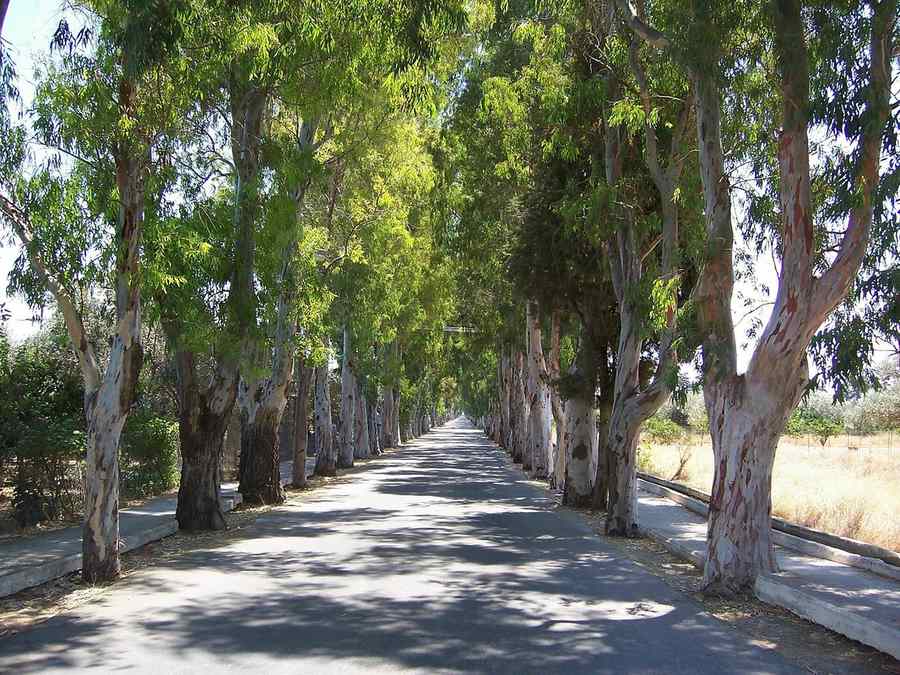
Kolymbia is a quiet, relatively modern resort village on the east coast of Rhodes, set between Faliraki to the north and the Tsambika headland to the south and lying roughly midway between Rhodes town and Lindos. It grew up around farmland first cultivated during the Italian era, and today it pairs a sheltered, gently shelving bay with a famous tree-lined avenue running down to the sea. Calmer and more family-oriented than its busier neighbours, it suits visitors who want clear water, tavernas and easy access to several of the island’s best beaches. Plan tickets and tours through My Greece Tours.
For the wider island context, see our Rhodes travel guide, which frames where Kolymbia sits among the east-coast resorts. The sections below cover what Kolymbia is, where it is and how to reach it, what the Eucalyptus Avenue and Kolymbia beach are like, what there is to do in and around the village, and the practical tips that help you visit.
What is Kolymbia?
Kolymbia is a small, relatively modern resort village on the east coast of Rhodes, between Faliraki and the Tsambika headland. Built around former Italian-era farmland, it offers a sheltered pebbly bay, calm clear water, tavernas and hotels, and a noticeably quieter, more family-oriented feel than larger resorts.
Kolymbia is one of the east coast’s calmer holiday bases, a purpose-grown resort rather than an old fishing port. The land here was developed for agriculture during the Italian era, and the village that followed kept a low-rise, unhurried character. Its layout is simple: a main road runs through the settlement, and a long straight avenue leads down to a sheltered bay framed by a small headland and a series of coves. Hotels, apartments, supermarkets and tavernas cluster along the way, so most needs are within walking distance. The pace is relaxed, the crowds are thinner than at the big party resorts, and families form a large share of the visitors.
Because it sits midway between Rhodes town and Lindos, Kolymbia works well as a quiet base for exploring the whole east coast. You are close to several major beaches and a celebrated inland beauty spot, yet far enough from the nightlife hubs to sleep easily. The village itself centres on swimming, eating out and gentle days by the water rather than late-night entertainment. Our guide to Rhodes beaches covers the wider coastline, and the next section covers where Kolymbia is and how you get there.
Where is Kolymbia and how do you get there?
Kolymbia lies on the east coast of Rhodes, north of the Tsambika headland and south of Faliraki, about midway between Rhodes town and Lindos. You reach it by car or by the regular bus service that runs along the main east-coast road, with the village turning down towards the sea.
Kolymbia sits beside the main road that links Rhodes town in the north with Lindos in the south, so it is straightforward to find. From Rhodes town you head south down the east coast, passing Faliraki, before the signposted turning leads you into the village and on towards the bay. The position is one of the resort’s strengths: you are within a short drive of Tsambika, Afandou and the Seven Springs, and within easy reach of both the island capital and the medieval streets of Lindos, making day trips in either direction simple to plan.
The two practical ways to arrive are by car or by bus. A hire car gives you the freedom to combine beaches, the inland springs and the wider island in a single day, and parking near the resort is generally manageable. The public buses that run along the east-coast route stop on the main road, from where it is a walk or short transfer down to the beach and accommodation. Many visitors fly into Rhodes airport on the west side of the island and transfer across to the east coast. Our guide to Tsambika Beach covers the neighbouring bay to the south, and the next section covers the Eucalyptus Avenue and Kolymbia beach.
What is the Eucalyptus Avenue and Kolymbia beach like?
Kolymbia’s signature feature is a long, straight avenue lined with tall eucalyptus trees, planted in the Italian era, running from the main road down to the sea. The beach itself is pebbly and gently shelving, set in a sheltered bay with calm, clear water that is good for swimming and snorkelling.
The Eucalyptus Avenue, sometimes called Eucalyptus Road, is the image most visitors associate with Kolymbia. The trees were planted when the area was first developed for agriculture under Italian rule, and they now form a tall, shady corridor that runs dead straight from the main road down towards the coast. Walking or driving the avenue is a small pleasure in itself, the canopy filtering the light and the line of trunks drawing the eye to the sea at the far end. It gives the resort a distinctive sense of arrival that few other east-coast villages can match, and it remains the village’s best-known landmark.
At the foot of the avenue you reach Kolymbia beach, set in a sheltered bay protected by a small headland with quieter coves nearby. The shore is pebbly and shelves gently into the water, so the sea stays calm and clear, which makes it well suited to swimming and to snorkelling around the rockier edges. Tavernas and accommodation sit close to the front, so a day here is easy to organise. Our guide to the Seven Springs covers the cool inland retreat just behind the resort, and the next section covers what there is to do in and around Kolymbia.
What is there to do in and around Kolymbia?
In Kolymbia you can swim, snorkel and relax on the sheltered bay, walk the Eucalyptus Avenue and eat at the tavernas. Nearby lie Tsambika Beach, Afandou Beach and the inland Seven Springs, while Rhodes town and Lindos are both within an easy drive for day trips.
Within the resort itself, days revolve around the water and the village. You can swim and snorkel in the calm bay, settle on the pebbly beach, stroll the famous eucalyptus avenue and choose between the tavernas for an unhurried lunch or dinner. The small headland and surrounding coves reward a little exploration on foot, and the gentle, family-friendly atmosphere means it never feels overwhelming. For many visitors the appeal is precisely this slower rhythm, with the option of a busier day out whenever the mood takes them.
The surroundings are where Kolymbia really earns its place as a base. To the south, beyond the headland, lies Tsambika Beach with its long stretch of sand, while Afandou Beach offers another broad shoreline to the north. Just inland sits the Seven Springs, or Epta Piges, a shaded valley of streams and woodland that is cool and green even in high summer. Rhodes town and Lindos are both reachable for a full day out. Our guide to where to stay in Rhodes covers the island’s resorts and bases, and the next section covers the tips that help you visit Kolymbia.
What tips help you visit Kolymbia?
Bring beach shoes for the pebbles, pack snorkelling gear for the clear water, and consider a hire car to reach Tsambika, Afandou and the Seven Springs easily. Choose Kolymbia for a calm, family base rather than nightlife, and use the east-coast bus when you prefer not to drive.
A few practical choices make a Kolymbia stay smoother. Because the beach is pebbly rather than sandy, water shoes or beach sandals make getting in and out far more comfortable, and they are worth packing for the children too. The calm, clear water is ideal for snorkelling, so bringing a mask and snorkel pays off around the headland and coves. Set expectations correctly as well: Kolymbia is a quiet, family-oriented resort, so visitors seeking lively nightlife are better matched to the busier resorts further north, while those wanting peace will find exactly that here.
Transport shapes how much of the area you see. A hire car lets you string together Tsambika, Afandou and the inland Seven Springs in a single day, and reach Rhodes town or Lindos at your own pace, whereas the east-coast bus is a reliable option if you prefer not to drive. Either way, plan beach days around the morning for calmer water and easier parking, and keep some time for simply enjoying the avenue and the bay. Plan your visit and tours through our Rhodes travel guide.
Frequently Asked Questions
Is Kolymbia good for families?
Yes, Kolymbia is widely regarded as one of the more family-friendly resorts on the east coast of Rhodes. It is calmer and quieter than busier neighbours such as Faliraki, with a relaxed, low-rise character and an unhurried pace that suits parents with younger children. The beach sits in a sheltered bay protected by a small headland, so the water stays calm and clear, and it shelves gently, which makes paddling and supervised swimming easier to manage. Tavernas, supermarkets and accommodation cluster within walking distance, so day-to-day needs are simple to meet on foot. Because nightlife is limited, evenings are peaceful, which families often prefer. The one thing to prepare for is the pebbly shore, so water shoes are a sensible addition to the packing list. With Tsambika, Afandou and the Seven Springs all close by, there is enough variety to fill a relaxed family holiday without long journeys.
Why is Kolymbia famous for its eucalyptus trees?
Kolymbia’s tall eucalyptus trees line a long, straight avenue that runs from the main road down to the sea, and this tree-lined approach is the resort’s best-known landmark. The trees date from the Italian era, when the area around Kolymbia was first developed for agriculture and the land was laid out for cultivation. The eucalyptus was well suited to the conditions, and the resulting avenue, often called Eucalyptus Avenue or Eucalyptus Road, has become the defining image of the village. Today the mature trees form a tall, shaded corridor that frames the route to the coast and gives the resort a distinctive sense of arrival you do not find in most other east-coast villages. Walking or driving its dead-straight line, with the canopy overhead and the sea visible at the far end, is one of the small pleasures of a stay here, and it helps explain why Kolymbia is so closely associated with the trees.
What beaches are near Kolymbia?
Kolymbia has its own pebbly beach in a sheltered bay with a small headland and quieter coves, where the calm, clear water is good for swimming and snorkelling. Beyond the resort, several of the east coast’s best-known beaches are close at hand. Immediately to the south, past the Tsambika headland, lies Tsambika Beach, a long stretch of sand that is among the most popular on this side of the island. To the north you will find Afandou Beach, another broad shoreline with plenty of room. Just inland, rather than on the coast, sits the Seven Springs, or Epta Piges, a cool, green valley of streams and woodland that makes a refreshing change from the seafront on a hot day. Because Kolymbia lies roughly midway between Rhodes town and Lindos, it works well as a base for reaching these spots, most easily by hire car, though the east-coast bus also serves the main road.