
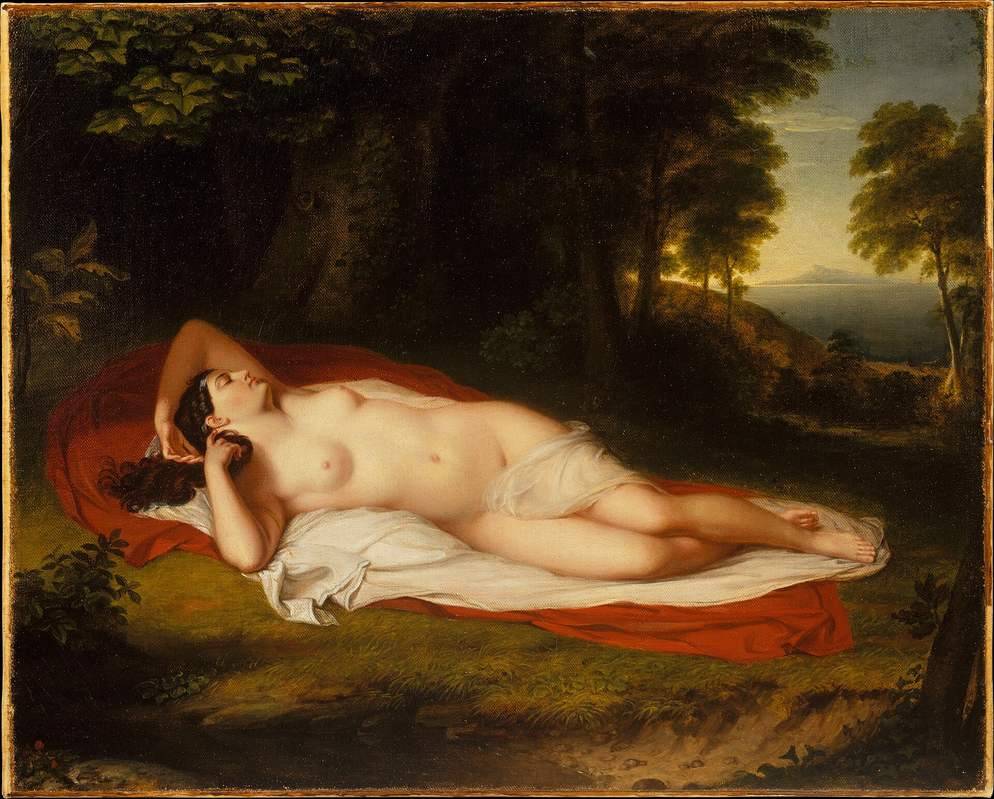
Ariadne was the princess of Knossos who gave Theseus the thread to escape the labyrinth, only to be abandoned and later wed to the god Dionysus. Plan tickets and tours through My Greece Tours.
Ariadne is one of the great figures linked to the Palace of Knossos. The sections below cover who she was, the thread that saved Theseus, her abandonment on Naxos, her marriage to Dionysus and her meaning.
Who was Ariadne?
Ariadne was a princess of Knossos in Greek mythology, the daughter of King Minos of Crete. She is known above all for the thread that let Theseus escape the labyrinth.
Ariadne stands among the most important figures in the legends of Knossos, a princess of Crete and the daughter of King Minos, who ruled from the palace. As a member of the royal family of Knossos, she lived at the heart of the Minoan world of the myths, and her story is interwoven with the most famous legends of the palace: the Minotaur, the labyrinth, the hero Theseus and the tribute of Athens. Her home was the court of a powerful sea-king, and the tale that made her famous unfolds within its walls and the maze beneath them.
Ariadne’s fame rests on the pivotal role she plays in the myth of Theseus and the Minotaur, where her love for the hero leads her to betray her own father and homeland to help him. Her choice sets in motion a dramatic tale of courage, love, betrayal and, in the end, a divine marriage. She is remembered as a romantic and tragic figure, and her name is forever linked to Knossos and its labyrinth. Our guide to the Minotaur and the labyrinth covers the central legend, and the next section covers her famous thread.
The myth belongs to the Bronze Age world of Minoan Crete, though the versions that survive were written down by Greek and later Roman poets. Ariadne bridges two roles across these tellings. She is a mortal princess of a legendary court, and she is also, in older and religious traditions, a figure closer to a goddess than to an ordinary woman. This double character gives her story its depth, and it is one reason her name recurs across ancient art, poetry and cult through the whole span of classical antiquity.
What does the name Ariadne mean?
The name Ariadne is usually explained as “most holy” or “utterly pure”, from a Cretan Greek form combining an intensifier with a root meaning holy. The sense points to a sacred, near-divine figure.
Ancient writers connected the name to the epithet Aridela, meaning “the very bright” or “the clearly visible”, a title recorded on the island of Naxos and elsewhere. The two explanations reinforce each other, since both cast Ariadne as a luminous, sacred being rather than a purely human princess. Scholars have long noted that a name meaning “most holy” fits a goddess more naturally than a king’s daughter, and this reading supports the idea that behind the mortal heroine of the Theseus story stands an older Cretan deity whose worship was folded into Greek myth.
The linguistic core of the name is Greek, but its Cretan colouring is important. The intensifying prefix and the root for “holy” appear in a dialect form tied to the island where her cult was strongest. This is consistent with the pattern seen across her legend, in which local Cretan and Aegean traditions were gathered up and reshaped by later poets. A name is rarely accidental in myth, and the meaning “most holy” frames how ancient audiences would have received her: not merely as a lovelorn girl, but as a figure touched by the sacred.
Her alternative title Aridela draws the same picture from a different angle. Brightness and visibility were qualities the Greeks associated with the divine and with the heavens, and Ariadne’s later placement among the stars, through the crown set in the sky, gives the epithet a literal fulfilment. The name therefore does double duty. It marks her as holy on earth and it anticipates her shining fate above it, tying together the mortal and celestial halves of her story.
Was Ariadne originally a goddess?
In one strand of tradition Ariadne began as a Minoan or Cretan goddess of vegetation and fertility, a “Mistress of the Labyrinth” whose worship predates the Greek myth of Theseus and the Minotaur.
Evidence from Bronze Age Crete points to a powerful female deity connected with the labyrinth. A clay tablet in the early Greek script known as Linear B, found at Knossos, records an offering to a figure whose title is read as “Mistress of the Labyrinth”. Scholars link this Mistress to the roots of Ariadne, arguing that a Minoan goddess of the palace and its maze was later remembered as a mortal princess once Greek storytellers reshaped the older religion into heroic legend. On this reading, Ariadne’s association with the labyrinth is not incidental but original, a survival of the deity she once was.
The idea of Ariadne as a vegetation goddess draws support from her marriage to Dionysus and from the mourning festivals held in her honour. Deities of growth and the seasons were often paired with a dying-and-reviving pattern, in which grief for a departed figure gave way to celebration of return. Ariadne’s abandonment, her death in one tradition, and her elevation to divine consort mirror this rhythm closely. Her link to the vine-god Dionysus, a power of fertility and renewal, strengthens the case that her earliest form belonged to the cycle of the natural year rather than to the world of heroes.
These older layers do not cancel the familiar story but underlie it. Greek myth frequently turned local gods and spirits into human characters within grand narratives, and Ariadne is a clear example. Her sacred name, her bond with the labyrinth, her cult on Naxos and Cyprus, and her celestial crown all read more easily if a goddess stands behind the princess. To meet Ariadne is therefore to meet two figures at once, the tragic Cretan girl of the Theseus legend and the far older Mistress of the Labyrinth whose memory that legend preserves.
Who were Ariadne’s parents and family?
Ariadne was the daughter of King Minos and Queen Pasiphae of Crete. Her siblings included Phaedra, Deucalion and Androgeos, and her mother’s monstrous son the Minotaur was her half-brother.
Her father, Minos, was the ruler of Knossos and, in the myths, a son of Zeus and Europa who became a judge of the dead after his reign. Her mother, Pasiphae, was a daughter of the sun-god Helios, which made Ariadne a granddaughter of the sun and part of a lineage that reached from the heavens to the sea. This ancestry gave the princess a status that was royal on her father’s side and divine on her mother’s, and it helps explain why later tradition found it easy to lift her toward the sphere of the gods. Our guide to King Minos covers her father and his court in full.
Among her siblings, Phaedra shares the darkest thread of the family’s later story. Phaedra would herself marry Theseus after Ariadne’s abandonment, a marriage that ended in tragedy and bound the two sisters to the same hero across a generation. Deucalion succeeded to power in Crete, and Androgeos, whose death at Athens set the whole cycle of tribute in motion, was the brother whose fate first drew Athenians to Knossos. The Minotaur, born to Pasiphae, was Ariadne’s half-brother, the creature at the centre of the labyrinth she would help Theseus survive. The family therefore stands at every hinge of the legend.
This web of relations is what makes Ariadne’s choice so charged. In giving Theseus the thread she does not simply aid a stranger. She betrays her father, defies her homeland, and sends a hero against the monster who shares her mother’s blood. The intimacy of the family ties raises the stakes of her decision and deepens the tragedy of her later abandonment, since the woman who gave up everything is left with neither the hero she chose nor the home she rejected. Ariadne’s story is, at heart, a story about a royal family torn apart by love, duty and monstrous inheritance.
What was Ariadne’s thread?
Ariadne’s thread was the ball of string she gave to Theseus so he could find his way out of the labyrinth after killing the Minotaur.
Ariadne’s thread ranks among the most famous objects in all of Greek mythology, and it is the key to the escape from the labyrinth. According to the myth, when the hero Theseus arrived at Knossos among the Athenian tribute destined to be sent into the labyrinth to be devoured by the Minotaur, Ariadne fell in love with him and resolved to help him survive. Her feelings turned at once into a plan, and that plan hinged on one small, ingenious object that would outwit the cleverest trap ever built.
Her solution to the inescapable maze was a simple ball of thread, which she gave to Theseus on the advice, in one telling, of the craftsman Daedalus. Theseus tied one end at the entrance and unwound the thread as he made his way into the heart of the labyrinth, so that after he had killed the Minotaur he could follow the thread back to find his way out again. The phrase Ariadne’s thread has since come to mean a method for solving a complex problem. Our guide to Daedalus and Icarus covers the labyrinth’s builder, and the next section covers her abandonment on Naxos.
The thread works as a symbol no less than an object. The labyrinth was designed so that no one who entered could reason a way out, and brute strength alone could kill the Minotaur but never solve the maze. What defeats the labyrinth is not force but a fixed line back to the known world, laid down step by step. Ariadne supplies exactly this, and in doing so she becomes the true author of the hero’s survival. The image of a single unbroken strand guiding a person through confusion has proved so powerful that it long outlived the myth, and it recurs in later thought whenever people describe how to reason through a tangled problem.
Why was Ariadne abandoned on Naxos?
Ariadne fled Crete with Theseus after helping him, but he abandoned her on the island of Naxos while she slept.
Ariadne, having helped Theseus defeat the Minotaur and escape the labyrinth, fled Crete with him, abandoning her father and homeland for the hero she loved. The romance ended in betrayal. During the voyage back the ship stopped at the island of Naxos in the Cyclades, and there Theseus sailed away and left Ariadne behind, in most versions while she was asleep on the shore. She had traded her family and her country for a promise, and she woke to find the promise broken and the horizon empty.
The myths give varying reasons for this abandonment. They range from simple forgetfulness or callousness on the part of Theseus, to the intervention of the gods, with one tradition holding that Dionysus claimed Ariadne for himself and commanded or compelled Theseus to leave her. The image of Ariadne waking to find herself abandoned on Naxos, having sacrificed everything to save Theseus, is one of the most poignant and frequently depicted moments in Greek myth and art. The next section covers her marriage to Dionysus.
The divine explanation matters for the shape of the story. If Theseus simply forgot her, the abandonment is a cruelty that dishonours the hero. If a god intervened, the desertion becomes the mechanism of Ariadne’s elevation, clearing the way for her marriage to Dionysus. Ancient writers were drawn to the second reading because it turns a tale of betrayal into a tale of destiny, in which the mortal hero was never meant to keep the sacred princess. Whichever cause a version prefers, the scene on the Naxos shore fixes Ariadne forever in the memory as the figure of loss on the threshold of transformation.
How did Ariadne marry the god Dionysus?
Abandoned on Naxos, Ariadne was found by the god Dionysus, who fell in love with her and made her his immortal wife.
Ariadne’s story does not end in tragedy on Naxos, for it is there that she was discovered by Dionysus, the god of wine, ecstasy and celebration. According to the myth, Dionysus came upon the abandoned Ariadne, fell in love with her, and took her as his wife, transforming her fortunes from betrayal and despair to an exalted divine destiny. The scene of the god’s arrival, often shown with his riotous train of followers, became one of the favourite subjects of ancient painters, who set the sleeping princess against the sudden joy of the divine procession.
Through this marriage Ariadne became the immortal consort of a god, a remarkable elevation for the mortal princess of Knossos. In one tradition, Dionysus set the crown he gave her among the stars as a constellation, immortalising her further. This divine marriage gives Ariadne’s tale a redemptive ending, turning the woman abandoned by a mortal hero into the beloved wife of a god. The story of Ariadne and Dionysus became a lasting subject in ancient and later art, and it fixed her image as the mortal raised to share in divinity.
The pairing of Ariadne with Dionysus fits the older reading of her as a vegetation and fertility figure. Dionysus governs the vine, the harvest and the recurring energies of growth, and a bride drawn from the cycle of the seasons is his natural match. Their union also explains the children the myth assigns to them and the joint cult they received on certain islands. What began as the desolation of a deserted woman becomes, in this marriage, the crowning of a goddess, and the arc from the Naxos shore to the starry sky is the true climax of Ariadne’s legend.
What children did Ariadne have with Dionysus?
In the myth Ariadne bore Dionysus four sons, most often named as Oenopion, Staphylus, Thoas and Peparethus, figures tied to wine, islands and the founding of communities in the Aegean.
Oenopion, whose name evokes wine, became in tradition a ruler of the island of Chios and a figure of vineyard lore, fitting for a son of the wine-god. Staphylus, whose name means the cluster of grapes, likewise carries the mark of Dionysus in his very naming and appears as a hero connected with the vine and with island settlement. These children read almost as personifications of their father’s gifts, and through them Ariadne becomes the mother of a line bound up with the spread of wine and cultivation across the Greek islands.
Thoas is named as a king of Lemnos and an ancestor within the wider web of Aegean legend, while Peparethus lends his name to the island now called Skopelos, again tying Ariadne’s offspring to specific places in the sea she is said to have crossed. Ancient sources differ on the full list, and other sons appear in individual authors, but the recurring names share a common character. They are founders, island-rulers and figures of the vine, which makes Ariadne the ancestral mother of a cluster of Aegean traditions rather than merely a tragic bride.
These children matter for understanding Ariadne’s place in the wider mythology. A figure who dies forgotten on a beach leaves no legacy, but a goddess-queen married to Dionysus founds dynasties and gives her name to islands through her sons. The genealogies that attach these children to her confirm her divine standing, since only a lasting, honoured consort would be credited with such descendants. Through Oenopion, Staphylus, Thoas and Peparethus, the abandoned princess of Knossos becomes a root of the Aegean’s legendary map.
What is the crown of Ariadne and the Corona Borealis?
The crown of Ariadne is a jewelled diadem placed among the stars as the constellation Corona Borealis, the Northern Crown. In the myth Dionysus gave it to her, and it was said to be made by the smith-god Hephaestus.
According to the tradition, the crown was a gift that marked Ariadne’s marriage to Dionysus, a wedding present worthy of a god’s bride. In one telling the diadem was the work of Hephaestus, wrought in gold and gems, and its beauty was so great that Dionysus cast it up into the heavens where its jewels became stars. The circle of stars we call the Northern Crown was thus explained as Ariadne’s own diadem, set in the sky so that her honour would shine forever above the world that had abandoned her.
The star-crown carries the meaning of her whole story. Ariadne begins as a princess wearing an earthly crown at Knossos, is stripped of everything on Naxos, and ends by wearing a crown of light in the heavens. The rise from palace to shore to sky traces her fall and her redemption in a single symbol. The constellation also fulfils the promise of her name and her epithet Aridela, “the very bright”, since the woman whose name pointed to holiness and brightness becomes a ring of visible stars, one of the clearest and most recognisable patterns of the night.
The placing of a mortal or a mortal’s crown among the stars is a recurring reward in Greek myth, reserved for figures the gods wished to honour beyond death. Ariadne’s crown is one of the most celebrated of these celestial transformations, and it kept her memory alive far beyond the retelling of her legend. A traveller who learns her story at Knossos and later looks up to find the Northern Crown is meeting the last chapter of the myth written across the sky itself.
How do the ancient sources describe Ariadne’s death?
Ancient traditions disagree. In Homer’s Odyssey the goddess Artemis slew Ariadne on the island of Dia on the testimony of Dionysus. Other accounts say she died in childbirth on Cyprus, or was mourned in a festival on Naxos.
The oldest surviving reference comes from Homer’s Odyssey, which reports that Ariadne died on the island of Dia, near Crete, killed by Artemis “on the testimony of Dionysus”. The line is brief and its exact meaning was debated in antiquity, but it shows that even in the earliest poetry Ariadne’s fate was bound to Dionysus and marked by a divine death rather than a happy mortal ending. This version sits oddly beside the later romance of her marriage, and ancient readers tried in learned ways to reconcile the two, treating the death as the passage from mortal to divine existence.
A second tradition, recorded by the traveller-writer Plutarch, holds that a pregnant Ariadne was set ashore on Cyprus, cared for by local women, and died there in childbirth before Theseus could return. The Cypriots, the account says, honoured her afterward with rites of their own. This version keeps Ariadne firmly mortal and turns her story into one of sorrow rather than apotheosis. Its survival alongside the Naxos romance shows how differently the myth was told from place to place, with each locality shaping the princess to fit its own cult and memory.
A third strand centres on mourning festivals held in her honour, especially on Naxos, where her worship blended grief and joy. In these observances Ariadne was lamented as one who had died and then celebrated as the risen consort of Dionysus, echoing the rhythm of the vegetation cycle. The variety of these accounts, divine death on Dia, mortal death on Cyprus, and ritual mourning on Naxos, reflects her double nature. A figure who is both a tragic princess and an old fertility goddess naturally attracts more than one ending, and the tradition preserved them all.
How was Ariadne worshipped in the ancient world?
Ariadne received cult on Naxos and Cyprus, where festivals known as the Ariadneia honoured her. Her worship linked her to Aphrodite through the title Aridela and reflected her older role as a goddess.
On Naxos, the island of her abandonment and her marriage to Dionysus, Ariadne was honoured with festivals that carried a double character. One set of rites mourned her as a figure of sorrow and loss, while another rejoiced in her as the blessed consort of the wine-god. This pairing of grief and celebration is the signature of a vegetation deity, whose myth traces the withering and return of the natural world. The Naxos cult treated Ariadne not as a distant legendary girl but as a living object of devotion, tended year by year through her festival.
On Cyprus, the tradition of her death in childbirth was matched by local rites in her memory, and here the traveller-writer Plutarch records a custom in which a young man imitated the pains of labour, a ritual echo of the story of her death. The Cypriot Ariadne was closely tied to Aphrodite, the island’s great goddess of love, and the epithet Aridela, “the very bright”, appears in this setting. The overlap suggests that Ariadne and Aphrodite shaded into one another in local worship, both bright goddesses bound up with love, beauty and the powers of life.
These cults confirm what the older layers of the name and the labyrinth already imply. Ariadne was not only a character in a story but a goddess who received offerings and festivals across the Aegean and beyond. Her worship on Naxos and Cyprus, her links to Dionysus and Aphrodite, and the antiquity of her titles all point to a figure of religious substance. The mortal princess of the Theseus legend is, in the fullest view, the memory of a widely honoured deity of love, growth and renewal.
How has Ariadne appeared in art and literature?
Ariadne inspired ancient poetry such as Catullus’s poem sixty-four, the “Sleeping Ariadne” sculpture type, Titian’s painting Bacchus and Ariadne, and Richard Strauss’s opera Ariadne auf Naxos.
In Roman poetry the Latin writer Catullus gave Ariadne one of her most moving portraits, in the long poem numbered sixty-four, where she stands on the Naxos shore watching Theseus sail away and pouring out her grief and anger. The passage became a model for later poets of abandonment, and it fixed the image of the deserted woman by the sea in the literary imagination. Roman art and verse returned again and again to this moment, and Ariadne’s lament shaped how the whole story was felt: less a hero’s triumph than a woman’s betrayal.
In sculpture the “Sleeping Ariadne” became a celebrated type, showing the princess reclining in slumber, an arm thrown over her head, at the instant before Dionysus discovers her. Ancient copies of this figure were prized, and one famous example entered the Vatican collections in the Renaissance, where it was long admired and copied by artists. The reclining sleeper captured the hinge of the myth, the pause between abandonment and rescue, and it gave painters and sculptors a lasting image of vulnerable beauty on the edge of transformation.
Later art carried the story forward. The Venetian painter Titian, in the Renaissance, produced the celebrated canvas Bacchus and Ariadne, showing the god leaping from his chariot toward the startled princess as her crown of stars gleams above. In music, the German composer Richard Strauss built the opera Ariadne auf Naxos around her abandonment and rescue, blending tragedy and comedy. Across poetry, marble, paint and song, Ariadne has remained a favourite subject, proof that the princess of Knossos still speaks to every age that meets her.
What is the meaning of “Ariadne’s thread” as a method?
“Ariadne’s thread” names a problem-solving method: work through a complex maze of possibilities by keeping a recorded path back, so no route is repeated and every branch can be tested in order.
The phrase moved from myth into ordinary language as a term for finding one’s way through a confusing problem. In logic and philosophy, an “Ariadne’s thread” is a systematic procedure that lets a reasoner explore a tangle of choices without getting lost, marking each step so the way back is always clear. The image captures the essence of methodical thought: you do not need to see the whole maze at once if you can record where you have been and retrace your steps whenever a path proves to be a dead end.
In mathematics and computer science the same idea underlies the search of a maze or a graph. An algorithm that solves a labyrinth keeps track of visited points and of the route taken, exactly as Theseus keeps hold of the string, so that it can back out of dead ends and try fresh branches until it finds the exit. Programmers speak of leaving a trail or marking visited nodes, and the connection to Ariadne is explicit in the very name given to certain maze-solving techniques. The princess’s gift became a template for how machines, as well as people, navigate complexity.
The endurance of the phrase shows how far a single image can travel. A ball of string handed to a hero at Knossos becomes, across the centuries, a byword for careful reasoning and a model for algorithms that had no place in the ancient world. This is the quiet power of Ariadne’s contribution. Where the sword kills the Minotaur, the thread solves the labyrinth, and it is the thread, not the sword, that people still reach for when they describe the work of thinking a hard problem through.
How does Ariadne connect to Knossos and a visit today?
Ariadne’s myth is rooted at Knossos, home of the labyrinth and the Minotaur. Visitors to the palace walk the maze-like ruins that inspired the legend, where her thread and her love shaped the most famous escape in myth.
The Palace of Knossos, with its intricate plan of corridors, storerooms and staircases, is widely thought to have inspired the very idea of the labyrinth. Walking its ruins today, a visitor moves through a structure so complex that the ancient image of an inescapable maze feels natural, and it is easy to picture Theseus unwinding the thread through such a warren. Ariadne belongs to this place more than to any other, and to know her story is to see the site with sharper eyes. Our guide to the Minotaur and the labyrinth sets out the central legend behind the stones.
Ariadne adds a human dimension to a visit that the architecture alone cannot supply. Where the Minotaur is monstrous and Minos is forbidding, Ariadne is a young woman who loves, risks everything, is betrayed and is finally redeemed. Holding her story in mind as you cross the courts and descend the stairs turns a walk through ancient ruins into a walk through the setting of a living drama. The palace stops being only an archaeological site and becomes the stage on which the most famous escape in mythology was made possible.
Planning helps you meet Ariadne on her own ground. The site rewards a guided visit that ties the legends to the surviving rooms, and the surrounding region of Crete carries further chapters of the Minoan world. You can plan tickets, guides and tours through our Palace of Knossos guide, and our page on King Minos fills in the ruler at the heart of her family. With her story in hand, the maze of Knossos becomes the place where a princess’s thread outwitted a labyrinth, and the myth takes on the solidity of stone.
What does the myth of Ariadne mean?
The myth of Ariadne explores love, betrayal, sacrifice and transformation. Her thread symbolises ingenuity, and her journey from princess to abandoned lover to divine wife reflects loss and redemption.
The myth of Ariadne is rich in meaning and has resonated for thousands of years. At its heart are the themes of love, betrayal, sacrifice and transformation: Ariadne sacrifices her family and homeland for love of Theseus, is betrayed and abandoned by him, and is finally redeemed through her marriage to a god. Her dramatic reversals of fortune make her one of the most sympathetic and human figures in Greek mythology, a princess whose fall and rise mirror the deepest patterns of the myths.
Her thread has become a lasting symbol of ingenuity, guidance and a way through difficulty, the means of navigating the inescapable labyrinth, and the phrase Ariadne’s thread is still used today. Her story also links the legendary world of Knossos to the wider Greek myths and to the divine. For visitors to Knossos, Ariadne adds a deeply human and romantic dimension to the legends of the palace, the princess whose cleverness and love made the hero’s victory possible. Our guide to King Minos covers her father, and you can plan your visit and tours through our Palace of Knossos guide.
Of all the figures linked to Knossos, Ariadne is perhaps the most human. Her thread, the clever solution to an impossible maze, has become a byword for finding a way through difficulty. To explore the labyrinthine palace of Knossos with Ariadne in mind is to feel the human heart of the legend, the princess whose love and ingenuity made the hero’s victory, and the most famous escape in mythology, possible. Behind her, older still, stands the Cretan goddess of the labyrinth whose memory her story preserves, so that in Ariadne the human and the divine meet in a single, enduring figure.
Frequently Asked Questions
Who was Ariadne in Greek mythology?
Ariadne was a princess of Knossos in Greek mythology, the daughter of King Minos of Crete and Queen Pasiphae. She is famous for her role in the myth of Theseus and the Minotaur. When Theseus came to Knossos among the Athenian tribute, Ariadne fell in love with him and gave him a ball of thread to unwind in the labyrinth, so that after killing the Minotaur he could follow it back to escape. She fled Crete with Theseus, but he abandoned her on Naxos, where the god Dionysus found her and made her his immortal wife. Ariadne is remembered as a tragic figure linked to Knossos, and an older tradition remembers her as a Cretan goddess.
What is Ariadne’s thread?
Ariadne’s thread is the ball of string that the princess Ariadne gave to the hero Theseus in the myth of the Minotaur, so that he could find his way out of the labyrinth at Knossos. Theseus tied one end at the entrance and unwound the thread as he entered the maze, so that after killing the Minotaur he could follow it back to the exit. The gift, given in one telling on the advice of the craftsman Daedalus, was the key to his escape. The phrase Ariadne’s thread now names a method of solving a complex problem, and it appears in logic and computer science for procedures that navigate a maze of choices.
What does the name Ariadne mean?
The name Ariadne is usually explained as “most holy” or “utterly pure”, from a Cretan Greek form that combines an intensifying prefix with a root meaning holy. Ancient writers also connected her to the title Aridela, “the very bright” or “the clearly visible”, recorded on Naxos and elsewhere. Both explanations point to a sacred, luminous figure rather than an ordinary mortal, which supports the idea that behind the princess of the Theseus story stands an older Cretan goddess. The meaning of the name fits her celestial fate, since the crown set among the stars as the Northern Crown gives the sense of brightness a literal fulfilment in the night sky.
Who did Ariadne marry, and did she have children?
Ariadne married the god Dionysus, the god of wine and celebration, after Theseus abandoned her on Naxos. Dionysus found her, fell in love with her, and made her his immortal wife. Through this marriage she became the consort of a god and, in one tradition, was honoured with a crown set among the stars. The myth credits her with sons by Dionysus, most often named as Oenopion, Staphylus, Thoas and Peparethus, figures tied to wine, to Aegean islands and to the founding of communities. These children mark Ariadne as an ancestral figure of the islands rather than merely a tragic bride, and they reflect her connection to the fertile powers of her husband, the vine-god.
How did Ariadne die in the ancient sources?
Ancient traditions disagree about Ariadne’s death. In Homer’s Odyssey, the oldest surviving reference, the goddess Artemis slew Ariadne on the island of Dia on the testimony of Dionysus. The writer Plutarch preserves a different tradition in which a pregnant Ariadne was set ashore on Cyprus and died there in childbirth, honoured afterward by local rites. A further strand centres on mourning festivals on Naxos, where she was lamented as one who had died and then celebrated as the risen consort of Dionysus. The variety of these endings reflects her double nature as both a tragic princess and an older fertility goddess, and the tradition preserved them side by side.
How is Ariadne connected to a visit to Knossos?
Ariadne’s myth is rooted at the Palace of Knossos, the home of the labyrinth and the Minotaur, whose complex plan of corridors and storerooms is thought to have inspired the very idea of the maze. Visitors who walk the ruins today move through the setting of her story, where her thread and her love shaped the most famous escape in myth. Knowing her legend turns the site from an archaeological ruin into the stage of a living drama, and it adds a human dimension to the visit that the architecture alone cannot supply. You can plan tickets, guides and tours through the Palace of Knossos guide.