
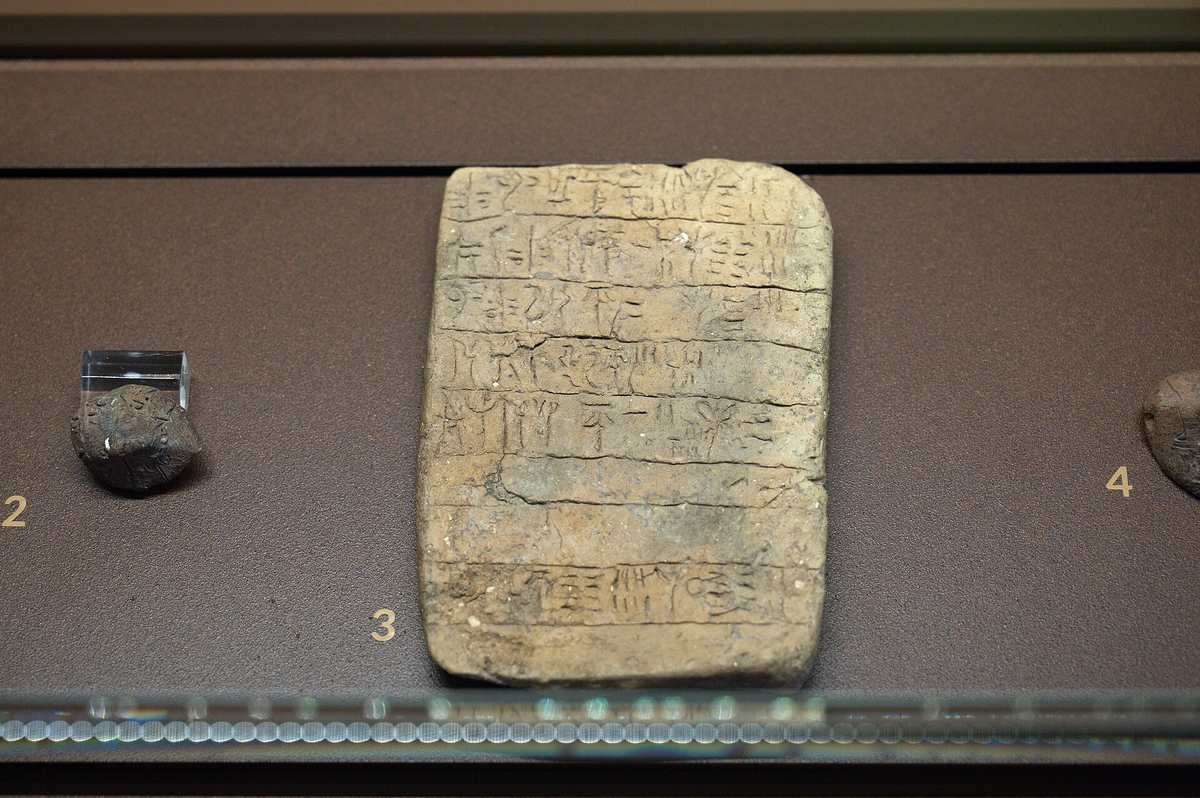
Linear B at Knossos is the ancient script found on clay tablets at the palace, deciphered as an early form of Greek. Plan tickets and tours through My Greece Tours.
The tablets are among the most important finds from the Palace of Knossos. The sections below cover what Linear B is, the tablets found at Knossos, how the script was deciphered, what it tells us and the older, undeciphered Linear A.
What is Linear B?
Linear B is an ancient writing system used on Crete and mainland Greece in the Bronze Age, found on clay tablets at Knossos.
Linear B is a Bronze Age script. Clay tablets carry it. Knossos preserved many. The signs record language.
The script is syllabic. Each sign marks a syllable. Word-signs add meaning. The system is complex.
Greek lies beneath it. The decipherment proved it. The language is early Greek. The link astonished scholars.
Administration drove it. Scribes kept the records. Lists fill the tablets. The palace economy shows.
Linear B is an ancient writing system used in the Bronze Age Aegean, and large numbers of clay tablets inscribed in it were discovered at Knossos, making the palace one of the most important sources for the script. It is written in a syllabic system, in which most signs stand for syllables rather than single letters or whole words, supplemented by ideograms, signs representing whole objects or commodities.
The great significance of Linear B is that it was eventually deciphered and shown to record an early form of the Greek language, the speech of the Mycenaean civilisation. This makes it the earliest known written form of Greek, pushing the history of the language far back into the Bronze Age. The tablets themselves are administrative records rather than literature, but they open a remarkable window onto the world that used them. Our guide to the Minoan civilization at Knossos covers the wider culture, and the next section covers the tablets found at Knossos.
What Linear B tablets were found at Knossos?
Large numbers of Linear B clay tablets were found at Knossos, baked hard and preserved by the fire that destroyed the palace.
Many tablets came from Knossos. The dig uncovered them. The fire had baked them. The clay survived.
Fire preserved the records. Flames hardened the clay. The unfired tablets endured. The archive lasted.
The tablets list and count. Goods and livestock appear. People and offerings follow. The accounts add up.
Bureaucracy fills them. Scribes tallied the stores. The palace tracked its wealth. The economy shows.
Knossos yielded a large archive of Linear B clay tablets, among the most important collections of the script anywhere. Crucially, these tablets were never deliberately fired; they were sun-dried clay meant for temporary record-keeping, but the very fire that destroyed the palace baked them hard and preserved them, an accidental act of conservation that saved the records for posterity.
The content of the tablets is administrative and economic rather than literary. They are lists and accounts: inventories of goods such as oil, grain, wine, textiles and weapons, records of livestock, lists of personnel and workers, and registers of religious offerings. Together they reveal the palace of Knossos as a sophisticated bureaucratic and economic centre that carefully tracked the resources of its territory. While not the stuff of stories, they tell us an enormous amount about how the society was organised. Our guide to the history of the Palace of Knossos covers its administration, and the next section covers the decipherment.
How was Linear B deciphered?
Linear B was deciphered in the mid-twentieth century, when the architect Michael Ventris, building on earlier work, showed that the script recorded an early form of Greek.
Decipherment came after long effort. Scholars puzzled for decades. Ventris cracked it. The breakthrough astonished.
Michael Ventris led the work. An architect by training, he persisted. He built on others. He found the key.
Greek emerged from the signs. The language surprised many. The early Greek shone through. The proof convinced.
The achievement was landmark. The Bronze Age spoke again. The history shifted. The scholars rejoiced.
Linear B remained undeciphered for decades after the tablets were first found, resisting the efforts of many scholars. The breakthrough came in the mid-twentieth century, when the English architect and amateur linguist Michael Ventris, building on the painstaking analytical work of others, demonstrated that the script recorded an early form of the Greek language rather than an unknown tongue, a conclusion that surprised the scholarly world.
Ventris’s decipherment, developed with the help of the scholar John Chadwick, was a landmark intellectual achievement, often compared to the cracking of Egyptian hieroglyphs. It proved that Greek was being written centuries earlier than previously thought, in the Bronze Age, and it allowed the administrative tablets from Knossos and other sites to be read, opening up the economy, organisation and religion of the Mycenaean world. It stands as one of the great triumphs of modern scholarship. The next section covers what Linear B tells us.
What does Linear B tell us about Knossos?
Linear B tells us that Knossos was a highly organised administrative and economic centre, tracking goods, livestock, people and religious offerings across its territory.
The tablets reveal the palace economy. Goods were counted. Stores were tracked. The system ran tight.
Administration emerges clearly. Scribes recorded everything. Officials managed the wealth. The bureaucracy worked.
Greek speakers controlled it. The Mycenaeans held Knossos. The language proves their presence. The history shifts.
Religion appears in the lists. Offerings name the gods. Early deities surface. The beliefs show.
The decipherment of Linear B transformed our understanding of Knossos. The tablets show that the palace functioned as a highly organised administrative and economic hub, with scribes meticulously recording the goods, livestock, textiles, weapons, personnel and religious offerings of its territory. This reveals a centralised, bureaucratic society in which the palace controlled and redistributed resources across the region it governed.
Just as importantly, the fact that the tablets are written in Greek shows that, in the later period of its history, Knossos was under the control of Greek-speaking Mycenaeans from the mainland, rather than the earlier Minoans, a major insight into the political history of Bronze Age Crete. The tablets even name early forms of Greek gods, officials and places, giving glimpses of religion and society. Few finds have done more to illuminate the ancient world. Our guide to the Knossos frescoes covers another window onto the culture, and the next section covers the older Linear A.
What is Linear A and is it deciphered?
Linear A is an older script used by the Minoans before Linear B, also found on Crete. Unlike Linear B, it has never been deciphered, as it records the unknown Minoan language rather than Greek.
Linear A came first. The Minoans wrote it. It predates Linear B. The script is older.
Decipherment has failed. The signs resist reading. The language is unknown. The puzzle endures.
Minoan speech lies hidden. No Greek underlies it. The tongue stays lost. The mystery deepens.
Linear B borrowed from it. The later script adapted the signs. The forms echo Linear A. The link is clear.
Linear A is the older of the two scripts, the writing system of the Minoans themselves, used before Linear B and found on tablets and other objects across Minoan Crete. Linear B was in fact adapted from Linear A, borrowing and modifying many of its signs to write Greek, so the two are visibly related.
The crucial difference is that, while Linear B has been deciphered as Greek, Linear A has never been convincingly read. This is because it records the original Minoan language, which is unknown and unrelated to Greek, so even though scholars can guess the sound values of many signs from their Linear B descendants, the underlying language cannot be understood. Linear A therefore remains one of the great unsolved mysteries of the ancient world, a reminder that much about the Minoans is still beyond our reach. Our guide to the mysteries of the Palace of Knossos explores its enigmas. Plan your visit and tours through our Palace of Knossos guide.
For all the spectacle of the frescoes and the drama of the throne room, it is the humble clay tablets of Knossos that may tell us the most about the people who lived here. Baked by the very fire that destroyed the palace and read at last in the twentieth century, they reveal a society of scribes and storerooms, of careful accounts and centralised power, and they prove that Greek was being written in the Bronze Age. Standing in the palace knowing that, you see Knossos not just as a beautiful ruin but as the working heart of a literate, organised civilisation. And in the silence of the still-undeciphered Linear A lies a reminder that the Minoans keep some of their secrets yet.
Frequently Asked Questions
What is Linear B and why is it important?
Linear B is an ancient writing system used in the Bronze Age Aegean, found in large numbers on clay tablets at Knossos. It is a mainly syllabic script, and its great importance is that it was deciphered and shown to record the earliest known form of the Greek language, the speech of the Mycenaean civilisation. The tablets are administrative records, listing goods, livestock, people and religious offerings, which reveal Knossos as a sophisticated economic and bureaucratic centre and show that Greek-speaking Mycenaeans controlled it in its later period. The decipherment pushed the history of written Greek far back into the Bronze Age, making Linear B one of the most significant discoveries in the study of the ancient world.
Who deciphered Linear B?
Linear B was deciphered in the mid-twentieth century by the English architect and amateur linguist Michael Ventris, with the help of the scholar John Chadwick and building on the analytical work of earlier researchers. Ventris demonstrated that the script recorded an early form of Greek rather than an unknown language, a conclusion that surprised the scholarly world and proved that Greek was being written centuries earlier than previously believed. The decipherment is regarded as one of the great intellectual achievements of modern scholarship, often compared to the cracking of Egyptian hieroglyphs, and it allowed the administrative tablets from Knossos and other sites to be read for the first time.
Has Linear A been deciphered?
No, Linear A has not been deciphered. It is the older script used by the Minoans before Linear B, and Linear B was in fact adapted from it. While Linear B has been read as Greek, Linear A records the original Minoan language, which is unknown and unrelated to Greek, so even though scholars can guess the sound values of many of its signs from their Linear B descendants, the underlying language cannot be understood. Linear A therefore remains one of the great unsolved puzzles of the ancient Aegean, and a reminder that, despite all that has been uncovered at Knossos and other Minoan sites, much about the Minoan civilisation is still beyond our reach.