
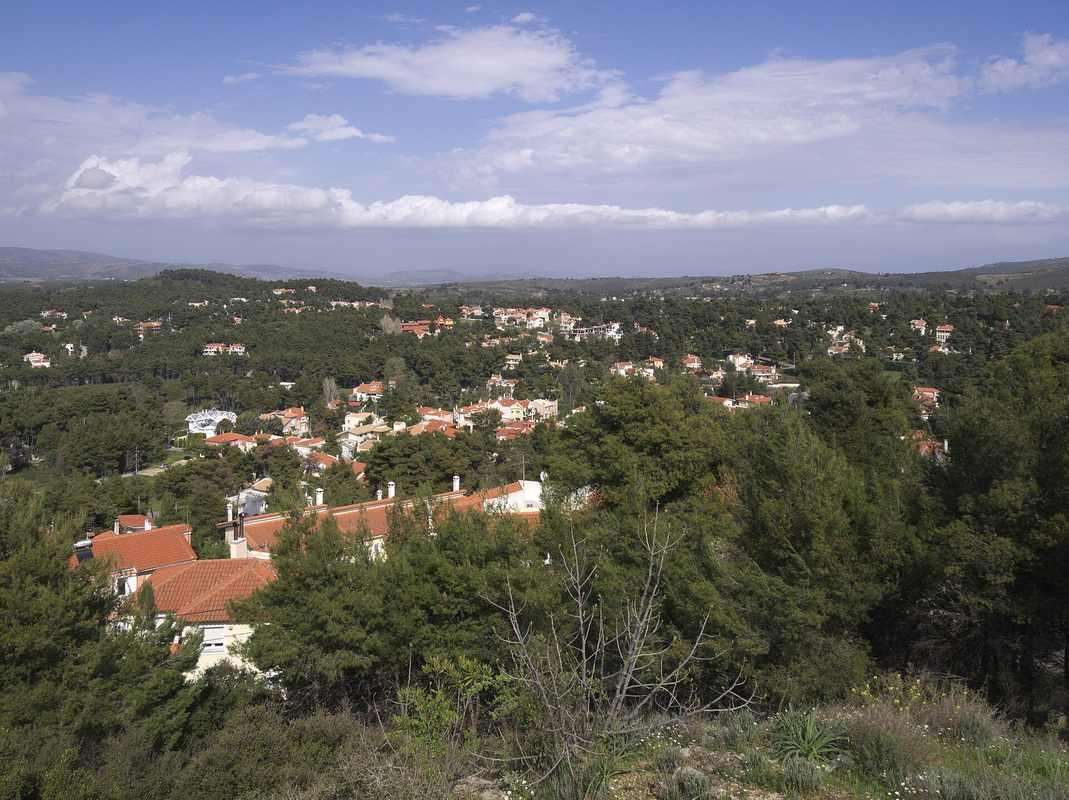
Chalandri is a leafy, upscale northern suburb of Athens with a lively café-filled square, buzzing nightlife, boutique shopping, the open-air Rematia festival theatre and easy access to Mount Penteli. Discover this stylish local district alongside skip-the-line sightseeing tickets and tours from My Greece Tours.
This sophisticated suburb is a local-life corner of the Athens travel guide. The sections below cover what Chalandri is, its history, the central square, the nightlife and dining, the shopping, the Rematia and nature, and how to visit.
What is Chalandri?
Chalandri is a leafy, prosperous and lively suburb in the northern part of Athens, popular with affluent locals and known for its vibrant café and bar culture. It centres on a bustling pedestrianised square ringed with cafés, restaurants and boutiques, has an energetic nightlife, and sits beneath Mount Penteli, giving access to nature and hiking. With ancient roots and a sophisticated, modern feel, it offers an authentic, upscale taste of everyday Athenian life away from the tourist centre.
Away from the ancient sites of the centre, Chalandri is one of the most pleasant, lively and sought-after suburbs of northern Athens, offering visitors a window onto the comfortable, sociable life of contemporary Athenians. A leafy and prosperous residential district lying in the northern reaches of the city, beneath the slopes of Mount Penteli, Chalandri is much loved by well-to-do locals for its high quality of life, its greenery and above all its famously vibrant café, bar and dining culture. At its heart lies a bustling, partly pedestrianised central square surrounded by a constellation of cafés, restaurants, bars and boutiques connected by tree-lined streets, which fills with people enjoying coffee by day and a buzzing nightlife after dark.
The suburb combines a sophisticated, chic and modern atmosphere with deep historical roots, and its position beneath Penteli gives it easy access to fresh air, nature and hiking. For travellers wanting to experience an authentic, upscale and lively Athenian neighbourhood rather than a tourist quarter, Chalandri is a rewarding and characterful destination. It is local Athens at its most stylish. Its roots stretch back to antiquity. That long history underlies the modern district.
What is the history of Chalandri?
Chalandri has been inhabited since ancient times, when the area was the ancient deme, or district, of Flya, known for its sanctuaries and as the birthplace traditionally associated with the playwright Euripides. Over the centuries it developed from a rural settlement into a desirable Athenian suburb, especially as the city expanded in the twentieth century. Today, traces of its past survive amid a thoroughly modern, prosperous neighbourhood, blending ancient heritage with contemporary life.
Though it is today a modern suburb, Chalandri has surprisingly deep historical roots that reach all the way back to antiquity, lending the district an added layer of interest. In ancient times the area corresponded to the deme, or district, of Flya, one of the rural townships of ancient Attica, which was noted for its religious sanctuaries and shrines and is, by tradition, associated with the great tragic playwright Euripides, one of the giants of ancient Greek drama, who is said to have been linked to the area. Through the long centuries that followed, the settlement remained a modest rural community amid the countryside and vineyards north of Athens, until the dramatic expansion of the city in the twentieth century gradually absorbed and transformed it into a desirable residential suburb, prized for its greenery, cleaner air and elevation away from the crowded centre.
Today the ancient past survives only in traces and place names amid a thoroughly modern, comfortable and prosperous neighbourhood, but this blend of deep heritage and contemporary affluence gives Chalandri a distinctive character. It wears its long history lightly. The modern district revolves around its square. The central plateia is its social heart.
What is Chalandri Square like?
Chalandri Square, the plateia, is the bustling social heart of the suburb, a lively, partly pedestrianised space ringed by cafés, bars, restaurants and shops and centred near the church of Saint Nicholas. By day it hums with people enjoying coffee, and by night it becomes one of the liveliest spots in northern Athens. Surrounded by leafy pedestrian streets full of boutiques and eateries, it is a wonderful place to sit, watch local life and soak up the atmosphere.
The beating heart of Chalandri, and the focus of any visit, is its central square, known simply as the plateia, a vibrant and characterful space that perfectly embodies the sociable spirit of the suburb. Partly pedestrianised and pleasantly leafy, the square and the network of tree-lined pedestrian streets radiating from it are densely packed with cafés, traditional kafeneia, modern coffee shops, bars, restaurants, tavernas and boutiques, all centred near the handsome church of Saint Nicholas which anchors the space. The rhythm of the square shifts through the day: in the daytime it hums gently with locals of all ages settled at café tables over a freddo coffee, reading, chatting and people-watching, while as evening falls and into the night it transforms into one of the most animated and popular gathering spots in the whole of northern Athens, buzzing with diners, drinkers and revellers.
For a visitor, simply finding a table at one of the cafés, ordering a coffee or a drink, and watching the easy flow of affluent Athenian life around the square is a delightful and authentic experience. It is the living room of the suburb. The energy here peaks after dark. The nightlife and dining are a major draw.
What are the nightlife and dining like?
Chalandri has an energetic, sophisticated nightlife concentrated around the central square and Agias Paraskevis street, with late dinners, cocktail bars, wine bars, tavernas and busy streets, especially on weekends. Locals head here for a chic, upscale evening out. The dining ranges from traditional tavernas and mezedopoleia to modern restaurants and international cuisine, all geared to a discerning local crowd, making it one of the best northern suburbs for eating and drinking out.
One of the chief reasons Chalandri is so popular, and a real draw for visitors wanting to experience how Athenians enjoy themselves, is its excellent and energetic nightlife and dining scene, considered among the best in the northern suburbs. The action is concentrated around the central square and along the lively Agias Paraskevis street and the surrounding lanes, which on weekend evenings throng with people enjoying a night out, the cafés of the daytime giving way to a vibrant after-dark world of cocktail bars, wine bars, music venues, late-dining restaurants and tavernas. Affluent and stylish locals, including many who come from other parts of the city, head to Chalandri precisely when they want a chic, sophisticated and lively evening out in a pleasant, upmarket setting.
The food on offer is correspondingly varied and high in quality, ranging from beloved traditional tavernas and mezedopoleia serving classic Greek dishes and mezedes to be shared over wine or tsipouro, through to modern Greek restaurants, gastropubs and international cuisine, all catering to a discerning and demanding local clientele. For a memorable evening of authentic Athenian socialising, eating and drinking, the suburb excels. It comes alive when the sun goes down. Daytime offers shopping and nature.
What about shopping, the Rematia and nature?
Chalandri offers good boutique shopping in the streets around the square, plus weekly farmers’ markets. In summer, the open-air theatre of Rematia, in a green ravine, hosts the long-running Rematia Festival of music, dance, theatre and puppetry. Beneath Mount Penteli, the suburb gives access to hiking, fresh air and the historic Penteli monastery. Together these offer shopping, culture and nature, rounding out the appeal of this varied and liveable district.
Beyond its cafés and nightlife, Chalandri offers further pleasures by day, spanning shopping, culture and nature, that round out its appeal as a varied and liveable district. For shopping, the leafy pedestrian streets around the central square are lined with attractive boutiques, fashion stores, shops and delis catering to the suburb’s affluent residents, making for enjoyable browsing, and the area also hosts weekly farmers’ markets, the laiki, where you can experience the colour and bustle of Athenians buying fresh local produce. On the cultural front, a highlight of the summer is the open-air theatre of Rematia, set in a green ravine, or rema, which for over thirty years has hosted the much-loved Rematia Festival, a rich programme running through the warmer months of music concerts, dance, theatrical performances and puppetry by Greek and international artists, a wonderful way to spend a summer evening.
And thanks to its position at the foot of Mount Penteli, the marble-rich mountain on the city’s northern edge, Chalandri provides easy access to nature, with opportunities for hiking and fresh air on the slopes and a visit to the historic old Penteli monastery nearby. This blend of retail, culture and countryside completes the picture. There is more to the suburb than its café tables. Reaching it from the centre is straightforward.
How do you visit Chalandri?
Chalandri lies in the northern suburbs of Athens and is easily reached from the centre. The metro line 3, the blue line, serves nearby stations such as Doukissis Plakentias or Cholargos, from where a short bus or taxi ride reaches the square, or you can take a bus or taxi directly, around 20 to 30 minutes from the centre depending on traffic. The square and its streets are best explored on foot, ideally in the evening to catch the lively atmosphere.
Visiting Chalandri from central Athens is straightforward, and the suburb’s vibrant square and streets reward an excursion, particularly in the evening when the district is at its liveliest. Lying in the northern part of the Athens metropolitan area, Chalandri is connected to the centre by good transport links, with the metro line 3, the blue line, running out toward the northern and northeastern suburbs and serving stations in the broader vicinity, such as Doukissis Plakentias or Cholargos, from which a short bus ride or taxi brings you to the heart of Chalandri and its square. Alternatively, you can simply take a bus or a taxi directly from the centre, a journey of roughly twenty to thirty minutes depending on the notoriously variable Athens traffic.
Once you arrive, the central square and the leafy pedestrianised streets radiating from it are compact and made for exploring on foot, so you can easily wander between the cafés, shops, bars and restaurants. To experience the suburb at its best, time your visit for the evening, when the square comes alive and you can settle in for dinner and drinks amid the buzz. With its easy access and authentic appeal, Chalandri makes a rewarding local outing. The transport network is explained in the Athens metro guide. The questions below cover the points visitors ask most.
Frequently Asked Questions
What is Chalandri known for?
Chalandri is known as a leafy, upscale northern suburb of Athens famous for its vibrant café culture and lively nightlife around its bustling central square. It offers sophisticated dining, boutique shopping, the summer Rematia Festival of music and theatre in an open-air ravine theatre, and access to Mount Penteli for hiking, all with ancient roots as the old deme of Flya.
Is Chalandri worth visiting?
Chalandri is worth visiting for travellers wanting an authentic, stylish taste of everyday Athenian life away from the tourist centre. Its bustling square, excellent cafés, restaurants and energetic nightlife, boutique shopping and summer cultural festival make it one of the most appealing northern suburbs, especially in the evening when it comes alive. It pairs well with exploring the northern districts.
How do you get to Chalandri from central Athens?
Chalandri lies in the northern suburbs of Athens, reached in around 20 to 30 minutes from the centre. The metro line 3, the blue line, serves stations in the wider area, such as Doukissis Plakentias, from where a short bus or taxi ride reaches the square, or you can take a bus or taxi directly. The central square and its streets are best explored on foot.