
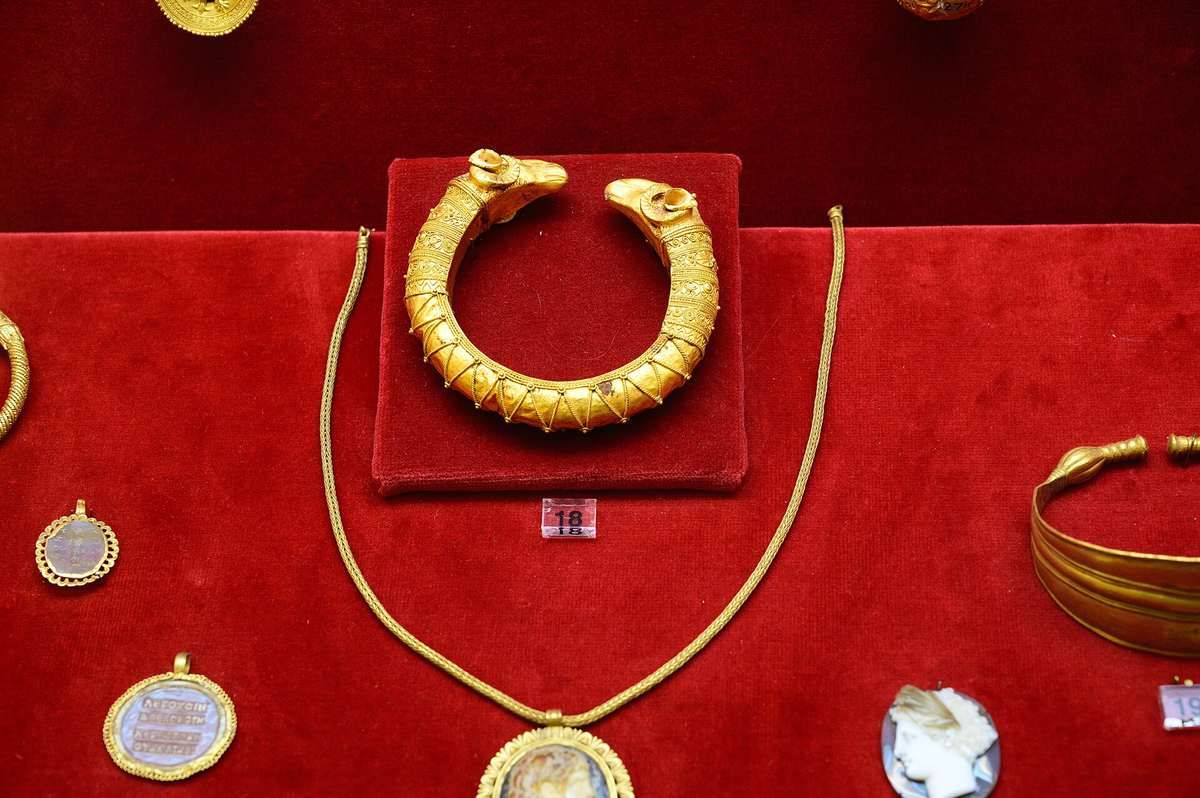
Tucked beneath the Acropolis, the Ilias Lalaounis Jewelry Museum is the first in Greece devoted to the art of jewellery, displaying over 4,000 dazzling pieces inspired by ancient art, nature and technology, with a live goldsmith’s workshop. Discover this hidden gem alongside skip-the-line Acropolis tickets and tours from My Greece Tours.
This elegant little museum is a refined corner of the Athens travel guide. The sections below cover what it is, the man Ilias Lalaounis, the dazzling collection, the highlights to see, the live workshop, the practical visit, and how to get there.
What is the Ilias Lalaounis Jewelry Museum?
This is the first museum in Greece dedicated to the art of jewellery, and one of only a handful of its kind in the world. Located just beneath the Acropolis, beside the Acropolis Museum, it displays the life’s work of the celebrated Greek goldsmith Ilias Lalaounis, with over 4,000 pieces of jewellery and decorative art across 50 collections inspired by ancient civilisations, nature and modern themes.
One of the most charming and underrated small museums in Athens, and a delight for anyone who loves beautiful craftsmanship, is the Ilias Lalaounis Jewelry Museum, a hidden gem nestled on the southern slope of the Acropolis, just a short walk from the Acropolis Museum and the ancient theatres. It holds the distinction of being the very first museum in Greece devoted entirely to the art of jewellery, and indeed one of only a small number of jewellery museums anywhere in the world, making it a rare and special institution. The museum is dedicated to the prolific and internationally renowned Greek jeweller and goldsmith Ilias Lalaounis, and it showcases his extraordinary life’s work, comprising over four thousand pieces of jewellery and decorative micro-sculpture arranged into around fifty themed collections, displayed in an elegant townhouse.
Drawing inspiration from the art of ancient civilisations, the natural world, science and technology, the dazzling creations on display blend exquisite craftsmanship with imagination and scholarship. Compact, elegant and uncrowded, the museum offers a refreshing and intimate change of pace from the great archaeological sites nearby. It is a true hidden treasure. The story of its founder explains its richness.
Who was Ilias Lalaounis?
Ilias Lalaounis was a celebrated 20th-century Greek goldsmith and jewellery designer who revived ancient Greek goldsmithing techniques and won international fame. Drawing on the art of antiquity, Byzantium and world cultures, he created acclaimed jewellery collections sold worldwide and was honoured as the first jeweller ever admitted to France’s Academy of Fine Arts. The museum, founded by him and his family, preserves and celebrates his life’s work and artistic vision.
To appreciate the museum fully, it helps to know the remarkable man behind it, Ilias Lalaounis, one of the most celebrated jewellers of the twentieth century and a figure who brought Greek goldsmithing to the world stage. Born into a family with a long tradition in the craft, Lalaounis became renowned for reviving the ancient Greek techniques of goldworking, such as filigree and granulation, and for drawing deep inspiration from the artistic heritage of antiquity, from Minoan and Mycenaean treasures to classical, Hellenistic and Byzantine art, as well as from the cultures of the wider world, nature and even modern science and technology.
His richly crafted, often boldly sculptural creations earned international acclaim and were sold in boutiques around the globe, dressing celebrities and royalty, and in a signal honour he became the first jeweller ever to be elected a member of the prestigious Academy of Fine Arts of the Institut de France in Paris. Toward the end of his career, Lalaounis and his family established this museum to preserve, study and share his vast body of work and his artistic philosophy. His vision and skill animate every display. Understanding him enriches the visit. The collection itself is a feast for the eyes.
What is the collection like?
The museum’s collection comprises more than 4,000 individual jewels and decorative objects across some 50 themed collections, each exploring a source of inspiration. These range from prehistoric, Minoan, Mycenaean, classical Greek, Hellenistic and Byzantine art to the art of 15 world cultures, and from the forms of nature to the patterns of science and technology, including biology and microorganisms. The result is a dazzling, imaginative survey of how art and history can be reborn in gold.
The heart of the museum is its glittering permanent collection, displaying the breadth of Ilias Lalaounis’s creativity across some fifty distinct thematic collections, each one a meditation in gold and gems on a particular source of inspiration. A great many of the collections look to the deep past, recreating and reinterpreting the jewellery and motifs of ancient civilisations: there are pieces inspired by Paleolithic and Neolithic finds, by the treasures of Troy that Schliemann unearthed, by the gold of Minoan Crete and Mycenae, and by classical Greek, Hellenistic, Persian and Byzantine art, allowing visitors to trace the evolution of decorative form across millennia. Other collections draw on the art and ornament of fifteen different cultures from around the world, broadening the horizon beyond Greece. Still more take their cue from the natural world, capturing the forms of plants, animals and landscapes, while some of the most original and surprising are inspired by modern science and technology, translating the structures of biology, genetics and microorganisms, even the double helix of DNA, into wearable gold.
Beyond the jewellery itself, the displays are enriched with explanatory panels, drawings and photographs that reveal the painstaking techniques behind each piece, from hammering and casting to the delicate granulation of tiny gold spheres, helping visitors appreciate the craftsmanship as well as the beauty. The collections are arranged thematically across the floors, so the visit unfolds as a journey through both history and imagination, and the intimate scale means you can linger over individual showcases without the crush of a major museum. This astonishing range showcases a restless, inventive imagination. The collection delights and amazes. Certain pieces are unmissable highlights.
What are the highlights to see?
Highlights include the collections inspired by ancient treasures, such as Minoan and Mycenaean gold, and the imaginative pieces drawn from nature and science, like jewellery based on microorganisms and DNA. Look out too for special commissions, including the design of an Olympic torch and ceremonial objects, and, on the upper floor, three small bronze sculptures by Salvador Dali. Each showcase reveals the craft, scholarship and imagination behind the work.
While the entire collection rewards close attention, certain pieces and sections stand out as particular highlights that capture the museum’s magic. The galleries inspired by the ancient world are especially captivating, with their recreations of Minoan and Mycenaean gold, classical Greek and Hellenistic ornament and Byzantine splendour, letting you admire the dazzling results of revived ancient techniques up close. Equally memorable are the more unexpected, modern-minded collections, where jewellery takes its form from the microscopic structures of nature and science, from cells and microorganisms to the spiral of DNA, demonstrating Lalaounis’s remarkable ability to find beauty in unlikely places. Visitors should also look out for the special commissions and one-off creations on display, which over the years included the design of an Olympic flame torch and various ceremonial objects, testaments to the jeweller’s stature.
A delightful surprise awaits on the upper floor, where three small bronze sculptures by the great surrealist artist Salvador Dali are exhibited, a connection that intrigues many visitors. The museum also stages temporary exhibitions and runs a small shop where you can buy reproductions and jewellery inspired by the collections, a tempting souvenir of a visit. Each showcase rewards a moment’s pause to admire the craftsmanship, scholarship and imagination on show. These highlights make the visit memorable. The living craft is shown too.
What is the live workshop, and how do you visit?
On the ground floor, the museum has a working jewellery workshop where you can often watch a resident goldsmith at work, crafting pieces using traditional techniques, bringing the art to life. The museum is in Makrigianni, just beneath the Acropolis, a 2-minute walk from the Acropolis metro station. It is open most days, with an admission ticket and some free-entry times, such as certain afternoons and Saturdays. Allow around an hour to enjoy it.
A wonderful and distinctive feature of the museum, which sets it apart from a static display, is its working jewellery workshop on the ground floor, where visitors can often watch a resident goldsmith at the bench, demonstrating the traditional techniques and tools of the craft as they create pieces, bringing the art of jewellery vividly and engagingly to life. This living connection to the craft, alongside the glittering collections, makes the experience all the more rewarding. The museum enjoys a superb location in the Makrigianni neighbourhood on the southern slope of the Acropolis, right beside the Acropolis Museum and the pedestrian promenade, making it extremely easy to combine with a visit to the Acropolis itself; the Acropoli metro station on line 2, the red line, is only about a two-minute walk away.
The museum is open on most days of the week, with an admission ticket required, though it offers free entry at certain times, traditionally including some weekday afternoons and Saturdays, as well as during August, so it is worth checking the current schedule. Allowing around an hour lets you savour the collections and the workshop comfortably. It is a perfect cultured pause near the Acropolis. The grand sites nearby complete the day, as the Acropolis Museum guide shows. The questions below cover the points visitors ask most.
Frequently Asked Questions
What is the Ilias Lalaounis Jewelry Museum?
This pioneering institution is the first museum in Greece dedicated to the art of jewellery, located just beneath the Acropolis beside the Acropolis Museum. It is one of only a handful of jewellery museums in the world. It displays the life’s work of the celebrated Greek goldsmith Ilias Lalaounis, with over 4,000 pieces across some 50 collections inspired by ancient civilisations, world cultures, nature and modern science.
Is the Ilias Lalaounis Jewelry Museum worth visiting?
Yes, this jewellery museum is a delightful hidden gem, well worth visiting for lovers of art, craft and design. Its dazzling collection of over 4,000 jewellery pieces, the live goldsmith’s workshop, the prime location beneath the Acropolis and the small, uncrowded scale make it a refined and refreshing change from the major archaeological sites nearby.
How do you get to the Ilias Lalaounis Jewelry Museum?
The museum is in the Makrigianni neighbourhood on the southern slope of the Acropolis, beside the Acropolis Museum. It is just a 2-minute walk from the Acropoli metro station on line 2, the red line. The museum is open most days with an admission ticket, and offers free entry at certain times such as some afternoons, Saturdays and during August.