
A Vravrona (Brauron) day trip from Athens reaches a quiet, uncrowded ancient sanctuary of Artemis in a green coastal valley east of the city, with a 5th-century BC temple, the Bear maidens’ stoa and a fine museum. Pair it with skip-the-line city sightseeing tickets and tours from My Greece Tours for a peaceful slice of ancient Attica.
This tranquil, off-the-beaten-path site is a rewarding escape in the Athens travel guide. The sections below cover whether it is worth it, the sanctuary, the Bear maidens, the museum, how to get there, when to visit and the best way to do it.
Is Vravrona worth a day trip from Athens?
Yes, for those who love ancient history away from the crowds. Vravrona, ancient Brauron, is a quiet, beautiful and genuinely important sanctuary of Artemis set in a green coastal valley east of Athens, just 38 kilometres away. Free of tour-bus crowds, it preserves a 5th-century BC temple, the unique “Bear maidens” stoa and an excellent museum, making a peaceful, atmospheric and rewarding half-day escape.
For travellers who relish ancient sites without the crush of visitors, Vravrona is a hidden treasure. Known in antiquity as Brauron, it lies in a peaceful, green valley near the coast east of Athens, only about thirty-eight kilometres from the centre, yet it sees a fraction of the crowds that throng the famous monuments. Despite its tranquillity, the site is genuinely significant: it was one of the most important sanctuaries in all of Attica, dedicated to Artemis, goddess of hunting, the wild and childbirth, and it played a special role in the lives of Athenian girls. Set among olive groves and reeds, watered by a stream and overlooked by a low acropolis hill, the sanctuary has a gentle, natural beauty that reflects Artemis’s association with the wilderness rather than civic grandeur.
Visitors can explore the foundations of the temple, the remarkable colonnaded building where young girls once lived during a famous festival, and a superb little museum nearby. The combination of important history, atmospheric setting and blissful lack of crowds makes Vravrona a deeply rewarding off-the-beaten-path day trip for history lovers. It complements other quiet ancient sites like the Eleusis day trip. The sanctuary itself is the heart of a visit.
What is the Sanctuary of Artemis at Brauron?
The Sanctuary of Artemis at Brauron was a major ancient cult centre dedicated to Artemis, goddess of the hunt and childbirth. Its main monument is the 5th-century BC Doric Temple of Artemis, whose foundations survive, alongside a sacred spring, a small shrine traditionally linked to Iphigenia, and the great pi-shaped stoa. The setting reflects Artemis’s bond with nature.
The sanctuary is one of the oldest and most evocative religious sites in Attica, with roots reaching back to the Bronze Age and a special connection to the goddess Artemis. The focal point of the sacred precinct is the Temple of Artemis, a Doric temple built in the fifth century BC, of which the foundations and lower courses survive, set against the green hillside; its modest scale and natural surroundings reflect Artemis’s character as a goddess of the wild, of hunting and animals, and of women in childbirth, in contrast to the grand civic temples of the city. Around the temple lie other features of the sacred landscape, including a spring and a small, ancient cave-shrine traditionally associated in myth with the priestess Iphigenia, daughter of Agamemnon, who according to legend served Artemis here.
The most striking standing structure, however, is the great colonnaded stoa, of which more shortly. Threaded by a stream and shaded by trees, the whole site has a serene, almost rural atmosphere that makes wandering its ruins a genuinely peaceful pleasure. For lovers of mythology and quiet ancient places, it is profoundly atmospheric. The myth of Iphigenia links to the wider Greek mythology sites in Athens. Its most famous ritual gives the site its character.
Who were the “Bear maidens” of Brauron?
The “Bear maidens”, or arktoi, were young Athenian girls who served Artemis at Brauron during the Arkteia festival, “playing the bear” in rituals before marriage. They lived in the sanctuary’s great pi-shaped stoa, whose stone dining couches and rooms still survive. This rite of passage made Brauron uniquely important to the women and girls of ancient Athens.
What sets Brauron apart from other ancient sanctuaries is its remarkable association with the young girls of Athens and a unique coming-of-age ritual. In a festival known as the Arkteia, held in honour of Artemis, selected young Athenian girls came to serve the goddess at Brauron for a period, where they were known as arktoi, or “little bears”, and were said to “play the bear” in dances and rituals; the bear was sacred to Artemis, and the rite marked the girls’ transition from childhood toward womanhood and marriage. To accommodate these girls, the sanctuary was equipped with a large and distinctive building, a pi-shaped (Π-shaped) stoa, a covered colonnade enclosing three sides of a courtyard, which served as a dormitory and dining hall.
Remarkably, this is the most substantial structure surviving on the site, and you can still see the stone dining couches where the girls reclined to eat and the small rooms where they slept and stored their belongings, an unusually intimate and human trace of ancient daily life. This special role in the upbringing of Athenian girls made Brauron one of the most cherished sanctuaries for the women of the city. It is a fascinating window onto ancient womanhood. The on-site museum brings it to life. The finds deepen the story.
What is in the Brauron Museum?
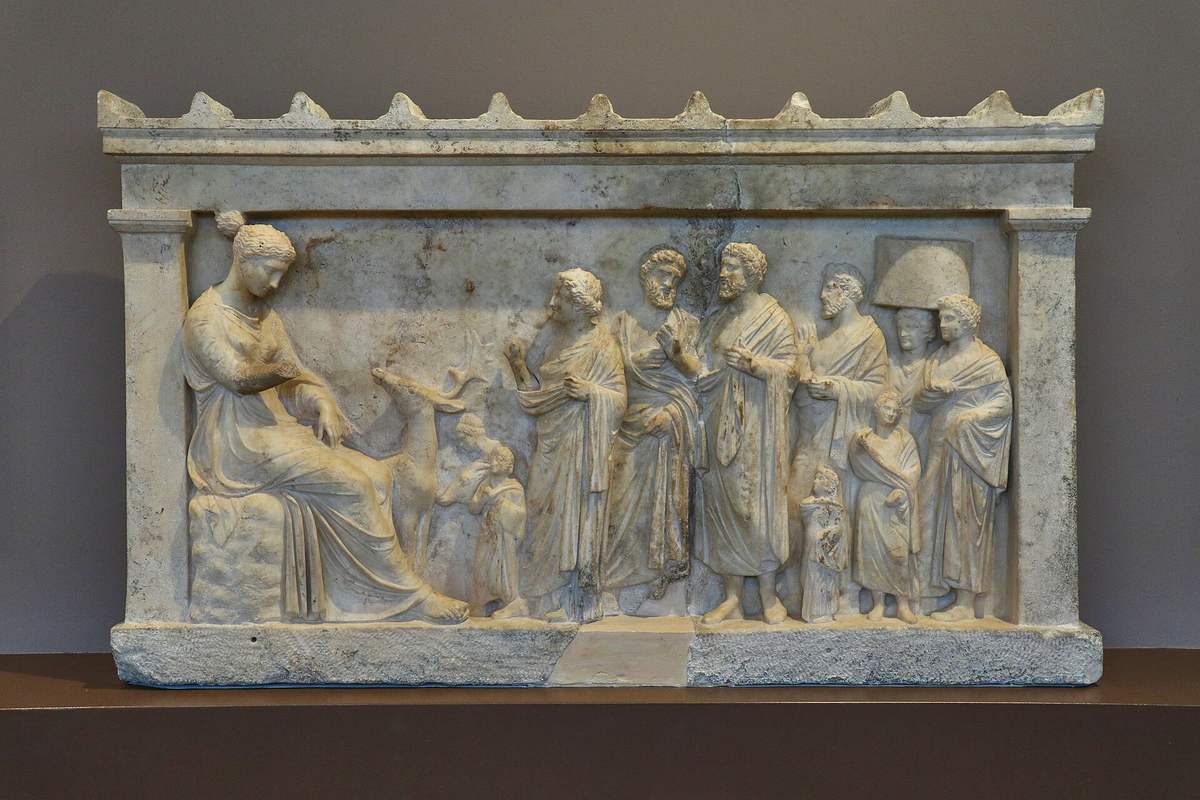
The Archaeological Museum of Brauron, near the site, displays the finds from the sanctuary, including statues of the young “bear” girls and boys, votive offerings, jewellery, mirrors and everyday objects dedicated to Artemis, pottery, and reliefs depicting the rituals. Small but excellent, it brings the sanctuary and its festival vividly to life and is well worth combining with the site.
Complementing the open-air ruins, the Archaeological Museum of Brauron, located a short distance from the sanctuary, is a small but outstanding museum that greatly enriches a visit by displaying the wealth of finds excavated at the site. Its galleries gather the votive offerings and dedications left to Artemis over the centuries, providing a vivid and touching picture of the sanctuary’s role in ancient life, especially that of women and children. Among the highlights are the charming sculpted statues of the young arktoi, the “bear” girls and boys depicted holding small animals or offerings, which put a human face on the famous festival.
The collection also includes fine jewellery, bronze mirrors, combs and other personal items dedicated by women to the goddess, often in connection with childbirth and marriage, alongside pottery, terracotta figurines, and carved votive reliefs showing worshippers approaching Artemis. Together these objects illuminate the beliefs, rituals and daily concerns of the people who came to Brauron, particularly Athenian girls and mothers. Compact, well-presented and rarely crowded, the museum is the perfect companion to the peaceful ruins and should not be missed. It rivals the intimate collections in the city’s museums. Reaching the site is straightforward.
How do you get to Vravrona?
Vravrona is about 38 kilometres east of central Athens, roughly a 40-minute drive via the Attiki Odos motorway or Mesogeion Avenue toward the airport and Markopoulo, then signs to Vravrona, with free parking at the site. Public transport is awkward, so a car, taxi or organised tour is best. The site and museum open daily, generally 8am to 3pm, with modest admission.
Reaching Vravrona is easiest by car, though the site lies conveniently close to the airport on the eastern side of Attica. By road it is about thirty-eight kilometres from central Athens, a drive of roughly forty minutes: you can take the Attiki Odos motorway toward the airport and the eastern suburbs, or follow Mesogeion Avenue east toward Markopoulo, then pick up the signs to Vravrona, with the final few kilometres running along a quiet country road through olive groves, and free parking available at the site. Public transport to the sanctuary is awkward and infrequent, with no direct or easy bus link, so driving, a taxi or an organised tour is by far the most practical option for visitors, and its closeness to the airport makes it an interesting stop for those with a spare half-day.
The archaeological site and its museum are generally open daily, typically from around 8am to 3pm, though it is wise to check current hours, and admission is modest. You need only about one to one and a half hours to explore both the ruins and the museum at a relaxed pace. With a car or tour, it is an easy and peaceful excursion. The airport-area routes connect to the Athens airport guide. Timing your visit well rewards you.
When should you visit, and what is the best way to do it?
The best time to visit Vravrona is spring, from March to May, when the green valley is full of wildflowers and the stream flows, though autumn is also lovely. Go in the cooler morning, allow roughly an hour or so to see the ruins and museum, and bring water and sun protection. Driving or an organised tour, perhaps combined with the coast or airport, makes the easiest visit.
A little planning makes a trip to Vravrona especially rewarding, as the site’s natural setting changes beautifully with the seasons. The finest time to visit is spring, roughly March to May, when the green coastal valley bursts into life with wildflowers, the stream that waters the sanctuary flows freely, and the mild weather is perfect for wandering the ruins; autumn offers a similar gentle beauty and pleasant temperatures, while high summer can be hot and the landscape parched. Whatever the season, visiting in the cooler morning hours is most comfortable and shows the site at its best, and you should bring water, a hat and sun protection, as shade is limited among the ruins.
Allow around one to one and a half hours to explore both the archaeological site and the excellent nearby museum without rushing. As for the best way to do the trip, driving gives you the most flexibility and is straightforward via the motorway, and because Vravrona lies close to the airport and the eastern coast, it combines well with a beach stop or a visit on a spare half-day. Organised tours focused on ancient Attica also include it. However you go, its peace and beauty reward the effort. The questions below cover the points visitors ask most.
Frequently Asked Questions
What is Vravrona (Brauron) known for?
Vravrona, ancient Brauron, is known as an important and beautifully peaceful sanctuary of Artemis east of Athens, famous for its 5th-century BC temple, its unique pi-shaped stoa where young “bear maidens” lived during the Arkteia festival, and its excellent museum. It offers a quiet, atmospheric ancient site free of crowds.
How far is Vravrona from Athens?
Vravrona is about 38 kilometres east of central Athens, roughly a 40-minute drive via the Attiki Odos motorway or Mesogeion Avenue toward the airport and Markopoulo, then signs to Vravrona, with free parking. Public transport is awkward, so a car, taxi or organised tour is the most practical way to visit.
How long do you need at Vravrona?
You need about one to one and a half hours to explore Vravrona, taking in the foundations of the Temple of Artemis, the remarkable pi-shaped stoa of the “bear maidens”, and the excellent nearby Archaeological Museum of Brauron at a relaxed pace. It makes a peaceful half-day trip from Athens.