
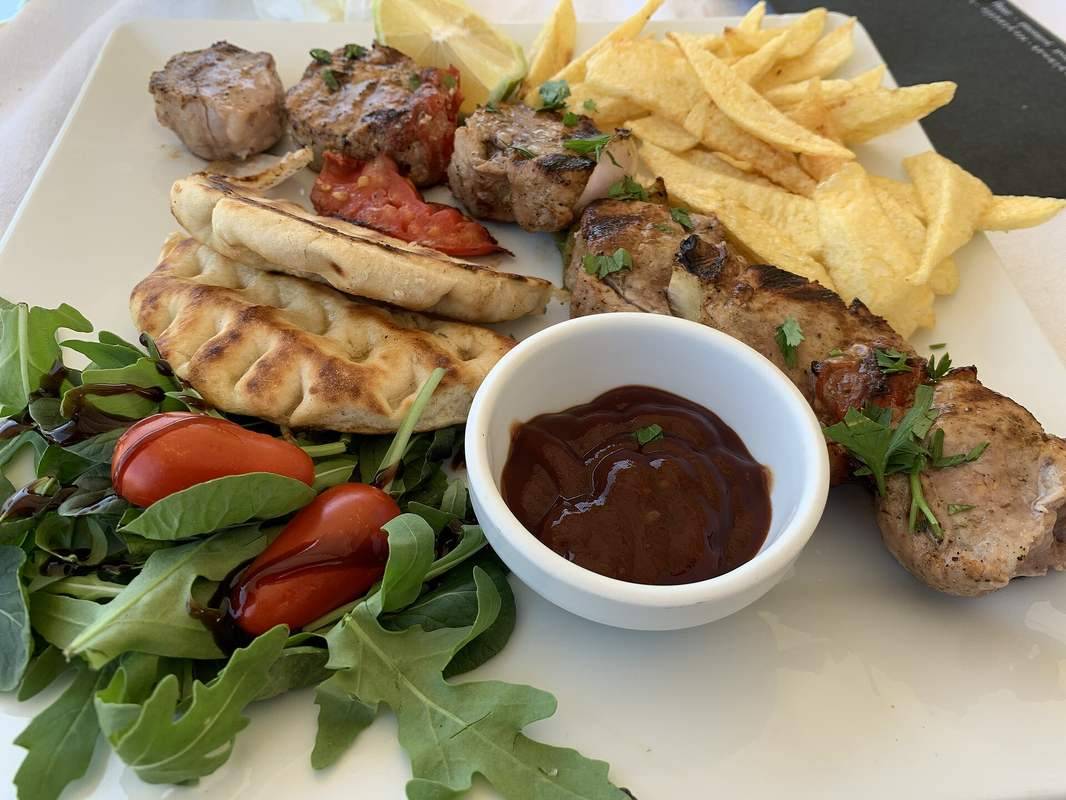
An Athens food tour takes you through markets, delis and backstreet eateries to taste souvlaki, flaky pies, meze, cheeses, olives and honey-soaked loukoumades with a local guide. Add a food walk to your trip alongside skip-the-line sightseeing tickets and tours from My Greece Tours for the tastiest side of Athens.
Tasting your way through the city is a highlight of the Athens travel guide. The sections below cover what a food tour is, what you eat, the neighbourhoods, the Varvakios Central Market, timing, the format, self-guided routes, dietary options, who it suits, whether it is worth it, and practical tips.
What is an Athens food tour?
An Athens food tour is a guided walk to markets, bakeries, delis, souvlaki stalls and backstreet eateries where you taste Greek staples while a local guide explains the dishes and culture. It runs on foot over roughly two-and-a-half to four hours.
For food-loving visitors, an Athens food tour ranks as one of the most rewarding ways to experience the capital. The concept stays simple. A knowledgeable local guide leads a small group on foot to a chosen sequence of food stops, mixing traditional bakeries, delicatessens, the covered central market, street-food vendors and tucked-away family eateries. You taste authentic Greek dishes at each stop along the way.
The experience goes past eating into understanding. Your guide explains the history, ingredients and traditions behind each food, shares the stories of the vendors, and reveals the customs of Greek eating and daily life. You come away with a deeper appreciation of the cuisine and the neighbourhoods around the Acropolis. By the finish you have sampled enough to replace a meal and discovered addresses you would never have found alone. It stands as the tastiest introduction to the city. The specific dishes are the real draw, as detailed in the Greek dishes to try guide.
The format contrasts with a standard sit-down meal in one key way: movement. Rather than staying at one table, you graze across the city, tasting three bites here, a pastry there, a market sample next door. That rhythm turns eating into exploration and pairs each dish with the place that makes it best. A pie tastes different bought hot from the bakery that bakes it, and a coffee lands harder in the cafe where regulars linger. This link between food and location is the quiet engine of the whole experience.
What foods do you try on an Athens food tour?
You taste souvlaki, gyros, spanakopita and tiropita pies, sesame koulouri, bougatsa, meze plates, Greek cheeses such as feta, olives, cured meats, honey, dips like tzatziki, and sweets including loukoumades and baklava, often paired with Greek coffee, wine, ouzo or tsipouro.
The heart of any Athens food tour is the food itself, and a strong tour delivers a generous parade of Greek flavours that together amount to a satisfying meal. You will almost certainly taste souvlaki, the skewered or rotisserie meat wrapped in warm pita with tomato, onion and tzatziki, alongside its cousin the gyros. Flaky filo pastries follow: spanakopita filled with spinach and feta, and tiropita filled with cheese. A sesame-crusted koulouri bread ring and a slice of creamy bougatsa often join the line-up.
Tours build in a spread of meze, the small sharing dishes central to Greek dining, plus tastings of quality Greek cheeses, olives, cured meats, honey and dips such as tzatziki and fava. To finish, expect something sweet: loukoumades, the honey-drenched fried dough balls dusted with cinnamon, and often baklava. Drinks weave through the walk too, with Greek coffee, local wine, ouzo or tsipouro poured to match the tastings. The result balances street food, traditional cooking and dessert, leaving you full and happy.
Regional depth runs through the tasting order as well. Greek yogurt with honey and walnuts shows up as a light course, while thick trahana soup, tomato keftedes and grilled halloumi-style saganaki reveal the range beyond the headline street bites. Guides often build in a seasonal touch, from spring greens to autumn figs, so the same tour tastes different across the calendar. The neighbourhoods you walk through deepen the flavour.
Where do Athens food tours go?
Athens food tours explore the central neighbourhoods of Psiri, Monastiraki and Plaka, with their backstreet eateries and souvlaki row, and almost always include the Varvakios Central Market on Athinas Street, where locals buy meat, fish, spices and produce.
Part of the pleasure of an Athens food tour is the journey itself. The route winds through the most characterful districts of the city centre, blending eating with discovery. Tours focus on the areas where Greek food culture runs richest. Psiri draws you in with its bohemian backstreet tavernas, ouzeri and hidden eateries. Monastiraki delivers the famous souvlaki row and a tangle of food shops. Plaka charms with traditional spots beneath the Acropolis.
The centrepiece of the walk is the Varvakios Central Market on Athinas Street, the great covered market where Athenians shop for meat, fish, olives, cheeses, herbs and spices amid colour, sound and aroma. Certain tours extend into the surrounding market streets on Athinas and Evripidou, lined with spice shops, delis and traditional foods. Walking these blocks with a guide, you taste the food and absorb the daily rhythm of central Athens. The market itself features as a highlight in the Athens shopping guide.
Each district brings its own flavour to the walk. Monastiraki blends food with the flea-market bustle and the rooftop views toward the Acropolis, so a gyros here comes with a monument backdrop. Psiri turns edgier after dark, its walls painted with street art and its ouzeri clattering with meze plates. Plaka slows the pace, its stepped lanes and bougainvillea framing family tavernas that have fed visitors for decades. The contrast between the three keeps the route varied, and moving between them on foot stitches the tastes into a single portrait of how central Athens lives and eats.
What is the Varvakios Central Market?
The Varvakios Central Market is the main covered food market of Athens on Athinas Street, between Monastiraki and Omonia. Meat and fish halls sit at the centre, ringed by stalls for olives, cheese, herbs, spices and nuts. It anchors most food tours.
The Varvakios sits at the heart of the city on Athinas Street, the artery that links Monastiraki Square with Omonia. Inside, the meat hall and the fish hall form the noisy centre, with vendors calling out prices as fresh catch glistens on ice and butchers work behind their counters. Around this core spread stalls selling barrels of olives, wheels and slabs of Greek cheese, fragrant herbs, spice mounds, dried figs, walnuts and honey.
The market runs the length of a working day and closes on Sundays, so morning tours catch it at its liveliest. For a food tour it doubles as a classroom: your guide names the cheeses, points out seasonal produce, and explains how Athenians shop and cook. The surrounding streets add spice merchants and old-school delis that spill the market’s energy outward. Standing inside the Varvakios, you see how the city truly eats, which is why it anchors the route on so many walks.
The market carries a long history as the belly of Athens, feeding tavernas, home cooks and traders for generations. Around dawn the fishmongers lay out the night’s catch, and by mid-morning restaurateurs arrive to pick the best cuts. Between the halls sit tiny cook-shops where market workers grab a plate of patsas or a bowl of chickpeas, a raw and authentic scene that guides love to reveal. Tasting there connects the produce on the stalls to the dishes on your fork.
How long is an Athens food tour and how much walking?
An Athens food tour runs roughly two-and-a-half to four hours on foot, with gentle walking between food stops across the central districts. The pace stays relaxed, the distances short, and the tastings frequent, so the walking rarely feels demanding.
Understanding the rhythm of an Athens food tour helps you know what to expect on the day. The typical walk lasts between two-and-a-half and four hours, moving on foot between a chosen sequence of food stops. The distances stay modest because the stops cluster in the compact centre, from Monastiraki through Psiri to the Varvakios and back toward Plaka. You are never far from the next tasting.
The walking itself is gentle rather than strenuous, though the ground includes cobbles, old-town lanes and the odd flight of steps. Frequent stops break the route into easy stretches, and pauses for eating give your legs regular rest. Comfortable shoes handle the surfaces well. Summer heat makes an early-morning or evening slot more comfortable, since the midday sun over the open market streets can feel strong. The overall effort suits most fitness levels, which is part of the appeal.
When is the best time for a food tour in Athens?
Morning tours catch the Varvakios Central Market and bakeries at their freshest and liveliest, while evening tours carry a sociable, dinner-replacing feel through the meze and ouzeri scene. Spring and autumn bring the mildest weather, and any season rewards booking ahead in busy summer.
Timing shapes the character of an Athens food tour as much as the route does. A morning slot catches the markets at their peak: the Varvakios buzzes with early trade, bakeries pull warm bougatsa and koulouri from the oven, and the streets stay cool before the sun climbs. Morning walks lean toward market produce, cheeses, pies and coffee, giving a bright, energetic start to the day.
An evening tour shifts the mood toward meze and drinks. Ouzeri and tavernas fill up, plates of grilled octopus and fava arrive with pours of ouzo or tsipouro, and the walk gains a relaxed, dinner-replacing warmth. Across the calendar, spring and autumn deliver the gentlest weather for walking and eating outdoors. Summer stays popular but hot, so an early or late slot works best and advance booking secures your place. Winter tours run quieter and cosier, trading crowds for a snug, local feel.
The day of the week counts as well. The Varvakios and the surrounding stalls close on Sundays, so a market-focused walk lands best from Monday to Saturday. Weekday mornings stay calmer than Saturday, when Athenians pile in for the weekend shop and the aisles turn shoulder-to-shoulder. Evening meze tours peak on Friday and Saturday nights, when the ouzeri buzz and the mood turns festive. Choosing your slot around these rhythms shapes whether you meet the working city at its busiest or catch it in a quieter, more intimate register.
Can you do a self-guided Athens food walk?
Yes. A self-guided Athens food walk can run from Monastiraki through the souvlaki row into Psiri, up Athinas Street to the Varvakios Central Market, then back toward Plaka, stopping at bakeries, souvlaki stalls, cheese shops and a loukoumades counter along the way.
Independent travellers can taste the city on a self-guided route without a booked tour. A workable loop begins in Monastiraki Square, where the souvlaki row offers a first bite of gyros and skewers straight from the grill. From there the lanes of Psiri open up, dotted with ouzeri, bakeries and traditional eateries worth a pause for spanakopita or a koulouri from a street cart.
Head north up Athinas Street toward the Varvakios Central Market to graze the olive, cheese and spice stalls, then dip into the surrounding delis on Evripidou for cured meats and dried fruit. Loop back toward Plaka for a sit-down meze plate and finish at a loukoumades counter for honey-soaked dough with Greek coffee. The route stays compact and walkable, though a guide still adds the vendor stories, tasting order and hidden addresses that turn a walk into a proper food tour, as the Athens street food guide describes.
Timing your own loop pays off. Set out mid-morning to catch the market in full swing and the bakeries fresh, then break for a sit-down meze before the lunchtime rush fills the tavernas. Keep bites small at each stop so appetite lasts the whole route, and carry cash, since the best stalls rarely take cards. A little Greek goes a long way too: a friendly “efcharisto” earns a warmer welcome and, often, an extra taste. Done at this pace, a self-guided walk delivers much of the flavour of a booked tour for the cost of the food alone.
What is the format of an Athens food tour?
Athens food tours run as small-group or private walking tours over roughly two-and-a-half to four hours, in the morning, afternoon or evening. Tastings and often drinks come included in the price, and a local guide stays with the group throughout.
Understanding the format helps you pick the right tour and know what the day holds. The great majority are walking tours on foot, run either as small-group experiences with a handful of other travellers or as private tours for your party alone. They last between two-and-a-half and four hours. Operators offer slots across the day, in the morning, the afternoon or the evening, each carrying its own character.
The pace stays relaxed, with gentle walking between food stops, and the tastings, often with drinks, come bundled into the upfront price, so nothing more is owed as you go. A friendly local guide accompanies the group throughout, choosing the stops, explaining the food and sharing stories. Dietary restrictions such as vegetarian, vegan or allergy needs can be arranged when you flag them at booking. This all-inclusive structure keeps food tours accessible and stress-free, and booking ahead secures your place. The experience suits a broad range of traveller.
Are there vegetarian or dietary options on Athens food tours?
Yes. Athens food tours can accommodate vegetarian, vegan and gluten-free needs when you flag them at booking. Greek cuisine offers plentiful plant-based staples, so guides swap in spanakopita, dolmades, fava, olives, dips and vegetable meze in place of meat and dairy stops.
Dietary flexibility is one of the quiet strengths of the Athens food scene. Greek cooking leans heavily on vegetables, pulses and grains, so a vegetarian or vegan walk never feels thin. Spinach spanakopita, vine-wrapped dolmades, creamy fava purée, grilled vegetables, olives, tomato keftedes and dips such as melitzanosalata give a plant-based route real depth. Guides who know their vendors can steer you to the right stalls and stops.
Gluten-free and allergy needs work the same way, provided you give notice at booking so the guide can plan substitutions. Cheese lovers get feta, graviera and kefalotyri; those avoiding dairy lean on olive-oil-rich meze and fresh produce from the Varvakios. Flagging your needs in advance matters, because the guide sequences the stops around them rather than improvising on the day. The upshot is that most eaters, whatever their diet, can build a full and satisfying tasting walk through Athens.
What Greek dishes should you not miss in Athens?
Do not miss souvlaki and gyros from the grill, spanakopita and tiropita pies, bougatsa for breakfast, a sesame koulouri, meze plates of fava and grilled octopus, feta and Greek olives, and loukoumades with honey and cinnamon to finish, washed down with Greek coffee.
Certain Athens dishes reward every visitor, and a food tour puts them in front of you in the right order. Start with the street classics: souvlaki and gyros wrapped in warm pita, the grilled staples that define cheap, brilliant eating across the city. For breakfast, bougatsa, a custard or cheese pastry in flaky filo, pairs perfectly with a strong coffee, while a sesame-crusted koulouri makes the ideal grab-and-go bite.
Move on to the sit-down flavours that reveal the depth of Greek cooking. Fava purée topped with olive oil and onion, grilled octopus, dolmades, feta drizzled with honey, and a bowl of Kalamata olives all belong on the list. Spanakopita and tiropita cover the pie tradition, and a plate of shared meze captures the sociable heart of Greek dining. Finish sweet with loukoumades, the honey-and-cinnamon dough balls, or a square of baklava. This spread maps the city’s food identity, from the market to the taverna table.
Pairings matter as much as the dishes. Greek coffee, brewed thick in a briki and served with a glass of water, suits the morning pies and bougatsa. Ouzo and tsipouro, both anise-touched spirits, cut through fried and grilled meze in the evening, while a crisp Assyrtiko or an earthy Agiorgitiko rounds out cheese and cured-meat plates. Frappe, the iced coffee shaken to a foam, is the afternoon staple you will see in every square. Matching the right drink to each bite is part of the craft a good guide passes on.
Who should take an Athens food tour, and is it worth it?
An Athens food tour suits food lovers, first-time visitors and anyone keen to find authentic eateries beyond the tourist traps. It is worth it for the range of food, the local knowledge and the hidden spots that reward the price of a guided walk.
An Athens food tour fits a wide range of traveller, and for most it delivers strong value and a memorable highlight. It works for dedicated food lovers eager to dive into Greek cuisine, for first-time visitors who want a tasty, informative introduction early in their trip, and for anyone keen to reach beloved local eateries and market stalls they would struggle to find alone. The walks turn social too, a natural way to meet fellow travellers and learn straight from a passionate local guide.
On the question of value, the answer for most is a clear yes. You get a generous quantity and range of quality food, often enough to replace a meal, plus expert knowledge, cultural insight and access to addresses off the tourist map, without the hassle of choosing and navigating yourself. Budget-conscious or independent travellers can still explore the same foods and neighbourhoods on their own, using a guide like this one and the city’s cheap-eats scene, at lower cost. For convenience, discovery and depth, a guided food tour is hard to beat.
Value also depends on the kind of traveller you are. A guest with limited days and a big appetite for context gains the most, since the tour compresses a week of trial-and-error eating into a single afternoon. Couples and small friend-groups enjoy the shared discovery, while solo travellers appreciate the built-in company. Families with older children can taste widely without the stress of ordering blind. Weighed against the price of an unmemorable restaurant meal, a well-run food tour returns both flavour and knowledge, which is why so many rate it a trip highlight. A little preparation makes it even better.
What tips help on an Athens food tour?
Come hungry and skip the meal beforehand, wear comfortable walking shoes, note dietary needs at booking, pick a morning slot for the markets or an evening one for dinner, carry water and a little cash, and book ahead in summer.
A little preparation ensures you finish an Athens food tour happy rather than overwhelmed. The single most important tip is to come genuinely hungry: skip the meal beforehand, taking only a light breakfast or lunch, because the cumulative tastings across the stops add up to a substantial amount of food, often enough to replace a full meal. Wear comfortable, supportive walking shoes, since you spend a couple of hours on your feet, frequently over cobbles and old-town lanes.
At booking, mention any dietary restrictions or allergies so the guide can adapt the stops. Consider the timing that suits you: a morning tour shows the markets at their most vibrant, while an evening tour offers a relaxed, dinner-replacing mood. Carry a bottle of water and a little cash for extra drinks or purchases along the way, and book in advance during the busy summer season, when the strongest small-group tours fill up. Above all, pace yourself and savour each tasting.
A handful of smaller habits sharpen the experience further. Ask your guide which stop makes the single best version of each dish, then return on your own later for a full portion. Keep a note of the addresses you love, since the standout souvlaki grill or loukoumades counter is worth a repeat visit. Bring an appetite for conversation as well as food, because the vendors and guides carry the stories that give each bite meaning. Dress for the weather, and in summer a hat and sun protection help on the open market streets. With these habits in place, the tour becomes both a meal and a map for the rest of your stay, as the wider Athens guide shows. The questions below cover the points visitors raise most.
Frequently Asked Questions
What do you eat on an Athens food tour?
On an Athens food tour you taste souvlaki, gyros, spanakopita and tiropita pies, koulouri, bougatsa, meze plates, Greek cheeses, olives, cured meats, honey, dips like tzatziki, and sweets such as loukoumades and baklava, often with coffee, wine, ouzo or tsipouro. It is a full sampling of Greek street food, traditional dishes and desserts.
How long is an Athens food tour?
An Athens food tour runs roughly two-and-a-half to four hours as a small-group or private walking tour in the morning, afternoon or evening. It involves gentle walking between food stops, with tastings included in the price. Evening tours usually provide enough food to replace dinner.
Where do Athens food tours go?
Athens food tours explore the central districts of Psiri, Monastiraki and Plaka, taking in the souvlaki row and backstreet eateries, and almost always the Varvakios Central Market on Athinas Street. The route stays compact, blending market stalls, bakeries and family-run tavernas across the historic centre.
Are Athens food tours worth it?
Yes, an Athens food tour is worth it for the range of authentic food, the guide’s local knowledge, and access to hidden eateries and the Varvakios Central Market you would not easily find alone. It suits food lovers and first-time visitors, though independent travellers can taste the same dishes on their own.
Can vegetarians do an Athens food tour?
Yes, Athens food tours accommodate vegetarian, vegan and gluten-free diets when you flag them at booking. Greek cuisine offers plentiful plant-based staples, so guides swap in spanakopita, dolmades, fava, grilled vegetables, olives and dips in place of meat and dairy stops for a full tasting walk.