
To save money in Athens, a visitor buys entry on the official e-ticket site, fills a bottle from the tap and takes a room beside a metro stop. Koukaki is a single Line 2 stop from Syntagma, and Chalandri sits about 17 minutes away.
Meals follow the same logic: a bakery breakfast, a baked lunch dish and small plates for dinner. With the daily bill under control, the Greece Tours homepage points to the regions and islands that the saved days can pay for.
How do visitors save money in Athens on breakfast, lunch and dinner?
Visitors who save money in Athens eat the way Athenians do. They take a koulouri or a cheese pie from a bakery at breakfast. They order the oven-baked dish at lunch and share small plates at dinner.
A Greek breakfast is built on bread and pies. Koulouri, rusks and tsoureki sit beside tiropita, spanakopita and bougatsa on the standard list. The Athens street food guide shows where to find these counters.
The first move to save money in Athens is a bakery counter at breakfast time. Koulouri is a ring of bread covered in sesame seeds. A text from the 9th century already mentions a small ring-shaped bread sold in Constantinople.
Tiropita is layers of buttered phyllo around a cheese and egg filling. It comes as one wrapped piece or as a larger pie cut into portions. People eat bougatsa for breakfast, as a snack in the middle of the morning, or as a snack at noon. It arrives hot, cut into small pieces on a small plate.
At lunch, look for the oven-baked dishes called mayirefta. An estiatorio, a modest restaurant, serves moussaka, casseroles, stews and baked meat and fish. A taverna lists baked dishes too, including seasonal vegetable dishes. A visitor who wants to save money in Athens asks which baked dishes the kitchen has today.
Greek dinner runs late. Tavernas open at noon, and dinner starts around 8 p.m. and peaks around 10 p.m. In summer, restaurants fill after about 8:30 p.m., and locals arrive between 9:30 and 10. Arriving between 7:30 and 8 p.m. means quieter restaurants and easier seating.
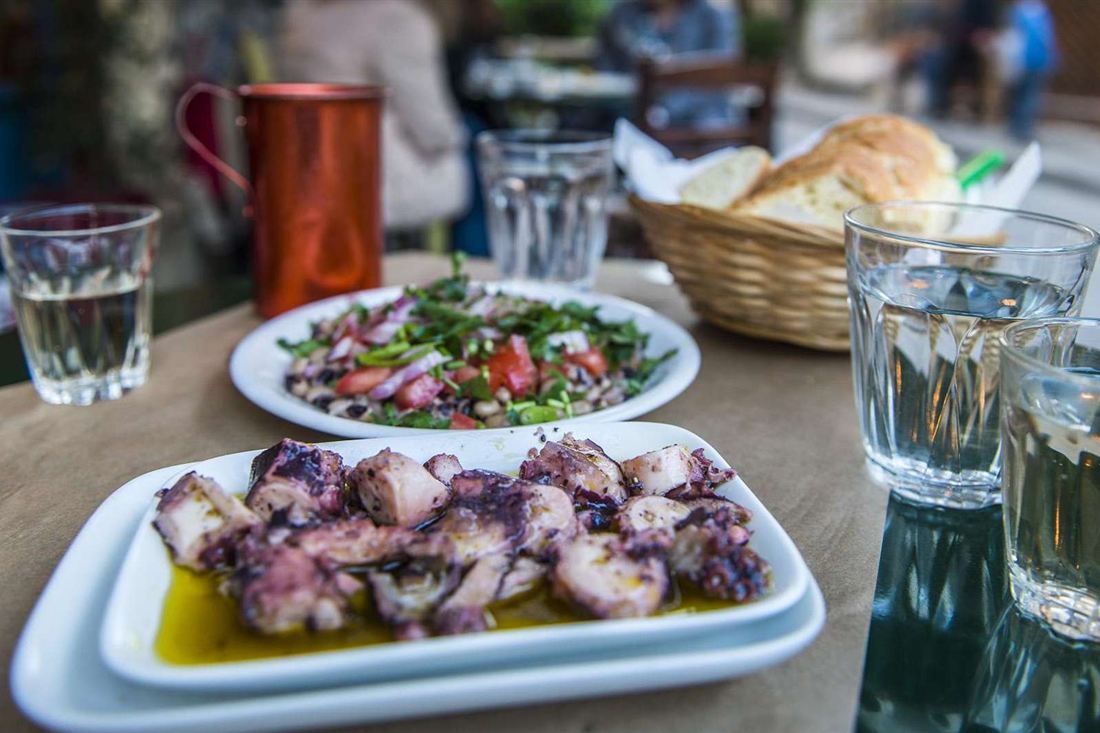
A Greek dinner is a shared meal. Meze are small dishes meant to be shared. A pikilia is a plate with a variety of small meze foods. A mezedopoleio with no fixed menu serves whatever it prepared that day. The meal lasts two to three hours.
Greek consumer groups list what a menu must show. The price list is in Greek, shows final prices and hangs at the entrance. Frozen fish, meat and vegetables carry the word “frozen”. A guest does not have to pay when no legal receipt is issued. Read the menu before you sit down to save money in Athens.
Where do visitors save money in Athens on groceries, markets and drinking water?
Shoppers who save money in Athens use the weekly laiki street markets. They buy staples around the Central Market on Athinas Street. They fill a bottle with tap water that the water utility tests every day.
A laiki is a farmers’ market held in the street. Each neighbourhood has its market on the same weekday every week, and trading runs from 8:00 to 14:00. Producers are farmers or beekeepers who sell their own goods. Professionals buy from other sources and resell. The Athens laiki farmers market guide covers the stalls in more detail.
Ways to save money in Athens include knowing which day each district trades. Monday brings markets to Kifissia, Patisia and Gouva. Tuesday is the day for Kypseli, Keramikos and Ambelokipi. Wednesday covers Kato Petralona and Nea Smirni, and Saturday covers Exarchia and Neos Kosmos.
Athens and Piraeus together hold about 195 laiki, and about 25 of them are strictly organic. Prices are quoted per kilogram, and they drop late in the day. The lowest ones come after about 13:00.
The Central Market stands inside a ring of four streets: Athinas, Sofokleous, Evripidou and Aiolou. It is open Monday to Saturday from 8:00 to 18:00 and closed on Sundays. The meat hall and the fish hall share one building. The vegetable and fruit hall faces them across Athinas Street.
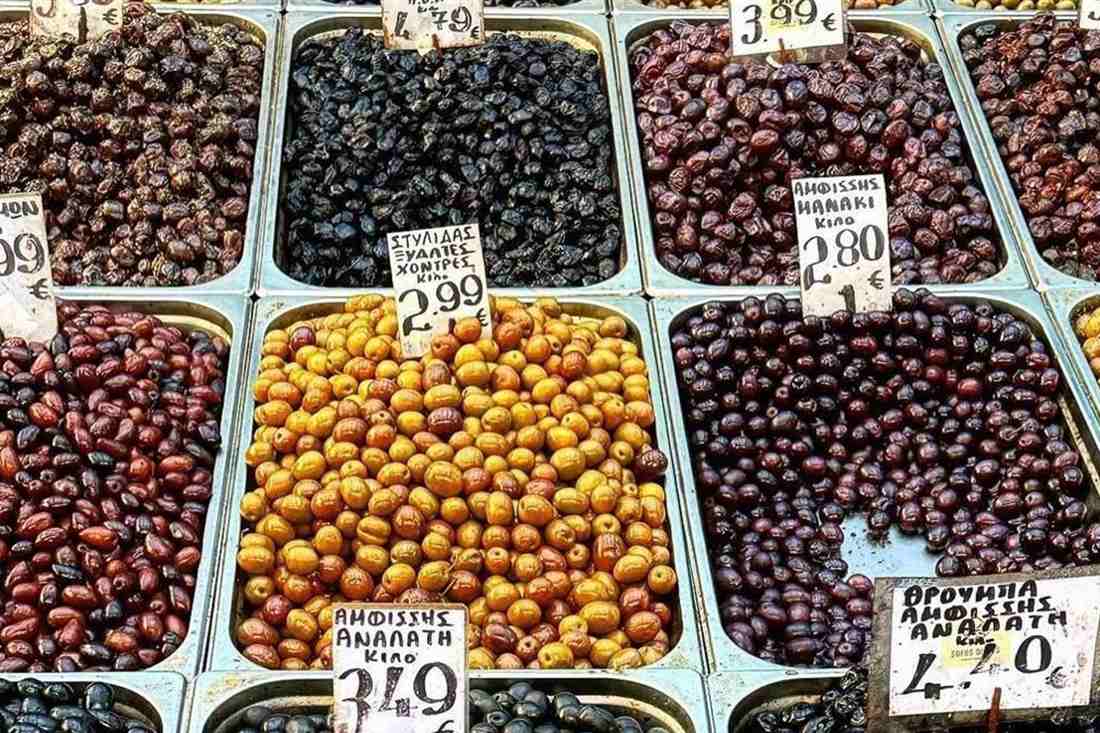
Evripidou Street starts where the market starts. Its shops sell spices, herbs, cheeses, olives, nuts and legumes. Shops there let you sample before you buy. Here a visitor can fill a bag with cheese, olives and legumes and save money in Athens at lunch.
The corner kiosk, the periptero, works as a small supermarket. Its fridges hold yoghurt, soft drinks, beer and ice cream. Its shelves carry water, tissues, cookies and chocolate. Mini markets that open all night have taken business from the traditional kiosks.
EYDAP supplies the tap water of Athens. It runs two quality laboratories, in Galatsi and Acharnes, and its tests run daily. The labs test raw water from four reservoirs: Marathon, Yliki, Mornos and Evinos. They also test drinking water from the treatment plants and the network. EYDAP states that the results certify its drinking water meets the legal requirements.
A refillable bottle is one more way to save money in Athens. The Municipality of Athens runs a plan to clean, repair and restore 34 public fountains. A public refill station on Korai Square has a spring, a point for filling bottles and a drinker for pets. Access is free for everyone.
Which coffee, drink and night-out habits help visitors save money in Athens?
To save money in Athens at night, order the iced coffees Greeks drink, the frappe or the freddo. Take drinks with a plate of meze. Use the free outdoor cinema and festival nights that the city organises each summer.
The frappe is a Greek iced coffee made from instant coffee, water, sugar, ice and optional milk. It was invented at the Thessaloniki International Fair. The coffee is shaken into a thick foam and poured over ice and cold water.
You order a frappe by sweetness. Glykos is sweet, metrios is medium and sketos is plain. Milk comes only if you ask for it with “me gala”. A clear order helps a visitor save money in Athens in cafes and beach bars, where the frappe is common.
Freddo espresso is an iced espresso with a foam top. Two espresso shots are shaken with ice in a mixer and poured over ice. Freddo cappuccino adds a cold milk froth called afrogala.
A kiosk sells water, soft drinks and snacks at the street corner. Kiosks stay open late into the night, and the city centre has stands that open round the clock. OASA, the Athens public transport organisation, lists kiosks and mini markets among its 554 ticket points in Attica.
Greek bars and ouzeria serve drinks with food. Meze is a plate of snacks that comes with ouzo or tsipouro. An ouzeri is a cafe-style place for those drinks, with food and service like a mezedopoleio. These bars show a way to save money in Athens: let the plate arrive with the drink.
Smoking rules shape where you sit. The ban covers enclosed public places such as restaurants and nightclubs without exception. Sheltered outdoor areas of bars and restaurants that are not open on at least two sides must be smoke-free.
The city counts 65 open-air cinemas, with municipal and private operators. Screenings begin in late spring and end in late September, weather permitting. The common pattern is one film around 21:00 and a second around 23:00. Films in Greece are never dubbed, except children’s films.
The Athens Open Air Film Festival is free. It is organised with OPANDA, the culture, sports and youth organisation of the city. It screens in July and August in parks and squares such as Kotzia Square, Drakopoulou Park and Plato’s Academy Park. These screenings are the easiest way to save money in Athens on an evening out.
The summer programme All Athens Is a Stage offered 59 events with free admission in 30 neighbourhoods. It ran in July and early August. A winter edition of the film festival shows classic films outdoors on the Thissio pedestrian walk.
Which entry rules help visitors save money in Athens at the Acropolis and the state museums?
Visitors save money in Athens by matching their status to the free and reduced categories at state sites. They buy only on the official e-ticket site. They pick the five-day combined ticket when they plan more than one site.
The Hellenic Ministry of Culture sets who enters state sites and museums free or at a reduced rate. Age comes first. Visitors from EU states enter free up to the age of 25. Under-18s from non-EU countries get in free as well. Reading that list before the desk pays off.
Status comes second. Unemployed Greek citizens, recipients of the Social Solidarity Income, refugees and military service personnel enter free with documents. Large families and single-parent families qualify under set conditions. A visitor over 65 from Greece or another EU state pays a reduced rate from October through late spring.
Cards and certificates open the door as well. A visitor with a disability enters free with one escort and a certificate. Licensed tourist guides, journalists and members of ICOM and ICOMOS enter free. A traveller with one of these documents can save money in Athens at state sites that follow the Ministry list.
The combined ticket has a fixed list of seven sites and stays valid for five days. The list names the Acropolis with its slopes. It adds the Roman Agora, the Ancient Agora and Hadrian’s Library. The Olympieion, the Kerameikos and Aristotle’s School complete it. Anyone who plans to save money in Athens checks that list first.
The Greek organisation that manages cultural resources names the Hellenic Heritage e-ticket site as the only official Acropolis portal. It calls any “skip the line” advertisement a deception. The hill and the monument do not allow such a service. A queue waits at the Propylaea in any case. Visitors who save money in Athens buy at that portal.
A limit of 20,000 visitors a day, with hourly caps, was announced for the Acropolis. The first hour admits 3,000 visitors and the next hour 2,000. Arrivals bunch between 8 am and noon, so the caps spread them out.
At the National Archaeological Museum, online ticket holders get priority access. At peak times, staff can ask the crowd to wait outside. In summer the museum opens at 8 am and closes at 8 pm, Wednesday to Monday. Ticket sales end 30 minutes before closing.
Which tour, audio guide and booking choices help visitors save money in Athens?
A tip-based walk, a self-guided audio ticket, a small group and a private tour each carry different terms. Visitors save money in Athens by comparing duration, group size, language and cancellation rules before they book.
A tip-based walking tour has no fixed fee. Guests book for free and pay at the end what they think the walk was worth. The Athens free walking tour page explains the format in detail. Check it first when a guide is the planned spend.
One tip-based listing runs 2 hours 30 minutes in English. Booking and cancelling are free. It includes no entrance to archaeological sites such as the Agora or the Kerameikos. The site ticket stays a separate purchase.
Self-guided audio replaces the live guide and trims the bill. One Acropolis ticket listing adds an optional audio guide in English, German, French, Spanish or Italian. It stays valid for one day. The buyer receives the ticket at once for the chosen day and time slot.
- Audio tour: another listing runs 2 hours and offers a Plaka Old Town audio tour or a full audio tour.
- Small group: one listing runs 2 hours, takes a maximum of 8 guests, offers English and asks for a booking 10 minutes in advance.
- Small group terms: the same listing labels cancellation free and states wheelchair access.
- Private tour: one listing for the Acropolis and its museum runs 1.5 to 3 hours in English, German, Italian or Greek.
- Private tour terms: the same listing carries a free-cancellation label and asks for a booking 10 hours in advance.
Entry tickets come straight from the museums. The Acropolis Museum sells tickets on its own online ticketing site. The National Archaeological Museum issues them through its e-ticketing system or at its reception desk. A visitor who wants entry without a guide can book there. Leaving out the guide fee helps visitors save money in Athens.
Read the terms line by line: duration, start point, language, group size and cancellation. Visitors who save money in Athens compare two tours on those five points. A listing that leaves one out asks the visitor to guess.
Which festival, concert and municipal event rules help visitors save money in Athens?
Concession categories, free open-air programmes and official box offices each lower the cost of an evening out. Visitors save money in Athens on events by checking who qualifies for a concession and where the sales channels stand.
The Athens and Epidaurus Festival runs from 1 June to late August and covers music, theatre, dance and visual arts. Its venues include the Odeon of Herodes Atticus, the Ancient Theatre of Epidaurus and a contemporary venue at Peiraios 260. Tickets sell online and at the festival box offices.
Concessions go to students, people aged 65 and over, the unemployed and persons with disabilities. Artist union members and art school students qualify too. Supply is limited and first come, first served, and the buyer shows documents. Unemployed holders of a valid monthly card can buy up to 24 hours before a show.
Seats on the lower and upper tiers are numbered, and each seat choice is final. One transaction is capped at four tickets. Tickets are personal and non-transferable, and a purchased ticket cannot be cancelled. Visitors who save money in Athens plan the date before they pay.
Last-minute tickets sell at the venue box offices on performance days. Those box offices stand at the Odeon of Herodes Atticus, the Epidaurus theatre and Peiraios 260. The organisers do not guarantee tickets bought outside the official network, and the buyer carries the risk.
The Athens Concert Hall lists concessions for students, people up to 25 and unemployed people. People aged 65 or over, people with disabilities and European Youth Card holders qualify too. So do families with four or more children. Schools get a special rate for Athens State Orchestra concerts, and one teacher per 10 students enters free.
Culture is Athens is the cultural platform of the City of Athens. It lists municipal events in a calendar with category and status filters. Its Creative Learning weekend programmes are free. Scan that calendar first to save money in Athens on a night out.
- Museum concerts: concerts held at museums are free to attend, though the museum entry can need a ticket.
- Municipal open-air venues: the Summer Cinema and the Open Air Theatres of Colonus and Grava.
- Athens Jazz: a week-long festival at Technopolis in late spring or early June, where the bulk of the concerts are free.
- Athens Open Air Film Festival: free screenings from June to August at archaeological sites, museums and parks.
- Outdoor cinemas: 65 venues run from late spring to late September, and films play with subtitles instead of dubbing, except children’s films.
Which room choices, from the district to the cancellation rule, help visitors save money in Athens?
Visitors who save money in Athens on a room pick a district beside a metro station. They match the room type to the group and read the cancellation terms before they pay. The overnight stay fee counts per room and per night.
The first way to save money in Athens on a room is the district. On Line 2, Akropoli station comes right after Syntagma, and Syngrou-Fix follows it. Koukaki, which borders Makrygianni and Plaka to the north, is served by both stations. Metaxourgeio is three stops from Syntagma, after Omonia and Panepistimio.
Pangrati has Evangelismos station and a short walk to the National Gardens. Check the walk from the room to the station before you book. The guide on where to stay in Athens profiles each district. The room rules below apply to all of them.
The overnight stay fee is the next line to check when you save money in Athens on a room. It counts per day and per room or apartment. The host collects it after the stay but before you leave the unit. You receive a document as proof of collection.
The fee follows the season and the type of accommodation. Hotels, rented furnished rooms and apartments, short-term rentals and self-catering homes carry it. Free accommodation carries none, and a half-stay is charged in full. Architectural heritage buildings, youth hostels and campsites are exempt.
- Apartment with a kitchen. An aparthotel unit comes with a small kitchen: sink, fridge, microwave and stovetop. Guests handle the cleaning, washing and cooking themselves, and the whole apartment carries one fee.
- Family room. The fee counts per room, so one family room is one charge a night. One room for the family is a way to save money in Athens on this fee.
- Shared room. A hostel guest rents a bunk bed in a dormitory room, and nearly all hostels have a shared kitchen. Hostel listings can include laundry services, luggage storage and lockers.
The EU’s 14-day right to cancel does not cover hotel bookings for specific dates, says Your Europe. The booking terms decide any refund. Read the cut-off date before you pay, because that date decides the refund. Under the national hotel chamber’s rules, a hotelier can request a deposit up to a quarter of the stay’s cost.
Where do visitors store luggage, wash clothes and land late to save money in Athens?
Storage points charge in different ways, so visitors compare each one to save money in Athens. They wash clothes at a self-service laundry. The airport express buses run around the clock, so a late landing still has a bus.
Ways to save money in Athens on luggage start with the storage point. The City of Athens tourism site lists points at the airport arrivals level and at Larissis railway station. It also lists lockers at Monastiraki and Syntagma metro stations.
The airport point charges per bag, by size and by length of stay, and you pay when you collect it. One locker operator charges per locker used, not per piece of luggage. The Larissis lockers open every day from 6 am to 10 pm. One operator keeps its Monastiraki lockers open around the clock.
Visitors who save money in Athens by flying late plan the gap after check-out. The national hotel chamber gives check-out as 12 noon on the day of departure. A later check-out needs the hotelier’s agreement and a free room, and a stay past noon carries a supplement. A locker covers the hours between noon and the flight.
A self-service laundry is a shop where the customer washes and dries the clothes. Coins are the common payment, and other shops take cards or run their own card system. A drop-off service washes, dries and folds the load and bills by weight. Check a hostel or an extended-stay hotel for self-serve laundry facilities before you book.
For a night arrival, OASA, the Athens transport authority, runs the Airport Express buses on a 24-hour basis. The X95 reaches Syntagma Square in about 60 minutes. The X96 reaches the Port of Piraeus in about 90 minutes. The night runs of the X97 to Elliniko metro station start from Dafni.
Ways to save money in Athens on an early flight use rail and the metro. Suburban trains leave the airport every 15 to 25 minutes and reach Larissis Station in about 45 minutes. The metro runs daily from 5 am. On Saturdays, two metro lines and two tram lines run through the night.
Which shopping and tax-free rules help visitors save money in Athens on souvenirs?
Visitors who save money in Athens on shopping ask for the tax-free form at the till. They show the unused goods to customs before they leave the EU. Nearly all shops close on Sundays, so the shopping day follows the opening hours.
How to save money in Athens with a VAT refund starts with residence. Only shoppers who live outside the EU are entitled to it, says Your Europe. The goods must reach customs on departure within three months of purchase. Customs validates every claim, digitally or in person, before the shopper leaves the EU.
Greece sets a minimum spend per receipt. Request the tax-free form at the time of purchase. At Athens airport, customs in the departures hall stamps the form before check-in, and the goods must be unused. A flight that leaves the EU from another airport gets its stamp at that last exit point.
For the shopping streets, the Athens shopping guide has the layout. Monastiraki, the flea market neighbourhood, centres on Pandrossou Street and Adrianou Street, and its station serves Lines 1 and 3. Stalls sell collectible coins. The City of Athens calls the flea market a place to trawl for antiques. Piraeus holds an antiques market on Sunday mornings.
- Olive oil. EU rules sort it into extra virgin, the highest quality, and virgin, which carries sensory defects at a very low level.
- Honey. Greek honey comes mainly from the nectar of fruit and citrus trees, with thyme honey and pine honey as named varieties.
- Herbs. Mountain tea is the dried herb Sideritis, and Sideritis raeseri is the cultivated species in Greece, harvested in July. One herb seller in the City of Athens guide sells oregano from Amorgos and sage from Crete.
- Ceramics. Akrokeramo, the ornamental ceramic pediments of Athenian rooftops, turn up at the Monastiraki flea market.
Visitors who save money in Athens on souvenirs read the label for the origin. A PDO name means every stage of production, processing and preparation happens in the named region, says the European Commission. A PGI name needs at least one stage there. The City of Athens guide sets handmade, locally sourced goods against fridge magnets and novelty ouzo bottles.
Shop hours decide the souvenir run. The City of Athens says Tuesday, Thursday and Friday shops close at 2 pm and reopen at 5.30 pm. They shut again at 9 pm. Saturday hours run from 9 am to 3 pm. Nearly all shops close on Sundays, so a souvenir run falls on a weekday or Saturday.
Which payment habits help visitors save money in Athens at cash machines, card terminals and exchange desks?
Visitors who save money in Athens pay in euros and take cash from a bank-run machine. They choose euros when a terminal offers a conversion, and they keep every receipt. Each habit removes a cost that no price list shows.
Greece replaced the drachma with the euro. A visitor from the euro area already holds the local currency, so no exchange desk is needed. A visitor from outside the area lets the card network and the home bank convert each payment. The first of the ways to save money in Athens is to convert as seldom as possible.
Cash machines come in two kinds. A bank machine shows the bank’s name and logo above the screen. It stands in a branch or its entrance lobby. An independent machine belongs to a payment company. These machines appear in airports, transport hubs and shopping centres.
The independent operator adds a fee to each withdrawal. The screen shows that fee before you confirm, so you can cancel the withdrawal. Your own bank can add its charges on top. A machine in the wall of a bank branch is one of the plain ways to save money in Athens.
An EU regulation on cross-border payments covers conversion offers. A party that converts currency at a cash machine or card terminal must show the charge as a percentage. The percentage is measured above the latest European Central Bank euro reference rate. The payer sees it before the payment starts. Anyone keen to save money in Athens reads that figure first.
The regulation asks for two amounts on the screen: the sum in euros and the sum in the home currency. It also requires a note that the payer can pay in euros and let their own provider convert. These tips to save money in Athens come down to one button: choose euros.
Screens can make the home-currency choice look like the safer one. Wording such as guaranteed rate appears, and that button can be the larger one. Before a tap, visitors who save money in Athens read the terminal screen. A receipt that shows your home currency and an exchange rate means the conversion already happened. Object before you pay, not afterwards.
A ministerial decision extended the duty to accept cards to 35 more professions. The list includes taxis, private kiosks, minimarkets, theatres and cinemas. The Independent Authority for Public Revenue checks the terminals. A visitor can ask to pay by card in these places.
Restaurants, bars, cafes and shops must use electronic cash registers, and they cannot issue handwritten receipts. The Independent Authority for Public Revenue tells tourists that they need not pay if no receipt is issued. It adds that paying by card and asking for a receipt helps collect the taxes already in the price.
By law a restaurant must also give an itemised bill. The receipt lets a visitor check each line against the menu. The Athens money and currency guide covers tipping and leftover cash. Those sit outside these ways to save money in Athens.
Which days and opening hours let visitors save money in Athens at sights, shops and offices?
The Hellenic Ministry of Culture closes the majority of its museums on Tuesday, and almost all shops close on Sunday. Visitors who save money in Athens look at the weekday first, because a closed gate wastes the whole trip.
The ministry splits the year in two. The winter period covers 1 November to 31 March; the summer period covers 1 April to 31 October. Winter hours for museums run from 08:30 to 15:30, and the major ones keep 09:00 to 16:00. Summer hours are longer. This calendar helps visitors who save money in Athens plan their days.
The ministry portal says the majority of museums and collections close on Tuesday. The last admission comes 20 minutes before closing time. A visitor who arrives in those last 20 minutes finds the doors shut. Knowing the closing day is one of the cheapest ways to save money in Athens.
The ministry keeps its museums shut on New Year’s Day, 25 March, Orthodox Easter Sunday, Labour Day and the two days of Christmas, 25 and 26 December. They open on 6 January, Clean Monday, Orthodox Easter Monday, Holy Spirit Monday, 15 August and 28 October. Hours on Good Friday and Saturday differ. Visitors who save money in Athens fit museum days around these dates.
The official Athens visitor guide lists shop hours by weekday. Shops open from 9 am to 3 pm on Monday, Wednesday and Saturday. On Tuesday, Thursday and Friday they open from 9 am to 2 pm. They open again from 5:30 pm to 9 pm.
That split leaves a midday break of two and a half hours. The majority of central shops stay open through it. Department stores open from 10 am to 9 pm, Monday to Friday. A shopper who plans the day around these hours can save money in Athens on extra trips.
Almost all shops close on Sunday. Shop owners in the Municipality of Athens have the option to open on Sundays from late spring to October. The second Sunday of August is excluded. A government gazette decision gives the historic centre the same option all year. That means Plaka, Monastiraki and the area around the Acropolis.
Shops close on the public holidays. These are 1 January, 6 January, Clean Monday and 25 March. The list continues with 25 December, 26 December, 28 October and 15 August, plus Labour Day and Orthodox Easter Sunday and Monday. On Orthodox Good Friday, stores open from 1 pm to 7 pm.
Offices follow their own clock. Standard post office hours run from Monday to Friday, 7:30 am to 2 pm. The branches at Syntagma Square and the airport also open on Sunday. Pharmacies open from 8 am to 2 pm on Monday and Wednesday. On Tuesday, Thursday and Friday the evening session runs from 5:30 pm to 8 pm.
Which mistakes make visitors miss the chance to save money in Athens?
Six mistakes cost visitors the savings they planned for Athens. Two happen on the road, two at the table, one at the booking page and one at the gate. Each has a plain rule that prevents it.
Inspectors fine passengers who travel without a valid ticket on the metro, buses and trolleybuses. Trams and the electric railway fall under the same checks. The checks are frequent and targeted, and a ticket controller can arrive without warning.
The controls aim at passengers who slip through the gates behind another traveller without validating a ticket. Passengers who hold a reduced fare face a lower penalty. Validating on every ride is the simplest way to save money in Athens on public transport.
Athens taxis run on a regulated meter, and the law requires it. Tariff 1 covers the day, from about 5 am to midnight. Tariff 2 covers midnight to 5 am. If Tariff 2 runs in the day, ask the driver to switch. If the meter is off, get out and try another taxi.
Trips between the airport and the city-centre ring have a fixed fare that includes all surcharges. Any other destination, such as Piraeus, goes on the meter. The Ministry of Infrastructure and Transport sets the tariffs after talks with taxi organisations.
EU law gives a 14-day right to cancel an online purchase. Your Europe, the EU consumer portal, lists exceptions. They are plane and train tickets and concert tickets. Hotel bookings, car rental reservations and catering services for specific dates are on the list too. Read the cancellation terms of such bookings before paying, as visitors who save money in Athens do.
Greek rules require restaurants, tavernas, cafes and bars to keep a price list in Greek. Other languages are optional. The list hangs outside the main entrance, and every customer sees it before ordering. A venue with no visible prices breaks that rule, so visitors who save money in Athens walk on.
The rules bar a couvert charge for plates, cutlery and napkins. A restaurant also cannot serve and bill bread or bottled water without the customer’s consent. Both can arrive unasked, and both have menu prices. Say no when the basket lands on the table. Saying no at the table is a quick habit to save money in Athens.
The Hellenic Organization of Cultural Resources Development calls every skip-the-line advertisement for the Acropolis deceptive. It says no ticket includes a skip-the-line service. Even a visitor who bypasses the main entrance meets a queue at the Propylaea, where the passage narrows. Treat a person at the gate who promises a shorter queue the same way.
How do visitors save money in Athens by staying outside the busiest centre?
Visitors who save money in Athens by staying beyond the core pick a base beside a metro or tram stop. Piraeus is 20 minutes from Syntagma on Line 3. Chalandri takes about 17 minutes. Koukaki is one Line 2 stop from Syntagma.
Piraeus suits visitors who save money in Athens around island trips. It is the chief port of Greece. From it, ferries serve almost every island in the east of the country. Line 1 starts here and crosses Line 3 at Monastiraki. For the port itself, read the Piraeus port guide.
The Athens visitor guide gives the ride from Piraeus to Syntagma Square on Line 3 as 20 minutes. Seafood tavernas line Mikrolimano and Piraiki. The central avenues hold the main shopping areas. The Archaeological Museum of Piraeus shows objects from classical antiquity.
Kallithea keeps the centre close for visitors who save money in Athens. It lies 3 kilometres south of Syntagma. Line 1 stops at Kallithea and Tavros, and the tram stops at Kallithea and Tzitzifies. Four Line 1 stops reach Monastiraki, and Line 3 runs one stop on to Syntagma.
South Kallithea, called Tzitzifies, is tied to the growth of Greek folk music, including rebetiko.
Neos Kosmos lies south of the historic centre. It has three metro stations: Syngrou–Fix, Neos Kosmos and Agios Ioannis. Line 2 runs from Neos Kosmos to Syntagma in three stops, through Syngrou–Fix and Akropoli.
Koukaki has two metro stations, Akropoli near the Acropolis and Syngrou–Fix on Syngrou Avenue. The pedestrian zones of Drakou and G. Olympiou fill with cafes and restaurants. The old brewery on Syngrou Avenue is now the National Museum of Contemporary Art.
Glyfada sits in the southern part of the Athens urban area, beside the sea. The tram follows the seafront along Poseidonos Avenue. Take line T6 from Syntagma to Pikrodafni, then change to line T7. One tram guide gives about 33 minutes for T6. It gives about 60 minutes from Syntagma to Voula with the change.
Glyfada’s main shopping district runs around the town hall, along Metaxa Avenue and Grigoriou Lambraki Street. The town has a marina and a golf club. Its restaurants and shops are described as upscale, so visitors who save money in Athens compare room rates first.
Chalandri is a northern suburb about 12 kilometres from the centre. Line 3 stops at Chalandri, and the ride to Syntagma takes about 17 minutes. It has a pedestrian shopping street and a high ratio of open green space per resident. The tavernas around Dourou Square became known for roast lamb and piglet.
For the rides between these areas and Syntagma, see budget transport Athens. These tips help you save money in Athens only when the ride stays short.
How do visitors who book ahead save money in Athens through cancellation and rebooking terms?
Booking ahead pays off when visitors save money in Athens by reading the terms before they pay. Two Acropolis tour listings carry a free-cancellation label and close bookings 10 hours before the start. One entry-ticket listing carries no such label.
The first listing is a private tour that runs 4 to 8 hours in English, German or French. Its label reads free cancellation, and the booking closes 10 hours before the start. Its page offers a full refund for a cancellation made at least 24 hours before the start.
The second listing is a guided walking tour that runs 2 to 4 hours. Guides speak German, Spanish, Italian, Greek, French and English. It also lists a private option, the free-cancellation label and the same 10-hour booking cut-off. Visitors who save money in Athens compare these lines across listings.
An Acropolis entry-ticket listing runs 2 hours and offers ten languages. It has no free-cancellation label. Its page states that the ticket is non-refundable. Entry works only in the chosen time slot, give or take 15 minutes.
Reserve now, pay later is a separate option. Listings that offer it let you book a spot and pay nothing today. The same listings pair it with free cancellation up to 24 hours before the tour. Together they keep a plan flexible while you wait for a forecast or a flight time.
A flexible date widens your choice. One listing sells an Acropolis Museum ticket that you redeem on any day that suits your schedule. The Acropolis ticket in the same listing is tied to the day and time slot you choose at booking.
A multi-site listing adds 3 days of validity for the other sites after the Acropolis visit. Flexible validity helps visitors save money in Athens when weather or a queue changes the route.
Disruption is part of the terms, and visitors who save money in Athens read them. One private-tour listing states that the tour runs regardless of the weather. The booking platform’s supplier terms define the free-cancellation period as ending 24 hours before the start.
Strikes show why the slot type matters. On one July day, an antiquities-staff union held a work stoppage. The Acropolis and every site with electronic ticketing stayed closed until noon. A fixed morning slot is the booking that suffers on such a day. Look for free cancellation or an any-day ticket before you commit to a slot.
What do travellers ask about how to save money in Athens?
Six questions cover how to save money in Athens. They deal with tap water, day passes, market payments, child entry, tips and tax-free shopping. The answers below rest on utility, transport, tax and customs sources.
Is it safe to drink tap water in Athens?
The utility says its analyses show the drinking water fully meets the legal requirements. Its laboratories in Galatsi and Acharnes test samples from reservoirs, boreholes, treatment plants and the network. Refilling a bottle from the tap costs nothing.
Is a day pass worth it for a short stay?
A 24-hour ticket runs for 24 hours after the first touch-in. It covers the metro, buses, trolleybuses and tram, but not airport trips. It helps you save money in Athens on days of repeated rides, not on days on foot around the centre.
Do street markets in Athens take cards?
Street-market stalls must have card terminals and accept card payments. The revenue authority checked 1,592 stalls and found 102 with no terminal or no booked connection appointment. Ask the seller before you fill a bag, and keep coins as a back-up.
Do children enter the Acropolis free?
Yes. Children under 18 of any nationality enter the Acropolis free. Pick up the free ticket at the ticket office with proof of age. A passport shows both age and nationality. Families who save money in Athens use this rule.
Do visitors need to tip in Athens?
A normal Athens bill has no service line, so anything you add is your own tip. Takeaway coffee and counter purchases need no tip. Hotel tips go to a task, such as carrying bags. Tipping stays voluntary, but it is welcome.
Who can claim tax-free shopping in Athens?
Travellers who live outside the EU can claim the refund. Keep the purchase receipts, because customs needs them to give the export validation before you leave the EU. The purchases count when you made them up to three months before you leave.