
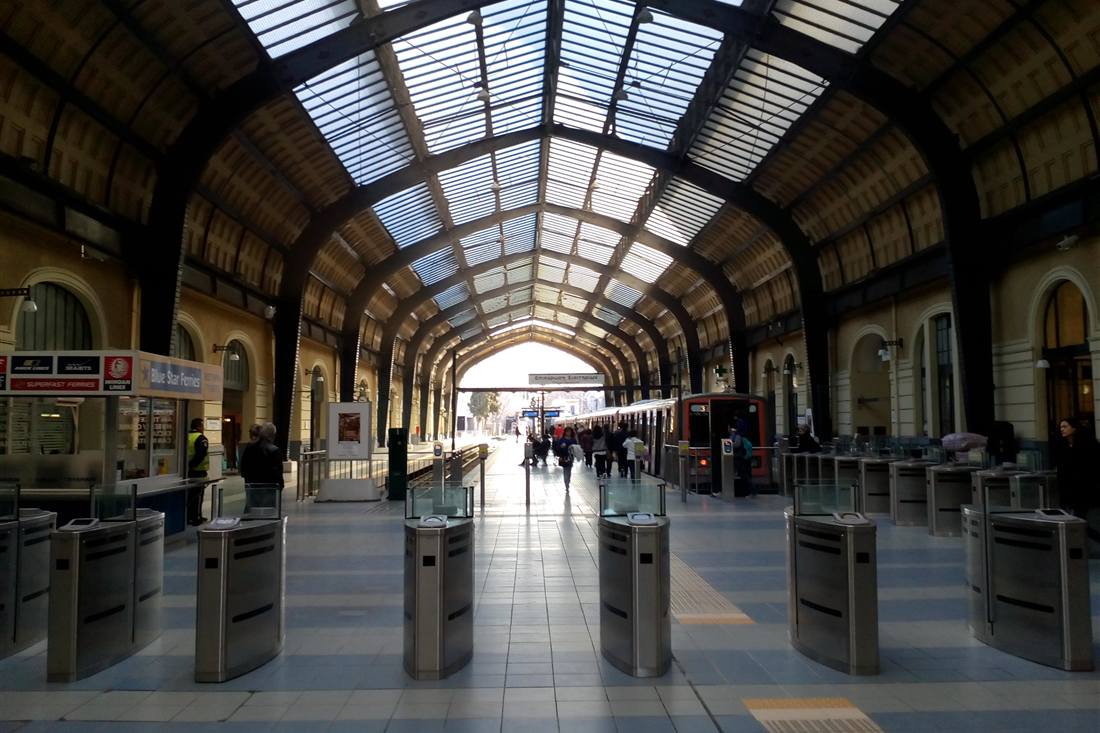
Budget transport Athens begins with a single 90-minute ticket that you validate once and use on the metro, the tram, buses and the suburban railway. The metro takes 20 minutes from Syntagma Square to Piraeus, and the tram follows the coast as far as Voula.
Four airport express buses and trolleybus 11 run all night, and two coach terminals, Kifissos and Liosion, serve the rest of Greece. Once you know where the lines lead, the Greece Tours homepage shows which regions and islands sit at the end of them.
Who runs budget transport Athens, and how do the metro, tram, bus and trolley fit together?
OASA, the Athens Urban Transport Organisation, plans and coordinates the whole network. Its two subsidiaries run the buses, trolleybuses, metro and tram, and a separate rail company runs the suburban railway. Together they make budget transport Athens one linked system.
The Hellenic Ministry of Infrastructure and Transport has jurisdiction over OASA. OASA handles the strategic and operational planning, coordination and control of public transport in the Athens metropolitan area. It does not run any urban mode itself. It is also responsible for the ticket system, ticket sales, ticket inspection and the split of ticket revenue.
OSY runs the buses and the trolleybuses. STASY runs the metro and the tram. Both are wholly owned subsidiaries of OASA. A separate consortium runs 63 outer bus lines that were assigned through a tender. The split stays invisible for anyone using budget transport Athens, because the ATH.ENA card works on every mode.
Budget transport Athens includes three metro lines. Line 1 runs from Piraeus to Kifissia. Line 2 runs from Anthoupoli to Elliniko. Line 3 runs from Dimotiko Theatro to the airport. Together they total 91.7 kilometres and 66 stations. Line 1 began as a single-track steam railway in the nineteenth century.
The tram has two lines. Line T6 runs from Syntagma to Pikrodafni, and Line T7 runs from Akti Poseidonos to Asklepieio Voulas. The network serves the Saronic Gulf coast. Its Piraeus branch links the Athens riviera with the port. For a seaside trip, the tram is the budget transport Athens offers on that coast.
Hellenic Train runs the suburban railway, called the Proastiakos, on lines of the Hellenic Railways Organisation. OASA coordinates it. Line A1 runs from Piraeus through Athens to the airport. Line A2 runs from Ano Liosia to the airport. Line A3 runs from Athens to Chalcis, and Line A4 runs from Piraeus to Kiato.
Pick the mode by the trip. Take the tram for the coast. Take the suburban railway for Chalcis or Kiato. Take the metro for the centre. Buses and trolleybuses fill the gaps between the rail lines. Metro Line 3 and the suburban lines A1 and A2 all reach the airport. That gives budget transport Athens two rail links to it.
How does one ticket work across budget transport Athens modes, and where do the fare zones end?
One 90-minute ticket covers the metro, tram, buses, trolleybuses and suburban railway from the first validation. The urban fare stops where the airport routes start, because those have their own tickets. That rule keeps budget transport Athens simple for riders who change modes.
The 90-minute ticket is valid on buses, trolleybuses and trams. It also covers metro lines 1, 2 and 3 and the suburban railway between Magoula, Piraeus and Koropi. The tram stays inside the urban fare, and it serves the Saronic Gulf coast. Check that the time left reaches your destination. If not, validate again once the 90 minutes end.
The urban fare ends before the airport. The 90-minute ticket is not valid on Airport Express buses or the X80 bus. It is not valid on the metro segment between Koropi and the airport. The metro airport ticket lasts 90 minutes and also works on the urban modes and the suburban railway.
On the metro and the suburban railway, validate at every entry and exit. On buses, trolleybuses and trams, validate once when you board. Validate before you walk into a metro gate. A gate that detects an obstruction stays shut. Step back and it opens. These steps apply on every budget transport Athens trip.
- The 24-hour ticket runs for 24 hours from the first validation and is also valid on the X80 bus.
- The 5-day ticket runs for five periods of 24 hours.
- The 3-day tourist ticket runs for three periods of 24 hours and includes two-way travel between the airport and the city by metro or Express bus.
- The ATH.ENA Ticket is rechargeable. OASA asks riders to reload it instead of buying a new one.
- The ATH.ENA Card comes in a personalized and an anonymous version. Reduced fares and the passes of 30, 90, 180 and 365 days load only on the personalized card.
- An Express bus airport ticket covers one trip.
- Wide metro gates are for riders with a disability, bags, a baby carriage or children.
A bank card also pays for budget transport Athens on every mode, with no ticket bought in advance. Tap in and out at metro gates. Tap once when you board a bus, trolleybus or tram. Always use the same card or device. The daily cap equals the cost of a 24-hour ticket. Airport rides count outside the cap.
Travelling without a valid ticket or card brings a fine. The ticket inspector is obliged to impose it, and the amount differs for full-fare and reduced-fare riders. Joint Ministerial Decision No. 80212 sets this rule. For the ticket types in detail, read our Athens public transport tickets guide before you plan budget transport Athens routes.
Which budget transport Athens options keep running at night, on Sundays and on strike days?
Four airport express buses, bus 040 and trolleybus 11 run around the clock every day. Four more bus lines serve the night. On Saturdays, metro lines 2 and 3 and trams T6 and T7 also run all night. That widens the budget transport Athens choices.
The airport express buses run on a 24-hour basis. X93 links the Kifissos intercity bus station with the airport. X95 starts at Syntagma. X96 starts at Piraeus and follows Posidonos avenue. X97 starts at Elliniko station, and its night runs between 00:00 and 04:55 start from Dafni station. Airport metro trains run every 30 minutes on Line 3 all week.
Bus 040 runs between Piraeus and Syntagma. Trolleybus 11 runs between Ano Patissia, Neo Pagkrati and Nea Elvetia. OASA lists both as 24-hour lines on weekdays and weekends. Four more lines serve the night hours, every day of the week. They fill the night for budget transport Athens riders.
- Line 400 runs from Piraeus to Doukissis Plakentias station.
- Line 500 runs from Piraeus to Kifissia.
- Line 790 runs from Glyfada through Peristeri to Anthoupoli.
- Line X14 runs from Syntagma to Kifissia. It runs from 22:40 to 05:25 from Monday to Friday and around the clock on Saturday and Sunday.
Every Saturday brings 24-hour service on metro lines 2 and 3, trams T6 and T7 and 11 bus routes. Line 3 runs all night only between Dimotiko Theatro and Doukissis Plakentias. Bus 049 from Piraeus to Omonia is one of the 11 routes. On Friday nights, lines 2 and 3 run later. The last trains leave Syntagma by 2:00 a.m.
On the August 15 holiday, every bus and trolleybus route ran a Sunday timetable. The 24-hour routes kept their Saturday schedules. Those four lines kept running through the night, at longer gaps between trains. Holidays change the budget transport Athens timetable, so check the day before you travel.
A strike changes budget transport Athens hours. The GSEE and ADEDY confederations declared one 24-hour general strike. The metro and tram workers announced a service from 10:00 to 17:00. Buses and trolleybuses ran from 9:00 to 21:00. Buses on the lines taken over by a separate operator were expected to run all day.
Check bus and trolleybus schedules on the OASA website, in the OASA Telematics app or on the information line 11185. Metro and tram frequencies are on the STASY website. The OASA announcements section lists temporary bus lines and suspensions. Check it for any budget transport Athens change.
Which bus and trolley lines give budget transport Athens riders the Acropolis, Plaka and the museums?
Line 230 runs between Akropoli and Zografou. The Makrygianni stop serves lines 1, 5, 040, 230, A2, A3 and B2. These lines form the core of budget transport Athens riders use around the Acropolis, Plaka and the museums.
Syntagma Square is the main hub. Metro lines 2 and 3 meet under it, and the tram ends beside it. Buses and trolleybuses start and finish there too. They include the services to the northern suburbs and the Olympic Complex in Maroussi. Start your budget transport Athens day here.
Omonia Square is the second hub. Panepistimiou, Stadiou, Athinas and Peiraios run into it, together with Agiou Konstantinou and 3rd Septemvriou, six streets in all. The metro station under the square carries the same passenger traffic as the one at Syntagma. Line 230 connects the Acropolis area with the Syntagma and Panepistimio metro stations.
The Acropolis Museum stands in the Makrygianni neighbourhood, next to Akropoli station on the red line. It is 280 metres from the Parthenon in a straight line and 400 metres on foot. The Makrygianni bus stop is a 10-minute walk from the Acropolis. Plaka is a 5 to 10 minute walk from the rock.
Budget transport Athens riders who want the port and the Acropolis in one ride can take the X80 express. It links Syntagma, Akropoli and Piraeus. The City of Athens guide says it runs every half hour from 7 am to 9:30 pm. The season runs from late spring through October.
For the National Archaeological Museum, budget transport Athens means Line 1 or a bus. The museum is in Exarcheia. Victoria station on Line 1 is a 5-minute walk away, and buses and trolleybuses serve the museum as well. Lines 060 and 046 start at a stop named Mouseio, the Greek word for museum.
Walk northwest from the Acropolis and you reach the Ancient Agora. Monastiraki station, on Lines 1 and 3, sits next to the site. Its museum occupies the reconstructed Stoa of Attalos. The station also stands right beneath the Acropolis, so one stop covers both sights.
Trolleybuses are electric. They draw 600V DC power from overhead wires through two pantographs. The fleet counted about 210 trolleybuses on 19 routes. Line 5 passes through Syntagma Square, and lines 11 and 040 run 24 hours a day.
The wire network is shrinking from 144 km to 44 km, and the remaining wires follow long straight roads. OASA is replacing trolleybuses with electric buses, starting with lines 17 and 20 in Piraeus. Check a line’s vehicle type on the OASA site first, because budget transport Athens options are changing.
Which budget transport Athens lines reach the Riviera beaches, and when does the tram beat the bus?
Tram T7 follows the shore from Piraeus to Voula, and T6 joins it from Syntagma at Pikrodafni. Past Voula, bus 115 links Glyfada, Vouliagmeni and Varkiza. For budget transport Athens beach days, the tram wins as far as Voula.
The Athens Riviera runs 70 km from Piraeus to Sounio and Lavrio. It begins about 16 km from downtown Athens. Glyfada, Voula, Vouliagmeni and Varkiza are its main beach districts in the south. Budget transport Athens needs a different line for each one.
Line T6 starts at Syntagma and ends at Pikrodafni. Line T7 runs between Akti Poseidonos in Piraeus and Asklepieio Voulas. T7 has 43 stops over 16.1 km. The average speed of the tram network is 22 km/h. Expect a steady ride, not a fast one.
The tram meets the metro and the suburban railway at Syntagma, Syngrou/Fix, Neos Kosmos and SEF. The City of Athens guide puts Edem 30 minutes from the heart of the city. Edem is on the first stretch of the Riviera coast. The Athens tram guide lists every stop in order.
Glyfada gives budget transport Athens riders a tram and a bus on two roads. The tram runs beside Poseidonos Avenue. Vouliagmenis Avenue runs parallel to the shore, and bus A3 follows it from Akadimia to Glyfada. Bus A2 runs from Akadimia to Voula. So the tram keeps to the sea, and the buses keep to the avenue.
The tram ends at Voula. The centre is 18 km from Vouliagmeni and 22 km from Varkiza. Bus 115 connects Glyfada, Vouliagmeni and Varkiza. Bus 171 runs from Argyroupoli station to Varkiza. Past Voula, budget transport Athens riders switch to the bus.
Metro line 2 plus bus 122 is a third route. Ride line 2 to Elliniko, then take the 122 toward Vouliagmeni. The City of Athens guide gives 55 minutes from Syntagma to Vouliagmeni Lake. The same guide puts the Limanakia rocky cove at 60 minutes, and entry there is free.
Late returns decide between tram and bus. The tram operates from 5:30 am to midnight daily and all night on Saturdays. Buses and trolleybuses run from 5 am to midnight. Only selected routes run all night on Saturdays. Plan budget transport Athens trips back before midnight, except on Saturdays.
How do budget transport Athens riders reach Piraeus, Rafina and Lavrio for the cheap ferries?
Metro line 3 links Piraeus with Syntagma Square in 20 minutes, and line 1 meets it at Monastiraki. Rafina and Lavrio sit farther out and need an intercity bus or a mix of metro and city bus. These budget transport Athens routes cover all three ports.
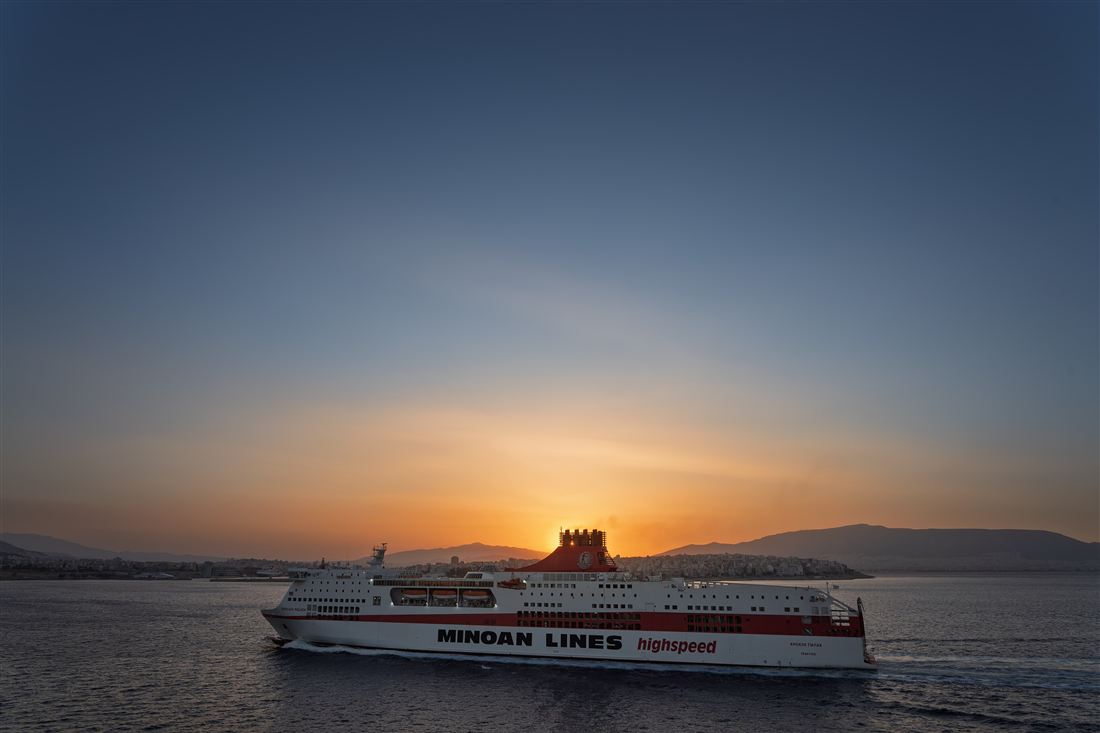
Piraeus metro station stands next to the port. It is the southern end of line 1 and an interchange with line 3. Line 1 has 24 stations over 25.7 km. The full run to Kifissia takes about 51 minutes. The Piraeus port guide shows which gate serves which island.
Tram T7 now reaches the port. Its terminal stop, Akti Poseidonos, is in Piraeus. Greece’s deputy transport minister said the tram will normally end at the port. For budget transport Athens trips by bus, line 040 runs between Syntagma Square and Piraeus 24 hours a day. Line 049 links Omonia and Piraeus.
Rafina sits 25 km east of central Athens. Piraeus is the first port of Athens, and Rafina is the second. Its ferries go to Andros, Tinos, Mykonos, Paros, Naxos and southern Euboea. The Attica intercity bus runs to Rafina from 5:45 am to 10:30 pm. The ride lasts between 60 and 90 minutes, with traffic setting the final time.
Guides name two departure points for that bus: Pedion Areos and the Nomismatokopio metro station on line 3. The operator uses three terminals, depending on the destination, so confirm your stop with the operator. City bus 314 is the other budget transport Athens route. It runs between Doukissis Plakentias station, Pallini and Rafina.
Lavrio lies about 60 km southeast of the city centre, overlooking the island of Makronisos. Ferries leave for Kythnos, Kea, Milos and Paros, among other islands. The intercity bus takes up to 2 hours. The port sits 1 km from the town centre.
A second route to Lavrio uses rail. Suburban railway lines A1 and A2 call at Koropi station. OASA bus 320 runs from Koropi station through Keratea to Lavrio. Budget transport Athens riders on the airport rail line can change there.
Arrive early. At Rafina, be in port at least an hour before sailing. At Lavrio, aim for 45 minutes to an hour. The Piraeus Port Authority says car passengers must be in port 1 hour ahead. It also says every passenger has to be aboard before the scheduled departure.
The Piraeus Port Authority states the luggage rules for foot passengers. The ticket shows the volume and weight allowed, and only luggage above it is charged. The carrier answers for luggage lost or damaged on board. It does not answer for luggage you keep with you.
Explosive and flammable goods are banned. Passengers cannot enter the vehicle area after departure, so carry the items you need during the trip. The Piraeus Port Authority also runs free buses between gate E1 and gate E5, and the ticket shows your gate.
How does the suburban railway work as budget transport Athens beyond the metro?
Four Proastiakos lines, A1 to A4, are budget transport Athens riders use for Piraeus, the airport, Chalcis and Kiato. The national rail operator runs them. OSE controls the infrastructure. No reservation is needed on any line.
Line A1 joins Piraeus and Athens Airport. Line A2 joins Ano Liosia and the airport. Line A3 joins Athens and Chalcis. Line A4 joins Piraeus and Kiato through Athens. In that order, the lines measure 48.2 km, 33.2 km, 82.8 km and 120.7 km.
Larissa station is the central stop for lines A1, A3 and A4. It stands on Domokou Avenue in Kolonos. Intercity trains call there too. The Metro Line 2 station of the same name is adjacent. A rider changes between rail and metro at one site.
Two of those lines leave this station for towns outside the city. For these towns, budget transport Athens offers a direct rail line from the centre.
At the airport, the station is reached over an elevated walkway from the terminal. A train takes about 45 minutes to Larissa station. It takes 16 minutes to Doukissis Plakentias, a stop on Metro Line 3. A rider can get off there and continue on the metro.
Line A1 also ends at Piraeus, beside the seaport, where Metro Lines 1 and 3 stop. The trip from the airport takes nearly an hour. For the metro, bus and taxi options on the same trip, see the guide to airport to Piraeus routes. The railway adds a budget transport Athens choice to that list.
Line A3 takes an average of 1 hour 22 minutes to reach Chalcis. Line A4 takes an average of 1 hour 43 minutes from Piraeus to Kiato. Line A4 runs up to one train per hour. Line A3 runs up to one train every two hours.
Riders on Line A3 change to Line A2 at the Acharnes Railway Center. Riders on Line A4 change to it at Ano Liosia. Line A2 ends at the airport. Both changes reach the airport without passing through Larissa station. That route suits budget transport Athens riders who arrive from Chalcis or Kiato.
Other metro joins sit along the lines. Nerantziotissa connects with Metro Line 1. Pallini, Paiania-Kantza and Koropi connect with Metro Line 3. Each join lets a rider leave the railway and finish the trip on the metro.
Which intercity coach terminals give budget transport Athens riders the cheapest ride out of the city?
Athens has two coach terminals, Kifissos and Liosion. Kifissos serves the Peloponnese, western Greece and Thessaloniki. Liosion serves central Greece and Thessaly. These budget transport Athens coaches belong to regional KTEL cooperatives, so each company sells its own tickets.
The Kifissos terminal stands at 100 Kifissou Avenue in Peristeri. Only KTEL coaches use it. It is the busiest and largest bus terminal in Athens, with 63 ticket offices. Coaches from there serve the Peloponnese, Epirus, Macedonia and the Ionian Islands.
The direct Athens to Thessaloniki service leaves from Kifissos. Coaches to Nafplio board there too. A rider bound for the south or the west of the mainland starts at this terminal.
The Liosion terminal lies in Patisia, at 260 Liosion Street. It serves central Greece, Thessaly and Pieria. The busiest route runs to Chalkida, with a coach about every 30 minutes.
Other coaches from Liosion go to Arachova, Livadeia, Thiva, Delphi, Amfissa, Lamia, Karpenisi, Trikala, Karditsa, Larissa and Platamon. A rider heading to central Greece or Thessaly boards here, not at Kifissos. For these regions, budget transport Athens offers the Liosion coaches.
Bus 051 links it with Omonia Square and Metaxourgeio station on Metro Line 2. Bus 052 links it with Elaionas station on Metro Line 3. Bus 420 links it with the port of Piraeus.
Kato Patisia station on Metro Line 1 stands near the Liosion terminal. Bus 024 links Liosion with Omonia Square. Bus A10 links it with Larissa station, and bus 420 links it with Piraeus.
KTEL is the Greek name for a cooperative of 62 regional bus companies. It runs the budget transport Athens coaches. The English translation of its full name is Joint Bus Proceeds Fund. Each company carries the name of the regional unit it serves.
Both terminals hold ticket offices for the regional companies, so coach tickets are sold on site. The Athens to Thessaloniki coach can be booked online. The companies for Trikala and Magnesia list online booking too. A company without an online system sells at the counter.
A coach guide advises buying at the terminal the day before travel. First thing on the day also works for busy mainland routes. Confirm the departure terminal on the ticket, because the two terminals serve different regions.
How do trains reach Thessaloniki, Patras and Volos as budget transport Athens options?
These budget transport Athens trains leave from Larissa station. Thessaloniki takes 4 hours 40 minutes and needs a free seat reservation. Patras takes about 3 hours, with a bus after Kiato. Volos has no train while the Larissa to Volos line is suspended.
The main line for budget transport Athens trains runs north through Livadeia, Larissa and Katerini on its way to Thessaloniki. The trip from Athens to Larissa takes 3 hours. From Larissa on, the trip to Thessaloniki takes 1 hour 35 minutes.
Long repair works on the line keep intercity services infrequent. For budget transport Athens plans, the timetable decides the trip. Check the departure on the operator’s official website before you plan the day.
Intercity trains need a seat reservation. It is free, and the operator adds it to the ticket. Ticket offices at the station issue reservations too. Nobody can reserve a seat on the train itself.
The operator’s official website is the only place to book Greek trains online, and it has an English version. Booking agencies outside Greece cannot sell these budget transport Athens tickets. The Greek ticketing system is not connected to outside systems. The “Choose seat” option picks a seat.
Intercity trains sell out in the days before departure, so reserve in good time. Summer and Easter are the busiest periods. One rail guide names Athens to Thessaloniki as a route to reserve early. It gives a rule of thumb of a month or more ahead.
No through train runs to Patras. Trains run from Larissa station to Kiato every hour or two. A connecting bus then covers the rest of the way. The whole trip takes about 3 hours.
A combined rail-and-bus ticket is sold at the station in Athens. In Patras, it is sold at the railway station, not at the bus station. This combination needs no prior reservation. It is a rail-and-bus link that budget transport Athens riders can buy in one step.
Replacement buses link Patras with Kiato and Diakopto until the railway to Patras is finished. A direct coach from the Kifissos terminal is the other option, and it leaves every hour.
The rail line between Larissa and Volos was damaged by the floods in Thessaly. Services stay suspended until the track is repaired, and a rail replacement bus runs along the route. From Athens, a coach from the Liosion terminal reaches Volos directly.
Which cycling and walking links count as budget transport Athens for short hops?
A flat 7 km bike route runs from Thiseio metro station to the coast. A car-free walk below the Acropolis also counts. Neither needs a ticket, so both work as budget transport Athens visitors can use for short hops.
The bike route for budget transport Athens starts at Thiseio metro station and runs 7 km toward the sea. The City of Athens visitor guide calls it entirely flat and traffic-free. It passes through Petralona, Kallithea and Moschato.
The wider cycle axis is planned at 17.8 km, from Kifissia to Faliron Bay. The southern section, from Gazi to Faliron Bay, is open. The northern stretch is unbuilt. When finished, 8.5 km of it will run beside the Athens-Piraeus electric railway line.
In the centre, the Municipality of Athens is adding dedicated on-road lanes on Athinas Street and September 3rd Street. Local roads in Kypseli and Patissia join them. On the coast, the Riviera promenade is flat and hugs the shore. A path runs past Palaio Faliro and Alimos to Glyfada. Both give cyclists a lane away from car traffic.
The Grand Walk of Athens, called Megalos Peripatos in Greek, is a 6.8 km network of pedestrian routes. It begins on Dionysiou Areopagitou Street and reaches Syngrou Avenue near the Temple of Olympian Zeus. It reaches three archaeological sites on one car-free line, among them the Ancient Agora.
The plan makes Ermou, Mitropoleos and Athinas streets and Plaka car-free. It widens sidewalks, with better surfaces for strollers and wheelchair users, and adds bicycle lanes. A walk along it needs no ticket, which makes it the simplest budget transport Athens link between the sites.
Greek law bans anyone under 17 from using an e-scooter. Riders must wear a helmet, and each scooter needs third-party liability insurance. The law bans e-scooters from roads with a speed limit of 50 kph or higher. Check these rules before you rent a scooter for budget transport Athens trips.
Athens is built around a large number of hills. Mount Hymettus rises to nearly 1,000 m, while the Acropolis rock stands 150 m above sea level. The city guide calls the ride up Hymettus an hour’s climb from the centre.
Summer adds heat. For downtown Athens, Wikipedia gives a daily high averaging 34.3 degrees Celsius in July and in August. The Thiseio route and the Riviera path are flat, while Hymettus is a climb. Match the link to the weather before you choose budget transport Athens on two wheels.
When does a shared taxi or ride-hailing trip count as budget transport Athens?
A taxi counts as budget transport Athens visitors can share once a group fills the cab. A conventional taxi in the Athens-Piraeus area carries a maximum of four passengers, so the group rides on one meter.
A news report on a taxi dispute says conventional taxis in the greater Athens-Piraeus area take up to four passengers. It calls a ride with five passengers illegal. A group of five needs two cabs. For hailing, ranks, payment and scams, read the Athens taxi guide before your first ride.
Every licensed Athens taxi shows yellow paint, a rooftop TAXI sign and a meter, according to a taxi-fare guide. The meter starts with a flag charge and adds a charge for each kilometre. Another guide advises checking that the meter reads zero when you get in.
Tariff 1 covers the day, from 5 a.m. to midnight. Tariff 2 is the night rate and runs from midnight to 5 a.m. It keeps the same flag charge and raises the charge per kilometre. A night trip therefore costs more for each kilometre, which matters for budget transport Athens plans after midnight.
According to the City of Athens guide, a ride from the airport into the centre has a flat rate. The day rate applies from 5 a.m. to midnight and the night rate from midnight to 5 a.m. The time of arrival sets the rate, and the rate includes all surcharges.
The Transport Ministry set flat fares between the airports of Athens, Thessaloniki and Kavala and their city centres. In Athens the flat fare covers rides to places inside the traffic restriction ring, called the daktylios. A fixed total suits budget transport Athens plans for a group, because the sum is known before the cab moves.
A taxi-fare guide lists extra charges for luggage over 10 kg. It lists a further charge for pick-ups from ports, railway stations and intercity bus stations. Count these extras when a group with heavy bags compares a shared cab with other budget transport Athens modes.
Greek law treats ride-hailing platforms as transport companies. A platform must sign three-year contracts with licensed taxi drivers, and the Transport Ministry issues the licences. A fare guide says the main apps book licensed taxis at regulated meter prices, with no surge pricing.
An app trip therefore sits in the same budget transport Athens class as a street taxi. Pick a shared cab when three or four travellers head to the same address. A solo traveller fills one seat of four, so sharing adds nothing.
How do budget transport Athens riders handle strollers, luggage and bicycles on each mode?
OASA, the Athens urban transport body, sets a different limit for each mode. Budget transport Athens riders take two conventional bicycles on a metro or tram train. A bus takes only folding bicycles.
On the metro and the tram, cyclists carry the bicycle, enter by the last door and use the lifts. They never use the escalators. The bicycle stands in a free space, away from passageways, doors and ticket validators. Bicycles are banned during sports and other events near the lines.
A bus or trolleybus takes only folding bicycles of up to 20 inches. The bicycle travels in a bag of up to 33 x 66 x 80 cm with securing straps. These limits shape budget transport Athens trips with a bicycle.
Folding e-scooters have their own rule. The metro takes up to two in the last door of a train. A bus or trolleybus takes only folding scooters, in a holder of up to 110 x 50 x 20 cm.
OASA allows large bags up to 100 x 60 x 25 cm and 25 kg. Any other object must be no longer than 1.70 m. A bus or trolleybus takes two shopping trolleys, or one on a midi bus, with the driver’s permission.
A bus or trolleybus takes one open stroller, or two on an articulated bus or trolleybus. The driver decides whether there is room. Otherwise the stroller travels folded. Children under 6 travel free with an escort, which helps budget transport Athens plans for families.
Metro lifts are fully accessible on entering and leaving, so step-free budget transport Athens starts at the station. Wheelchair users board more easily at the first or last car, which have a boarding ramp. At Agios Nikolaos, Omonoia and Monastiraki on Line 1, the platform gap is wide, so staff bring a movable ramp.
Almost all buses have a kneeling system, and the driver lowers the bus or deploys the ramp. All trolleybuses kneel. Trams have special seats for disabled passengers. OASA’s general rule is to give priority to people who need help.
Storage points save you from carrying a bag all day. One operator runs a luggage desk on the Arrivals level of Athens International Airport. Larissis railway station has baggage lockers open daily from 6 a.m. to 10 p.m. For more points, see the page on left luggage storage in Athens, which suits budget transport Athens riders.
Which apps and live boards help budget transport Athens riders plan a trip?
The OASA Telematics app shows live bus arrivals and bus positions on a map. OASA also runs a route search on its website and an information line on 11185. These tools keep budget transport Athens trips on schedule.
OASA is the Athens Urban Transport Organisation, the public body behind the city’s buses and trolleybuses. Its Telematics app runs on Android, iOS and Windows devices. A rider types a line number, picks a direction and sees every stop on that route.
Pick a stop and the app returns the arrival time of the bus. The “Bus locations” option shows the buses of a line on a map in real time. Riders save lines and stops as favourites, and the app posts news on route changes. The budget transport Athens offers by bus therefore comes with real-time arrival information for each stop.
The app’s store listing adds four details. It lists nearby stops by GPS position and shows the daily timetable of each line. Location services stay on for the nearby-stops list, and internet comes through wifi or mobile data. The Athens SIM card and WiFi guide lays out the SIM, eSIM and WiFi options.
The Telematics app is built for buses and trolleybuses. Metro and tram service hours sit on the metro and tram operator’s own timetable pages. OASA’s metro and tram pages link there. The metro also runs a passenger information system on lines 1, 2 and 3. Budget transport Athens planning by rail therefore uses a second source.
The OASA site lists the 24-hour bus lines and the Express bus lines on separate route pages. A full network map opens in a web viewer. The ATH.ENA Card app loads a personalised or anonymous card through an NFC-enabled phone. The rider pays for the loading with a bank card.
When an app cannot answer a question, the OASA information line takes calls on 11185. The Express bus page of OASA sends riders with route questions to the same number. Save it in the phone before the first ride, next to the other budget transport Athens tools.
Which budget transport Athens mistakes cost riders a fine or a missed connection?
Budget transport Athens mistakes cost money in three ways: no validation, an expired ticket and the wrong airport ticket. Missed connections come from the wrong end station, a late departure, a closed station or a strike day.
On the metro and the suburban railway, OASA requires validation on exit as well as on entry. On buses, trolleybuses and the tram, a rider validates once, on boarding. Tram validators sit inside the vehicle. A rider who shows no valid ticket or card at a check is fined.
The ticket inspector must impose that fine. A full-fare rider pays a higher fine than a reduced-fare rider. Contactless riders add one more rule for budget transport Athens. Keep the bank card apart from any ATH.ENA card at the reader. Two cards at one reader cause a double charge.
A single ticket lasts 90 minutes from its first validation. The reader shows the remaining time, so check that it covers the rest of the journey. When the time runs short, validate again once the 90 minutes of the original ticket have expired. This one check keeps budget transport Athens trips legal on the second leg.
The airport has its own ticket rule. A 90-minute ticket reaches Koropi on Line 3 and no further, and the Airport Express buses do not take it. An Express bus ticket covers one journey from or to the airport. Heading to the airport, the bus only takes riders on; leaving the airport, it only lets riders off.
An ATH.ENA card holds one active product at a time. OASA advises against loading an airport ticket onto a card with an active product. The advice is to add monetary value to the card instead.
- Wrong end of the line. Each metro line has two end stations. Line 1 runs between Piraeus and Kifissia, Line 2 between Anthoupoli and Elliniko, and Line 3 between Dimotiko Theatro and Doukissis Plakentias or the airport. A Line 3 train that ends at Doukissis Plakentias does not go on to the airport.
- Late departures. OASA states that lines 2 and 3 run extended hours only on Friday and Saturday. At the extension, the last trains left Dimotiko Theatro at 1:34 a.m. and Doukissis Plakentias at 1:38 a.m. Elliniko saw its last departure at 1:40 a.m. and Anthoupoli at 1:43 a.m.
- Closed stations. The Hellenic Police orders a station closed during rallies, as it did at Syntagma. Metro trains then pass through the station without stopping for passengers.
- Strike days. UK government travel advice notes regular strikes, sometimes called at short notice, that disrupt buses and trains. In one nationwide strike, buses and the metro, tram and trolley services ran a reduced schedule, and no taxis or trains ran for 24 hours.
A fine or a missed connection undoes the saving a rider planned. The budget travel tips Athens Greece page covers the other parts of the trip, from sights to food.
What do travellers ask about budget transport Athens?
Travellers ask six things about the network. They cover the cheapest airport route, child fares, ticket validity, night service, contactless payment and day passes. The answers below come from OASA and the other public bodies that run budget transport Athens.
Which way from Athens Airport to the centre costs the least?
Budget transport Athens starts with the Airport Express bus, which carries the cheapest airport ticket. Line X95 runs to Syntagma Square around the clock, and Syntagma links to metro lines 2 and 3. The metro and the suburban railway take the Metro Airport ticket instead.
Do children travel free on Athens public transport?
Children under six travel free, and they can ride on the personalised card of a guardian. Children aged 7 to 18 pay a reduced fare, which needs a personalised ATH.ENA Card based on an age profile.
How long is a budget transport Athens ticket valid?
A single ticket stays valid for 90 minutes from its first validation. The 24-hour ticket lasts 24 hours from first validation. The 3-day tourist ticket runs three times 24 hours and the 5-day ticket five times 24 hours.
Does the Athens metro run at night?
Yes. Lines 2 and 3 run late on Friday and Saturday nights, and they run around the clock every Saturday. Budget transport Athens at night also relies on buses 400, 500, 790 and X14, which run on weekdays and weekends. The Airport Express buses run all day and night.
Do Athens buses accept contactless payment?
Yes. OASA lists contactless bank cards, phones and watches for rides on buses, trolleys, trams and the metro. Express buses and the metro accept them on airport trips too. Reduced fares such as student fares do not work with contactless payment.
Is a day pass worth it for budget transport Athens on a short stay?
A 24-hour ticket suits a day of repeated rides between sights. One round trip with a transfer fits the 90-minute ticket. The 3-day tourist ticket includes a two-way airport journey, and contactless riders face a maximum daily charge.