
Santorini vs Naxos pits a dramatic, romantic, crowded island against a bigger, more authentic one with superb sandy beaches and lower prices. Santorini wins on views and romance; Naxos wins on beaches, value and Greek character. This guide compares them on scenery, beaches, cost, food and who each suits.
Both are Cyclades islands beyond the wider Santorini travel guide, easily linked by ferry. The sections below compare them. They appeal to different travellers.
What is the difference between Santorini and Naxos?
Santorini is a small, dramatic volcanic island built around caldera views, sunsets and romance. Naxos is the largest Cyclades island, greener and more authentic, with long sandy beaches, mountain villages, ancient ruins and a relaxed, low-key atmosphere.
Santorini and Naxos are neighbours in spirit but opposites in feel. Santorini is compact and spectacular. Its appeal concentrates in the caldera, the whitewashed clifftop villages, the famous sunset and a polished, romantic atmosphere geared to luxury and short stays. The whole island measures roughly 76 square kilometres, so distances are short and the crowds concentrate around Fira and Oia.
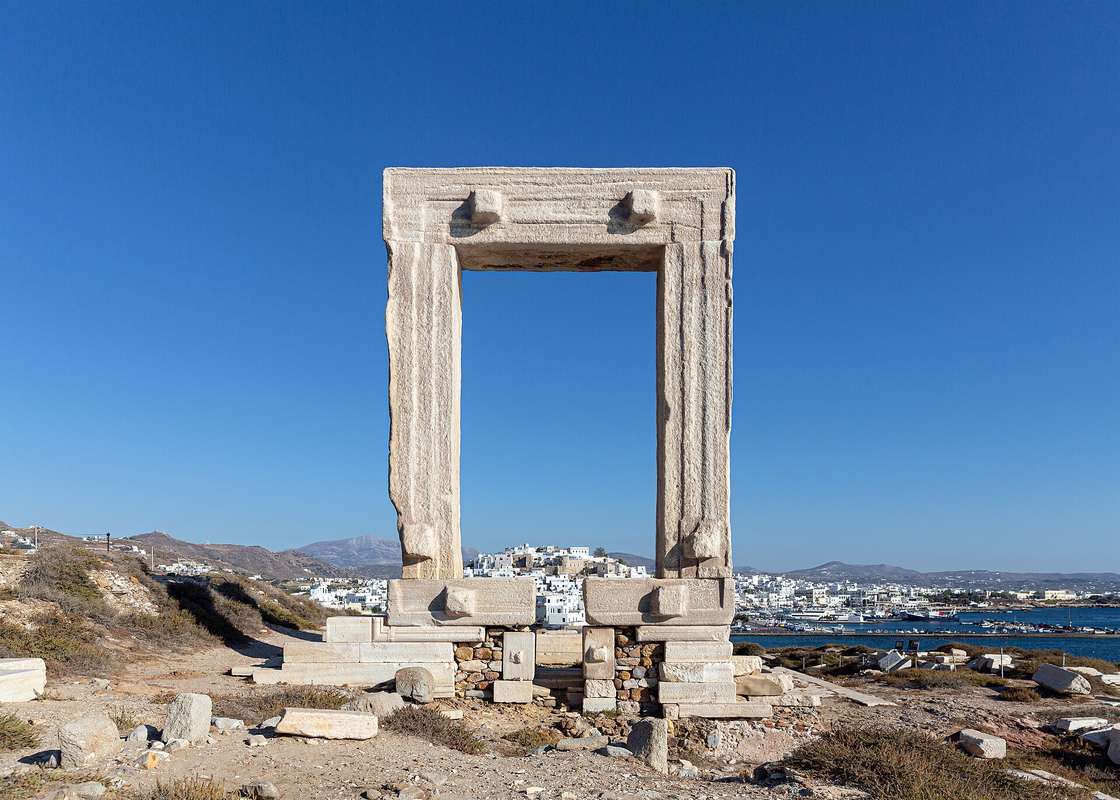
Naxos is the biggest island in the Cyclades at about 430 square kilometres, greener and more self-sufficient. Fertile valleys, mountain villages, Venetian and ancient ruins like the great marble Portara, and a lived-in Greek character define it. You hear more Greek than English, and visitors never dominate the island. One sells drama and romance; the other sells authenticity and space, both set within reach of the Santorini to Naxos ferry.
How do the beaches compare between Santorini and Naxos?
Naxos has far better beaches, with long stretches of golden sand such as Plaka, backed by dunes and cedar trees and gently shelving for families. Santorini’s beaches are volcanic black and red pebbles and stone, striking but rockier and busier.
For beaches, Naxos is the decisive winner. The island holds some of the finest sands in the whole Cyclades, led by Plaka, a ribbon of soft golden sand running for close to four kilometres and backed by cedar trees and dunes. Agios Prokopios, Agia Anna and Mikri Vigla continue the run of long, shallow, family-friendly bays with warm, clear water and shallow entry.
Santorini’s beaches, born of the volcano, feel entirely different. Perissa and Kamari lay out long strands of black volcanic sand and stone, while the Red Beach glows with rust-coloured cliffs behind dark pebbles. These shores are dramatic to photograph but rockier underfoot, smaller and more crowded. Travellers who dream of long, sandy, swimmable coastline find far more of it on Naxos, a contrast set out alongside the guide to Santorini beaches.
Which island is more scenic and romantic?
Santorini is more scenic in the iconic sense and far more romantic, with its caldera, blue-domed villages, cave hotels and famous sunset. Naxos is beautiful in a gentler, greener way, but for honeymoons and the postcard image, Santorini wins.
For the dreamlike, romantic image of the Greek islands, Santorini stands unrivalled. Its caldera of whitewashed villages tumbles down the cliffs, blue-domed churches punctuate the ridge, cave suites cut into the rock, and the sunset over the volcano draws honeymooners from around the world. Imerovigli and Oia frame that view at its finest, high above the flooded crater.
Naxos is genuinely lovely too. Its marble Portara gateway, the surviving doorway of an unfinished Temple of Apollo, stands silhouetted at sunset on a small islet linked to the harbour. The atmospheric Venetian old town and Kastro castle climb above the port, and a green, mountainous interior hides traditional villages. Its beauty runs quieter than postcard-dramatic, so couples after the iconic, view-driven escape find it in Santorini, alongside the guides to the Santorini sunset and a Santorini honeymoon.
How do the food and villages differ?
Santorini leans toward refined dining, cliffside restaurants and Assyrtiko wine from volcanic vineyards. Naxos serves hearty farm food, local cheeses, potatoes and citrus liqueur, spread across mountain villages such as Halki and Apeiranthos that reward exploration.
Santorini’s food scene centres on its volcanic soil. Assyrtiko grapes grow in low basket-woven vines that shelter from the wind, and the island’s wineries pour crisp white wine with sea views. Cherry tomatoes, white aubergine, fava and caper leaves shape the local dishes, and clifftop restaurants in Fira and Oia turn dinner into a caldera spectacle.
Naxos is farm country, the most agricultural island in the Cyclades. Its valleys produce potatoes, citrus, olive oil and the graviera and arseniko cheeses sold across Greece, along with kitron, a fragrant citron liqueur. Mountain villages carry the culture inland: Halki with its old distillery and marble fountains, Apeiranthos built entirely of stone, and Filoti under the slopes of Mount Zas. These inland routes give Naxos a depth that Santorini’s compact footprint cannot match.
Which island is cheaper for a holiday?
Naxos is cheaper across food, hotels, car hire and daily expenses. Santorini commands a premium for its caldera setting and sunset views, so budgets stretch further on Naxos while Santorini carries the higher price tag.
Money often settles the choice. Naxos runs more affordable, with lower daily costs and heartier, cheaper food, plainer but comfortable accommodation and reasonable car hire. Its space, sandy beaches and agricultural, family-friendly feel make it a strong fit for families, longer holidays and travellers who want value and real Greek life.
Santorini charges a premium for its setting. Caldera-view hotels, cave suites and sunset restaurants sit at the top end of Greek island pricing, and the island rewards couples, honeymooners and first-time visitors who want the famous crater and sunset in a short, easy break. A caldera room facing Oia costs far more than a comparable room on Naxos, so short scenic breaks suit Santorini and longer value trips suit Naxos.
Which suits families, and which suits couples?
Naxos suits families and longer stays, with shallow sandy beaches, space and lower prices. Santorini suits couples, honeymooners and short scenic breaks, thanks to its caldera views and romantic setting rather than child-friendly shores.
Naxos is built for families. Its shallow, gently shelving beaches at Agios Prokopios and Plaka let young children paddle safely, the flat coastal plain makes cycling and walking easy, and larger self-catering apartments cost far less than Santorini’s boutique hotels. The relaxed pace and open space give families room to spread out over a week or more.
Santorini plays to couples. Its cave suites, private plunge pools and sunset dinners frame a romantic, view-driven escape rather than a beach-and-space holiday. Steep steps, cliff paths and a lack of long sandy beaches make it less practical for toddlers, yet ideal for a honeymoon or a special-occasion trip, mapped out alongside a Santorini itinerary.
How do you travel between Santorini and Naxos?
Ferries link Santorini and Naxos directly, with a crossing of roughly two hours on the fast boats. Both islands sit on the same central Cyclades route, so pairing them on one trip is straightforward.
Santorini and Naxos share the busy central Cyclades ferry corridor that also serves Paros, Ios and Mykonos. High-speed catamarans cover the crossing in around two hours, while conventional ferries run slower and carry vehicles at lower fares. Frequency rises through the warm season, so day-to-day connections stay reliable for island-hopping.
The order of travel comes down to flights. Santorini’s airport handles more international arrivals, so travellers often start there and sail on to Naxos afterward. Naxos also connects by ferry to Athens through the port of Piraeus, giving a mainland link at either end of the trip, detailed in the Santorini to Naxos ferry guide.
Can you visit both Santorini and Naxos in one trip?
Yes. A week or more lets you combine both islands comfortably. Pair Santorini’s caldera and sunset with Naxos’s beaches, villages and value, using the short ferry between them to see two contrasting sides of the Cyclades.
Combining the two islands gives the best of both. A common split spends three nights on Santorini for the caldera, the sunset and a winery visit, then four or more nights on Naxos for the beaches, the Portara and the mountain villages. The short ferry hop makes the transfer painless, and the contrast keeps the trip varied.
Timing favours the shoulder months. Late spring and early autumn bring warm seas, thinner crowds and lower prices than the peak of summer, which suits both the caldera walks on Santorini and the long beach days on Naxos. A combined route rewards travellers who want scenery, culture and swimming in a single Cyclades holiday.
Santorini vs Naxos: which should you choose?
Choose Santorini for a short, romantic break built on caldera views and the sunset. Choose Naxos for a longer, family-friendly holiday with sandy beaches, mountain villages and lower prices. With a week or more, combine both by ferry.
The verdict follows your travel style. Santorini rewards couples, honeymooners and first-timers who want the iconic view in a compact, upmarket setting. Naxos rewards families, longer stays and value-seekers who want space, sand and authentic Greek life. The table below sums up the head-to-head at a glance.
| Category | Santorini | Naxos |
|---|---|---|
| Scenery | Caldera, blue domes, cliff villages | Portara, green interior, mountains |
| Beaches | Volcanic black and red pebbles | Long golden sand, shallow bays |
| Cost | Higher, premium hotels | Lower, better value |
| Best for | Couples, honeymoons, short breaks | Families, longer stays, budgets |
| Food | Refined dining, Assyrtiko wine | Farm food, cheeses, citrus liqueur |
| Atmosphere | Polished, romantic, busy | Authentic, relaxed, uncrowded |
Which ancient sites stand out in the Santorini vs Naxos comparison?
Santorini holds Akrotiri, a Bronze Age town buried by a volcanic eruption, and Ancient Thera on the Mesa Vouno ridge. Naxos holds the Temple of Demeter near Sangri and unfinished kouros statues lying in its old marble quarries.
Akrotiri lies near the southwest tip of Santorini. Volcanic ash covered the town in the great Bronze Age eruption. The ash kept its streets, multi-storey houses and wall paintings. A roof now shelters the excavation. The Akrotiri page covers the visit.
Ancient Thera stands on Mesa Vouno, the ridge between Kamari and Perissa. Dorian settlers founded the city, and its ruins span Hellenistic, Roman and Byzantine times. The Ancient Thera guide covers the climb.
The Temple of Demeter near Sangri dates from the sixth century BC. Archaeologists rebuilt part of it from the original marble. Unfinished kouros statues lie in the ancient quarries at Melanes and Apollonas. The Apollonas kouros is about ten metres long. The Temple of Demeter page covers the site.
Is Santorini or Naxos better for hiking and active days?
In the Santorini vs Naxos choice, Naxos gives more room to hike, with trails to Mount Zas and windsurfing at Mikri Vigla. Santorini packs its active days into the caldera path from Fira to Oia and boat trips to the volcano.
The caldera path runs along the cliff rim from Fira through Firostefani and Imerovigli to Oia. The sea and the volcano stay in view the whole way. The Fira to Oia hike page covers the route.
Boats cross the caldera to Nea Kameni, where a path climbs to the crater. The boats then stop at warm sulphur springs off Palea Kameni. The Santorini volcano guide covers the trip.
Mount Zas rises to 1,004 metres in the centre of Naxos. A trail from Filoti climbs to the summit past the Cave of Zas. Mikri Vigla, on the southwest coast, draws windsurfers and kitesurfers. Horse riding and sea kayaking run on the Naxos coast too. The Naxos hiking page covers the paths.
Frequently Asked Questions
Should you visit Santorini or Naxos?
Visit Santorini for a short, romantic break built on caldera views and the famous sunset, and Naxos for a longer, more authentic holiday with sandy beaches, mountain villages and lower prices. With a week or more, a short ferry lets you combine both islands on one Cyclades trip.
Is Santorini or Naxos cheaper?
Naxos is cheaper than Santorini across food, hotels, car hire and daily expenses, making it a strong fit for families, longer stays and value-focused travellers. Santorini commands a premium for its caldera setting and sunset, so it suits couples and short scenic breaks rather than tight budgets.
Does Santorini or Naxos have better beaches?
Naxos has far better beaches, with long golden sands like Plaka, Agios Prokopios and Agia Anna that shelve gently and suit families. Santorini’s beaches are volcanic black and red pebbles and stone, dramatic to see but rockier and busier, so Naxos wins for a beach holiday.
How long do you need to see both Santorini and Naxos?
Plan seven days or more to enjoy both islands without rushing. A split of three nights on Santorini for the caldera and sunset, then four nights on Naxos for the beaches, villages and Portara, gives a balanced trip. The direct ferry between them keeps the transfer short.
Which island is better for a honeymoon?
Santorini is the stronger honeymoon choice, with cave suites, sunset dinners and caldera views that frame a romantic escape. Naxos works for couples who prefer beaches and authentic villages over the postcard setting, and it costs far less, but Santorini delivers the classic honeymoon image.
Which island is better for families with children?
Naxos is the easier family island. Its long, shallow, sandy beaches at Agios Prokopios and Plaka let children paddle safely, and the flat waterfront towns handle prams and buggies with ease. Santorini’s cliff-top villages, stepped lanes and dark pebble beaches make it harder work with young children, though the volcano boat trip and the beaches of Kamari and Perissa still entertain older kids.
Is Naxos less crowded than Santorini?
Naxos stays noticeably calmer than Santorini through the summer. Santorini draws cruise-ship day visitors and peak crowds around the Oia sunset, so its caldera path and viewpoints fill quickly in the evening. Naxos spreads its visitors across a far larger island with room to breathe, keeping beaches, tavernas and mountain villages quieter even in the busiest weeks.