
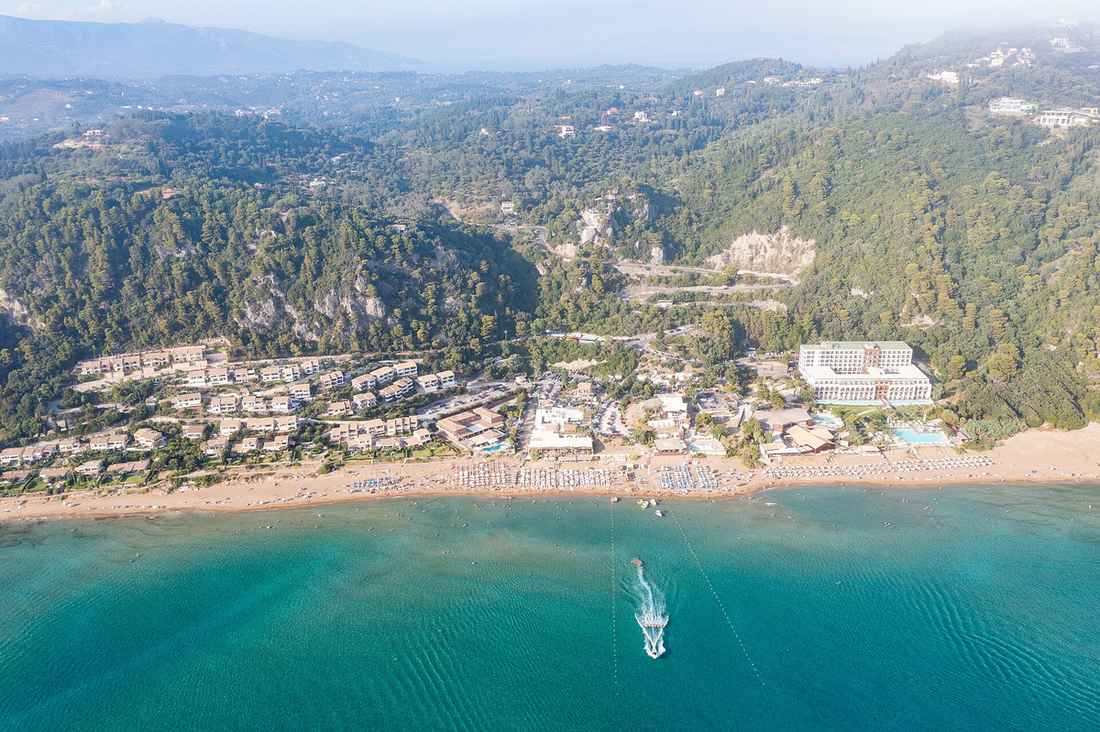
Corfu beaches span the turquoise coves and cliffs of Paleokastritsa, the golden family sands of Glyfada and Agios Gordios, the famous Canal d’Amour at Sidari, and quiet pebble bays on the green north-east coast. The lush Ionian island offers more variety of coast than almost anywhere in Greece. This guide covers the best beaches and which to pick for the day you want. Plan the whole trip with Greece Tours.
The coast is one of the island’s great draws, a core part of the wider Corfu tours and travel guide. Beaches ring every side of the island. The sections below cover the standouts and how to choose.
What is the most famous beach area?
The most famous beach area is Paleokastritsa on the west coast, six interconnected coves of turquoise water beneath green cliffs, crowned by a 13th-century clifftop monastery. Its accessible coves, sunbeds and watersports make it the island’s all-rounder.
One area defines the island’s coast. Paleokastritsa wraps six small coves of clear turquoise water around headlands of green cliff, crowned by a 13th-century monastery, one of the most photographed spots in Greece. Its main coves offer sunbeds, watersports and parking within walking distance, making it the most accessible all-rounder. It is also the best base for exploring sea caves and boat-only beaches such as Chomi, often called Paradise Beach, by rented motorboat or kayak, set out in the guide to Paleokastritsa. The west coast holds great sandy beaches too.
Which beaches are best for families and sand?
For golden sand and families, the best beaches are Glyfada and Agios Gordios on the west coast, with broad, gently shelving bays, soft sand and shallow water. Issos and Halikounas in the south-west add long, dune-backed sandy stretches.
The west and south coasts hold the island’s best sandy beaches. Glyfada, about 16 kilometres west of Corfu Town, is a wide, gently shelving bay of soft golden sand backed by green hillsides, with shallow water and parking, ideal for families. Nearby Agios Gordios offers a long sandy beach beneath dramatic cliffs, while the south-west’s Issos and Halikounas stretch for kilometres behind dunes and a lagoon, quieter and wilder. These suit relaxed beach days and children, set out in the guide to things to do in Corfu. The north has its own famous shore.
What is the Canal d’Amour at Sidari?
The Canal d’Amour at Sidari is one of Corfu’s famous attractions, a run of sandstone cliffs, channels and sea caves carved into striking shapes. Legend says couples who swim its main channel stay together, and the sheltered coves give calm swimming.
The north-coast resort of Sidari holds a natural wonder. The Canal d’Amour, or Channel of Love, is a maze of soft sandstone cliffs eroded into channels, arches and small caves, with sheltered turquoise coves between them. By legend, couples who swim through the main channel will find lasting love, giving the spot its name. The unusual rock formations and calm water make it a favourite, busy in summer, set within the wider Corfu villages and resorts. The green north-east offers a wholly different beach.
What are the north-east coast beaches like?
The north-east coast beaches are pebbly, sheltered and green, set beneath olive-clad hills with clear water and views across to Albania. Barbati, Nissaki, Kalami and Kassiopi are calm, scenic bays popular with families and those wanting a quieter shore.
The north-east coast offers a gentler, greener beach experience. Here the hills fall steeply to the sea, and small pebble beaches such as Barbati, Nissaki, Kalami and the harbour of Kassiopi sit in sheltered bays of crystal-clear water, with olive groves and cypresses behind and the mountains of Albania across the narrow channel. The water is calm and clear, ideal for swimming and snorkelling, and the area, once home to the Durrell family, keeps an upmarket, peaceful feel. It suits families and quiet-seekers, set out alongside the guide to where to stay in Corfu. Reaching the beaches takes a little planning.
How do you reach the beaches and when to go?
You reach the beaches best by rental car, spread as they are across the large island, with buses serving main resorts and boats reaching hidden coves. The swimming season runs June to October, when the Ionian Sea sits at 22 to 26 degrees.
The island’s size makes transport key. A rental car gives the most freedom to reach the scattered beaches across the west, south and north-east coasts, while buses serve the main resorts from Corfu Town and small boats reach coves accessible only from the water. The swimming season runs from June through October, when the Ionian Sea is a comfortable 22 to 26 degrees, with July and August warmest and busiest and the shoulder months quieter. Bringing sun protection, water shoes for the pebble beaches and shade for the wilder coves is wise, set out in the guides to how to get to Corfu and the best time to visit Corfu. The questions below cover the points travellers ask most.
Which west-coast beaches are worth the drive?
The west-coast beaches worth the drive are Paleokastritsa, Glyfada, Agios Gordios, Myrtiotissa, Porto Timoni and Logas. This shore holds the island’s finest sand, its most dramatic cliffs and its best sunsets, each cove reached by a scenic descent from the ridge road.
Corfu’s west coast lines up its headline beaches within a 30-kilometre run. Glyfada Beach spreads soft golden sand along a gently shelving bay, backed by tavernas and a car park at road’s end. Just south, Agios Gordios pairs a long sandy strand with the towering Ortholithi rock offshore, a landmark visible from the descent. Both bays face west, so the afternoon light turns the sea gold and the sunsets draw a crowd to the shoreline tavernas.
Myrtiotissa Beach hides below a steep track north of Glyfada, a narrow strip of pale sand under wooded cliffs that Lawrence Durrell called the loveliest in the world. The final stretch is walked on foot, which keeps the bay quiet and clothing-optional at its northern end. Every west-coast beach rewards an early start, since the single-lane access roads fill by mid-morning in July and August and the small car parks empty slowly.
Where are the best sunset and hidden beaches?
The best sunset beach is Logas at Peroulades, a sand strip beneath 40-metre red cliffs on the north-west tip. The best hidden beach is Porto Timoni, a twin bay below Afionas village reached only on foot or by boat.
Logas Beach sits at the base of sheer ochre cliffs at Peroulades, the island’s north-west corner, where a clifftop bar looks straight down the coast into the setting sun. The beach itself is a slim ribbon of dark sand, exposed at low water, reached by a steep staircase; the cliffs and the sundown view are the true draw. This is the westernmost sunset on Corfu, unbroken by any headland.
Porto Timoni is the island’s classic hidden beach, a double bay of clear water joined by a thin isthmus below the hilltop village of Afionas. A 20-minute walk down a rocky path reaches the sand and shingle, with no road, no sunbeds and no facilities, so bring water and shade. Its two back-to-back bays let swimmers cross from one side to the other in 20 paces, one calm and one open to the breeze.
Sandy or pebble: what will you find on Corfu?
Corfu mixes golden-sand beaches on the west and south with clear pebble coves on the green north-east. West-coast Glyfada and Agios Gordios and southern Issos are sand; north-east Nissaki, Agni, Barbati and Kalami are white pebble in glass-clear water.
The coast changes character with the compass. The west and south deliver broad sandy bays built for beach towels, buckets and long shallow paddles, ideal when the priority is soft ground underfoot and space for children to play. Southern Issos Beach runs for kilometres of dune-backed sand beside the Korission lagoon, its shallow water and light surf drawing kite-surfers to the open end.
The north-east tells a different story. Here the mountain drops to the sea and the beaches are white pebble, so the water reads a luminous blue-green and stays crystal-clear even in high summer. Nissaki, Agni Bay, Barbati and Kalami sit in sheltered coves beneath olive groves, with waterside tavernas and a calm sea made for snorkelling. Water shoes earn their place on this coast, since the smooth stones underfoot turn slippery at the tideline.
Which beaches suit families, quiet-seekers and the party crowd?
Families favour Glyfada, Agios Gordios and pebbly Barbati for shallow, calm water. Quiet-seekers pick Agni, Kalami, Myrtiotissa and Porto Timoni. The party crowd heads to Kavos in the far south, with Sidari and Roda on the north coast for a livelier resort scene.
Corfu sorts neatly by mood. Family days work best where the sand is soft, the water shelves gently and a car park sits close, which points to Glyfada and Agios Gordios in the west and to Roda and Acharavi on the shallow north coast, both long sandy resorts with easy parking and tavernas along the front. Barbati adds a pebble option with the same calm, protected water.
Quiet-seekers gain from the boat-only and walk-in coves, where the effort of arriving thins the crowd; Agni, Kalami, Myrtiotissa and Porto Timoni all reward the extra ten minutes. The party crowd concentrates in Kavos at the southern tip, where the bars and clubs run late through July and August. Sidari and Roda strike the middle, resort beaches with watersports, music bars and a family fringe, so the tone shifts along the sand rather than switching all at once.
Which beaches have water sports and organised facilities?
Glyfada, Agios Gordios, Dassia, Ipsos, Sidari and Barbati carry the fullest water-sports menus, from jet-skis and paddleboards to banana boats and diving. Paleokastritsa is the diving and boat-trip hub, while remote coves like Myrtiotissa and Porto Timoni stay unorganised.
Organised beaches cluster where the resorts are. Glyfada, Agios Gordios, Dassia and Ipsos rent sunbeds and umbrellas by the row and run watersports desks for parasailing, jet-skis, kayaks and stand-up paddleboards through the summer. Sidari and Barbati add the same on the north and north-east coasts, with schools that take beginners out onto flat morning water before the afternoon breeze builds.
Paleokastritsa is the centre for anything underwater. Its clear coves and sea caves make it the base for Corfu diving, and small operators run boat runs to Chomi and the grottoes that a car cannot reach. Booking a wider circuit of the coast through Corfu boat tours opens the hidden west-coast bays in a single day. The wild coves keep no rental desk at all, so a day at Myrtiotissa or Porto Timoni means packing water, food and shade from the start.
What do the south-coast beaches offer?
The south coast offers Corfu’s longest open sands. Issos and Halikounas stretch for kilometres of dune-backed beach beside the Korission lagoon, wild and quiet, while Kavos at the tip pairs a broad shallow bay with the island’s liveliest nightlife.
South Corfu trades the drama of the west cliffs for space and openness. Issos and Halikounas run one into the other along the Korission lagoon, a protected wetland of dunes, cedar and salt water where the beach stays wide even in August. The shallow, gently breaking water and steady afternoon wind make Halikounas the island’s kite-surfing and windsurfing base, while the dunes behind screen out the road and keep the shore feeling remote.
Further south the character flips at Kavos, a long sweep of soft sand and warm shallow water fronted by bars and clubs that fill through July and August. The bay itself works well by day, broad and safe for swimming, before the resort turns to nightlife after dark. Between the two extremes the south holds smaller village beaches such as Boukari and Petriti, working fishing hamlets where the tavernas sit at the water’s edge and the pace stays slow.
Which beaches are easiest to reach from Corfu Town?
The easiest beaches from Corfu Town lie on the east coast: Dassia, Ipsos and Gouvia sit within 12 kilometres north, on the main bus routes, with sand-and-shingle shores, watersports and marinas. Glyfada and Paleokastritsa on the west coast are a 30-minute drive.
Corfu Town has no true beach of its own, so day-trippers head a short way out. The east-coast resorts of Gouvia, Dassia and Ipsos strung along the coast road north of town give the quickest swim, each a mix of fine shingle and imported sand with sunbeds, watersports and frequent buses from the town terminal. Gouvia adds a large marina, Dassia a long tree-backed strand, and Ipsos a lively promenade of bars and tavernas.
For the postcard beaches the drive is longer but still manageable. Glyfada, Agios Gordios and Paleokastritsa on the west coast each sit about 30 minutes across the island by car, and the green pebble coves of the north-east lie 40 minutes up the coast road. Renting a car for a day or two opens the full spread, since no single base reaches every coast, a point covered in the guide to where to stay in Corfu. Buses cover the main resorts but thin out to the remote bays.
What should you bring to a Corfu beach?
Bring water shoes for the pebble coves, high-factor sun cream, drinking water and shade for the wild beaches. Organised resorts rent sunbeds and umbrellas, but remote bays such as Myrtiotissa and Porto Timoni carry no shop, tap or rental desk at all.
What you pack depends on the beach. On organised west-coast and resort beaches the kit is light, since sunbeds, umbrellas, showers and tavernas sit on the sand; a hat, sun cream and a swim towel cover the day. The Ionian sun runs strong from June to September, so factor-30 cream and a shirt for the midday hours guard against burning on the exposed shores.
The wild and boat-only coves demand self-sufficiency. Myrtiotissa, Porto Timoni, Chomi and the northern end of Logas keep no facilities, which means carrying drinking water, food, shade and a rubbish bag for the walk out. Water shoes turn from luxury to essential on the white-pebble north-east beaches, where the smooth stones underfoot and the sea urchins on the rocks make bare feet risky. A dry bag protects phones and cameras on the boat runs to the sea caves.
How is Corfu’s coastline laid out?
Corfu’s coastline splits into four beach zones. The west holds the dramatic sand and cliffs, the north the resort strands and Canal d’Amour, the green north-east the clear pebble coves, and the south the long open sands by the Korission lagoon.
Reading the island by coast makes the choice simple. The west faces the open Ionian, so its beaches carry the biggest sand, the tallest cliffs and the sunsets, from Paleokastritsa down through Glyfada and Agios Gordios to the south-west dunes. The north coast, shallow and sandy, lines up the family resorts of Roda, Acharavi and Sidari, with the eroded sandstone of the Canal d’Amour as its landmark.
The north-east coast hugs the flank of Mount Pantokrator, where the slope drops to sheltered pebble bays of clear water facing the Albanian shore across a narrow strait. The south spreads the widest, quietest sands beside the lagoon at Issos and Halikounas before the nightlife of Kavos at the tip. Four coasts, four moods, all reached from a single base with a rental car and an early start.
Frequently Asked Questions
What is the best beach in Corfu?
Paleokastritsa is the best-known beach area, with six turquoise coves under green cliffs and a clifftop monastery. For golden sand, Glyfada and Agios Gordios lead, while Sidari’s Canal d’Amour and the quiet north-east bays offer something different.
Which Corfu beaches are best for families?
The best family beaches are Glyfada and Agios Gordios on the west coast, with soft golden sand and shallow water, and the sheltered pebble bays of the north-east such as Barbati and Nissaki. All offer calm, clear water and easy access.
When is the swimming season in Corfu?
The swimming season runs from June through October, when the Ionian Sea sits at a comfortable 22 to 26 degrees. July and August are warmest and busiest, while June, September and October are quieter with pleasant water.
Are Corfu beaches sandy or pebbly?
Both. The west and south coasts hold golden-sand beaches such as Glyfada, Agios Gordios and Issos, while the green north-east coast has white-pebble coves like Nissaki, Agni and Kalami in glass-clear water. Pack water shoes for the pebble bays.
Which is the best beach for a Corfu sunset?
Logas Beach at Peroulades on the north-west tip owns the finest sunset, a slim strand beneath 40-metre red cliffs with a clifftop bar looking straight into the setting sun. West-coast Glyfada and Agios Gordios also face the evening light.
What is the Canal d’Amour and where is it?
The Canal d’Amour is a run of eroded sandstone cliffs, channels and sea caves at Sidari on the north coast. Its sheltered turquoise coves give calm swimming, and legend says couples who swim its main channel will stay together.
How do you get to Corfu’s hidden beaches?
Hidden beaches like Porto Timoni and Chomi reach only by foot or boat. A rented motorboat or a guided sea trip from Paleokastritsa opens the west-coast coves and grottoes in a day, while a 20-minute path from Afionas village drops down to Porto Timoni.
When is the best time to visit Corfu’s beaches?
June and September give warm water with fewer crowds and easier parking, the sweet spot for a beach holiday. July and August are hottest and busiest. See the guide to the best time to visit Corfu for month-by-month detail.