
Paros Kayak Tour
A Paros kayak tour is a guided sea kayak day on the north coast of Paros, where a small group paddles from a beach near Naoussa along rocky shores, swims and snorkels in coves and shares a picnic of local food on a quiet islet. Greece Tours lists the Paros kayak tour on sale, with the route, the gear and the pace of the day set out below.
A certified sea kayak guide picks the route around the wind, so a Paros kayak tour stays in sheltered water. Beginners, families with teenagers and confident paddlers join the same trip, and the slow pace leaves time for long breaks on beaches that no road reaches.
What is a Paros kayak tour?
A Paros kayak tour is a guided day trip in single or double sea kayaks along the coast of Paros, mixing two to three hours of relaxed paddling with swim stops, snorkeling, short walks and a picnic lunch on a beach or islet.
The trip treats the kayak as a way to reach places, not as a race. A Paros kayak tour follows the shoreline at an easy rhythm, noses into small coves and crosses short stretches of open water to reach islets that sit off the coast. The guide stops the group on beaches that have no road access, so the breaks feel private even in the busy summer months.
Most of the day happens on the sheltered side of the island chosen for that morning. The group paddles in a line behind the guide, rafts up to hear stories about the coast, and lands two times for longer breaks. Our guide to Paros covers the rest of the island, and a Paros kayak tour shows the same coastline from sea level, where the rock shapes and the colour of the water stand out most.
Which Paros kayak tour can you book?
The Paros kayak tour on sale here is the sea kayak trip with snorkeling and a snack or picnic, starting near Naoussa. It runs as a full morning-to-afternoon day, and the same guides also offer a shorter evening paddle, private trips and multi-day routes.
The full-day Paros kayak tour is the main product. It includes the kayaks and paddles, safety gear, snorkel equipment, a fruit snack at the first stop and a picnic lunch of local products at the second. Photos of the group on the water are taken by the guide and shared after the trip.
The shorter evening version suits visitors who spend the morning on the beach and want a paddle in softer light. A private Paros kayak tour keeps the boat and the guide for one family or group, which helps when ages and fitness levels differ. Multi-day trips are for experienced paddlers who want to link beaches and islets over more than one day. Check the tour listing for the exact start time and inclusions of each option.
- Full day – morning start, two landings, snack and picnic lunch.
- Evening trip – shorter paddle in the late afternoon light.
- Private trip – one group, one guide, a pace set around the group.
- Multi-day trip – linked routes for experienced sea kayakers.
Where does a Paros kayak tour start?
A Paros kayak tour starts at a launch beach on the coast around Naoussa bay, in the north of the island. The guide confirms the exact meeting point a day or two before the trip, because the launch beach changes with the wind forecast.
The meeting time sits in the morning for the full day, with the group on the beach by about half past nine. The guide sets out the kayaks at the waterline, hands out paddles and life vests, and gives a short briefing on how to sit, steer and hold the paddle before anyone gets wet. The launch itself takes place from the sand in knee-deep water.
Visitors who stay in Naoussa reach the launch beach in a few minutes by car or taxi. Guests based in Parikia, on the west coast, need a taxi or rental car across the island, so it pays to plan the ride the evening before. Check the Paros kayak tour listing for transport, and expect the meeting point once the route is set.
What route does a Paros kayak tour follow?
A typical Paros kayak tour paddles along the shore past the headland park at the mouth of Naoussa bay, stops at a beach reached only from the water, then crosses the bay to a string of small islets for lunch and snorkeling before paddling back.
The round trip covers about 6 to 10 kilometres, split into short legs. The first leg follows the rocky coast at close range, weaving between boulders and ledges, and ends at a small beach for the first swim. The second leg is the crossing, the only stretch in open water, which the group paddles together behind the guide.
On the far side, the Paros kayak tour threads a narrow passage between two islets where the water turns pale over sand, then lands on a larger islet with a small white chapel. This is the lunch stop, with time to climb to the chapel for the view, swim into a small sea cave and snorkel over the rocks. Some islets have natural clay on the shore that visitors spread on their skin before a swim. The return leg retraces the crossing back to the launch beach.
How long does a Paros kayak tour last?
The full-day Paros kayak tour runs for about six hours, for example from half past nine in the morning to half past three in the afternoon. Only two to three hours of that time is paddling; the rest goes on swims, snorkeling, walks and lunch.
This split is what makes the day work for beginners. A Paros kayak tour never asks for hours of paddling without a rest, and each leg lasts well under an hour. The guide adds short pauses on the water to regroup, point out a rock formation or talk about the history of the coast, so the group moves as one.
The evening version is shorter and keeps to one area of coast, with a single landing for a swim. Multi-day trips add longer legs and more open-water crossings. For the full day, plan nothing else before mid-afternoon, and expect tired shoulders the next morning, since even a relaxed pace uses the upper body for most of the day.
What do you see from the water on a Paros kayak tour?
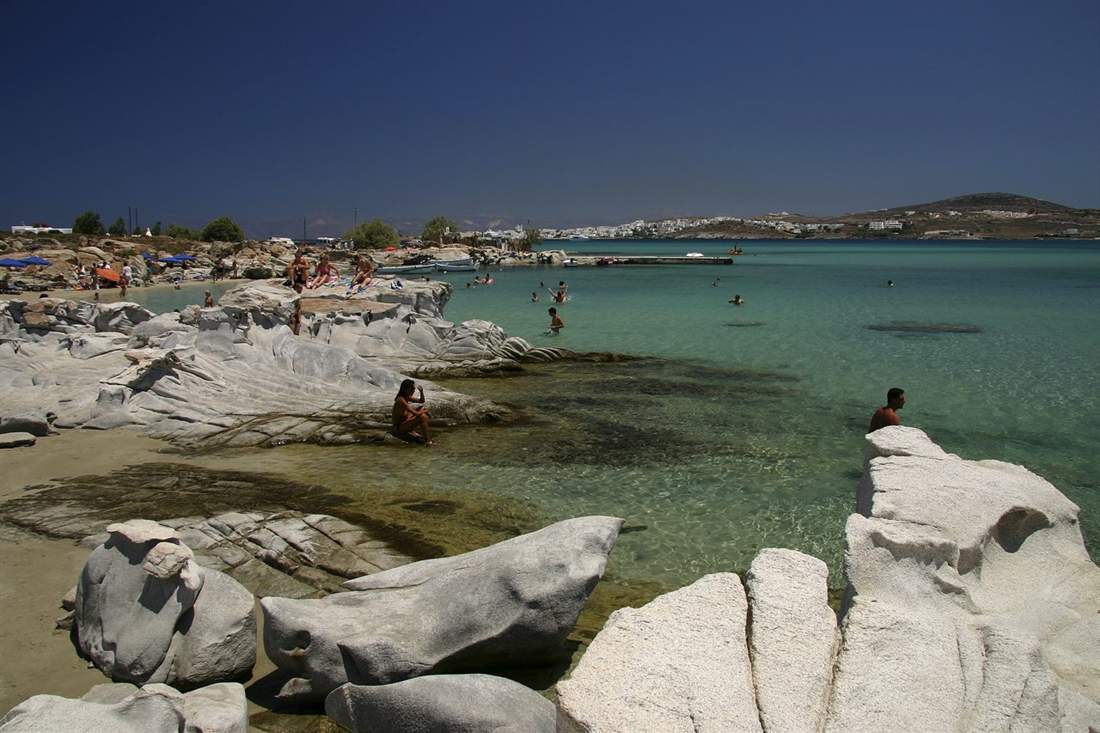
From the kayak you see the sculpted granite and marble shoreline of the north coast, small coves with clear shallow water, sea caves, islets with Cycladic chapels and views back to the white houses of Naoussa across the bay.
The rock along this coast is the main show. Wind and water have carved it into rounded shapes, hollows and ledges, and a Paros kayak tour passes close enough to touch them. The same kind of rock forms the famous boulders at Kolymbithres beach inside the bay. Between the rocks, the seabed shows through metres of clear water in shades of green and blue.
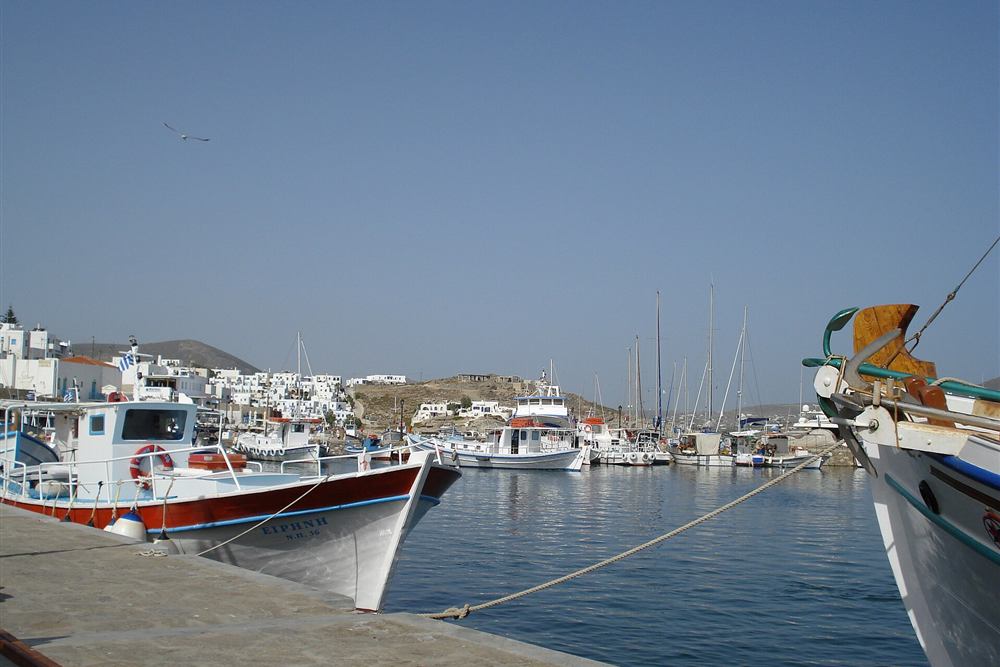
The islets add a different scene: low, bare and ringed by pale sand, with a chapel or two on the higher ground. Looking back towards land, the view takes in the fishing harbour and the hills behind Naoussa. Walkers who want the same coast from above can follow the trails in our Paros hiking page on another day and compare the two points of view.
What does the picnic and snorkeling stop include?
The first stop brings a light snack of fruit and biscuits with time to swim; the second is the main break, with a picnic lunch of local products such as tomatoes, cucumber, Greek cheeses and cured meats, and snorkel gear for exploring the rocks.
The picnic is laid out on the beach or on flat rocks near the chapel on the lunch islet. Guests eat in the shade where there is some, rest, and then swim off the lunch spot. The guide carries the food in dry bags inside the kayaks, so it arrives cool and dry. Guests bring enough water of their own for a full day in the heat.
Snorkeling is the other half of the break. Masks and snorkels come with the Paros kayak tour, and the rocky edges of the islets hold small fish, sea urchins and seaweed gardens in clear water. Visitors who want a longer session in the water can add a dedicated trip from our Paros snorkeling page. On the kayak day, the guide keeps an eye on swimmers and sets the time to pack up.
Who can join a Paros kayak tour?
The full-day Paros kayak tour suits beginners with no kayaking experience, families with teenagers, couples and experienced paddlers. Guests need to swim, feel at ease in open water and manage a few hours of steady, gentle paddling across the day.
Double kayaks carry pairs, which works well for a parent with a teenager or for a couple with different fitness levels. Families with children aged about 12 to 15 have joined the full day in double kayaks. Younger children and anyone with back or shoulder problems need to talk to the operator before booking, and the listing states the minimum age.
The guide teaches the basic stroke at the launch beach and corrects technique on the water, so first-timers pick it up within the first leg. Experienced paddlers get something from the day too: they can paddle out to a feature further away while the group rests, and practise strokes or rolls during the breaks. A Paros kayak tour keeps groups small, and some days run with as few as six guests.
How does wind shape a Paros kayak tour?
Wind decides the route. The guide reads the forecast for wind strength and direction a day or two ahead and picks a stretch of coast in the lee of the island, so a Paros kayak tour paddles in calm water even when the summer meltemi blows.
The meltemi is the strong northerly wind of the Aegean summer, and on Paros it can raise waves on exposed coasts within hours. That is why the launch beach is confirmed late and why the route varies between days. Inside Naoussa bay and behind the islets the water stays flat when the open sea is rough, and the guide uses the wind to the group’s advantage on the return where possible.
The afternoon leg can still feel windier than the morning, as the breeze builds through the day. Early starts and evening trips see the calmest water. The same wind that challenges kayakers makes Paros a centre for wind sports, covered on our Paros windsurfing page. When the wind is too strong for any safe route, the operator moves or cancels the Paros kayak tour and offers another day.
What equipment does a Paros kayak tour provide?
A Paros kayak tour provides single or double sea kayaks, paddles, life vests, dry bags for personal items, snorkel masks and tubes, the snack and picnic lunch, and the guide’s safety kit. Guests bring only swimwear, sun protection and personal items.
The kayaks are stable single and double sea kayaks chosen for comfort and ease of steering, and the guide adjusts footrests and seats before launch. Life vests are worn for the whole time on the water. Dry bags keep phones, keys and a spare layer dry inside the hatches, and the guide carries the safety equipment for the group.
The guide on this Paros kayak tour holds international sea kayak leader and coaching certifications, which cover rescue skills and group management on open water. That training shows in the briefing, in the way the group is kept together on the crossing, and in the choice of landing spots. Equipment quality is one of the points guests mention most after a Paros kayak tour.
- Kayaks and paddles – single or double, fitted at the beach.
- Life vests – worn on every leg of the trip.
- Dry bags – for phones, keys and a spare layer.
- Snorkel gear – masks and tubes for the two stops.
What do you bring on a Paros kayak tour?
Bring swimwear worn under light clothes, a hat with a strap, strong sunscreen, sunglasses on a cord, a water bottle, a small towel, water shoes or sandals that stay on, and a phone in a waterproof pouch if you want your own photos.
Sun is the main hazard on a Paros kayak tour. The sea reflects light back at the paddler, so a long-sleeved rash top or light shirt saves the shoulders, and sunscreen goes on before launch and again at lunch. A hat with a chin strap stays on in the breeze. Sunglasses need a cord, since anything dropped over the side sinks in seconds.
Footwear matters at the landings, where the shore is rock rather than sand in most spots. Water shoes or sports sandals protect the feet and grip wet stone. Leave jewellery and valuables at the hotel. A light layer is useful on the evening Paros kayak tour, when the breeze cools the air after sunset, and a change of dry clothes in the car makes the ride home more comfortable.
How does a Paros kayak tour compare with a boat tour or other sea trips?
A Paros kayak tour covers less distance than a boat tour but reaches coves and islets up close, at sea level and in silence. Boat tours suit visitors who want to see more of the coast in a day; kayaks suit those who want exercise and quiet.
A boat day from Naoussa or Parikia can reach Antiparos, the Blue Lagoon off Antiparos and a string of beaches in one trip, as shown on our Paros boat tours page. The trade-off is engine noise and larger groups. A Paros kayak tour gives up range for detail: the group notices the rock textures, the fish under the hull and the sound of water in the caves.
Visitors who enjoy the day on Paros look for more paddling in the Cyclades. Naxos, a short ferry ride east, has its own sea kayak routes along a different coast, listed on our Naxos sea kayaking page. For a first taste of sea kayaking in Greece, the sheltered bays of north Paros and a patient guide make a Paros kayak tour one of the easiest places to start.
Frequently Asked Questions
Do you need kayaking experience for a Paros kayak tour?
No experience is needed for the full-day Paros kayak tour. The guide teaches the basic stroke and steering on the beach before launch, the pace is relaxed, and each leg is short, so first-time paddlers keep up with the group from the first hour.
Can children join a Paros kayak tour?
Teenagers join the Paros kayak tour in double kayaks with a parent, and families with children aged about 12 to 15 have taken the full day. For younger children, check the minimum age on the listing and ask the operator before booking.
Is lunch part of a Paros kayak tour?
Yes. The full-day Paros kayak tour includes a fruit snack at the first stop and a picnic lunch of local products at the second, such as tomatoes, cucumber, Greek cheeses and cured meats, served on a quiet islet beach.
What happens if the wind is too strong?
The guide moves the Paros kayak tour to a sheltered stretch of coast when the wind rises. If no safe route exists, the operator changes the date or cancels the trip, and the listing explains the options for a new day or a refund.
Can you swim during a Paros kayak tour?
Yes. Swimming is a large part of the day, with two long stops on beaches and islets, snorkel gear provided and time to swim into a small sea cave. Guests need to be confident swimmers in open water.