
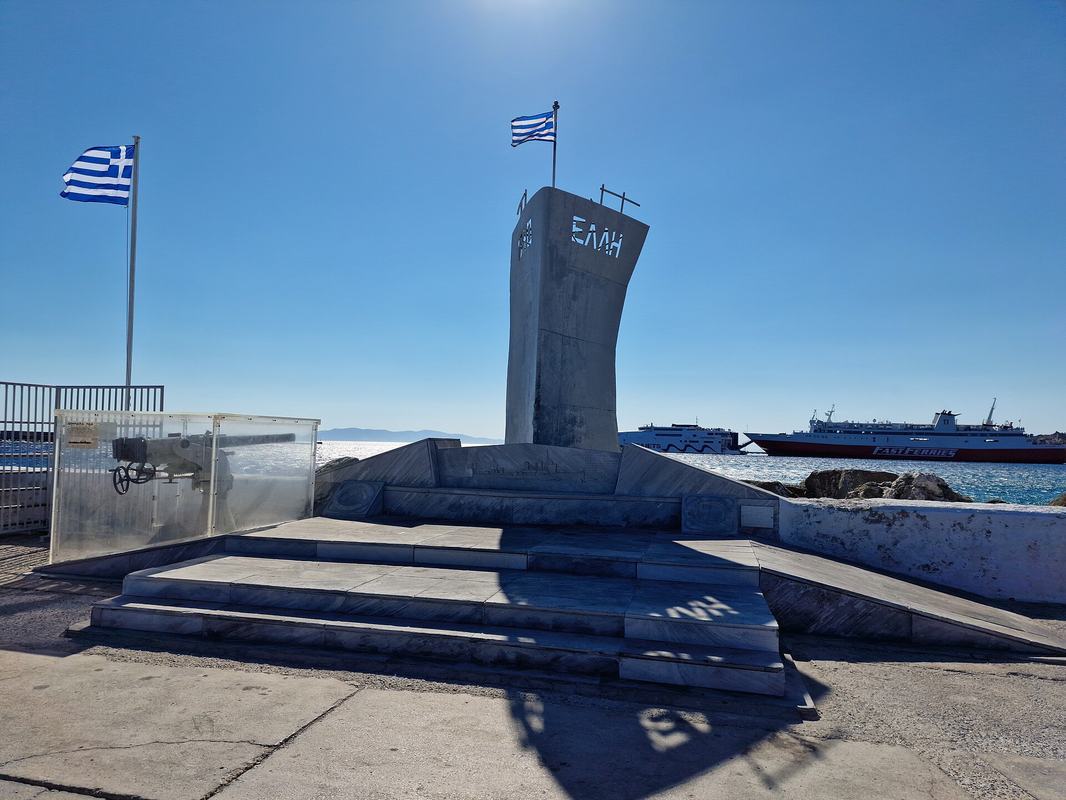
The Paros to Tinos ferry crosses the central Cyclades in about 1 hour 5 to 2 hours 20, running around three times a day in summer for €7 to €48 each way. The route links Paros northward to the island, often as part of a longer Cyclades line. This guide covers the ferry times, prices, operators and how to plan the trip. Plan the whole trip with Greece Tours.
The crossing is one of the useful island-hopping links to the island, set out among the routes in the guide to how to get to Tinos. Paros sits to the south, a busy hub of the central Cyclades. The sections below cover the crossing in detail and how to use it.
How long is the crossing?
The crossing takes about 1 hour 5 on the fastest high-speed boat and up to 2 hours 20 on a slower service with stops, averaging around 1 hour 22. The time depends on the operator and whether the boat calls at Mykonos along the way.
The journey length varies with the boat. High-speed catamarans cover the channel in about 1 hour 5 when sailing direct, while services that call at Naxos or Mykonos stretch the trip toward 2 hours 20, for an average near 1 hour 22. The boats are modern vessels that ride the open Aegean well, though the summer meltemi can lengthen a crossing. Paros sits south in the central Cyclades, a major hub from which many lines fan out. The mid-length route suits travellers island-hopping north. Knowing the schedule helps with planning.
What is the ferry schedule?
The route runs around three times a day in summer, roughly twenty-one crossings a week, with the first boat about 08:15 and the last near 16:35. The frequency drops sharply in winter, when high-speed services are reduced.
The timetable is busiest in the high season. From June to September a mix of fast catamarans offers about twenty-one sailings a week, clustered through the morning and afternoon, which supports an onward connection the same day. Schedules shift week to week and depend on the wider Cyclades line each boat runs, so confirming the exact time when booking is wise. Summer sailings fill quickly around the August 15 pilgrimage. From late autumn the high-speed services thin out and crossings become less frequent. Fares stay moderate across the route.
How much does the trip cost?
A standard seat costs about €7 to €48 each way, depending on the operator and the speed of the boat. The high-speed catamarans sit at the higher end, taking a car across averages around €45, and children and students receive discounts.
The mid-length crossing is reasonably priced. A foot-passenger seat ranges from roughly €7 on a cheaper sailing to about €48 on a premium high-speed service, while carrying a car across averages near €45. The fare reflects the distance and the speed of the boat, sitting between the short northern hops and the long Santorini run. Booking early secures both the lowest price and a guaranteed place in the busy summer months. Children, students and residents qualify for reduced fares. Several operators share the route.
Which companies run the route?
Seajets, Golden Star Ferries, Blue Star Ferries and Fast Ferries run the route, mostly with high-speed vessels. The crossing forms part of the central Cyclades network linking Paros, Naxos, Mykonos and Tinos.
Several operators share the channel. Seajets and Golden Star Ferries run fast catamarans across the central Cyclades, while Blue Star Ferries and Fast Ferries add conventional and high-speed sailings on overlapping lines. Their combined departures give the route its daily frequency. A single ticket along the line often allows island-hopping, with a stop at Mykonos or Naxos on the way. Comparing operators on a booking platform shows the fastest and cheapest option for a date. The ports themselves are simple to use.
Where do the ferries depart and arrive?
Boats leave from Parikia, the main port of Paros, and arrive at Tinos port in the heart of Tinos Town. Both ports sit in their island’s main town, so no long transfer is needed at either end of the crossing.
The ports are conveniently placed at each end. Ferries depart from Parikia, the capital and main harbour of Paros, whose quay sits in the town centre beside the cafés and the old quarter. On arrival, Tinos port lies right in the middle of Tinos Town, so the pilgrimage church, the marble old town and the tavernas are all within a short walk, with no onward transfer. This central docking makes a transfer efficient, a pattern the guide to how to get to Tinos describes. The arrival sets up the rest of a visit.
What can you do on arrival in Tinos?
On arrival, you can climb to the Church of Panagia Evangelistria, wander the marble lanes of Tinos Town, and head out to the villages and beaches. The central port puts the island’s main sights within easy reach of the dock.
The crossing lands you in the middle of everything. From the port it is a short uphill walk to the great pilgrimage church, and the old town’s marble-paved lanes and waterfront tavernas spread out from the harbour. Buses and rental cars reach the marble village of Pyrgos, the sandy beaches and the scenic west-coast villages within the hour, all covered in the guide to things to do in Tinos. A short stay or an island-hopping stopover both work well from this central arrival. The questions below cover the points travellers ask most.
Frequently Asked Questions
How long does the crossing from Paros to Tinos take?
The crossing takes about 1 hour 5 on the fastest high-speed boat and up to 2 hours 20 on a slower service with stops, averaging around 1 hour 22. The time depends on the operator and whether the boat calls at Mykonos.
How much is this crossing?
A standard seat costs about €7 to €48 each way, depending on the operator and the speed of the boat. The high-speed catamarans sit at the higher end, taking a car across averages around €45, and children and students receive discounts.
How often does the ferry run?
The ferry runs around three times a day in summer, roughly twenty-one crossings a week, with the first boat about 08:15 and the last near 16:35. The frequency drops sharply in winter, when high-speed services are reduced.
Is there a direct boat from Paros to Tinos?
There are direct high-speed sailings that reach Tinos in about 1 hour 5, alongside services that call at Naxos or Mykonos and take longer. Checking whether a sailing is direct when booking avoids a longer trip than expected.