
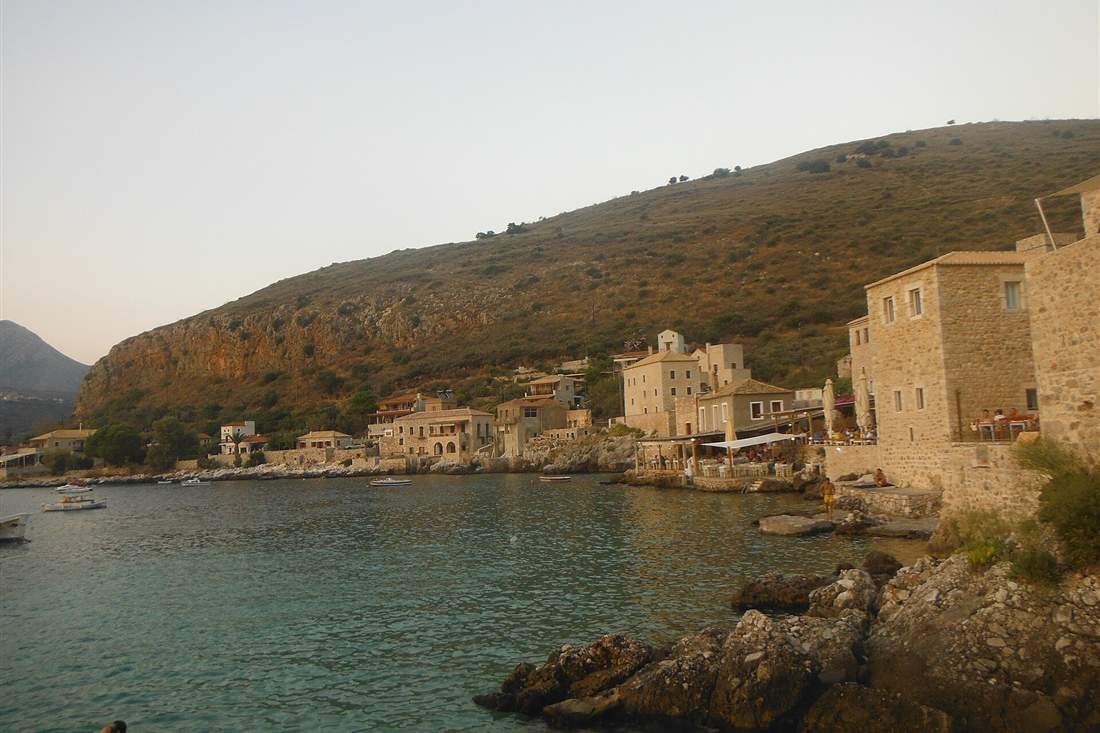
A Kalamata catamaran cruise is a four to eight hour sail out of the city marina along the Mani coast of the Messinian gulf, with two or three swim stops, a cooked meal at anchor and drinks aboard, from 90 euros a head. Plan the rest of the trip with Greece Tours.
This page covers the day: what it costs, where the boat goes, the Mani coves, Kardamyli and Stoupa, how much of it is under sail, what is included, the wind, the wildlife, the season and how to book.
What does a Kalamata catamaran cruise cost?
From 90 to 150 euros a head for a shared day with a cooked meal and drinks, 55 to 85 for a three-hour sunset sail, and 700 to 1,800 for a private charter of the whole catamaran with a skipper and a host for the day.
The day price covers the skipper, the fuel, the food, the wine and beer, the snorkelling gear and the marina fees. A kalamata catamaran cruise operator states this at booking and prints it on the ticket.
Private charters quote by the boat, so a party of eight splits 1,100 euros rather than paying eight fares. The kalamata catamaran cruise timetable is shaped by it more than by demand.
Children go half price to twelve on the shared departures and the operators set a minimum age of four to six. The kalamata catamaran cruise route is set by it rather than by the clock.
Card payment is taken at booking on the platforms and the balance in cash at the pontoon with the independent skippers.
Nothing is added at the marina, and the only extra on the day is the crew tip.
Where does the cruise leave from?
Kalamata marina at the western end of the city seafront, a 350-berth harbour with fuel, water and a charter fleet, ten minutes on foot from the old town and five from the beach hotels.
The marina is the best-equipped on the western Peloponnese and the base for most of the Messinian charter trade. Every kalamata catamaran cruise is planned around it before the lines come off.
Boarding runs from 09:30 for a full day and 18:00 for a sunset sail, and the pontoon number is printed on the voucher. Guests on a kalamata catamaran cruise meet it within the first hour.
Parking inside the marina gate is free and the spaces fill by ten in August. Crews brief it on deck before a kalamata catamaran cruise leaves harbour.
A handful of operators run from Stoupa and Kardamyli further down the Mani coast for guests staying there.
Kalamata airport is fifteen minutes from the marina, which makes an arrival-day sunset sail possible.
What is the Messinian gulf?
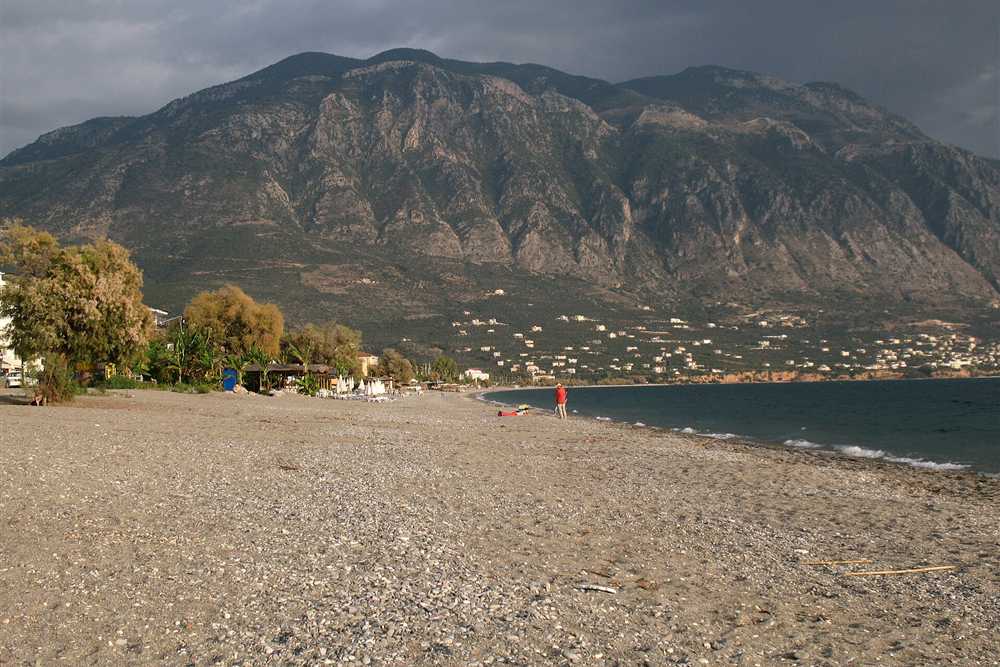
A deep 40-kilometre bay between the Mani peninsula in the east and Messinia in the west, sheltered by the Taygetos range, with water over 800 metres deep in the middle and coves along both shores.
The depth means the gulf holds its temperature and stays clear, and the anchorages are at the edges rather than in the centre. A kalamata catamaran cruise is sold on that, and the listing says so plainly.
Taygetos rises to 2,404 metres directly behind the eastern shore, and the mountain is in view for the whole day. That is the kalamata catamaran cruise difference against a hire car day.
Dolphins work the gulf and sightings happen on one day in three. It decides which kalamata catamaran cruise format fits the party.
Loggerhead turtles nest on the Messinian beaches west of the city and swim in the bay through the season.
The gulf opens south to the open Ionian, which is why the swell arrives from that direction rather than from the north.
Where does the boat go?
East along the Mani coast to Santova, Almyros, Kitries and the coves below Kardamyli and Stoupa, or west past Petalidi towards Koroni, with two or three swim stops and lunch at anchor.
The eastern route is the standard one, because the Mani shore holds the clear water and the rock coves. This is what a kalamata catamaran cruise delivers along the Mani coast.
Foneas, a small cove with a rock standing in the middle of it, is the stop guests remember. A kalamata catamaran cruise carries the lunch and the snorkels for it.
Santova and Almyros sit twenty minutes out and make the first swim of a full day. The kalamata catamaran cruise price reflects it, stop by stop.
The western route runs flatter, passes the olive plain and reaches Petalidi and the Koroni approaches on a long day.
The skipper picks the side by the morning wind rather than by the brochure.
What is Kardamyli?
A stone village on the Mani coast 35 kilometres south-east of Kalamata, with tower houses, an old fortified quarter above the modern village, a pebble shore and the house where the writer Patrick Leigh Fermor lived until 2011.
The old quarter of Kardamyli holds the Mourtzinos tower and the church of Agios Spyridon with its carved stone belfry. The kalamata catamaran cruise fleet is prepared for it through the season.
Leigh Fermor built his house at Kalamitsi south of the village and left it to the Benaki Museum, and it now hosts writers and opens to visitors. The kalamata catamaran cruise season turns on this more than on the calendar.
Kardamyli appears in the Iliad as one of the seven cities Agamemnon offered Achilles. A kalamata catamaran cruise fills first on that count in early August.
Boats anchor off the shingle and tender in, or hold while guests swim.
Full-day cruises reach it and half-day trips turn back before it.
What is Stoupa and the Zorba connection?
A small resort 45 kilometres from Kalamata with two sand bays, Kalogria and Stoupa beach. Nikos Kazantzakis worked a lignite mine above it in 1917 with George Zorbas, and the character in the novel came from that year.
Kalogria beach is fed by a freshwater spring that runs cold into the sea at its northern end. A kalamata catamaran cruise starts with this settled at the quay.
The mine at Prastova sits in the hills behind and the track to it still exists. A kalamata catamaran cruise operator states this at booking and prints it on the ticket.
Stoupa is the busiest stop on this coast and the cruises anchor off rather than land in August. The kalamata catamaran cruise timetable is shaped by it more than by demand.
The village has tavernas on the sand and a small harbour for the local boats.
Cruises that sell a Zorba theme stop here and tell the story at anchor.
What catamarans work out of Kalamata?
Lagoon and Fountaine Pajot hulls of 38 to 50 feet taking eight to twelve guests, with four cabins, a shaded cockpit, a bow trampoline and a swim ladder on each stern, crewed by a skipper and a host.
A catamaran sits flat under sail, which is what separates it from a monohull for anyone nervous about heeling. The kalamata catamaran cruise route is set by it rather than by the clock.
The shallow draught reaches into the coves where a deep keel stays outside. Every kalamata catamaran cruise is planned around it before the lines come off.
Trampolines forward are where most guests spend the passage, and the shade is aft under the bimini. Guests on a kalamata catamaran cruise meet it within the first hour.
Two heads and fresh-water showers are standard on the 42-foot and larger boats.
Monohull sailing yachts run the same routes for a lower price and a livelier ride.
How much of the day is under sail?
Two to four hours when the afternoon thermal fills in, and less on a flat morning, when the engines do the passages. The Messinian gulf gives a reliable south-westerly from about one o’clock in summer.
Morning departures motor out along the coast and sail back with the breeze behind them. Crews brief it on deck before a kalamata catamaran cruise leaves harbour.
The katabatic wind off Taygetos drops down the eastern shore in the evening and can be sharp for an hour. A kalamata catamaran cruise is sold on that, and the listing says so plainly.
Guests take the helm and the winches on most boats and nothing is required of anyone. That is the kalamata catamaran cruise difference against a hire car day.
Listings that describe the day as motor-sailing are the accurate ones.
A sunset sail almost always sails, because the thermal is still running at seven.
What is included on board?
A welcome snack, a cooked lunch or a meze spread served at anchor, wine, beer, soft drinks and water, snorkelling masks, towels, and a paddleboard on most of the newer boats.
Lunch on a Kalamata catamaran leans on local produce: olives, oil, feta, tomatoes, grilled meat or fish, and Messinian figs. It decides which kalamata catamaran cruise format fits the party.
Drinks are unlimited within reason on the shared departures and named on the listing when they are not. This is what a kalamata catamaran cruise delivers along the Mani coast.
Dietary requests are handled with a day’s notice and vegetarian is the default alternative. A kalamata catamaran cruise carries the lunch and the snorkels for it.
Excluded is the transfer to the marina, which is a short walk or a five-euro taxi from the centre.
Crew tips run 5 to 10 percent of the fare, in cash at the end of the day.
Day sail or sunset sail?
The day sail for the Mani coves, the swimming and the lunch at anchor over six to eight hours. The sunset sail for three hours of easy water, a drink and the light going down behind Messinia, at half the price.
Sunset departures leave at 18:00 in June and 19:00 in August and return in the dark. The kalamata catamaran cruise price reflects it, stop by stop.
The evening boat stays inside the bay and does not reach Kardamyli. The kalamata catamaran cruise fleet is prepared for it through the season.
A family with small children takes the sunset trip and skips the long day. The kalamata catamaran cruise season turns on this more than on the calendar.
Couples book the sunset sail as the evening rather than as an excursion.
Both across two days costs less than one private charter and covers the whole coast.
What is the snorkelling like?
Clear water over rock and seagrass, visibility of 15 to 25 metres, octopus, moray, sea bream and the occasional turtle. The Mani coves at Foneas, Delfinia and Agios Nikolaos are the best of it.
The gulf’s depth keeps the water cold and clear and the temperature at the surface reaches 26 degrees in August. A kalamata catamaran cruise fills first on that count in early August.
Masks and fins come with the boat and a mask of your own fits better. A kalamata catamaran cruise starts with this settled at the quay.
Nothing here is dangerous beyond the sea urchins on the rock edges. A kalamata catamaran cruise operator states this at booking and prints it on the ticket.
The dedicated snorkel trips run four hours and cost less than a full sailing day.
Seagrass meadows in the bay are protected and the skippers anchor on sand.
When is the season and what is the weather?
April to the end of October, with daily departures from June to September. Air temperatures run 25 to 35 degrees in summer, the sea climbs from 19 in May to 26 in August, and the gulf stays sheltered from the meltemi.
Messinia sits outside the meltemi’s reach, which makes this one of the calmer sailing grounds in Greece in August. The kalamata catamaran cruise timetable is shaped by it more than by demand.
Spring brings the Taygetos snow still on the ridge above a warm coast, which is the view of the year. The kalamata catamaran cruise route is set by it rather than by the clock.
Autumn holds the sea temperature into late October and the light softens. Every kalamata catamaran cruise is planned around it before the lines come off.
Cancellations for weather are rare and the refund is automatic when they happen.
Winter charters run on request for the delivery trips rather than as day sails.
What do you bring aboard?
Swimwear, a towel, reef-safe sunscreen, a hat that ties, sunglasses with a strap, a light windproof for the return, soft soles or bare feet, and a dry bag for the phone.
Hard-soled shoes go in a bag at the gangway on every teak or composite deck. Guests on a kalamata catamaran cruise meet it within the first hour.
Shade is the cockpit bimini and the saloon, and the trampolines have none at all. Crews brief it on deck before a kalamata catamaran cruise leaves harbour.
Cash is worth carrying for the crew tip and a canteen at a beach stop. A kalamata catamaran cruise is sold on that, and the listing says so plainly.
A long-sleeved shirt beats extra sunscreen on a six-hour day.
Leave hard luggage ashore, since the storage on a day charter is a locker and a bench.
Is it suitable for children and non-swimmers?
Yes. A catamaran sits flat, the stern ladders are wide, the trampolines are enclosed by netting and the boats carry child-sized life jackets. Non-swimmers use a jacket and the ladder and stay beside the hull.
Operators set a minimum age of four to six on the shared departures and take babies on a private charter. That is the kalamata catamaran cruise difference against a hire car day.
Two heads aboard matter with a family and the 42-foot boats have them. It decides which kalamata catamaran cruise format fits the party.
Shade and a cabin to nap in make a long day workable for a young child. This is what a kalamata catamaran cruise delivers along the Mani coast.
A three-hour sunset sail is the right first boat rather than an eight-hour day.
The crew brief the safety points before the lines come off and the briefing is bilingual.
How does it compare with a yacht charter?
A day cruise is a seat on a crewed boat for one day at 90 to 150 euros. A yacht charter is the whole boat for a week, bareboat from 2,500 euros or crewed from 6,000, and it sails the Ionian rather than one gulf.
The day cruise needs no licence, no planning and no provisioning. A kalamata catamaran cruise carries the lunch and the snorkels for it.
A charter week from Kalamata runs south round the Mani or west to Pylos, Methoni and the Ionian islands. The kalamata catamaran cruise price reflects it, stop by stop.
Bareboat requires a skipper licence and a sailing resume from one of the party. The kalamata catamaran cruise fleet is prepared for it through the season.
Flotilla sailing from this marina is limited and the Ionian bases at Lefkada carry it instead.
The multi-day option sits at Kalamata yacht charter.
What is Kalamata beyond the marina?
A city of 70,000 with a four-kilometre beachfront, a Frankish castle above the old town, a covered market, the Byzantine church of the Holy Apostles where the 1821 revolution was declared, and the olive plain behind it.
The old town runs uphill from the church to the castle and holds the market and the tavernas. The kalamata catamaran cruise season turns on this more than on the calendar.
Kalamata olives and Kalamata olive oil are both protected designations, and the market sells them by the barrel. A kalamata catamaran cruise fills first on that count in early August.
The city was rebuilt after the 1986 earthquake, which is why the centre mixes old and new so abruptly. A kalamata catamaran cruise starts with this settled at the quay.
The seafront promenade runs from the marina east to the port and fills at seven in the evening.
The city’s guided options sit at Kalamata tours.
What else is on the water in Messinia?
Sea kayaking at Kardamyli, scuba diving from Stoupa and Agios Nikolaos, the Polylimnio canyon inland, kitesurfing at Petalidi and Agios Andreas, and boat rentals without a licence from the marina.
Diving along the Mani wall works on drop-offs with 25 metres of visibility. A kalamata catamaran cruise operator states this at booking and prints it on the ticket.
Kayak trips run the Kardamyli coast in the morning before the thermal. The kalamata catamaran cruise timetable is shaped by it more than by demand.
Licence-free motor boats of 25 to 30 horsepower hire from 90 euros a day and reach the near coves. The kalamata catamaran cruise route is set by it rather than by the clock.
Polylimnio is a freshwater canyon of waterfalls and pools 40 minutes west of the city.
Voidokilia bay near Pylos is the region’s famous beach and it is an hour by road rather than a sail.
What is the Mani coast like?
Bare limestone falling into deep water, stone tower villages above the shore, cypress and olive in the gullies, and a string of pebble coves with no road access between Kalamata and Stoupa.
The Mani was never fully subdued by the Ottomans and the tower houses are the architecture of that independence. Every kalamata catamaran cruise is planned around it before the lines come off.
Outer Mani, the stretch the cruises work, is greener than the bare Deep Mani further south. Guests on a kalamata catamaran cruise meet it within the first hour.
Villages sit above the sea rather than on it, because piracy made a shoreline settlement a bad idea. Crews brief it on deck before a kalamata catamaran cruise leaves harbour.
The coves between them are reachable by boat and by footpath and by nothing else.
Boats hold in two to five metres over sand and the swim to shore is short.
Can you reach Koroni or Methoni by boat?
Koroni is a three-hour sail west from Kalamata and appears on full-day and private charters. Methoni lies round the cape beyond it and needs an overnight rather than a day sail.
Koroni’s Venetian castle stands above the town and the anchorage sits below it. A kalamata catamaran cruise is sold on that, and the listing says so plainly.
The town holds a working fishing harbour, a beach at Zaga and a monastery inside the castle walls. That is the kalamata catamaran cruise difference against a hire car day.
Methoni’s sea castle and the Bourtzi tower on its islet are the sight of the western Messinian coast. It decides which kalamata catamaran cruise format fits the party.
A day charter that promises both is selling nine hours of passage for two hours ashore.
By road each is an hour from Kalamata, which is the sensible way to see them.
What wildlife is in the gulf?
Common and bottlenose dolphins, loggerhead turtles, tuna and swordfish offshore, shearwaters and Eleonora’s falcons on the cliffs, and monk seals in small numbers along the Mani coast.
Dolphin pods work the deep water in the middle of the gulf and follow boats under power. This is what a kalamata catamaran cruise delivers along the Mani coast.
Loggerheads nest on the sand beaches west of Kalamata and are seen feeding in the bay through summer. A kalamata catamaran cruise carries the lunch and the snorkels for it.
Approaching a turtle is prohibited and the skippers hold position and let the animal decide. The kalamata catamaran cruise price reflects it, stop by stop.
Eleonora’s falcons breed on the Mani cliffs and hunt over the water in late summer.
Nothing here is dangerous to a swimmer and the jellyfish years are occasional rather than annual.
How do you get to Kalamata?
Two and a half hours from Athens on the motorway, 45 minutes from Sparta over the Taygetos road, and direct flights into Kalamata airport from Athens and from European cities between April and October.
The A7 motorway runs from Athens via Corinth and Tripoli and is fast the whole way. The kalamata catamaran cruise fleet is prepared for it through the season.
Kalamata airport sits ten kilometres west of the city with a terminal that handles charter traffic in summer. The kalamata catamaran cruise season turns on this more than on the calendar.
Buses from Athens take three and a half hours from the Kifissos terminal. A kalamata catamaran cruise fills first on that count in early August.
A hire car is worth having for Mani, Pylos and Ancient Messene and is unnecessary for a marina day.
Costa Navarino’s resorts sit 50 minutes west and run their own transfers.
What are the common mistakes?
Booking an afternoon departure in August when the thermal is at its strongest, expecting to reach Koroni and back on a half day, forgetting shade on a catamaran trampoline, and arriving at the wrong pontoon.
The afternoon breeze is what sailors want and what a queasy passenger does not. A kalamata catamaran cruise starts with this settled at the quay.
Half-day trips cover twelve to eighteen miles and nothing further. A kalamata catamaran cruise operator states this at booking and prints it on the ticket.
Sunburn on the foredeck is the single most common complaint after a Kalamata day sail.
The marina is large and the pontoon letter on the voucher matters more than the boat name.
The last is treating a day cruise as a beach transfer, when the swimming happens off the boat rather than ashore.
How do you book a Kalamata catamaran cruise?
Book three to five days ahead from mid-June to early September and a day ahead in the shoulder months. The shared catamarans cap at eight to twelve, so a departure sells out rather than thins.
Private charters need a week in August and take a deposit at booking. The kalamata catamaran cruise route is set by it rather than by the clock.
Free cancellation up to 24 hours before is standard on the platform listings. Every kalamata catamaran cruise is planned around it before the lines come off.
Weather calls are made by the skipper the evening before or at 08:00 on the day.
Walk-up booking at the marina office works outside the peak weeks at the same price.
Operators confirm the pontoon and the boarding time by message the evening before.
What is the sailing day’s timetable?
Boarding at 09:30, lines off at 10:00, the first swim at 11:00, lunch at anchor around 13:00, a second and third stop through the afternoon, and back on the pontoon between 17:00 and 18:00.
The crew brief safety, the heads and the swim ladder in the first ten minutes and then leave guests alone. Crews brief it on deck before a kalamata catamaran cruise leaves harbour.
Passages between stops run 30 to 60 minutes and that is when the sails go up. A kalamata catamaran cruise is sold on that, and the listing says so plainly.
Swim stops are 45 minutes to an hour, which is longer than a motor-boat tour allows.
Lunch is cooked aboard and served in the cockpit or on the transom steps.
The return leg is the sailing leg on most days, with the thermal behind the boat.
Nothing about the day is rushed, and that pace is the difference from a coach excursion.
What are the coves on the Mani shore?
Santova, Almyros, Mikri Mantineia, Kitries, Kalamitsi, Delfinia, Foneas and Agios Nikolaos, running south from Kalamata along 40 kilometres of coast, most with pebbles, deep water and no road down.
Mikri Mantineia is the first proper cove out of the city and takes twenty minutes. It decides which kalamata catamaran cruise format fits the party.
Kitries has a small harbour and a taverna and is the last village before the road climbs inland. This is what a kalamata catamaran cruise delivers along the Mani coast.
Delfinia is a pair of pebble bays under a cliff and it is the quietest anchorage on the route.
Foneas has a freestanding rock in the middle of the cove that guests swim out to and jump from.
Agios Nikolaos is a working fishing harbour south of Stoupa with tavernas on the quay.
The full-day cruises reach four of these and the half-day trips two.
How does a catamaran compare with a monohull?
A catamaran stays level, carries twice the deck space and draws a metre less water. A monohull heels, sails closer to the wind, costs 20 to 30 percent less a head and feels more like sailing.
The level deck is what sells the catamaran to families and to anyone prone to motion sickness. The kalamata catamaran cruise price reflects it, stop by stop.
Monohulls point higher upwind, which matters on a passage and not on a day cruise. The kalamata catamaran cruise fleet is prepared for it through the season.
Two hulls mean two engines, two rudders and a wider berth, so the marina charges more for the space.
Swimming from a catamaran’s twin sterns is easier than from a single ladder.
For a first day on the water in Messinia the catamaran is the safer choice.
Experienced sailors take the monohull for the same money and get more sailing.
What food and drink comes from Messinia?
Kalamata olives and extra virgin olive oil, both protected designations, figs from Messinia, sfela cheese, lalangia fried dough, honey from the Taygetos slopes, and wines from Nemea and the Peloponnese.
The Kalamata olive is the large purple variety cured in brine and vinegar and it carries a PDO. A kalamata catamaran cruise fills first on that count in early August.
Messinian figs are dried whole and were an export crop long before tourism. A kalamata catamaran cruise starts with this settled at the quay.
Sfela is a hard salty sheep cheese from Messinia and Laconia, sold in slabs in brine.
Lalangia are strips of fried dough eaten at Christmas and sold year round in the market.
The boats provision from the covered market, which is why the lunch on a Kalamata catamaran is better than average.
Wine aboard is a Peloponnesian white, a Moschofilero or a Malagousia.
What does the marina offer ashore?
Fuel, water, electricity, 350 berths, a travel lift, chandlers, charter offices, cafes and restaurants on the quay, and a beach promenade that runs east from the gate.
The marina is a working harbour rather than a resort pontoon and the winter liveaboard community is large. The kalamata catamaran cruise timetable is shaped by it more than by demand.
Charter offices there cover bareboat, crewed and day-sail products under one roof. The kalamata catamaran cruise route is set by it rather than by the clock.
Cafes on the quay open from breakfast and are the meeting point for most departures.
The city beach begins immediately east of the marina and runs four kilometres.
Taxis wait at the gate and the fare to the old town is five to seven euros.
Cruise ships berth at the commercial port further east rather than in the marina.
Is a private charter worth it?
From six people up, yes. A private catamaran at 700 to 1,800 euros divides to 120 to 220 a head, buys the route, the timings and the music, and removes every compromise a shared boat involves.
Private parties set their own departure time, which matters for a sunset that falls at 20:45 in June. Guests on a kalamata catamaran cruise meet it within the first hour.
The route becomes negotiable: Koroni on a long day, or three coves and a late return. Crews brief it on deck before a kalamata catamaran cruise leaves harbour.
Celebrations, proposals and small weddings are handled by the crews as routine.
A skipper-only charter without a host costs less and puts the catering on the party.
Deposits run 30 to 50 percent and the balance is due on the day.
Booking a fortnight ahead is enough outside the first half of August.
What is the Kalamata marina’s charter fleet?
Around forty boats work out of the marina in season: crewed catamarans of 40 to 50 feet, bareboat monohulls of 32 to 50, a handful of motor yachts and RIBs, and two or three day-sail operators running fixed departures.
The crewed day-sail boats are the ones a visitor books for a single day, and they run from May to October. That is the kalamata catamaran cruise difference against a hire car day.
Bareboat fleets base here because Messinia sits between the Ionian and the Cyclades and both are reachable in a week. It decides which kalamata catamaran cruise format fits the party.
Winter berthing is cheap by Greek standards, so the liveaboard community keeps the marina occupied year round.
Technical services, a travel lift and chandlers on site mean the boats are maintained rather than merely stored.
The charter offices sit along the western quay and handle day sails alongside week-long bookings.
Booking direct with an operator and booking through a platform cost the same, and only the platform carries free cancellation.
What does the Taygetos backdrop add?
A 2,404-metre wall rising directly behind the eastern shore, snow-covered into May, throwing the coast into shadow in the late afternoon and generating the evening wind that runs down its gullies onto the water.
Profitis Ilias, the summit, is the highest point in the Peloponnese and it is visible from every mile of the day. A kalamata catamaran cruise carries the lunch and the snorkels for it.
The mountain drops to the sea within six kilometres in places, which is why the coast road climbs and the villages sit high. The kalamata catamaran cruise price reflects it, stop by stop.
Katabatic wind off the slopes arrives after sunset and is the reason evening sails turn for home rather than linger.
Spring sailing under a snow line above a 22-degree sea is the picture Messinia sells and rarely gets credit for.
The Vyros and Rindomo gorges cut the range behind Kardamyli and reach the sea at the coves the boats use.
Guides on the crewed boats point out the gorge mouths, because the geology explains the coastline.
What is Ancient Messene and does it fit a sailing trip?
A large classical city 30 kilometres inland from Kalamata, founded in 369 BC with nine kilometres of walls, a stadium, a theatre, an agora and the Arcadian Gate, and it belongs to a land day rather than a boat day.
The site is one of the least visited major excavations in Greece and one of the most complete. The kalamata catamaran cruise season turns on this more than on the calendar.
Its stadium with the surrounding colonnade is the best-preserved in the country. A kalamata catamaran cruise fills first on that count in early August.
Epaminondas founded the city after defeating Sparta, and the walls were built to keep the Spartans out permanently.
A visit takes three hours and the drive from Kalamata is 40 minutes.
Pairing a sailing day with a Messene morning fills a two-day stay properly.
Guided half-day trips from the city cost 60 to 110 euros a head.
What are the swimming conditions in the gulf?
Deep clear water off pebble shores, a surface temperature of 19 degrees in May rising to 26 in August, no tide worth the name, and coves that shelve steeply within three metres of the water’s edge.
The steep shelve means swimming from the boat rather than wading in, which is what the stern ladder is for. A kalamata catamaran cruise operator states this at booking and prints it on the ticket.
Water clarity is a function of the depth and the absence of river silt on this coast. The kalamata catamaran cruise timetable is shaped by it more than by demand.
Jellyfish appear in some years in late August and the crews say so before anyone enters.
Sea urchins live on the rock edges and reef shoes solve them at the shore stops.
Currents inside the gulf are weak and the swim stops are safe for a competent swimmer.
Life jackets and a floating line are carried on every commercial boat for the guests who want them.
What happens if the weather turns?
The skipper decides at 08:00 and either shortens the route, swaps to the sheltered western shore, or cancels with a full refund. The Messinian gulf is calm enough that cancellations run to a handful of days a season.
A southerly is the wind that makes the gulf uncomfortable, since it blows straight up from the open sea. Every kalamata catamaran cruise is planned around it before the lines come off.
Thunderstorms in September arrive fast off the mountains and the boats run for the marina. Guests on a kalamata catamaran cruise meet it within the first hour.
Rebooking to another day is offered before a refund and most guests take it.
Platform bookings return the money automatically and direct bookings take a day or two.
Nothing sails on a forecast above force six, which is an operator rule rather than a legal one.
Checking the forecast the night before sets expectations and saves the morning argument.
How does a Kalamata day compare with the Ionian or the Cyclades?
Messinia gives flat water, short passages and a mountain backdrop at half the price of Mykonos or Santorini. The Ionian gives more islands within reach. The Cyclades give the famous names and the meltemi with them.
A day sail here costs 90 to 150 euros against 140 to 250 for the same boat out of Mykonos. A kalamata catamaran cruise is sold on that, and the listing says so plainly.
The gulf has one coastline rather than a scatter of islands, so the day is about coves rather than crossings. That is the kalamata catamaran cruise difference against a hire car day.
Wind is lighter and steadier here, which suits a first sailing day and frustrates an experienced crew.
Crowding is the real difference: eight boats in a Mani cove against eighty in a Cycladic bay.
Anyone wanting island hopping charters a week and leaves the gulf behind on day two.
For a family staying in Messinia the day cruise is the best value on the water anywhere in Greece.
What does a first-time sailor need to know?
No experience required, no duties, a safety briefing of five minutes, a flat deck on a catamaran, and a crew who sail the boat while the guests swim, eat and sit in the sun.
Guests who want to help are given the helm and a winch and taught in ten minutes. This is what a kalamata catamaran cruise delivers along the Mani coast.
Nobody is asked to handle a line and the crew do not expect it. A kalamata catamaran cruise carries the lunch and the snorkels for it.
Motion sickness affects one guest in ten on a monohull and far fewer on a catamaran.
The tablet works when taken 45 minutes before boarding and does nothing taken at the pontoon.
Sitting amidships, watching the horizon and staying on deck are the three things that help.
A three-hour sunset sail is the sensible test before committing to an eight-hour day.
What is the Mani’s tower architecture?
Stone war towers of three to five storeys built by feuding clans from the seventeenth century, with gun slits instead of windows on the lower floors, clustered into villages that read as fortresses rather than as settlements.
Height was the weapon: a taller tower commanded the shorter ones around it, so families built upwards in competition. The kalamata catamaran cruise fleet is prepared for it through the season.
Feuds ran for generations and were suspended for the harvest by formal truce. The kalamata catamaran cruise season turns on this more than on the calendar.
Outer Mani, the stretch the boats pass, has fewer towers than the Deep Mani further south and greener ground.
Kardamyli, Proastio and Exochori hold the best-preserved examples within sight of the water.
Many are restored as guesthouses now, which is why the villages look inhabited rather than abandoned.
From the sea the towers read clearly on the ridges, and the crews point them out on the passage south.
What does a half-day cruise cover?
Four hours, two swim stops, the coast as far as Mikri Mantineia or Santova, a snack rather than a cooked lunch, and a return by mid-afternoon, at 55 to 90 euros a head.
The half day suits a family with young children and anyone with an afternoon commitment. A kalamata catamaran cruise starts with this settled at the quay.
Distance covered is twelve to eighteen nautical miles against thirty on a full day. A kalamata catamaran cruise operator states this at booking and prints it on the ticket.
Kardamyli and Stoupa sit beyond its range and the listings say so.
Morning half-days leave at 10:00 and afternoon ones at 14:30.
The snorkel-focused half day at the lower end of the price band is the best value product in the marina.
Two half days across two dates cost more than one full day and cover less water.
What is the Messinian coast’s history on the water?
Mycenaean Pylos to the west, the Spartan conquest that made Messenia a helot territory for three centuries, Venetian and Ottoman castles at Koroni and Methoni, and the naval battle of Navarino in 1827 that decided Greek independence.
Navarino bay, an hour west by road, saw the allied fleets destroy the Ottoman-Egyptian navy in October 1827. The kalamata catamaran cruise route is set by it rather than by the clock.
The Palace of Nestor above the bay is the best-preserved Mycenaean palace in Greece and produced the Linear B archive. Every kalamata catamaran cruise is planned around it before the lines come off.
Koroni and Methoni were the Venetian eyes of the republic, guarding the route to the Levant.
Kalamata’s own castle was Frankish, built by the Villehardouins in the thirteenth century.
The gulf carried all of that traffic, and the coves the cruises stop at were the shelters it used.
Crews who know the history make the passage between stops the better half of the day.
What do the tavernas on the route serve?
Grilled fish by the kilo, octopus hung to dry, lalangia, sfela cheese, Kalamata olives, tomatoes from the plain, and local oil poured without asking. Kitries and Agios Nikolaos have the best of them on this coast.
Agios Nikolaos harbour south of Stoupa is the fish stop the skippers use when lunch is ashore. Crews brief it on deck before a kalamata catamaran cruise leaves harbour.
Kitries has two tavernas on a working quay and the catch comes off the boats beside them. A kalamata catamaran cruise is sold on that, and the listing says so plainly.
Ordering fish by the kilo and agreeing the price before it is cooked is the local practice.
Most crewed day cruises cook aboard, so the taverna stops belong to the private charters.
Prices on this coast are 20 to 30 percent below the island resorts for the same plate.
Lunch ashore adds an hour to the day and the skipper says so at booking.
How do the anchorages work?
Skippers anchor in three to eight metres over sand, keep clear of the seagrass, drop a floating line for swimmers, and hold rather than tie to shore. No cove on this coast has a mooring buoy.
Posidonia seagrass meadows are protected and anchoring in them is prohibited. It decides which kalamata catamaran cruise format fits the party.
Sand patches between the meadows are what the skippers look for on the sounder. This is what a kalamata catamaran cruise delivers along the Mani coast.
A swimming line off the stern keeps guests within a safe radius in any current.
Boats anchor bow-to the swell rather than beam-on, which is why the orientation changes between stops.
Two boats in one cove is busy on this coast, which is the whole argument for Messinia.
Nobody lands a tender on the pebble unless the cove has a taverna worth the trip.
Can you combine the cruise with a land tour?
Yes. Operators pair a morning sail with an afternoon in the old town, or a sailing day with a Mani driving day, or a sunset cruise with a Kardamyli and Stoupa road trip the following morning.
The Mani road south of Kalamata is one of the best drives in Greece and takes a full day to Areopoli. The kalamata catamaran cruise price reflects it, stop by stop.
Ancient Messene, Mystras and the Diros caves each need half a day from the city. The kalamata catamaran cruise fleet is prepared for it through the season.
Polylimnio’s waterfalls are 40 minutes west and make a cool morning before an afternoon sail.
Two nights in Kalamata covers one sailing day and one land day comfortably.
Hire cars from the airport cost 35 to 60 euros a day in season.
The city’s guided land options are listed at Kalamata tours.
What accessibility does a catamaran offer?
A flat deck from the transom to the saloon with no companionway steps on most 42-foot and larger hulls, wide stern platforms, and a pontoon berth that is boarded level rather than climbed into.
The step from the marina pontoon onto a catamaran’s transom is the shortest of any boat type. A kalamata catamaran cruise fills first on that count in early August.
Guests who cannot swim from a ladder use the platform and the floating line. A kalamata catamaran cruise starts with this settled at the quay.
The heads on a 42-foot catamaran are reached without steps from the cockpit on one hull.
Crews handle mobility needs on request and the private charters accommodate anything with notice.
Nothing on the day requires a guest to move forward of the cockpit unless they want to.
A monohull is a poorer choice for the same party, since the cockpit sits below deck level.
Frequently Asked Questions
What does a Kalamata catamaran cruise cost?
From 90 to 150 euros a head for a shared day with a cooked meal and drinks, 55 to 85 for a three-hour sunset sail, and 700 to 1,800 for a private charter of the whole catamaran with a skipper and a host.
Where does the boat go?
East along the Mani coast to Santova, Almyros and the coves below Kardamyli and Stoupa, or west past Petalidi towards Koroni. The skipper picks the side by the morning wind rather than by the brochure.
How much of the day is under sail?
Two to four hours when the afternoon thermal fills in, and less on a flat morning. The Messinian gulf gives a reliable south-westerly from about one o’clock, so the return leg is the sailing leg.