
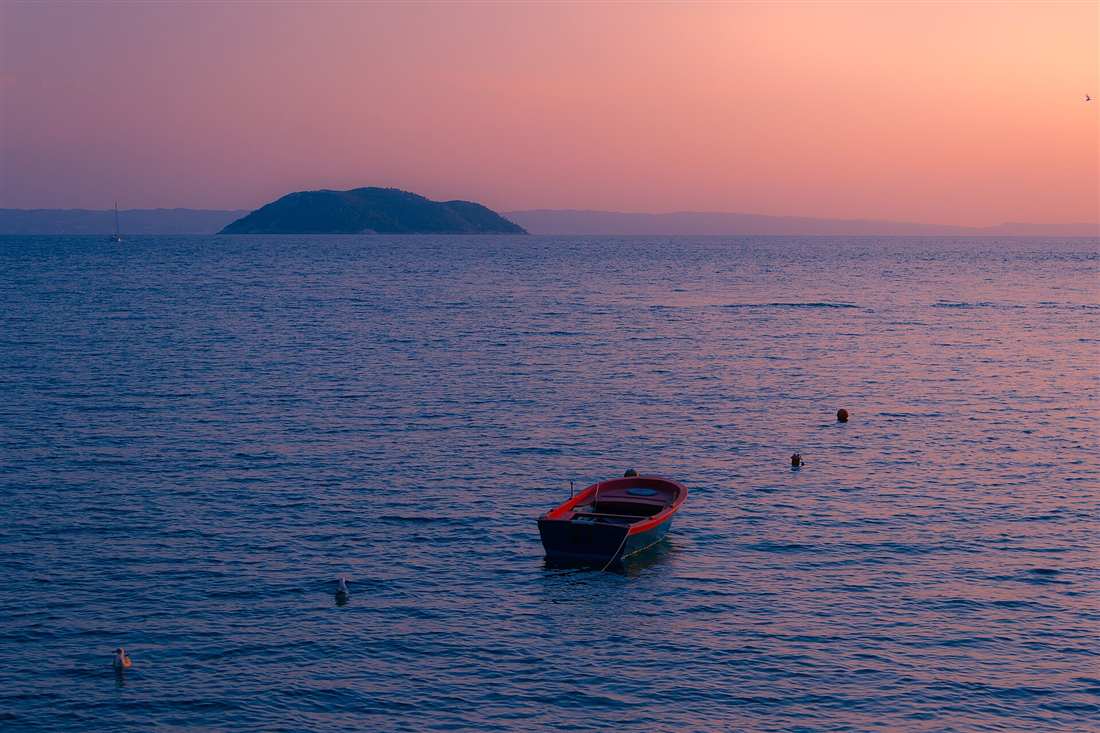
Halkidiki scuba diving is diving off the three peninsulas of northern Greece, with PADI dive centres on the Kassandra and Sithonia coasts running Discover Scuba sessions for beginners and guided dives for certified divers, an hour and a half from Thessaloniki airport. Plan the whole trip with Greece Tours.
This guide covers Halkidiki scuba diving in full: what a session includes, the Discover Scuba programme for beginners with no certification, guided dives for certified divers, the dive sites from Kassandra to Vourvourou and the Kelyfos islet, what you see underwater, the courses, the season and conditions, what it costs, and how to book.
What Is Halkidiki Scuba Diving and What Does a Session Include?
Halkidiki scuba diving is a guided underwater programme run from PADI-affiliated dive centres on the Kassandra and Sithonia peninsulas, ninety minutes from Thessaloniki airport, and each session includes a safety briefing, equipment fitting, shallow-water skills practice, and a guided dive along a reef, wall, or seagrass site. The dive centre opens the day with a short theory talk that covers hand signals, buoyancy control, breathing technique, and the dive plan for the site chosen that day. Staff fit each diver with a wetsuit, mask, fins, buoyancy compensator, and regulator, and check the fit before the group moves to the water.
Families take Halkidiki scuba diving for the guided shallow dives off the peninsulas. Halkidiki scuba diving is booked ahead for a fixed, agreed price per person. The first stage happens in shallow water, a sandy shelf or a calm bay three to five meters deep, where the instructor runs through mask-clearing, regulator recovery, and controlled ascents. This stage confirms comfort in the water before the group descends to the main dive site. The guided dive that follows runs along a fixed route the instructor sets in advance, timed to the group’s air consumption and the site’s depth profile.
For certified divers, Halkidiki scuba diving opens the deeper walls and caverns. The dive sites for Halkidiki scuba diving reach Vourvourou and the Diaporos islets. A single instructor leads a small group, staying within arm’s reach of each diver for the entire dive. Photography equipment, a torch for cavern sections, and a slate for underwater notes belong to the standard kit at every Halkidiki dive centre. The season runs from spring through autumn, and centres operate daily departures from both the Kassandra and Nikiti bases.
Every Halkidiki scuba diving session starts at the centre with theory and kit. Every session closes with a debrief on the boat or the shore, where the instructor reviews the dive log, marine life sighted, and depth and time figures for each diver’s logbook. First-time divers leave with a signed record even without a certification card, and certified divers get the dive stamped toward their log total.
What Is the Discover Scuba Diving Programme for Beginners?
The Discover Scuba Diving programme is a single-day introduction that requires no certification, no prior experience, and no swimming test beyond basic water confidence, and it pairs each beginner with a PADI instructor for a confined-water skills session followed by an open-water dive to a shallow depth. The programme exists for travelers who want to try diving without committing to a multi-day course, and it runs on the same daily schedule as the certified-diver trips.
Halkidiki scuba diving runs from centres on the Kassandra and Sithonia coasts. For beginners, Halkidiki scuba diving starts with a briefing and shallow-water skills. A participant arrives at the centre, completes a short medical questionnaire, and receives a full kit fitting before the confined-water stage. That stage takes place in a sheltered bay near Kassandra or off the Sithonia coast near Nikiti, where the instructor teaches breathing through the regulator, clearing water from the mask, and basic buoyancy adjustment. Ten to fifteen minutes of practice covers every skill the diver needs for the open-water portion.
The medical questionnaire is completed before Halkidiki scuba diving begins. Booking Halkidiki scuba diving ahead secures the date and the instructor. The open-water dive that follows stays close to the instructor at all times, and the group descends along a gentle slope rather than a wall or drop-off. Beginners view rock formations, seagrass beds, and resident fish species within the first ten meters, and the shallow depth keeps decompression risk and air consumption low. A single instructor supervises a maximum of two beginners per dive, a ratio that keeps direct contact throughout the session.
Halkidiki scuba diving carries a PADI course path from Open Water upward. No age exclusion applies beyond a lower minimum, and the programme accepts non-swimmers who demonstrate comfort with the mask and regulator on the surface first. The Discover Scuba dive counts as credit toward a later Open Water certification, since the skills already covered carry directly into the certification course syllabus.
What Dives Are Available for Certified Divers?
Certified divers choose between guided boat dives to reefs, walls, and wreck sites at 12 to 30 meters and shore dives from Kassandra beaches, with dive plans set by certification level, logged dive count, and the site conditions on the day. A PADI Open Water card is the entry point for boat trips beyond the beginner depth range, and Advanced certification opens deeper wall and wreck sites.
The price of Halkidiki scuba diving covers the instructor, the equipment and the dive. The choice of Halkidiki scuba diving comes down to the centre, the site and the certification. Boat dives depart from the Kassandra and Nikiti centres each morning, and the dive master briefs the group on the site’s depth profile, current, and points of interest before entry. A two-tank morning covers one reef or wall site and one shallower site, with a surface interval between dives long enough to clear residual nitrogen. Certified divers carry their own logbook and certification card, and the centre checks both before boarding.
Halkidiki scuba diving includes the transfer from the hotel where the centre offers it. Halkidiki scuba diving ends with the surface interval and the logbook entry. Shore dives suit divers who prefer a slower pace or a night dive, since entry and exit happen directly from a beach rather than a boat. Night dives run at select Kassandra sites and reveal nocturnal species absent from daytime dives, including octopus that hide in rock crevices during daylight hours. A dive light and a buddy pair are mandatory for every night dive.
The set price on Halkidiki scuba diving covers the equipment, the guide and the boat. Nitrox certification extends bottom time at the deeper sites, and dive centres stock enriched-air tanks alongside standard air for divers who hold the certification. Nitrox is not mandatory for the standard depth range Halkidiki scuba diving covers, but it lengthens the second and third dives of a multi-dive day, giving longer bottom time without added decompression obligation.
Where Are the Halkidiki Scuba Diving Sites Located?
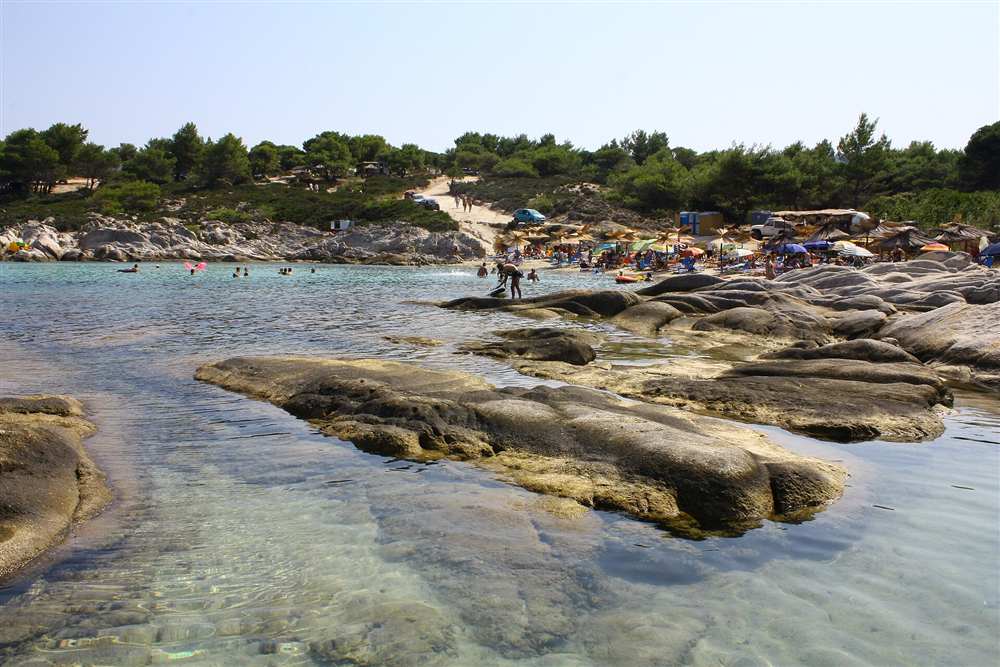
Halkidiki scuba diving sites spread across three areas: the Kassandra peninsula’s western coast, the Sithonia coast near Nikiti and Vourvourou with the Diaporos islets offshore, and the Athos coast near the islet of Kelyfos, each offering a distinct seabed of granite walls, sand channels, and rocky reefs. Dive centres run day trips to all three zones depending on wind direction and sea state.
Halkidiki scuba diving runs as a half-day session or a full two-dive day. A private Halkidiki scuba diving session pairs one instructor with one guest. Kassandra’s dive sites sit close to shore, a short boat ride from the peninsula’s west-facing beaches, and the seabed there drops in stepped ledges from 5 to 25 meters. This proximity makes Kassandra the base for Discover Scuba sessions and shallow certified dives alike, since a short surface swim reaches the drop-off point directly.
The rock of Kelyfos off Neos Marmaras is a set-piece of Halkidiki scuba diving. The instructor on Halkidiki scuba diving holds contact with beginners throughout. Sithonia’s coastline near Nikiti and Vourvourou opens onto the Diaporos islet cluster, a scatter of small granite islands separated by narrow channels with clear water and depths from 8 to 20 meters between them. A Halkidiki yacht charter reaches the outer Diaporos sites directly, giving private groups access to spots the standard dive-centre boat schedule does not cover on a given day.
Planning Halkidiki scuba diving ahead beats the scramble for a summer date. The Athos coast, the third prong of the peninsula, holds the deepest and least-visited sites, including the waters off the islet of Kelyfos, where the seabed drops to 30 meters and beyond along a granite wall. Boat access to this stretch depends on the monastic community’s sea-traffic rules, and dive centres schedule Athos-coast trips on set days rather than daily.
What Do Divers See Underwater in Halkidiki?
Halkidiki scuba diving sites show rocky reefs, sheer granite walls, small caverns, and seagrass meadows populated by bream, octopus, and moray eels, alongside scattered amphorae fragments and wreck sites that mark the seabed’s long maritime history. The rock formations along Kassandra and Sithonia host sponges, sea fans, and encrusting coral in the crevices between boulders.
The dive sites for Halkidiki scuba diving reach Vourvourou and the Diaporos islets. The morning slot for Halkidiki scuba diving fills first in high season. Bream schools move along the reef edges in tight formation, and divers spot grouper resting in shaded overhangs at the deeper Sithonia and Athos sites. Octopus dens sit tucked into rock crevices, marked by a scatter of shell fragments outside the entrance, and a patient diver watches one emerge to hunt along the sand. Moray eels occupy similar crevices, their heads visible through gaps in the rock, and night dives bring more moray sightings than daytime trips.
Every Halkidiki scuba diving session starts at the centre with theory and kit. Halkidiki scuba diving passes rocky reefs, walls and seagrass beds. Seagrass meadows carpet the sandy flats between reef sections, providing shelter for juvenile fish and a feeding ground for sea urchins and starfish. These meadows filter the water column and contribute directly to the visibility that makes the coast suitable for beginner dives.
Halkidiki scuba diving is booked ahead for a fixed, agreed price per person. Amphorae fragments rest on the seabed near distinct dive points off Kassandra and Sithonia, remnants of ancient trade routes that ran along this coast, and dive centres mark these spots as points of interest on guided dives without disturbing the artefacts. A handful of wreck sites, small vessels lost along the coast, sit at depths accessible to Advanced-certified divers and add a wreck-penetration option to the standard reef and wall itinerary.
Why Does the Halkidiki Sea Suit Beginner Divers?
The Halkidiki sea suits beginner divers because visibility runs 10 to 20 meters through summer, the water stays calm inside the peninsulas’ sheltered bays, currents stay weak at the shallow training sites, and warm surface temperatures reduce the wetsuit thickness a first-time diver needs. These conditions together lower the physical and mental barrier to a first dive.
Booking Halkidiki scuba diving ahead secures the date and the instructor. Families take Halkidiki scuba diving for the guided shallow dives off the peninsulas. Clear water lets an instructor keep visual contact with every beginner in the group at all times, a safety margin that matters directly during the confined-water skills stage. The granite seabed reflects light well past 15 meters on clear days, so even the deeper training dives keep the surface and the boat in view from below.
For certified divers, Halkidiki scuba diving opens the deeper walls and caverns. The bays inside Kassandra and Vourvourou break the open sea’s swell, so a beginner’s first entry happens in flat, calm water rather than against surge or chop. This shelter also keeps sediment settled on the bottom, since wave action does not stir the sand the way an exposed coast does, and that settled sediment is a direct contributor to the clarity divers see on entry.
For beginners, Halkidiki scuba diving starts with a briefing and shallow-water skills. Surface water temperature stays comfortable through the main diving season, warm enough that a 5mm wetsuit covers a diver for the full session without added thermal layers. A warmer dive means longer comfortable bottom time for a first-timer, since cold is the leading reason a beginner cuts a dive short.
How Long Does a Session Run and How Deep Do Beginners Go?
A standard Halkidiki scuba diving session runs three to four hours door-to-door, including transfer, briefing, and equipment fitting, with 30 to 40 minutes of confined-water practice and a 25 to 35 minute open-water dive to a maximum depth of 12 meters for first-time beginners. Certified-diver trips extend to a full morning or a two-tank day.
Halkidiki scuba diving ends with the surface interval and the logbook entry. Halkidiki scuba diving runs from centres on the Kassandra and Sithonia coasts. The confined-water stage takes up the first block of time, since every skill covered there sets the pace for the open-water dive that follows. An instructor moves a beginner through the skills only once each one lands cleanly, so a diver who needs extra practice on mask-clearing takes longer at this stage before the group descends together.
The medical questionnaire is completed before Halkidiki scuba diving begins. Beginner open-water depth stays capped at 12 meters, a limit set by the training standard rather than the site’s full depth range, and the instructor holds the group at a shallower band for the greater part of the dive, descending to the maximum only at a single planned point. This depth keeps nitrogen absorption low and leaves a wide safety margin for the ascent.
The choice of Halkidiki scuba diving comes down to the centre, the site and the certification. Certified divers on the Advanced track descend past this limit, with an 18 to 30 meter working range on the boat dives and deeper still on the Athos coast wall. Total time underwater for a certified two-dive day runs close to 80 minutes of bottom time split across the two dives, with a surface interval of an hour between them.
What Does Halkidiki Scuba Diving Cost and What Is Included?
Halkidiki scuba diving is sold as a whole-experience package that bundles equipment rental, instructor fee, transfer from the dive centre to the boat or shore site, and a certificate or logbook stamp into a single price, with a lower rate for group bookings and a premium rate for a private, one-on-one instructor session. No hidden add-ons apply once the package price is set.
The instructor on Halkidiki scuba diving holds contact with beginners throughout. The price of Halkidiki scuba diving covers the instructor, the equipment and the dive. The group rate covers a shared boat or shore trip with other divers at a similar level, split between beginners on the Discover Scuba programme and certified divers on a parallel dive plan. This rate includes full equipment, the instructor’s fee, and air fills for the dive, and it is the default single-day booking format for travelers.
Halkidiki scuba diving includes the transfer from the hotel where the centre offers it. A private session pairs one diver or one small family group with a single instructor for the full session, a format suited to a nervous first-timer or a family wanting to dive together without joining a larger group. The private rate runs above the group price to cover the dedicated instructor time.
A private Halkidiki scuba diving session pairs one instructor with one guest. Multi-dive packages reduce the per-dive cost for certified divers booking three or more dives across a stay, and PADI course packages bundle the certification fee, course materials, and open-water dives into one price separate from the single-session rates. Equipment upgrades, a dive computer rental or a larger wetsuit size, add a line item on top of the base package where the diver requests one.
What PADI Courses, Safety Rules, and Booking Steps Apply?
Halkidiki dive centres run the full PADI course ladder from Open Water Diver through Advanced Open Water and Rescue Diver, each course requiring a signed medical questionnaire, a minimum age of ten for the Junior Open Water track and fifteen for the standard adult course, and advance booking through the centre’s own site or a local agent.
Halkidiki scuba diving passes rocky reefs, walls and seagrass beds. Halkidiki scuba diving runs as a half-day session or a full two-dive day. The Open Water course runs across three to four days, combining classroom or eLearning theory, confined-water skill sessions, and four open-water dives that qualify a diver to the standard 18-meter certification limit. Advanced Open Water follows with five specialty dives, deep and navigation dives included, that raise the working depth to 30 meters. Rescue Diver adds emergency-response and rescue-scenario training for divers who dive on a regular basis.
The rock of Kelyfos off Neos Marmaras is a set-piece of Halkidiki scuba diving. Every diver, beginner and certified alike, completes a medical questionnaire before the first dive, and a flagged answer routes the diver to a physician’s clearance before the centre accepts the booking. Age minimums apply strictly: the Junior Open Water course accepts divers from age ten under a depth-restricted certification, while the standard adult Open Water course and the Discover Scuba programme both set fifteen as the practical minimum for full open-water participation.
The morning slot for Halkidiki scuba diving fills first in high season. Booking runs through the dive centre’s own reservation page or a travel agent covering the Halkidiki area, with a deposit confirming the date and the balance due on arrival at the centre. Peak summer weeks fill the daily departure slots ahead of the date, so a traveler locks in a preferred morning or afternoon slot well before arrival rather than walking in on the day.
Frequently Asked Questions
How much is Halkidiki scuba diving?
Halkidiki scuba diving is priced per person for the whole session, agreed at booking. The price covers the instructor or guide, the full equipment, the briefing and the guided dive; extra dives, photos and hotel transfers are included by the centres that offer them.
Do you need a certification for Halkidiki scuba diving?
No. The Discover Scuba programme takes complete beginners: a briefing and theory session, shallow-water skills with the instructor, then a guided dive to about five or six metres with the instructor alongside throughout.
Where are the Halkidiki dive sites?
The Halkidiki dive sites run along the Kassandra peninsula, the Sithonia coast at Nikiti and Vourvourou with the Diaporos islets, the rock of Kelyfos off Neos Marmaras, and the Athos coast, with reefs, walls and caverns close inshore.