
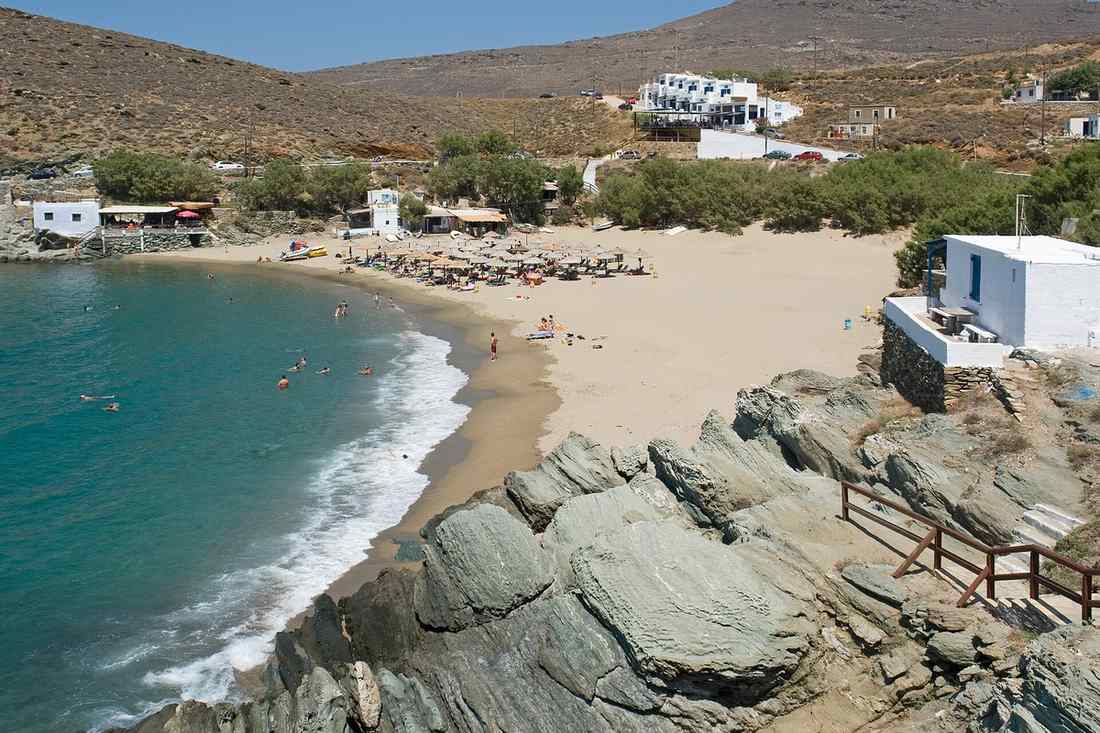
Tinos beaches number more than 50, spread across two contrasting coasts, from organised sandy bays with tavernas to wild coves reached only by dirt track. The best Tinos beaches pair calm, shallow water on the sheltered south with surfable waves on the wind-blown north. This guide ranks each shore by facilities, access and conditions, so every traveller finds the right sand for the day. Plan the whole trip with Greece Tours.
Tinos sits in the heart of the Cyclades, where the summer meltemi wind splits the island into a breezy north and a protected south. That divide decides which beach suits a family afternoon, a surf session or a quiet swim. The Tinos beaches below are grouped by coast, by crowd level and by activity, with the practical details that turn a map pin into a plan.
What are the best beaches in Tinos?
The best beaches in Tinos are Kolimbithra for surfing, Agios Sostis and Agios Ioannis Porto for families, Pachia Ammos and Santa Margarita for quiet sand, Kionia for proximity to Tinos Town, and Rochari for a beach-bar scene.
Tinos rewards travellers who match the beach to the day. Kolimbithra, a double bay on the north coast, draws surfers and free spirits. Agios Sostis, a long organised strand on the south coast, suits families with its shallow water and easy parking. Pachia Ammos and Santa Margarita trade facilities for solitude. Kionia, three kilometres from the capital, serves visitors without a car. Each of these Tinos beaches answers a different need, and the sections that follow sort them by traveller type. The first question most visitors ask concerns where to take children.
Which Tinos beaches are best for families?
The best family beaches in Tinos are Agios Sostis, Agios Ioannis Porto and Kionia. All three sit on the sheltered south coast with shallow, calm water, sunbeds, tavernas within steps of the sand, and parking close to the shore.
Families need calm water, shade and facilities, which the south coast supplies. Agios Sostis stretches for almost a kilometre of soft sand, with gently shelving water that lets small children paddle safely. Agios Ioannis Porto, a horseshoe bay further east, adds rooms, restaurants and a sheltered swimming zone. Kionia offers the same calm sea three kilometres from Tinos Town, beside the ruins of a Poseidon sanctuary that entertains older children. All three rent umbrellas and loungers, so a family arrives with little gear. Travellers comparing these beaches against the island’s other draws can read the full things to do in Tinos guide. Surfers, by contrast, head straight for the wind.
Where is the best beach for surfing in Tinos?
The best surfing beach in Tinos is Kolimbithra, on the exposed north coast. The summer meltemi wind drives clean waves into its wide bay, and a beach bar rents surfboards, bodyboards and wetsuits through the season.
Kolimbithra stands alone as the island’s surf hub. The meltemi, a strong north wind that blows hardest in July and August, pushes consistent swell into the larger of its two bays. A relaxed beach bar rents boards and offers lessons for beginners, while the smaller adjoining bay stays calmer for swimmers. Wetlands behind the sand attract migrating birds, which adds a quiet natural draw away from the break. The road in passes the village of Komi and the artichoke fields that supply the island’s tavernas. Surfers planning a session check the wind forecast, which the best time to visit Tinos guide explains in detail. Visitors short on time prefer the beaches nearest the capital.
Which beaches are closest to Tinos Town?
The beaches closest to Tinos Town are Agios Fokas and Kionia. Agios Fokas lies a 15-minute walk south of the harbour, while Kionia sits three kilometres west, both organised with sunbeds, tavernas and bus links to the centre.
Proximity matters most for travellers without a car. Agios Fokas, the town beach, runs for a long sandy stretch just south of the port, backed by hotels and tavernas and reachable on foot. Kionia, a short bus ride or drive west, combines a sandy shore with the archaeological site of the Sanctuary of Poseidon and Amphitrite. Both beaches rent loungers and serve food, which suits a half-day between ferries or sights. Their bus connections make them the default choice for a first afternoon on the island. Choosing a base near these beaches simplifies a short stay, a topic covered in the where to stay in Tinos guide. The wider south coast holds many more options.
What are the best beaches on the south coast of Tinos?
The best south-coast beaches in Tinos are Agios Sostis, Agios Ioannis Porto, Agios Fokas, Kionia, Pachia Ammos and Santa Margarita. The south shore stays sheltered from the meltemi, which keeps its water calm and clear through summer.
The south coast holds the island’s calmest, most accessible sand. Agios Sostis and Agios Ioannis Porto anchor the family scene with long organised strands. Agios Fokas serves the town, and Kionia pairs swimming with ruins. Pachia Ammos, meaning “thick sand,” rewards a short drive with a broad quiet beach and a single taverna. Santa Margarita, beside Porto, stays low-key with shallow water ideal for a lazy afternoon. Lychnaftia, further along, mixes sand and flat rock for snorkelling. These beaches share easy roads and gentle seas, which makes the south the safe default in windy weather. The north coast offers a wilder, more dramatic alternative.
What are the best beaches on the north coast of Tinos?
The best north-coast beaches in Tinos are Kolimbithra, Rochari, Agios Romanos and the Panormos Bay beaches of Agia Thalassa and Kavalourko. The north shore catches the meltemi, which brings waves, cooler water and a raw, scenic feel.
The north coast trades calm for drama and space. Kolimbithra leads with surf and a laid-back bar. Rochari, reached by a rough track, hides a bohemian beach bar with a Mexican-tinged vibe and umbrellas scattered across the sand. Agios Romanos offers a long quiet beach near the village of the same name. Around Panormos Bay, Agia Thalassa shades its sand with tamarisk trees, while Kavalourko stays shallow and exotic. These beaches reward travellers who bring water, snacks and a sense of adventure, since facilities thin out. A boat trip reaches several north-coast coves that the road cannot, which the Tinos boat tours and island-hopping day trips guide details. Beach bars cluster where the crowds gather.
Which Tinos beaches have beach bars?
The Tinos beaches with beach bars are Kolimbithra, Rochari and Agios Ioannis Porto. Kolimbithra mixes surf culture with cocktails, Rochari runs a bohemian bar on a remote bay, and Agios Ioannis Porto serves families and couples alike.
Beach bars give a shore its social rhythm. Kolimbithra’s bar rents boards by day and pours drinks at sunset, drawing a young, relaxed crowd. Rochari’s hidden bar leans into a free-spirited scene, with hammocks, shade and music far from any village. Agios Ioannis Porto keeps a gentler tone, with beachfront tavernas and a bar suited to all ages. Agios Sostis and Agios Fokas add seasonal canteens for coffee and snacks. The island avoids the loud party scene of its neighbours, so even its busiest bars stay low-key. Travellers seeking solitude turn away from these hubs entirely. Quiet beaches sit only a short drive beyond them.
Where are the quietest, secluded beaches in Tinos?
The quietest beaches in Tinos are Pachia Ammos, Santa Margarita, Lychnaftia, Livada and the coves below Volax. Reached by dirt tracks or short walks, they offer no sunbeds, which keeps crowds away even in August.
Secluded beaches reward travellers who carry their own shade and water. Pachia Ammos and Santa Margarita stay calm and uncrowded on the south coast. Lychnaftia mixes sand and rock for snorkelling away from the bustle. Livada Bay, on the wild east, draws wind and waves into a dramatic, near-empty arc favoured by free campers. The rocky coves beneath Volax and the eastern cliffs need a careful drive or a short hike. These beaches trade facilities for silence, so a cooler bag and sturdy shoes become essential. Their isolation suits couples and photographers chasing the empty Cyclades. Organised beaches, by contrast, supply everything on arrival.
Are there organised beaches with sunbeds in Tinos?
Yes, Tinos has many organised beaches with sunbeds and tavernas, including Agios Sostis, Agios Ioannis Porto, Agios Fokas, Kionia and Kolimbithra. These beaches rent loungers and umbrellas and serve food and drinks through the summer season.
Organised beaches suit travellers who want comfort without planning. Agios Sostis, Agios Ioannis Porto and Agios Fokas lead with full sunbed rows, beach tavernas and showers. Kionia adds the same comforts beside its ruins. Kolimbithra organises the larger of its two bays while leaving the smaller one wild. Rental for two loungers and an umbrella costs around €10 to €20 a day, often waived with a food or drink order. These beaches keep their facilities from June to September and scale back out of season. Families and first-time visitors gravitate to them for the easy logistics. Arriving before midday secures a front-row lounger on the busiest summer days, since the best spots fill fast at Agios Sostis and Kionia. Snorkellers, though, look for clear water over rock.
Which beaches are best for snorkelling in Tinos?
The best snorkelling beaches in Tinos are Lychnaftia, Kavalourko, Agios Markos and the rocky edges of Kionia. Clear water, flat rock and seagrass beds along these shores shelter fish, urchins and the occasional octopus.
Snorkelling rewards beaches where rock meets clear, sheltered water. Lychnaftia mixes sand and stone on the south coast, with calm visibility on windless days. Kavalourko in Panormos Bay stays shallow and clear over a mixed bottom. Agios Markos and the rocky margins of Kionia hold small reefs that gather marine life. Snorkellers bring their own mask and fins, since rentals are scarce outside the main bays. Water shoes protect against sea urchins on the rockier entries. Calm mornings before the meltemi rises offer the clearest water. The seabed around Tinos mixes sand, seagrass and low rock reefs, which shelters bream, wrasse and small octopus close to shore. Early summer brings the clearest visibility, before the season’s swimmers stir the shallows. Snorkellers who explore the rocky headlands between bays often find the richest marine life away from the main sand. Wind, more than any other factor, governs the snorkelling and swimming day.
How does the meltemi wind affect Tinos beaches?
The meltemi wind exposes the north-coast beaches of Tinos and shelters the south. This strong summer north wind, strongest in July and August, brings waves and cooler water to Kolimbithra while leaving Agios Sostis and the south calm.
The meltemi is the single biggest factor in choosing a beach. On a windy day, north-coast beaches like Kolimbithra and Livada turn choppy and cool, which suits surfers but not swimmers. The south coast, screened by the island’s hills, stays calm and warm in the same conditions. Smart travellers check the forecast each morning and pick their coast accordingly, swapping north for south as the wind shifts. The meltemi also drops the air temperature and keeps the island fresher than its still, hotter neighbours. Understanding this pattern turns a windy forecast from a problem into a plan. The meltemi typically builds through the morning and peaks in the afternoon, so an early start on an exposed beach can still deliver calm water before the wind arrives. Locals read the white-capped channel toward Mykonos as a gauge, switching coasts the moment the sea turns. This daily rhythm, rather than the season alone, decides the perfect beach hour. Reaching the right beach then depends on transport.
How do you get to the beaches in Tinos?
You get to the beaches in Tinos by rental car or scooter for full reach, by KTEL bus to the main south-coast and Kolimbithra beaches, or on foot for the town beach of Agios Fokas. Remote coves need a car and a dirt-track drive.
Transport decides how many beaches a trip can reach. A rental car or ATV opens every shore, from the family sands of the south to the remote north-coast coves. KTEL buses link Tinos Town to Agios Sostis, Agios Ioannis Porto, Kionia and Kolimbithra on a summer timetable. Agios Fokas sits within walking distance of the harbour. The wildest beaches, including Rochari and Livada, demand a careful drive on unpaved roads. Travellers arriving by ferry can rent a vehicle at the port, a process the how to get to Tinos guide describes. A little preparation makes every beach day smoother.
What should you pack for Tinos beaches?
For Tinos beaches you should pack water shoes, a windbreak or umbrella, plenty of water, snacks and reef-safe sunscreen. Many beaches lack shade and shops, and the meltemi wind makes a secure umbrella and a light cover-up essential.
Packing well turns a remote beach into a comfortable day. Water shoes protect feet on the rockier entries and against sea urchins. A sturdy umbrella or windbreak matters on the breezy north coast, where natural shade is rare. Water and snacks cover the many beaches without a canteen. Reef-safe sunscreen guards both skin and the shallow marine life. A dry bag keeps phones and cameras safe from spray on windy days. A light long-sleeve top and a hat guard against the strong Aegean sun, which feels deceptively mild in the cooling breeze. Cash covers the smaller canteens and taverna bills, since card machines are unreliable on remote shores. A refillable water bottle and a small first-aid kit round out the essentials for a day far from shops. With the right kit, even a facility-free cove becomes an easy afternoon. The questions below cover the practical points travellers ask most.
Which named beaches should you know in Tinos?
The named Tinos beaches worth knowing are Kolimbithra, Agios Sostis, Agios Ioannis Porto, Agios Fokas, Kionia, Pachia Ammos, Santa Margarita, Rochari, Agios Romanos, Agia Thalassa, Kavalourko, Lychnaftia, Livada and Ormos Giannaki, each suited to a different kind of day.
Each beach below carries its own character, access and facilities. Read them as a shortlist, then match the wind and your plans to the right shore.
Kolimbithra
Kolimbithra forms a double bay on the north coast, the island’s surf capital. The larger bay catches the meltemi swell and runs a board-rental beach bar, while the smaller, sheltered bay stays calm for swimmers. Wetlands behind the sand draw migrating birds, and the drive in passes Komi’s artichoke fields. It blends adventure, nature and a relaxed scene better than any other Tinos beach.
Agios Sostis
Agios Sostis stretches nearly a kilometre of soft sand on the sheltered south coast, the top family choice. Shallow, gently shelving water lets small children paddle safely, and rows of sunbeds, tavernas and parking sit steps from the shore. A small chapel marks the headland. Its calm sea holds even when the north coast turns rough, which makes it the reliable bad-wind backup.
Agios Ioannis Porto
Agios Ioannis Porto curves into a horseshoe bay on the south-east coast, lined with rooms, tavernas and a beach bar. The sheltered swimming zone suits families and couples alike, and the sand stays soft and clean. A second smaller cove, Pachia Ammos, sits a short walk away. The bay’s mix of calm water and full facilities makes it a comfortable base for a beach-focused stay.
Agios Fokas
Agios Fokas is the town beach, a long sandy stretch a 15-minute walk south of Tinos Town harbour. Hotels and tavernas back the shore, and sunbeds line the organised central section. Its closeness to the port makes it the default first swim for travellers without a car. The water stays calm in most conditions, and a seafront path links it straight back to the centre.
Kionia
Kionia lies three kilometres west of Tinos Town, pairing a sandy organised beach with the ruins of the Sanctuary of Poseidon and Amphitrite. A bus and an easy drive connect it to the centre, and tavernas and sunbeds serve the main stretch. The archaeological site beside the sand gives older children and history lovers something beyond swimming. Calm water and culture make it a balanced half-day.
Pachia Ammos
Pachia Ammos, meaning thick sand, opens into a broad quiet beach reached by a short drive on the south-east coast. A single taverna serves the shore, but facilities stay minimal, which keeps crowds thin even in August. The wide sand and shallow entry suit a lazy, unhurried afternoon. Travellers who find the organised beaches busy come here for room to breathe.
Santa Margarita
Santa Margarita sits beside Porto on the south coast, a low-key bay with shallow, clear water. It draws families and couples who want calm without the bustle of the larger strands. A taverna and limited sunbeds cover the basics. The gentle sea and modest facilities make it an easy, undemanding swim, especially on windy days when the north coast is out.
Rochari
Rochari hides on the north coast at the end of a rough track, home to a bohemian beach bar with a free-spirited feel. Umbrellas, hammocks and music scatter across the sand far from any village. The exposed setting brings wind and waves, so it suits a scene and a sunset more than calm swimming. Adventurous travellers reach it by a careful drive and stay for the vibe.
Agios Romanos
Agios Romanos is a long, quiet beach beside the village of the same name on the north-west coast. Tamarisk trees offer patches of shade, and a taverna serves the shore. The meltemi reaches here, so the water can be lively, but the space and calm atmosphere reward the drive. It suits travellers who want a real swim away from the organised crowds.
Agia Thalassa
Agia Thalassa lies in Panormos Bay on the north coast, a long sandy beach shaded by tamarisk trees with an organised section and free natural shade. The clear water and soft sand make it one of the prettiest northern beaches. Panormos village and its seafood tavernas sit a short distance away. It balances facilities with a quieter, scenic setting on the wilder coast.
Kavalourko
Kavalourko, also in Panormos Bay, stays shallow and exotic, with sun-dappled water over a sand-and-rock bottom. Its clear, calm shallows suit snorkelling and gentle swimming on windless days. Limited facilities keep it quiet, so visitors bring shade and water. The bay’s clarity and soft light make it a favourite for photographers and anyone chasing an undeveloped slice of the north coast.
Lychnaftia
Lychnaftia mixes sand and flat rock on the south coast, which makes it better for snorkelling than for lounging. Clear water and a rocky margin shelter fish and the occasional octopus. Facilities stay minimal, so the beach keeps a wild, quiet feel. Water shoes help on the stony entries. Snorkellers and travellers seeking calm, undeveloped shore choose it over the busier organised sands.
Livada
Livada Bay opens onto the wild east coast, a dramatic near-empty arc that catches wind and waves. Free campers and travellers chasing solitude favour its raw setting and clean sand. Strong gusts and rough water make it scenic rather than swimmable on breezy days. The rugged drive in keeps numbers low. It rewards photographers and adventurers more than families or casual swimmers.
Ormos Giannaki
Ormos Giannaki, below Kardiani village on the north-west coast, pairs a small sandy beach with a fishing harbour and seafood tavernas. The sheltered cove stays calmer than its exposed neighbours, and a meal overlooking the water completes the visit. Its mix of swimming, shade and dining suits a relaxed half-day. The drive down from Kardiani adds sweeping sea views along the way.
Apigania
Apigania is a small, hard-to-reach cove on the wild eastern shore, prized by travellers who want near-total seclusion. A rough track and a short walk guard the access, which keeps numbers low even in peak August. No facilities reach the sand, so visitors carry shade, water and food. The clear water and silence reward the effort, and the rugged setting feels far from the organised south. It suits adventurers and free campers.
Malli
Malli sits on the north coast near Panormos, a quiet sandy beach framed by rock and open to the meltemi breeze. Limited facilities and a modest access road keep it calm, and the clean water draws swimmers on settled days. Its position near the marble villages makes it an easy pairing with a Pyrgos visit. Travellers exploring the north often stop here between sights for an unhurried swim.
Kalivia
Kalivia is a sheltered south-coast beach with shallow, calm water and a low-key, local feel. Soft sand and gentle shelving suit families and slow afternoons, and a small taverna covers the basics. The beach stays quieter than the headline south-coast strands, which appeals to repeat visitors. Easy access by car and protection from the wind make it a dependable choice when the meltemi blows hard.
Frequently Asked Questions
Does Tinos have good beaches?
Tinos has more than 50 beaches, from organised family sands like Agios Sostis to wild surf bays like Kolimbithra. The island’s beaches stay less crowded than those on Mykonos, and the split between calm south and breezy north suits every kind of beach day.
What is the best beach in Tinos?
The best beach in Tinos is Kolimbithra for surfers and a relaxed scene, while Agios Sostis ranks first for families thanks to shallow water and parking. Pachia Ammos and Santa Margarita win for travellers who want quiet, undeveloped sand.
Are Tinos beaches sandy or pebbly?
Tinos beaches are mostly sandy, especially Agios Sostis, Pachia Ammos and Kolimbithra. Some shores, such as Lychnaftia and parts of Kionia, mix sand with flat rock, which makes them noticeably better for snorkelling than for stretching out and sunbathing.
Which side of Tinos has the calmest beaches?
The south side of Tinos has the calmest beaches, because the island’s hills shelter it from the summer meltemi wind. Agios Sostis, Agios Ioannis Porto and Kionia stay calm even when the north coast turns choppy.
Can you swim in Tinos in the meltemi wind?
You can swim in Tinos during the meltemi by choosing the south coast, which stays sheltered. The north-coast beaches like Kolimbithra grow choppy in strong wind, so swimmers move south while surfers head north to ride the waves.
Do you need a car to reach Tinos beaches?
You need a car to reach the quieter and north-coast beaches of Tinos, though buses serve the main south-coast beaches and Kolimbithra in summer. Agios Fokas, the town beach, sits within walking distance of the port, and a rented scooter or ATV opens the rest of the coast for travellers who skip a full car.