
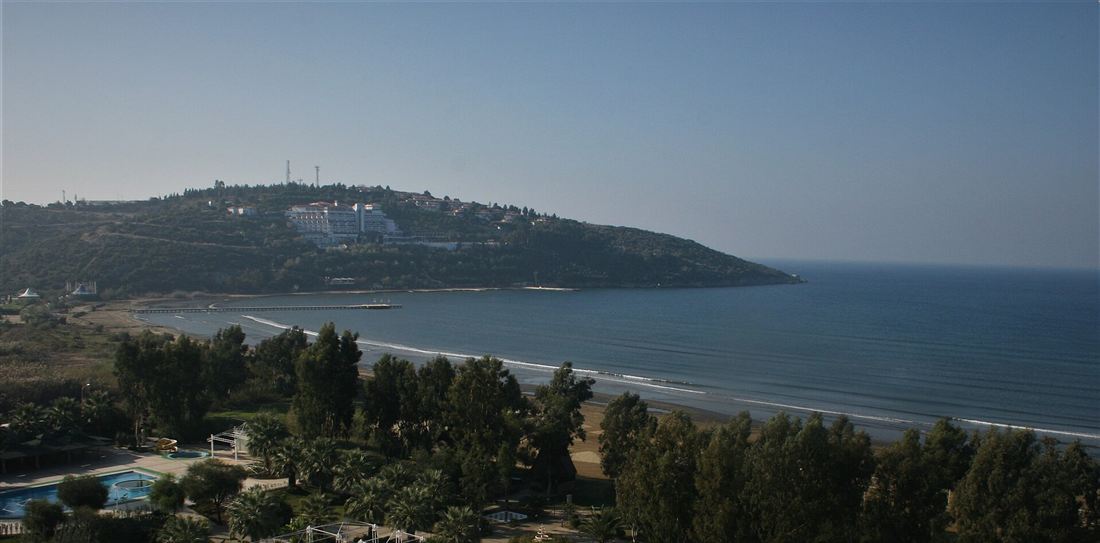
Pamucak beach is a long sandy public beach on the Aegean at the mouth of the Kucuk Menderes, 7 kilometres from Selcuk and the ruins of Ephesus and 15 kilometres from Kusadasi, a wide open shoreline for a swim after the ancient city. Plan the whole trip with Greece Tours.
This guide covers Pamucak beach in full: what the beach is and where it sits, how to get there, the sand, sea and length, the facilities and beach clubs, whether it suits families, how to pair it with Ephesus, the watersports and horse riding, the best time to visit, and where to stay along the shore.
What is Pamucak beach?
Pamucak beach is a long public sandy beach on Turkey’s central Aegean coast, spread along the mouth of the Küçük Menderes river beside the ancient port plain of Ephesus. The open shoreline runs for kilometres of unbroken grey-gold sand.
Pamucak sits within the Selçuk district of İzmir Province, facing the Aegean Sea at the point where the Küçük Menderes delta meets the water. The name Pamucak translates to “little cotton”, a reference to the pale, cotton-soft sand that stretches in a continuous band from the river outflow northward. Unlike the small cove beaches that dot the Kuşadası coast, Pamucak is a wide, flat expanse with no cliffs hemming it in and few buildings crowding the sand.
The beach forms the modern seafront of a landscape steeped in antiquity. In classical times the harbour of Ephesus opened onto this very bay, and centuries of silt carried down by the Küçük Menderes pushed the coastline seaward, leaving the ruins of Ephesus 7 km inland and creating the fertile delta plain that backs the beach today. The result is one of the widest natural sand beaches on the İzmir coast, framed by low green hills, farmland and reed beds rather than by resort towers.
Pamucak carries Blue Flag status on its managed stretches, a certification tied to water quality, safety provision and environmental management. The combination of clean Aegean water, generous width and a setting beside a UNESCO World Heritage archaeological zone gives the beach a distinct character: an unhurried, spacious strand that pairs a swim with the ancient world next door.
The delta setting shapes the whole beach. The Küçük Menderes, known in antiquity as the Cayster, drains the fertile plain behind Selçuk and empties into the Aegean at the beach’s northern edge, and the silt it carries built the flat coastal apron that defines Pamucak. This is why the beach is so wide and so level: it stands on alluvial ground rather than on a rocky shore, and the sand runs deep and soft rather than shingled. The same delta feeds the reed beds and wetland behind the dunes, a habitat for herons, egrets and migrating birds that adds a wild fringe to the beach’s inland border.
Where is Pamucak beach and how far is it from Ephesus and Kuşadası?
Pamucak lies 7 km west of Ephesus and Selçuk, about 15 km north of Kuşadası, and roughly 70 km south of İzmir. It occupies the coastal strip of the Selçuk district where the Selçuk–Kuşadası road meets the Aegean shore.
Selçuk, the market town that serves as the gateway to Ephesus, is the nearest settlement, a straight 7 km run west along the plain to the sea. The ancient city of Ephesus itself stands between the two, so a visitor leaving the archaeological site reaches the sand within a fifteen-minute drive. This proximity defines Pamucak: it is the swimming beach for everyone touring the ruins, the theatre, the Temple of Artemis and the Basilica of St John.
Kuşadası, the busy cruise port and resort city, sits about 15 km to the south along the coast road. The distance places Pamucak an easy day-trip drive from the Kuşadası hotels and the cruise terminal, and cruise passengers docking at Kuşadası reach the beach in under half an hour. İzmir, the regional metropolis and site of the nearest major airport at Adnan Menderes, lies roughly 70 km north; the drive south on the main highway takes about an hour.
The beach also anchors a cluster of nearby draws. The Aqua Fantasy waterpark and resort complex stands directly behind the northern end of Pamucak, the Şirince hill village lies inland beyond Selçuk, and the House of the Virgin Mary crowns Mount Koressos above Ephesus. Pamucak’s position at the centre of this triangle of sites makes it the natural coastal stop on any Ephesus-region itinerary.
How do you get to Pamucak beach?
Reach Pamucak by dolmuş minibus from Selçuk or Kuşadası, by taxi, or by car along the Selçuk–Kuşadası road, where free and paid parking sits behind the sand. The journey from Selçuk takes about ten minutes, and from Kuşadası about twenty-five.
The dolmuş, Turkey’s shared minibus, is the standard budget route. Services run from Selçuk’s central bus station and from Kuşadası along the coast road, stopping at the Pamucak turn-off on the main road. From the drop point a short walk leads down to the sand. The Selçuk minibuses tie the beach directly to the Ephesus tour circuit, so travellers finish the ruins in the morning and ride out to swim in the afternoon.
By car the approach is straightforward. Drivers follow the D515 Selçuk–Kuşadası road to the signposted Pamucak junction, then turn toward the sea. Parking areas back the central and northern beach; the free public stretches offer roadside and unpaved parking, while the beach-club and resort sections operate managed car parks. The flat delta road carries light traffic outside the peak summer weekends.
Taxis from Selçuk and from Kuşadası run to the beach on a metered or agreed fare, and hotels in both towns arrange transfers. Cruise passengers arriving at Kuşadası port book beach transfers or private cars for the twenty-five-minute hop. For self-guided visitors, hiring a car in Selçuk or Kuşadası unlocks the whole Ephesus-and-beach loop in a single day, with Pamucak as the coastal anchor.
Rail travellers reach the area through Selçuk, which sits on the İzmir–Denizli line and holds a working station a short walk from the town centre. Trains from İzmir Basmane run down to Selçuk, from where the beach is a final dolmuş or taxi leg. The İzmir Adnan Menderes airport, 65 km north, links Pamucak to the wider flight network, and airport transfers and hire cars carry arriving visitors south to the coast in about an hour.
What is Pamucak beach like — sand, sea and length?
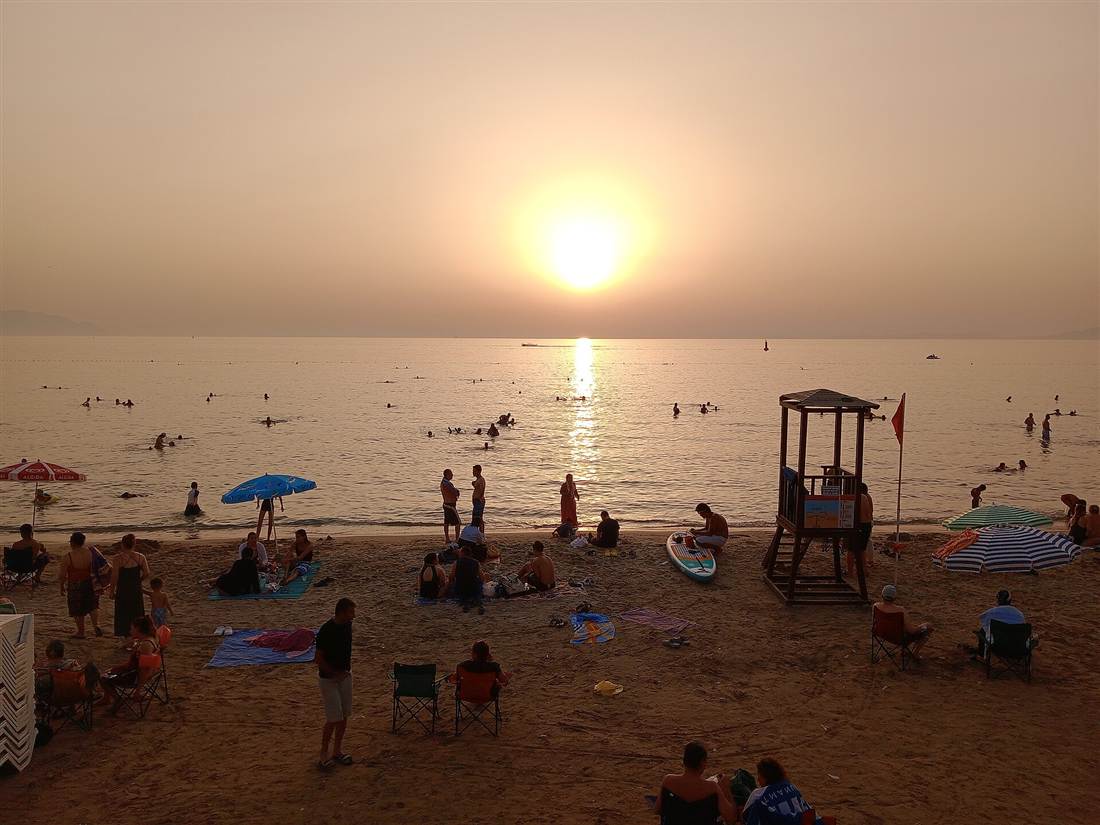
Pamucak is a broad, flat beach of fine grey-gold sand that runs for kilometres beside the Küçük Menderes delta. The Aegean here is open and clean with a shallow, gradual entry, and afternoon breezes raise light waves that draw wind-sport enthusiasts.
The sand is the beach’s signature: soft, pale and deep underfoot, forming a wide apron between the road-side dunes and the waterline. Because the shore is unbroken by rock or headland, the walking distance from one end to the other stretches for a long, uninterrupted line, giving space that thins the crowd even at the height of summer. The northern reaches near the river mouth stay especially quiet and wild.
The sea enters gently. The seabed shelves slowly from the shoreline, so the shallow water reaches well out before the depth builds, a gradient that suits paddling, floating and unhurried swimming. The Aegean water runs clear and cool, refreshed by the open bay. Because Pamucak faces the open sea with no sheltering cove, the afternoon breeze picks up and stirs the surface into rolling waves, which is precisely why kitesurfers and windsurfers favour the stretch.
Behind the sand the delta landscape adds to the setting: reed beds, farmland and low green hills frame the beach rather than concrete. The Küçük Menderes river spills into the sea at the beach’s edge, marking the boundary between the managed central strand and the untamed northern flats. The overall impression is one of scale and openness, a natural beach on a grand horizon rather than a packed resort cove.
What facilities are at Pamucak beach?
Pamucak mixes free public sand with managed sections that rent sunbeds and umbrellas. Beach clubs and cafés serve the central strip, providing showers, toilets, changing areas, loungers, food and watersports, while the outer stretches stay open and undeveloped.
The central beach carries the amenities. Here beach clubs lay out rows of sunbeds and parasols for daily hire, run bars and restaurants on wooden decks, and provide freshwater showers, changing cabins and toilet blocks. Cafés and snack kiosks sell grilled food, cold drinks, ice cream and Turkish tea, so a full day on the sand needs no return to town for supplies. The managed zones hold the Blue Flag facilities and the lifeguard provision.
Watersports operators set up on the busier sections through the swimming season. The offer includes jet-ski hire, banana-boat and ringo tow rides, pedalos and stand-up paddleboards, alongside the wind-driven kitesurfing and windsurfing that the open bay favours. Equipment rental and lessons run from beachfront stands near the clubs.
Beyond the managed core the beach reverts to free public sand. These stretches carry no sunbeds and no bar service, so visitors bring their own shade, water and mats, but they trade facilities for space and quiet. The northern flats near the river mouth are the wildest, backed by dune grass and open to the full sweep of the delta. This split gives Pamucak two moods in one shoreline: a serviced beach-club afternoon or a self-sufficient escape onto empty sand.
Parking, transport and refreshment tie the facilities together. Car parks back the central beach clubs, dolmuş minibuses drop passengers at the main-road turn-off, and taxis run to the sand from Selçuk and Kuşadası. The beachfront restaurants serve Turkish grills, meze, seafood and cold drinks through the day, so a visit runs from a morning swim to an evening meal without leaving the shore. For overnight stays the campsites and resorts directly behind the beach extend the amenities from the sand into full accommodation.
Is Pamucak beach good for families and swimming?
Pamucak suits families through its shallow, gently shelving entry, its vast open space and its soft sand. Children paddle safely in the long stretch of shallow water, and lifeguards patrol the managed Blue Flag sections during the summer swimming season.
The gradual seabed is the key family asset. The water stays shallow a long way out, so young children wade and splash without a sudden drop, and parents supervise from the sand within easy reach. The wide beach gives families room to spread out, build sandcastles and set up for the day without crowding a neighbour, and the soft, deep sand is kind to bare feet and to falls.
Safety provision concentrates on the managed strand. The Blue Flag sections carry lifeguard cover through the peak months, marked swimming zones and the showers and toilets that make a family day workable. The beach clubs rent shaded sunbeds, a practical shield against the strong midday Aegean sun, and their cafés keep children fed and watered on the spot.
Two cautions shape a family visit. The afternoon breeze that delights the wind-sport crowd raises waves and surface chop, so the calmest swimming falls in the morning before the sea builds. And the Küçük Menderes river mouth at the beach’s edge carries a current where fresh water meets the sea, so families keep their swimming to the patrolled central sand away from the outflow. Within those bounds Pamucak is a spacious, gentle beach for children.
Can you combine Pamucak beach with a visit to Ephesus?
Yes. Pamucak sits 7 km from Ephesus, a ten-minute drive, so touring the ruins in the morning and swimming at the beach in the afternoon fits into a single day. The pairing is the classic Selçuk itinerary that joins ancient history with the Aegean.
The logic of the day flows from the heat and the light. Ephesus is an open archaeological site with little shade, so the marble streets, the Library of Celsus, the Great Theatre and the Terrace Houses are best walked in the cooler morning. By early afternoon the sun bears down on the ruins, and that is exactly when the sea calls: the short hop out to Pamucak turns the second half of the day into a swim and a rest on the sand.
The geography makes the switch effortless. The road from the Ephesus lower gate runs west across the delta plain straight to the coast, so a car covers the distance in about ten minutes and a Selçuk dolmuş links the two on public transport. Cruise passengers landing at Kuşadası fold both into one shore excursion, taking in the ruins first and the beach after.
The pairing rewards the traveller with contrast. A morning among the columns and mosaics of one of the ancient world’s greatest cities gives way to an afternoon on an open Aegean strand that once formed the seafront of that same city. Add the Temple of Artemis, the Basilica of St John and the House of the Virgin Mary to the morning, and Pamucak closes the day where the history began, at the water’s edge of ancient Ephesus.
The historical thread runs right into the sand. Ephesus rose as a maritime power precisely because its harbour opened onto this bay, and the silting of that harbour by the Küçük Menderes is what stranded the city inland and left Pamucak as the living coastline of the ancient port. Standing on the beach, a visitor looks out over the water that once carried the trade of one of antiquity’s richest cities, which turns a simple swim into the final chapter of the Ephesus story.
What is there to do around Pamucak — watersports, horse riding, camping?
Around Pamucak visitors kitesurf and windsurf on the breezy open bay, ride horses along the sand with the local equestrian club, camp behind the northern dunes, and cool off at the Aqua Fantasy waterpark that stands directly behind the beach.
The wind defines the watersports. Pamucak’s open, unsheltered aspect draws a steady afternoon Aegean breeze, and kitesurfers and windsurfers gather on the flats to work the wind and the low waves. Rental stands and instruction run from the central beach through the season, alongside jet-skis, tow rides, pedalos and paddleboards for less committed thrill-seekers. The long shoreline gives wind-sport riders room to run without crowding the swimmers.
Horse riding is a Pamucak signature. An equestrian club operates beside the beach, leading rides across the open sand and along the delta tracks, a memorable way to take in the wide shoreline at the pace of a walk or a canter. The flat, uninterrupted beach and the quiet northern flats make the setting a natural riding ground.
For overnight stays close to nature, campsites and caravan pitches back the beach among the pines and dunes, putting the sand within a short walk of the tent. And for families and thrill-seekers who want more than the sea, the Aqua Fantasy Aquapark rises directly behind the northern end of Pamucak, a large waterpark of slides, pools and a wave attraction attached to a resort complex. Between the wind, the horses, the campsites and the waterpark, the beach anchors a full spread of activity beyond the swim.
What is the best time to visit Pamucak beach?
The Pamucak swimming season runs from late spring to mid-autumn, with warm Aegean water and long sunny days. High summer brings the hottest weather and the busiest sand, while spring and autumn deliver quieter beaches and mild temperatures, and mornings stay calmest before the afternoon wind rises.
Peak summer is the height of the season. The Aegean warms to a comfortable swimming temperature, the days stretch long and hot, and the beach clubs, watersports and cafés run at full tilt. The trade-off is the midday heat, which bears down hard on the open, shadeless sand and drives sunbathers under the rented parasols, and the weekend crowds that fill the central strand. Water, shade and an early start are the summer essentials.
Spring and autumn reward those who prefer space over bustle. In the shoulder months of late spring and early autumn the air stays mild, the sea holds enough warmth for a swim, and the vast beach empties of the peak-season crowd, so the quiet northern flats feel almost private. These months also pair a beach afternoon with a comfortable Ephesus morning, since the ruins are far kinder to walk without the summer glare.
The daily rhythm matters as much as the season. Pamucak’s open bay gathers an afternoon breeze that stirs the sea into waves, so the flattest, calmest water for swimming and paddling falls in the morning, while the afternoon wind belongs to the kitesurfers and windsurfers. Planning a visit around a morning swim and an afternoon of wind sports makes the most of the beach’s character.
Where do you stay near Pamucak beach?
Stay in the beachfront resorts set directly behind Pamucak, in the town of Selçuk beside Ephesus, or in the resort city of Kuşadası 15 km south. Each base puts the beach and the ancient sites within a short drive, matched to a different travel style.
The beachfront resorts sit closest to the sand. Large hotel and aquapark complexes, including the Aqua Fantasy resort behind the northern beach, back Pamucak directly, so guests walk from the room to the sea. These self-contained resorts suit families and travellers who want the beach, the pools and the watersports on the doorstep, with the Ephesus ruins a ten-minute transfer away.
Selçuk is the base for history-first travellers. The market town sits 7 km inland at the foot of the Ephesus hill, packed with guesthouses, boutique hotels and family-run pensions within walking distance of the Temple of Artemis, the Basilica of St John, the archaeological museum and the train station. From Selçuk the beach is a short dolmuş or taxi ride, so a stay here joins the ruins, the town’s character and the sand in one compact circle.
Kuşadası is the base for resort life and cruise access. The lively coastal city 15 km south holds the largest concentration of hotels, restaurants and nightlife on this stretch, plus the region’s main cruise port. Guests here reach Pamucak in about twenty-five minutes and Ephesus in a similar time, so Kuşadası works as an all-round hub that pairs a full resort town with easy access to the beach and the ancient world inland. Whichever base a traveller picks, Pamucak and Ephesus stay firmly within a day’s easy reach.
How does Pamucak beach compare with the beaches at Kuşadası?
Pamucak trades the sheltered coves and built-up promenades of Kuşadası for scale, space and open sand. Where Kuşadası beaches like Ladies Beach sit hemmed by hotels and crowds, Pamucak stretches wide and undeveloped, exposed to the open Aegean and its afternoon wind.
The Kuşadası beaches are urban and enclosed. Ladies Beach, the city’s most famous strand, is a compact curve of sand backed by a solid wall of hotels, bars and apartments, packed through the season and lively into the night. Long Beach and the coves south of the city follow the same pattern: sheltered water, close facilities and a resort atmosphere on a modest scale. These beaches suit travellers who want the sea a step from the bar and the shops.
Pamucak is the opposite proposition. It is a natural delta beach measured in kilometres, not metres, with open horizons, farmland behind the dunes and long free stretches without a single building. The gain is space and calm; the trade-off is exposure, since the open bay catches the wind and the waves that the Kuşadası coves are spared. Travellers who want room to walk, wilder scenery and a beach paired with the Ephesus ruins choose Pamucak, while those who want the resort bustle stay in Kuşadası.
What do you bring and know before visiting Pamucak beach?
Bring sun protection, water, and your own shade if you head for the free stretches, since the open sand carries little natural cover. Wind-resistant sunshades hold up better than umbrellas against the afternoon breeze, and cash covers the dolmuş fares and beach kiosks.
Sun and wind are the two constants to plan for. The beach is flat, wide and treeless, so the Aegean sun bears down with nothing to break it, making a high-factor sunscreen, a hat and plenty of drinking water essential for a full day. The managed beach-club sections rent parasols and sunbeds that solve the shade problem, but visitors heading to the free public and northern stretches carry their own cover. Because the afternoon breeze rises reliably, a weighted or wind-resistant beach tent outperforms a light umbrella that the gusts flip.
A few practical notes sharpen the day. The free stretches have no shops, so water, snacks and supplies come from Selçuk or from the beach-club cafés before setting up. Swimmers keep clear of the Küçük Menderes river mouth, where the freshwater current meets the sea, and stick to the patrolled central sand for safety. Footwear helps on the walk across hot sand at midday, and a light layer takes the edge off the sea breeze once the sun drops.
Timing pulls the visit together. A morning at Ephesus, a midday transfer to the coast and an afternoon swim make the standard rhythm, with the calmest water early and the wind sports later. Pack for the open shore, plan around the sun and the breeze, and Pamucak delivers a spacious Aegean beach day on the doorstep of the ancient world.
Frequently Asked Questions
Where is Pamucak beach?
Pamucak beach lies on the Aegean coast 7 kilometres west of Selcuk and Ephesus, 15 kilometres north of Kusadasi and 70 kilometres south of Izmir, at the mouth of the Kucuk Menderes river on the Selcuk-Kusadasi road.
Is Pamucak beach free?
Pamucak beach has long free public stretches of open sand. Beach clubs and hotel sections rent sunbeds and umbrellas and run cafes and watersports, while the unmanaged sand between them stays open to all at no charge.
Is Pamucak beach close to Ephesus?
Pamucak beach sits 7 kilometres from Ephesus, a 10-minute drive or a short dolmus ride. A morning at the ruins pairs with a swim and lunch at the beach in the afternoon on the same trip.