
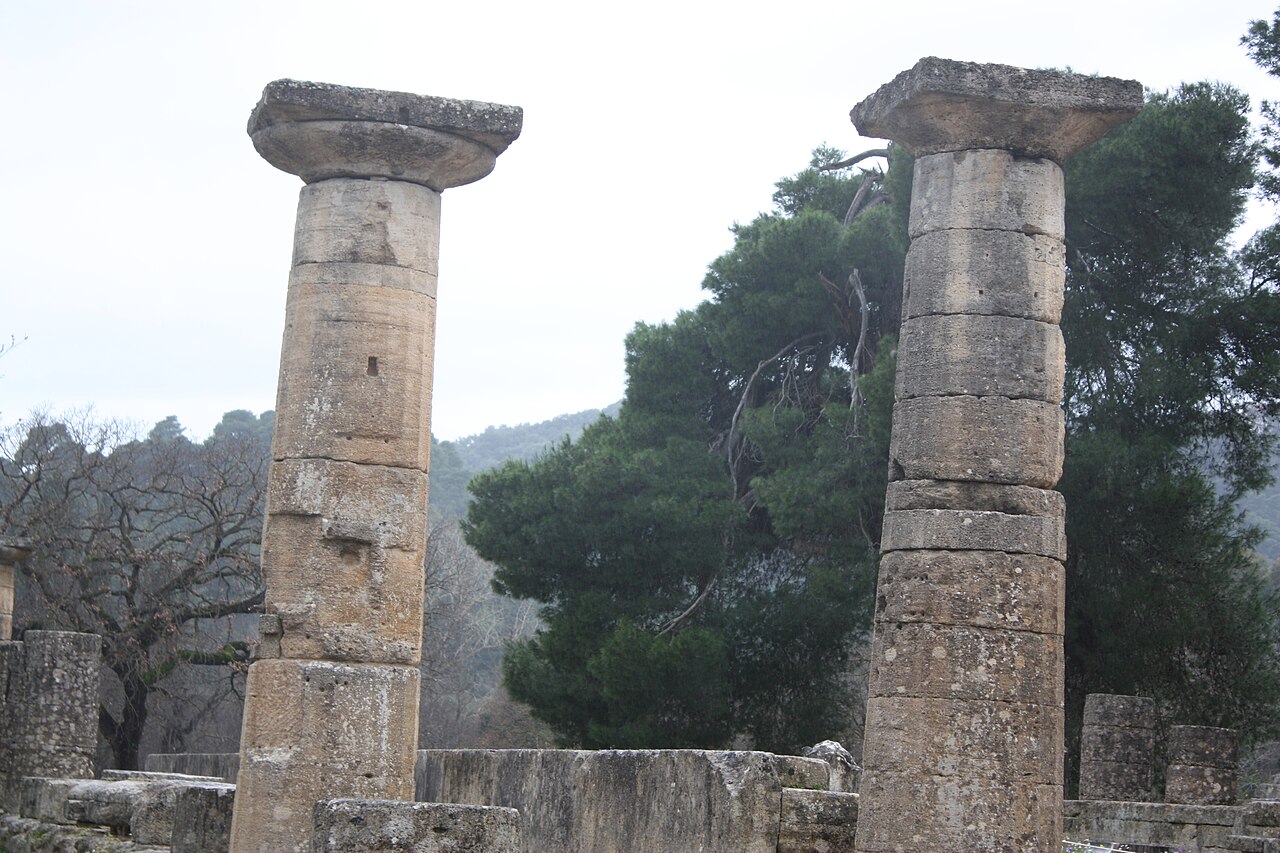
The Olympic flame lighting ceremony is one of the most evocative rituals in the modern world, and it takes place at the very heart of Ancient Olympia, birthplace of the Games. Before every Olympic Games, summer and winter, a high priestess and a group of priestesses gather at the altar before the Temple of Hera, and there, using a parabolic mirror to focus the sun’s rays, the flame is kindled from the sun itself. It is then carried by torch relay from Olympia to the host city. Drawing on the ancient worship of Hera and the memory of the Games born here, the ceremony forms a living bridge between the ancient and modern Olympics. This guide covers where and how the flame is lit, the priestesses and the ritual, and the journey of the flame.
This guide covers the Olympic flame lighting ceremony in full: where and how the flame is lit, the priestesses and the ritual, the torch relay, the ancient connection, and whether you can watch it. Read it beside the guide to the Temple of Hera at Olympia where it takes place, the ancient Olympic Games, and the full Ancient Olympia guide.
What is the Olympic flame lighting ceremony?
The Olympic flame lighting ceremony is the ritual, held before every Olympic Games, in which the flame is kindled from the sun’s rays at the altar of the Temple of Hera in Ancient Olympia. A high priestess, played by an actress and accompanied by priestesses, lights a torch using a parabolic mirror and then passes the flame to the first torchbearer to begin its journey to the host city.
It kindles the Olympic flame. The ceremony lights the flame that opens each Games, so it is the starting point of every Olympics.
It takes place at Olympia. The ritual is held at the Temple of Hera in the birthplace of the Games, so it ties the flame to the ancient sanctuary.
It begins the torch relay. The lit flame passes to the first torchbearer, so the ceremony launches the relay to the host city.
Where does the Olympic flame lighting ceremony take place?
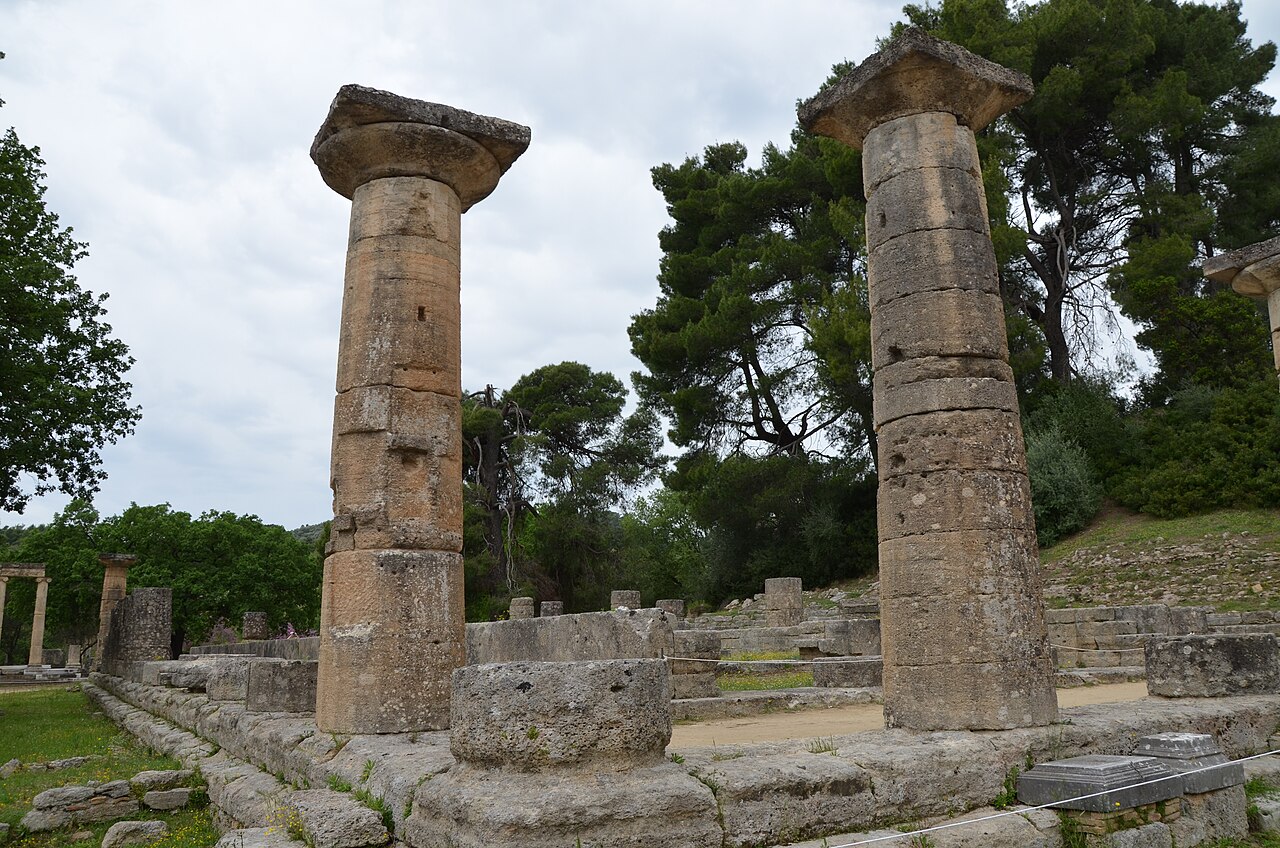
The Olympic flame lighting ceremony takes place at the altar before the Temple of Hera, the Heraion, in the archaeological site of Ancient Olympia. The oldest temple of the sanctuary, dedicated to the goddess Hera, provides the sacred backdrop, and the flame is kindled at the altar just in front of its worn Doric columns, at the very heart of the birthplace of the Olympic Games.
It is at the Temple of Hera. The ceremony is held at the Heraion, the oldest temple of Olympia, so it draws on the sanctuary’s ancient worship.
It is at the altar. The flame is kindled at the altar before the temple, so the ritual has a fixed and sacred spot.
It is in the birthplace of the Games. The Heraion stands at the heart of Olympia, so the flame is born where the Games began, as the guide to the Temple of Hera describes.
How is the Olympic flame lit?
The Olympic flame is lit using the sun’s rays, focused by a parabolic mirror. The high priestess holds a torch at the focal point of the concave mirror, and the concentrated sunlight ignites it. This method, drawing the flame directly from the sun, gives the fire its purity and its symbolic link to the light of the heavens, so no ordinary fire is ever used to kindle the Olympic flame.
The sun provides the fire. A parabolic mirror focuses the sun’s rays to light the torch, so the flame comes from the sun itself.
The mirror concentrates the light. The concave mirror gathers sunlight to a single burning point, so the torch ignites at its focus.
No ordinary fire is used. The flame is always drawn from the sun, so its purity and symbolism are preserved.
Who lights the Olympic flame at Olympia?
The Olympic flame is lit by an actress in the role of the high priestess of Hera, supported by a group of others playing the priestesses. Dressed in pleated robes evoking ancient Greece, the high priestess leads the ritual, calls upon the god Apollo, and kindles the flame at the altar. The ceremony is performed by trained performers, so it recreates the solemn character of an ancient rite.
A high priestess leads it. An actress in the role of the high priestess lights the flame, so the ritual has a clear central figure.
Priestesses attend her. A group of performers play the accompanying priestesses, so the ceremony has the dignity of an ancient rite.
They wear ancient dress. The performers wear robes evoking ancient Greece, so the ritual looks the part of a timeless ceremony.
What happens during the flame lighting ceremony?
During the ceremony the high priestess invokes Apollo, the god of light and the sun, to send his rays, then kindles the flame at the parabolic mirror. The flame is placed in an urn and carried in procession to the ancient stadium, where the first torchbearer receives it. An olive branch is presented, and the flame then begins its torch relay from Olympia towards the host city of the Games.
Apollo is invoked. The high priestess calls on Apollo, god of light, to send the sun’s rays, so the ritual appeals to the god of the sun.
The flame is kindled and carried. The flame is lit and placed in an urn, then carried to the stadium, so the fire moves through the sanctuary.
The first torchbearer receives it. In the stadium the flame passes to the first runner, so the torch relay begins at Olympia.
What is the torch relay from Olympia?
The torch relay carries the Olympic flame from Olympia to the host city of the Games, passed from torchbearer to torchbearer along the way. Beginning in the ancient stadium, the relay travels first through Greece and then, for the modern Games, on to the host country, keeping the flame alight throughout. The relay ends at the opening ceremony, where the flame lights the cauldron to open the Games.
It begins at Olympia. The relay starts in the ancient stadium with the first torchbearer, so the flame’s journey opens at its birthplace.
It travels to the host city. Torchbearers carry the flame onward to the host of the Games, so the fire links Olympia to the world.
It opens the Games. The relay ends by lighting the cauldron at the opening ceremony, so the flame from Olympia begins each Olympics.
What is the ancient connection of the flame ceremony?
The flame ceremony draws on the ancient worship of Hera at Olympia and on the women’s Heraean Games held in her honour. The Temple of Hera, the oldest in the sanctuary, was the centre of her cult, tended by a college of women. The modern ceremony, with its priestesses at the Heraion, evokes this ancient female ritual, binding the flame to the deep history of the sanctuary and its Games.
It recalls Hera’s worship. The ceremony at the Heraion evokes the ancient cult of Hera, so it draws on the sanctuary’s oldest rites.
It echoes the Heraean Games. The women’s Games in Hera’s honour lie behind the priestesses’ ritual, so the ceremony has a female heritage.
It roots the flame in history. The link to ancient worship binds the modern flame to Olympia’s past, so the ceremony is more than a modern invention.
When does the Olympic flame lighting ceremony happen?
The Olympic flame lighting ceremony happens before every Olympic Games, both summer and winter, taking place some months ahead of the opening. It is held on a set date in the run-up to each Games, not every year, so it occurs only when a Games approaches. The flame is then relayed over the following weeks to reach the host city in time for the opening ceremony.
It precedes every Games. The ceremony is held before each summer and winter Olympics, so it recurs with the Games rather than yearly.
It is months ahead. The flame is lit some months before the opening, so the relay has time to reach the host city.
It follows a set schedule. Each ceremony falls on a planned date before its Games, so it is a fixed part of the Olympic calendar.
Can you watch the Olympic flame lighting ceremony?
Yes, the Olympic flame lighting ceremony is open to the public and free to attend, held in the open at the archaeological site of Olympia. Crowds gather to watch the priestesses and the lighting at the Temple of Hera, and the ceremony is broadcast around the world. On any ordinary day, when no ceremony is taking place, visitors can still stand at the altar where the flame is kindled.
It is open to the public. The ceremony is free to attend in the open site, so spectators gather to watch it.
It is broadcast worldwide. The lighting is shown around the world, so millions see the ceremony at the Heraion.
The altar is always there. On other days visitors see the altar where the flame is lit, so the setting is open to everyone, as the full Ancient Olympia guide describes.
Why is the Olympic flame lit at Olympia?
The Olympic flame is lit at Olympia because it is the birthplace of the Olympic Games, held there for nearly twelve centuries in honour of Zeus. Lighting the flame at the ancient sanctuary, and at the altar of its oldest temple, links every modern Games directly to their ancient origin. The flame carries this history from Olympia to the world, making the sanctuary the symbolic home of the Olympic movement.
It is the birthplace of the Games. Olympia is where the Olympics began, so the flame is fittingly lit there.
It links ancient and modern. Lighting the flame at Olympia ties the modern Games to their origin, so history is carried to each Olympics.
It makes Olympia the flame’s home. The ceremony keeps the sanctuary at the heart of the Olympic movement, so Olympia remains its symbolic home.
What does the Olympic flame symbolise?
The Olympic flame symbolises the light, purity and continuity of the Olympic spirit, and the link between the ancient and modern Games. Drawn from the sun at Olympia, it represents the pursuit of excellence and the peace of the Games, and its unbroken journey from the birthplace of the Olympics to the host city carries the ideals of the movement across the world.
It stands for the Olympic spirit. The flame represents excellence, peace and the ideals of the Games, so it is more than a fire.
It is drawn from the sun. Kindled from the sun’s rays, the flame carries a sense of purity and light, so its origin gives it meaning.
It links past and present. The flame’s journey from Olympia to the host city ties the modern Games to their ancient roots, so it embodies continuity.
How did the Olympic flame ceremony begin?
The Olympic flame was revived for the modern Games in the early twentieth century, with the lighting ceremony at Olympia and the torch relay introduced for the Games held in Berlin. Drawing on the ancient Greek tradition of sacred fire and on the sanctuary’s history, the founders of the modern ceremony created a ritual that has opened every Olympic Games since, growing into one of the most recognised events in world sport.
It was a modern revival. The lighting ceremony and relay were created for the modern Games, so the ritual is younger than it looks.
It drew on ancient fire. The Greeks kept sacred fires at Olympia, so the modern ceremony revived an ancient idea.
It has opened every Games since. The ceremony became a fixture of the Olympics, so it now precedes each Games as a tradition.
What happens if the sun does not shine at the ceremony?
If clouds hide the sun during the ceremony, the flame cannot be kindled from the mirror at that moment, so a backup flame is prepared in advance. During the rehearsal on a sunny day before the ceremony, a flame is lit from the sun and kept safe, ready to be used if the weather fails on the day. In this way the sacred origin of the flame from the sun is always preserved.
A backup flame is kept. A flame lit from the sun at the rehearsal is stored, so the ceremony has a reserve.
It guards against clouds. If the sun is hidden on the day, the reserve flame is used, so the ceremony still proceeds.
The sun’s origin is preserved. Because the backup too is lit from the sun, the flame’s sacred source is never compromised.
What is the olive branch in the ceremony?
The olive branch presented during the flame ceremony recalls the ancient Olympic prize, the wreath of wild olive given to victors of the Games. At the lighting, an olive branch is offered as part of the ritual, linking the modern flame to the ancient reward of the athletes. The olive, sacred at Olympia, was cut from a tree beside the Temple of Zeus to crown the champions.
It recalls the ancient prize. The olive branch echoes the wreath given to Olympic victors, so it ties the ceremony to the Games’ history.
It is offered in the ritual. An olive branch features in the lighting, so the ancient symbol has a place in the modern rite.
The olive was sacred. Olive from a sacred tree crowned the champions at Olympia, so the branch carries deep meaning, as the guide to the ancient Olympic Games describes.
How does the flame travel to the host city?
The flame travels from Olympia to the host city by torch relay, passed from runner to runner, and, for distant hosts, carried by air in special safety lamps that keep a portion of the original flame alight. The relay crosses land and sea over many days or weeks, but the flame that reaches the opening ceremony is always kept burning from the fire first lit at Olympia.
It passes between torchbearers. Runners carry the flame hand to hand, so it moves overland by relay.
It flies in safety lamps. For distant hosts, part of the flame travels by air in special lamps, so it crosses the world unbroken.
It stays lit from Olympia. The flame at the opening is kept alight from the original fire, so its link to Olympia is never broken.
What is the difference between the Olympic flame and the torch?
The Olympic flame is the fire itself, kindled from the sun at Olympia and kept burning throughout the relay and the Games. The torch is the handheld object that carries the flame during the relay, and many identical torches are used, one for each torchbearer, each lit from the one before. So the flame is the single continuous fire, while the torches are the many vessels that carry it.
The flame is the fire. The Olympic flame is the continuous fire from Olympia, so it is the sacred element.
The torch is the carrier. Each torchbearer holds a torch lit from the last, so the torches are the vessels of the flame.
Many torches, one flame. Countless torches carry a single unbroken flame, so the fire endures while the torches change.
What is the atmosphere at the flame lighting ceremony?
The atmosphere at the flame lighting ceremony is solemn and moving, blending the dignity of an ancient rite with the excitement of the coming Games. Crowds gather quietly among the ancient ruins, the priestesses process in their flowing robes, and a hush falls as the flame is kindled from the sun. The setting, in the green sanctuary where the Games began, gives the ceremony a rare and timeless power.
It is solemn and dignified. The ritual unfolds with the gravity of an ancient ceremony, so the mood is reverent.
It is charged with anticipation. The lighting marks the approach of the Games, so excitement runs beneath the calm.
The setting adds power. The ancient ruins and green sanctuary frame the rite, so the atmosphere is unforgettable.
Who attends the Olympic flame lighting ceremony?
The Olympic flame lighting ceremony is attended by Olympic officials, representatives of the host country, dignitaries and the media, alongside members of the public who gather to watch. The first torchbearer, often a distinguished athlete, receives the flame, and the ceremony is filmed for a worldwide audience. So the event draws both a select gathering and a vast global viewership.
Officials and dignitaries attend. Olympic and host-country representatives gather for the ceremony, so it has an official character.
The public watches too. Members of the public come to see the lighting, so the open site fills with spectators.
The world sees it. The ceremony is broadcast globally, so a vast audience shares the moment.
How does the ceremony connect to the Temple of Hera?
The ceremony connects to the Temple of Hera because it is held at the altar before this temple, the oldest at Olympia and the centre of the ancient worship of the goddess. Choosing the Heraion, tended in antiquity by a college of women, gives the modern ceremony its priestesses and its female ritual character, so the flame is born at a temple deeply tied to women’s worship and to the earliest history of the sanctuary.
It uses the oldest temple. The Heraion is the oldest at Olympia, so the ceremony draws on the sanctuary’s earliest rites.
It echoes women’s worship. The temple was tended by women in antiquity, so the priestesses of the ceremony reflect that heritage.
It roots the flame in the sanctuary. Held at the Heraion, the ceremony ties the flame to Olympia’s deep past, as the guide to the Temple of Hera describes.
Is the Olympic flame lit for both summer and winter Games?
Yes, the Olympic flame is lit at Olympia for both the summer and the winter Olympic Games. Each Games, whatever the season, begins with its own lighting ceremony at the Temple of Hera and its own torch relay to the host city. So the ceremony takes place at Olympia more often than every four years, marking the approach of each summer and each winter Olympics in turn.
It serves both Games. Summer and winter Olympics each have a lighting, so the ceremony is held for both.
Each Games has its own. Every Games begins with its own ceremony and relay, so the ritual repeats for each.
It recurs often. Because both seasons are served, the ceremony takes place at Olympia more than once every four years.
Frequently Asked Questions About the Olympic Flame Lighting Ceremony
Is the Olympic flame ceremony ancient or modern?
The Olympic flame lighting ceremony is a modern creation, introduced for the Games of the twentieth century, but it draws deeply on ancient tradition. The ancient Greeks kept sacred fires burning at Olympia, and the modern ceremony revived the idea, staging it at the Temple of Hera with priestesses and the sun’s flame. So it blends a modern ritual with genuine echoes of the ancient sanctuary.
Because it is a modern ceremony rooted in ancient practice, the flame lighting bridges the old and new Olympics, giving the modern Games a link to their origin.
What role does Apollo play in the ceremony?
Apollo plays a central symbolic role in the flame ceremony, for as the god of light and the sun he is called upon by the high priestess to send the rays that kindle the flame. Although the sanctuary of Olympia was dedicated to Zeus and the temple to Hera, it is Apollo, the sun god, whom the ritual invokes, since the flame is drawn from the light of the sun.
Because the flame comes from the sun, the ceremony invokes Apollo as the god of light, giving the ritual its poetic and religious meaning.
How long does the Olympic flame ceremony last?
The Olympic flame lighting ceremony itself lasts about an hour, from the entry of the priestesses to the departure of the first torchbearer. It includes the invocation, the lighting of the flame, the procession to the stadium and the handing over of the torch. Spectators gather beforehand, and the ceremony, though short, is a solemn and memorable spectacle at the heart of Ancient Olympia.
Because the ceremony is compact but rich in ritual, it makes a moving spectacle for the crowds who gather at Olympia to witness the birth of the flame.
What does the high priestess say at the ceremony?
At the ceremony the high priestess speaks an invocation calling upon Apollo, the god of light and the sun, to send his rays and kindle the flame. The words, composed in a solemn, poetic style, address the god and the sun and consecrate the moment of lighting. This invocation gives the ritual its religious character and links the modern ceremony to the ancient worship of the gods at Olympia.
Because the high priestess calls on Apollo to send the sun’s light, her invocation gives the lighting of the flame its sacred and poetic meaning.
Can visitors get close to the flame ceremony?
Visitors can attend the flame lighting ceremony and watch from the public areas of the archaeological site, though the immediate space around the altar and the priestesses is reserved for the participants and officials. Those who wish to see the ceremony arrive early to find a good vantage point among the ruins. On ordinary days, when no ceremony is held, visitors walk freely to the altar itself.
Because the ceremony draws crowds but keeps the altar area for participants, arriving early gives visitors the best view of the lighting among the ancient ruins.
Why is the flame lit months before the Games?
The flame is lit months before the Games so that the torch relay has time to carry it from Olympia to the host city, often across great distances and many countries. The long relay, passing between thousands of torchbearers, is itself a celebration that builds anticipation for the Games. Lighting the flame well in advance ensures it arrives at the host city in time for the opening ceremony.
Because the relay from Olympia to the host city takes weeks, the flame is lit months ahead so it can complete its long journey in time to open the Games.
Has the Olympic flame ever gone out?
The Olympic flame has occasionally been extinguished by wind or rain during the torch relay, but it is always relit from a backup flame kept from the original lighting at Olympia. Because a reserve of the sacred fire is carefully preserved, any flame put out along the way is rekindled from the same source, so the unbroken link to the fire first lit at the Temple of Hera is never lost.
Because a backup of the original flame is always kept, an extinguished torch is relit from the same sacred fire, so the flame’s connection to Olympia endures throughout the relay.
What is the parabolic mirror used in the ceremony?
The parabolic mirror is a curved, concave mirror that gathers the sun’s rays and focuses them to a single burning point. Held toward the sun by the high priestess, it concentrates enough heat at its focus to ignite the torch placed there. This simple but elegant instrument is the means by which the Olympic flame is drawn directly from the sun, giving the ceremony its purity and its timeless character.
Because the concave mirror focuses sunlight to a burning point, it lets the high priestess kindle the flame straight from the sun, the heart of the whole ceremony.
Is the flame lighting ceremony worth seeing at Olympia?
Yes, for those able to time a visit to it, the Olympic flame lighting ceremony is a moving and unforgettable spectacle, staged in the ruins where the Games began. It happens only before each Olympics, so most visitors see the setting rather than the ceremony itself. Even so, standing at the altar of the Temple of Hera, where the flame is born, is a highlight of any visit to Olympia.
Because the ceremony is rare but the altar is always open, most visitors experience the sacred spot where the flame is lit rather than the lighting itself, still a memorable part of a visit to Olympia.
Where does the flame go after it leaves Olympia?
After the flame leaves Olympia it travels by torch relay first across Greece, ending at a handover ceremony in Athens, and then on to the host country of the Games. There it is carried the length and breadth of the nation by thousands of torchbearers before reaching the host city, where it lights the cauldron at the opening ceremony to mark the start of the Olympic Games.
Because the relay carries the flame from Olympia through Greece and across the host nation, its long journey builds anticipation until it opens the Games at the host city.