
The Palaestra and Gymnasium at Ancient Olympia were the training grounds where the athletes of the Olympic Games prepared for their contests. The Palaestra was a fine colonnaded building for the combat sports of wrestling, boxing and the pankration, its sanded courtyard ringed by rooms where athletes oiled, dusted and washed. The larger Gymnasium beside it gave runners and throwers the long open spaces they needed. Together these buildings, set beside the river Kladeos just west of the sacred Altis, show how the ancient athletes trained for the greatest festival of the Greek world. This guide covers both training grounds and what survives today.
This guide covers the Palaestra and Gymnasium at Olympia in full: their purpose, the architecture of the Palaestra and its rooms, the great Gymnasium, and what you see today. Read it beside the full Ancient Olympia guide and the guide to the ancient Olympic Games the athletes trained for.
What is the Palaestra at Olympia?
The Palaestra at Olympia is the ancient training ground where athletes prepared for the combat events of the Olympic Games. A nearly square colonnaded building west of the sacred Altis, near the river Kladeos, it centred on a sanded courtyard ringed by a Doric colonnade, with rooms around it for oiling, dusting, undressing and washing. Wrestlers, boxers and pankration fighters trained here.
It was a training ground. The Palaestra was where athletes trained for the combat sports, so it was central to their preparation.
It was colonnaded. A Doric colonnade ringed its sanded courtyard, so it gave a sheltered space for practice.
It served the combat sports. Wrestlers, boxers and pankration fighters trained here, so it suited the sports needing enclosed space.
What was the Palaestra used for?
The Palaestra was used for training in the combat sports of the ancient Olympic Games: wrestling, boxing and the pankration. Its enclosed, sanded courtyard suited these events, which needed a soft, level surface and shelter. Around the courtyard, rooms let athletes oil and dust their bodies, undress and wash, so the Palaestra provided everything the combat athletes needed to train.
It trained fighters. Wrestlers, boxers and pankration athletes practised here, so it focused on the combat events.
Its courtyard suited them. The sanded, level courtyard gave a soft surface for grappling, so it fitted the combat sports.
Its rooms served the athletes. Spaces for oiling, dusting and washing surrounded the court, so athletes prepared their bodies there.
What did the Palaestra look like?
The Palaestra was a nearly square building about sixty-six metres on each side, built around a central open courtyard ringed by a Doric colonnade of seventy-two columns. The courtyard, covered in fine sand, was the main training space. The columns and lower walls were stone, the upper walls brick and the roof of wood, and rooms of different purposes opened off the surrounding portico.
It was square in plan. The building measured about sixty-six metres each way, so it formed a large enclosed square.
A colonnade ringed the court. Seventy-two Doric columns surrounded the sanded courtyard, so a sheltered portico framed the training space.
Rooms opened off it. Chambers of various uses lined the portico, so the building served many needs around the central court.
What were the rooms of the Palaestra for?
The rooms around the courtyard of the Palaestra served the athletes’ preparation. One room, the elaiothesion, was for anointing the body with olive oil; another, the konisterion, for dusting it with fine powder; others were for undressing and for washing. These rooms, together with the sanded courtyard, gave the combat athletes everything they needed to train and to care for their bodies.
One room held the oil. The elaiothesion was where athletes anointed themselves with olive oil, so it prepared them for training.
Another held the dust. The konisterion was for dusting the oiled body with powder, so athletes gripped better in wrestling.
Others served washing. Rooms for undressing and washing completed the building, so athletes cared for their bodies there.
What was the Gymnasium at Olympia?
The Gymnasium at Olympia was the large training ground beside the Palaestra, built for the athletes who needed long open spaces: the runners, the javelin throwers and the discus throwers. A great rectangular enclosure ringed by colonnades, it gave a covered track the length of the stadium, so athletes practised the running and throwing events under shelter whatever the weather.
It served runners and throwers. The Gymnasium suited the events needing long space, so runners and throwers trained there.
It had a full-length track. Its colonnade ran the length of the stadium, so athletes practised the race distance under cover.
It lay by the Palaestra. The Gymnasium adjoined the Palaestra, so the two training grounds worked together.
Where are the Palaestra and Gymnasium at Olympia?
The Palaestra and Gymnasium stand together in the western part of the archaeological site of Olympia, just outside the sacred Altis and near the river Kladeos. They lie close to the Workshop of Pheidias, on the walk between the entrance and the temples, so visitors pass through the training grounds early on their way into the heart of the sanctuary.
They lie west of the Altis. The training grounds stand just outside the sacred precinct, so they border the temples.
They sit by the Kladeos. The buildings lie near the river Kladeos, so they occupy the green western edge of the site.
They come early on the walk. Visitors pass them on the way in, so the training grounds open the tour of Olympia.
What can you see of the Palaestra today?
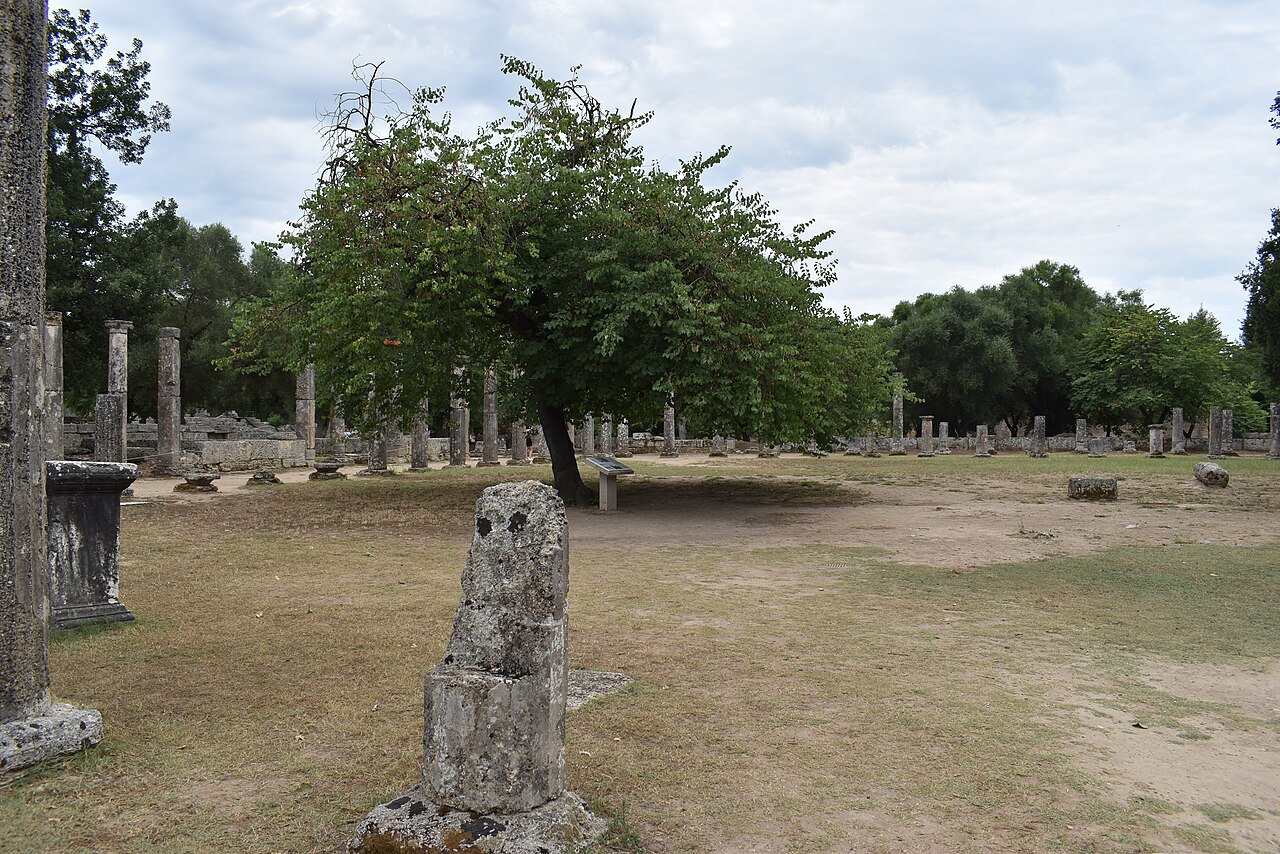
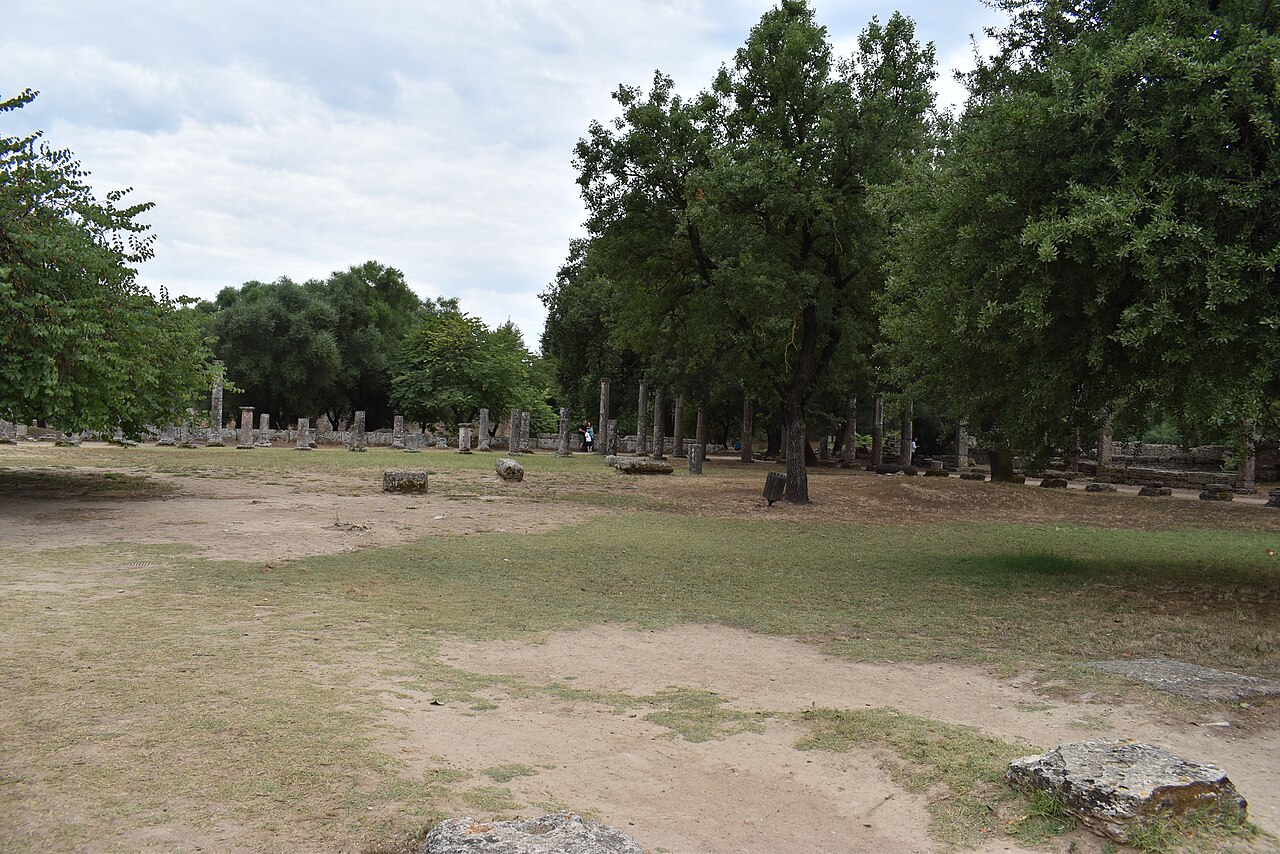
Today you see the clear plan of the Palaestra, its foundations and several re-erected columns of the Doric colonnade around the courtyard. The rows of standing columns give a strong sense of the training ground, and the outline of the surrounding rooms can be traced. Set among trees near the river, the Palaestra is one of the most evocative and photogenic monuments at Olympia.
Its plan is clear. The foundations and courtyard are easily read, so visitors picture the training ground.
Columns stand again. Several columns of the colonnade have been re-erected, so the Palaestra shows its form.
It is photogenic. The standing columns among the trees make a fine sight, so the Palaestra rewards a photograph, as the full Ancient Olympia guide describes.
Frequently Asked Questions About the Palaestra at Olympia
What is the difference between the Palaestra and the Gymnasium?
The Palaestra and the Gymnasium at Olympia were both training grounds, but for different events. The Palaestra was a smaller, square building for the combat sports of wrestling, boxing and the pankration, which needed enclosed space. The Gymnasium was a much larger open enclosure for the runners and throwers, who needed long space to practise. Together they served all the athletes of the Games.
Because combat sports need enclosed space and running needs length, the two buildings divided the athletes’ training between them.
What does the word palaestra mean?
The word palaestra comes from the Greek for wrestling, and a palaestra was a wrestling school or training ground. Every Greek city had one, and the Palaestra at Olympia was the training ground for the combat athletes of the Olympic Games. The word survives in modern languages to describe a place of exercise, a legacy of the ancient Greek athletic tradition.
Because the palaestra was above all a place for wrestling, its name captures the central role of combat sport in Greek athletic life.
Is the Palaestra worth seeing at Olympia?
Yes, the Palaestra is well worth seeing at Olympia. Its rows of re-erected columns around the old training courtyard are among the most photogenic ruins on the site, and it brings the daily life of the ancient athletes vividly to mind. Set near the river on the walk into the sanctuary, it is an easy and rewarding stop early in a visit to Olympia.
Its standing columns and its link to the athletes’ training make the Palaestra one of the most rewarding and evocative monuments at Olympia.
How did athletes train at the Palaestra?
Athletes trained at the Palaestra by practising the combat sports in its sanded courtyard, coached and supervised by trainers. They rubbed their bodies with olive oil, dusted themselves with fine powder for grip, and worked at wrestling, boxing and the pankration. After training they scraped off the oil and dust with a curved bronze tool, the strigil, and washed, so the building supported the whole daily routine of the athlete.
Because the Palaestra combined a training courtyard with rooms for oiling, dusting and washing, it supported the ancient athlete’s whole day of preparation for the Games.
When was the Palaestra at Olympia built?
The Palaestra at Olympia was built in the third century BC, in the Hellenistic period, later than the great classical temples of the sanctuary. Its construction reflected the growing importance of organised athletic training, and together with the neighbouring Gymnasium it gave the athletes of the Olympic Games dedicated facilities to prepare for their contests in the centuries when the Games were at their height.
Because it was built in the Hellenistic age, the Palaestra shows how athletic training at Olympia grew more organised and specialised over the long life of the ancient Olympic Games.