
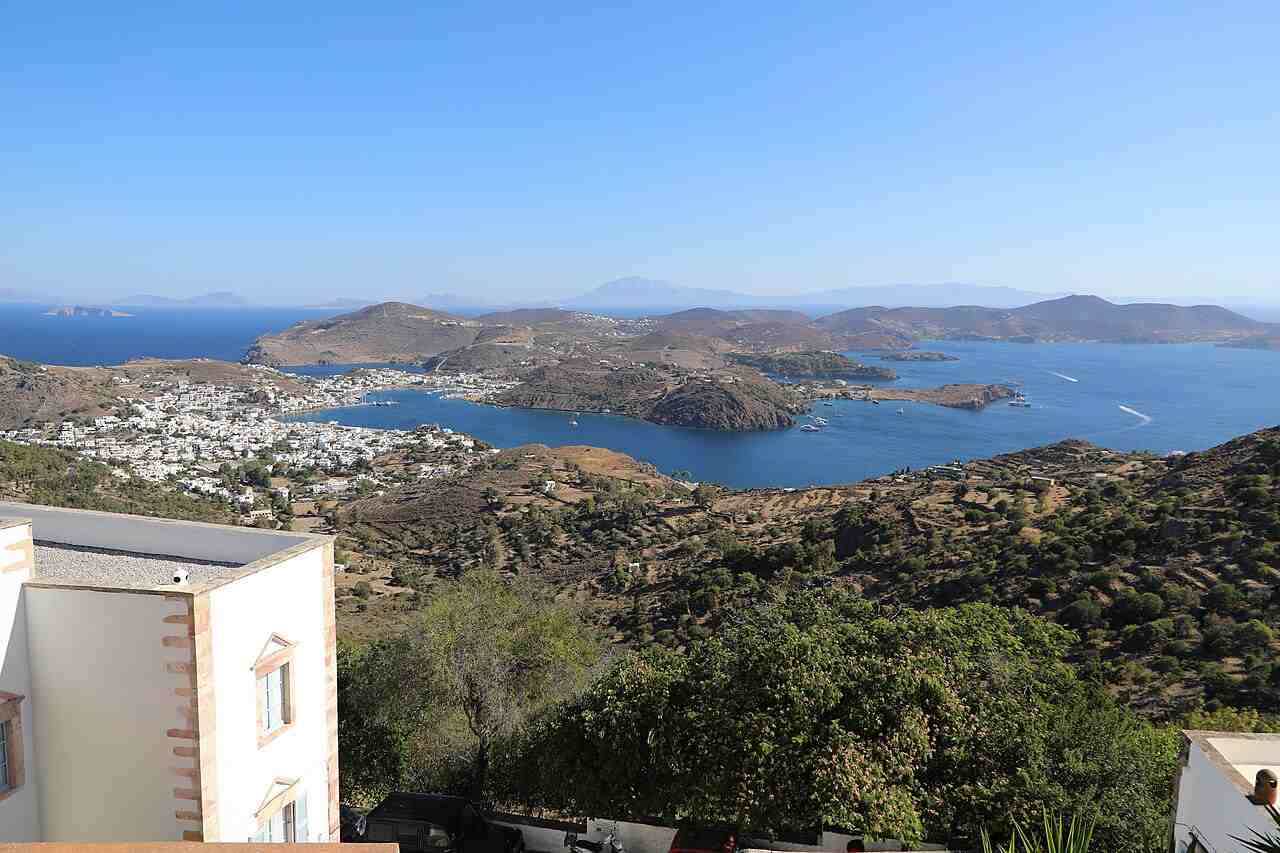
Patmos is a small, sacred island in the northern Dodecanese, famous worldwide as the place where Saint John wrote the Book of Revelation. For such a compact island, barely 34 square kilometres and home to around 3,000 people, it packs in a remarkable range of things to do. From a UNESCO-listed monastery and a holy cave to whitewashed hill towns, clear-water beaches, coastal hikes and boat trips out to near-empty islets. Plan the whole trip with Greece Tours.
This guide covers the best things to do in Patmos: its spiritual monuments, the towns of Chora and Skala. The finest beaches, boat trips, hiking, diving, watersports and local food, along with the easiest day trips. Read it beside the full Patmos travel guide and the deeper guide to the Monastery of Saint John and the Cave of the Apocalypse.
What are the best things to do in Patmos?
The best things to do in Patmos are visiting the UNESCO Monastery of Saint John and the Cave of the Apocalypse, exploring hilltop Chora and the port of Skala, swimming at Psili Ammos and Grikos, taking a boat trip to.
Patmos rewards a slow, varied visit, and its attractions divide neatly into the spiritual and the natural. Its headline sights are the fortress-like Monastery of Saint John the Theologian and the nearby Cave of the Apocalypse. Both inscribed on the UNESCO World Heritage list in together with the medieval town of Chora that surrounds them. These three sites cluster on one hillside above the port. Most visitors give them a single full morning before the day warms up and the cruise groups arrive. Then spend the afternoon by the water.
Beyond the monuments, the island offers a genuine mix of experiences that fill anything from two days to a week. You can wander Chora’s whitewashed lanes and climb to its viewpoints for sunset, people-watch over seafood on the Skala waterfront. Swim at sandy Psili Ammos and family-friendly Grikos, snorkel in glass-clear coves. Board a boat to the offshore islets of Arki and Marathi. Walkers find old monopatia, the stone paths that once linked every settlement, threading between the towns, the beaches and the high ridges.
The pleasures here are quiet ones. A good visit balances the sacred sights with beach time, a boat trip and long, unhurried meals on candlelit terraces. The sections below take each of the island’s best things to do in turn. Grouped by theme. You can build a day or a whole week around whichever mix of history, swimming, walking and food appeals to you most.
Why you visit the Monastery of Saint John and the Cave of the Apocalypse?
You visit them because they are the heart of Patmos and a UNESCO World Heritage Site: the 11th-century Monastery of Saint John crowns Chora with its treasury of icons and manuscripts, while the Cave of the Apocalypse below is.
The Monastery of Saint John the Theologian, founded in 1088 by the blessed Christodoulos under the Byzantine emperor Alexios I Komnenos, dominates the island’s skyline like a castle. Its tall, buttressed walls were raised against the pirates and Seljuk raiders that threatened the medieval Aegean. Behind them lies a warren of interconnecting courtyards, chapels, arcades and roof terraces. At its heart, the treasury-museum holds Byzantine icons of the Cretan school, jewelled crosses. Embroidered vestments and rare manuscripts, some dating back to 1073, making it one of the richest monastic collections in Greece.
A short walk below, on the road between Skala and Chora, the Cave of the Apocalypse is a small. Dim grotto where tradition holds that Saint John sheltered around AD 95 to 97 and received his visions, dictating the Book of Revelation to his disciple Prochoros. Guides point out the hollow in the rock said to have served as his pillow. The ledge he used to rise. The triple cleft in the ceiling read as a symbol of the Holy Trinity. Silver, icons and lamps mark these spots, and the atmosphere is hushed and moving even for non-religious visitors.
Both are working religious sites with a strict dress code. Bring a layer that covers shoulders and knees. Keep your voice low, and arrive early, ideally soon after opening, to beat the mid-morning cruise crowds. Entry to the museum and the cave each costs only euros. They are covered in full in the dedicated guide to the Monastery of Saint John and the Cave of the Apocalypse, which sets out the history, hours and exactly how to reach them from the port.
What is there to do in Chora, the capital of Patmos?
In Chora you can wander the whitewashed maze of lanes around the monastery, visit grand 17th-century captains’ mansions and small churches, browse icon and craft shops, walk up to the old windmills, and climb to the viewpoints for one of.
Chora is one of Greece’s most photogenic hill towns, a tight cluster of whitewashed houses, shuttered wooden doors and flower-filled courtyards wrapped around the base of the monastery. Behind many of the plain facades stand grand mansions built by wealthy sea captains and merchants during the island’s 17th- and 18th-century golden age, when Patmos grew rich on trade and its monastery school drew scholars from across the Greek world. A few of these archontika are open as house-museums, their carved ceilings, painted rooms and antique furniture showing how the island’s elite once lived.
The real pleasure of Chora, though, is simply getting lost in its car-free labyrinth of lanes. Which were deliberately built as a confusing maze to slow down any pirates who breached the walls. You can pause at tiny whitewashed chapels, of which the town has dozens, browse shops selling hand-painted religious icons. Ceramics, textiles and local thyme honey. Stop for a Greek coffee or a chilled ouzo in a hidden square. Above the town, a short uphill walk leads to a row of restored stone windmills that once ground the island’s grain and now frame sweeping views over Patmos and the surrounding sea.
Come late afternoon, climb to one of Chora’s terraces or the walls near the monastery to watch the sun drop over the Aegean while the town’s bells mark the hour and the whitewash turns gold. Then stay on for dinner on a candlelit terrace, one of the island’s most romantic experiences. Chora sits about 4 kilometres above the port, an easy 15-minute drive, a short bus ride. Or a steeper 30 to 40 minute walk up the old path. It rewards visits both by day, for the sights, and after dark, for the atmosphere.
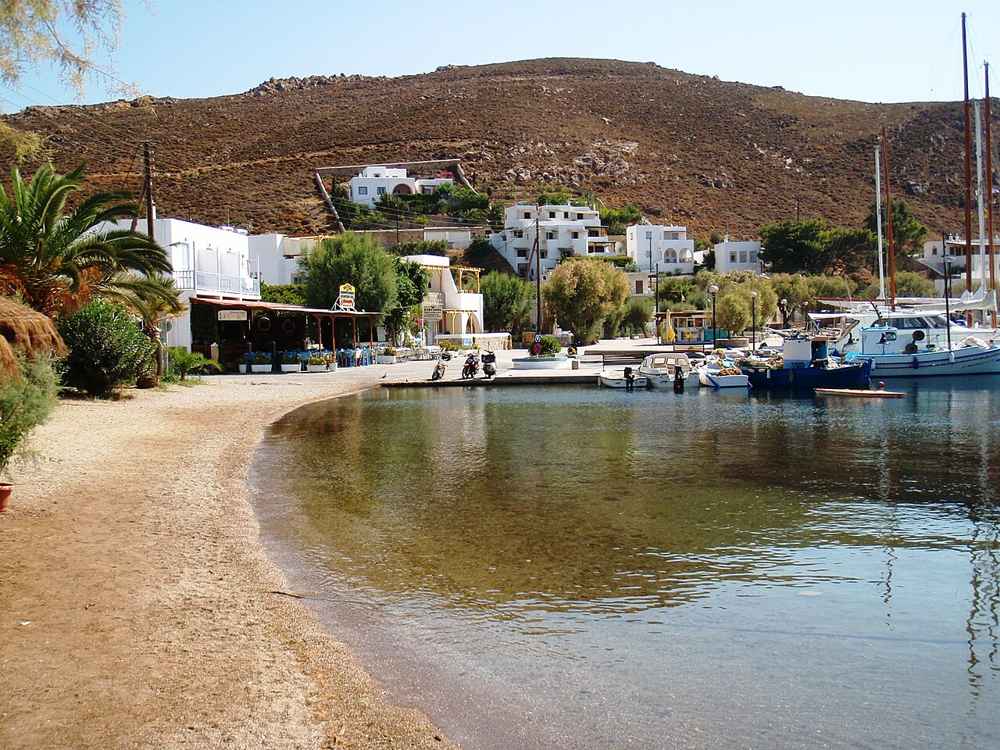
What can you do in Skala, the port of Patmos?
In Skala, the island’s port, you can stroll the lively waterfront, eat fresh fish at seaside tavernas, join the evening volta, visit small folklore and archaeological collections, climb to the ancient acropolis on Kastelli hill, and arrange boat trips, car.
Skala is where every ferry and cruise tender arrives. It is the island’s practical hub, yet it keeps a relaxed. Low-rise charm, with no building allowed to rise higher than the monastery on the hill above. Whitewashed waterfront cafes, bakeries, ouzeries and seafood tavernas line the curving quay. Making it a fine place to settle in over a long lunch and watch the fishing boats and yachts come and go. Each evening, locals and visitors alike join the volta, the unhurried stroll along the harbour front. Dressed up and greeting friends, before sitting down to dinner as the lights come on across the bay.
The town has a handful of low-key cultural stops that put the island’s past in context. Including small folklore and archaeological displays and several handsome churches, among them the 17th-century Agia Paraskevi. Rising directly behind Skala is the Kastelli hill, where the scant remains of the ancient acropolis of Patmos. Walls and foundations from the classical and Hellenistic town, reward a short uphill walk with wide views over the port, the bay and the boats below. It is an easy way to add a little ancient history to a day otherwise focused on the Byzantine monuments.
Skala is also the place where you organise everything else: this is the base for car and scooter rental. For taxi-boats out to beaches like Psili Ammos. For the group boat trips, sunset cruises and diving excursions that leave from the harbour. With the greatest concentration of hotels, rooms, restaurants, shops and travel agencies on the island, it makes a convenient and sociable base for first-time visitors. Especially those arriving without their own transport. It stays quietly lively into the evening without ever becoming raucous.
Which beaches you visit in Patmos?
The best beaches in Patmos are sandy Psili Ammos in the south, reached on foot or by taxi-boat, family-friendly Grikos with its Kallikatsou rock, sandy Agriolivado near Skala, colourful-pebbled Lambi in the north, and a scatter of quiet coves reachable.
Patmos has famously clear, clean water and a beach to suit every mood, most of them small and low-key rather than developed resorts. Psili Ammos, in the wild south, is the island’s most celebrated, a stretch of soft golden sand backed by tamarisk trees and served by a single, well-loved taverna. It is reached either by a 20-minute walk over the headland from where the road ends. Or by taxi-boat from Skala. The small effort of getting there keeps it relatively uncrowded and gives it a wild, end-of-the-world feel that regulars return for year after year.
On the east coast, Grikos is a sheltered, gently shelving sandy bay with good facilities, tavernas, watersports and the distinctive Kallikatsou rock. A huge natural monolith rising from the shallows that you can snorkel around, all of which makes it a favourite with families. Closer to the port, Agriolivado and Kambos are easy sandy beaches with calm water and tavernas, with Kambos also offering paddleboards, kayaks and windsurfing on breezier afternoons. In the north, Lambi is famous for its beach of multicoloured volcanic pebbles polished smooth by the sea. For the excellent fish taverna behind it, though taking the stones home is discouraged to preserve the shore.
For more solitude, the southern and eastern coasts hide a scatter of small coves reachable only by boat or a short scramble. Where the water is glass-clear and there are no facilities at all. You bring water, shade and snorkelling gear. A taxi-boat from Skala, or a chartered day on the water, is the best way to string several of these coves together into one long, blissful swimming day. Whichever beaches you choose, note that the summer meltemi wind can whip up the exposed shores, so on breezy days head for the sheltered, south- and east-facing bays.
What boat trips and cruises can you take from Patmos?
From Patmos you can take half-day boat trips to hidden southern coves and Psili Ammos, full-day charters to the offshore islets of Arki and Marathi or neighbouring Lipsi, and romantic sunset cruises from Skala.
The sea is central to any visit. Getting out on it is one of the best things to do in Patmos, since much of the island’s finest coast is invisible from the road. Half-day group boat trips typically loop along the shore with stops for swimming and snorkelling at coves that road-bound visitors never reach. Including the wild beaches of the south and small inlets with water so clear the boat seems to float on air. These trips are an easy, affordable way to see a side of Patmos most people miss, and they usually include time at a sandy beach for a proper swim.
For more freedom, full-day private charters let you and your group set the route entirely, combining a remote swim, a lunch stop and a crossing to the tiny. Near-untouched islets of Arki and Marathi off the north coast, where a couple of family tavernas serve fresh-caught fish beside impossibly turquoise water. The relaxed island of Lipsi, only 30 to 45 minutes away, is another rewarding boat-trip destination, with its own string of quiet coves and friendly harbour. Skippers who know the coast will always steer you toward the calmest, clearest bays for the conditions on the day.
Sunset cruises leave Skala for a gentle turn along the coast with a drink in hand as the light softens and the monastery glows on its hill, an intimate outing that couples and honeymooners especially enjoy. Whatever the trip, bring a light layer for the sea breeze, sun protection and a little cash for the taverna stops. Book ahead in July and August, when the best local skippers and the most popular group boats fill up days in advance. Many trips can be arranged the day before directly on the Skala waterfront.
What are the best hikes and walks in Patmos?
The best walks in Patmos follow old stone monopatia between the towns and beaches: the pilgrims’ path linking Skala, the Cave of the Apocalypse and Chora, the ridge walk to the eastern viewpoints, and trails toward Profitis Ilias and the.
Patmos is criss-crossed by old monopatia. The stone footpaths that linked its settlements and monasteries long before there were roads. Walking them is a rewarding way to slow down and experience the island’s landscape and history at close range. The classic route is the pilgrims’ path that climbs from Skala past the Cave of the Apocalypse up to Chora and the monastery. Tracing on foot the way generations of pilgrims have approached the island’s holiest sites. It takes roughly 30 to 40 minutes uphill and is best walked in the cool of the early morning, when you can arrive at the monastery ahead of the tour groups.
For bigger views, a ridge walk leads from Chora out toward the island’s eastern lookouts, rewarding walkers with wide sea panoramas, wildflowers in spring and very few other people, while keener hikers climb toward Profitis Ilias, one of the island’s high points, for a sweeping outlook over the whole of Patmos and its neighbours. Gentler village-to-village strolls in the north link the coves, chapels and hamlets around Kambos and Lambi. Passing terraced fields, grazing goats and the occasional roadside shrine. Can easily be combined with a swim at the end.
The trails are generally well marked with signs and coloured waymarks. Shade is scarce and the midday sun is strong, so bring sturdy shoes. Plenty of water, a hat and sun protection, and set out in the cooler morning or late afternoon rather than the heat of the day. Spring, from April to early June. Autumn, in September and October, are the finest walking seasons, when temperatures are mild and the hillsides are green and dotted with flowers, as the wider Patmos travel guide describes in more detail.
Can you snorkel, dive and do watersports in Patmos?
Yes. Patmos has excellent water clarity for snorkelling straight off the beaches, small local operators run guided dives to rocky reefs and caves for certified and beginner divers, and beaches such as Grikos and Kambos offer kayaks, paddleboards and windsurfing.
The clear, deep Aegean water around Patmos makes snorkelling a real pleasure. You need no more than a mask and fins to explore the rocky outcrops around Grikos. The underwater base of the Kallikatsou monolith, and the quiet coves of the southeast coast, where shafts of light play over the rocks and shoals of small fish. Because many of the best spots are reached by boat rather than from an organised beach, it is worth bringing your own snorkelling gear so you can jump in wherever a boat trip anchors. The calm, sheltered bays are safe and easy even for children and hesitant swimmers.
For diving, small local operators based around Skala and the main beaches run guided dives and courses for certified divers and complete beginners alike. Exploring rocky reefs, dramatic drop-offs and small underwater caves populated by the groupers, bream and octopus typical of these clean, nutrient-rich waters. A supervised discovery dive is an easy and safe way for first-timers to try the sport in a calm, shallow bay, while certified divers can arrange deeper trips to the more interesting sites. The excellent visibility, often 20 metres or more in summer, makes every dive rewarding.
On breezier afternoons, when the summer meltemi wind picks up from the north, the more open beaches such as Kambos come into their own for windsurfing, while paddleboards, kayaks and small sailing craft let you explore the shallow bays, sea caves and hidden inlets under your own power at a gentler pace. Renting a kayak for a couple of hours to paddle quietly along the coast, slipping into coves you never reach on foot. Is one of the most enjoyable and inexpensive active things to do in Patmos. It suits all ages and abilities.
What cultural experiences and local food you try in Patmos?
In Patmos you can join a religious-heritage tour of the monastery and cave, take a cooking class or a tasting of local cheese, honey and pastries, catch a summer panigiri festival, and eat fresh seafood, cheese pies, chickpea fritters and.
Patmos rewards travellers who want to connect with its living culture rather than only tick off sights. Guided religious-heritage tours add real depth to the monastery and cave, explaining the manuscripts, the monastic day and the island’s long role in Byzantine and Orthodox history, while cooking classes and food tastings in village kitchens introduce the island’s cheeses, thyme honey, wild herbs and traditional sweets, often hosted by families who have farmed and cooked here for generations. These small-group experiences are intimate and personal, and they give a memorable window onto everyday island life beyond the tourist trail.
Time your visit for a summer panigiri, a village saint’s-day festival, when a church courtyard fills with long communal tables, live music, dancing and platters of local food that visitors are warmly welcomed to share, often late into the night. The great feast of Saint John on 26 September and the solemn Holy Week and Easter ceremonies in Chora, including the unique Niptiras foot-washing rite on Holy Thursday. Are the most atmospheric of these gatherings and draw pilgrims and returning islanders from far afield. Book accommodation well ahead if you plan to be there.
At the table, Patmos cooking is simple, seasonal and sea-facing: expect fresh grilled fish and octopus landed that morning, cheese and spinach pies, revithokeftedes (chickpea fritters). Hearty bean and vegetable stews. Honey-and-cheese pastries such as pougkia, typically finished with a spoon sweet and a Greek coffee as the locals do. The tavernas of Skala are best for fresh fish by the water, those of Chora for classic home cooking with a view. The beach tavernas for a long. Salty lunch. Pair any of them with a chilled ouzo or a crisp local white for the full island experience.
What are the best viewpoints and photo spots in Patmos?
The best viewpoints in Patmos are the walls and terraces around the Monastery of Saint John, the row of windmills above Chora, the Kastelli hill behind Skala, and the high slopes toward Profitis Ilias, all offering wide sunset panoramas over.
Patmos is a superbly scenic island, and its hilltop geography gives a string of memorable viewpoints within easy reach. The finest of all are up in Chora: from the terraces and walls near the Monastery of Saint John you look out over a sea of whitewashed cubes, blue-domed chapels and the deep blue Aegean beyond, while the restored windmills just above the town provide an even higher, breezier vantage point that catches the light beautifully in the late afternoon. Photographers return again and again for the way the low sun sets the whitewash and the monastery walls glowing gold.
Down at sea level, the Kastelli hill rising behind Skala rewards a short walk with a sweeping outlook over the port. The bay and the ferries coming and going, taking in the scant remains of the ancient acropolis on the way up. For the widest views of all, the high ground toward Profitis Ilias, one of the island’s summits, opens up a panorama over the whole of Patmos and out to the neighbouring islands of Lipsi. Leros and Arki, a rewarding goal for walkers willing to make the climb in the cool of the day.
For sunset specifically, the terraces of Chora and the windmills are the classic choice. Many visitors plan their day so as to be up in the old town as the light fades. Camera or glass in hand, before dinner. Around the coast, the viewpoint above Grikos bay and the headland near Psili Ammos also make fine spots to watch the changing light over the water. Simply pausing on the road as it winds up from Skala to Chora offers photo stops at almost every bend.
What local products and souvenirs can you buy in Patmos?
In Patmos you can buy hand-painted religious icons and iconography from Chora’s workshops, local thyme honey, herbs and spoon sweets, ceramics and textiles, island cheeses and wine, and traditional pastries such as pougkia, mostly from small family-run shops in Chora.
Shopping in Patmos is refreshingly free of mass-produced tat, and browsing its shops is a genuine pleasure and a thing to do in its own right. The island has a long tradition of religious art. Several workshops and studios in Chora produce and sell hand-painted Byzantine-style icons. Along with crosses, censers and other devotional pieces, making a beautifully made icon the most characteristic and lasting souvenir of a visit. Small galleries and boutiques in the old town also sell jewellery, ceramics, textiles and artwork by local and Greek makers.
For edible souvenirs, look out for the island’s excellent thyme honey, gathered from the wild herbs that cover the hillsides. Along with dried herbs, olive oil. Traditional spoon sweets and honey-and-cheese pastries such as pougkia that keep well enough to carry home. Local cheeses and a bottle of Greek island wine or a good ouzo also make easy. Authentic gifts. The small grocers and delis of Skala and Chora are the places to find them, often with a friendly explanation of what you are buying.
The best hunting grounds are the car-free lanes of Chora, where tiny shops are tucked into old mansions and courtyards. The waterfront and back streets of Skala. Which have more everyday stores alongside the gift shops. Prices are fair by Greek island standards. Especially away from the cruise-day crush. Buying directly from the makers and family businesses means your money supports the island’s own craftspeople and producers rather than importers.
What can you do in Patmos with children and as a family?
Families in Patmos can swim at the calm, sandy beaches of Grikos, Agriolivado and Kambos, try kayaks and paddleboards, take a gentle boat trip to nearby coves and islets, explore Chora’s maze-like lanes and windmills, and enjoy easy, safe walks.
Patmos is a safe, gentle and welcoming island for families, with none of the frenetic nightlife or traffic of the bigger resorts, and children take quickly to its calm rhythm. The sheltered, shallow, sandy beaches of Grikos, Agriolivado and Kambos are ideal for young swimmers, with tavernas close at hand for lunch and ice cream, while Kambos in particular offers kayaks, paddleboards and other watersports that keep older children and teenagers happily occupied through the afternoon.
A short, gentle boat trip to nearby coves or the little islets of Arki and Marathi is usually a highlight for children. Combining the excitement of the boat with swimming stops in clear, calm water. Skippers are used to families and will pick sheltered, easy anchorages. Back on land, the maze of lanes, hidden courtyards. Chapels and windmills up in Chora turns a simple wander into a small adventure. The island’s very safety means older children can explore the car-free old town with a little freedom.
Greek tavernas are famously child-friendly, and mealtimes on Patmos are relaxed, unhurried and made for families, with simple grilled dishes, pizzas and pasta easy to find alongside the local specialities. Distances on the island are short, the pace is slow. The lack of an airport and big crowds all make Patmos an easy. Low-stress destination for a family holiday, especially in the calmer shoulder months of June and September when the sea is warm and the beaches are quiet.
What day trips and island hopping can you do from Patmos?
From Patmos you can day-trip by fast ferry to relaxed Lipsi, historic Leros, climbers’ favourite Kalymnos and larger Samos, or by small boat to the tiny islets of Arki and Marathi.
Patmos sits within a cluster of Dodecanese and eastern Aegean islands. A day trip to a neighbour is one of the easiest and most rewarding things to add to a stay. Tiny Lipsi, just 30 to 45 minutes away by boat, is a gentle island of lovely coves, a pretty harbour and friendly tavernas, ideal for a lazy day of swimming and eating, while Leros. A short ferry ride further on, offers charming harbours, striking Italian-era Art Deco architecture from the interwar years. A poignant layer of Second World War history in its forts and museums.
Active travellers head to Kalymnos, world-famous for its sponge-diving heritage and now a magnet for rock climbers who come for its dramatic limestone cliffs. Or to the near-untouched islets of Arki and Marathi for a true castaway day of swimming and a long fish lunch in water of astonishing clarity. Larger, greener Samos, with its vineyards, wine, forests and important ancient sites such as the Heraion and the Eupalinos tunnel. Is another rewarding option and a useful gateway, since it has an airport with frequent flights to Athens and beyond.
For a longer trip, a classic island-hopping route links Samos, Patmos, Leros, Kalymnos and Kos, balancing short catamaran hops with varied landscapes, from monasteries to climbing crags to lively resort towns, and Patmos pairs naturally with a night or two on Kos or in Athens at either end of a trip. Check the seasonal catamaran timetables, which shift through the summer and can be affected by the meltemi wind. Book the longer legs in advance in July and August, as popular sailings sell out.
Frequently Asked Questions
What are the top things to do in Patmos in one day?
With one day in Patmos, spend the morning at the two UNESCO sites, the Monastery of Saint John and the Cave of the Apocalypse. Which sit close together on the hill above the port, then wander the whitewashed lanes, mansions and viewpoints of Chora just beside them. After lunch in Chora or on the Skala waterfront, take an afternoon swim at sandy Psili Ammos or family-friendly Grikos. If time allows, join a short boat trip or a sunset cruise from the harbour. This route covers the island’s spiritual heart, its most beautiful town and a classic beach in a single. Unhurried day. It works well for cruise passengers and island-hoppers with limited time.
Prioritise the monastery and cave in the morning and a quick look at Chora. Save the swimming for another island, as the sites are what make Patmos unique.
Is Patmos worth visiting for non-religious travellers?
Yes, very much so. While Patmos is a major Christian pilgrimage site, its appeal reaches well beyond the religious. The island offers some of the clearest swimming water in the Dodecanese, sandy beaches like Psili Ammos and Grikos, quiet coves reached only by boat. Scenic hikes on old stone paths, excellent seafood and local wine. The sheer beauty of Chora, one of the finest hill towns in Greece with its captains’ mansions and windmills. Its calm, unhurried atmosphere, with no airport and no party scene, makes it especially rewarding for couples, walkers, food lovers and anyone who prefers slow, authentic islands to busy resorts. Even the great monuments impress on purely architectural and artistic grounds.
What are the best beaches in Patmos?
The best-known beach is Psili Ammos, a sandy bay in the wild south reached by a 20-minute walk or a taxi-boat from Skala. Prized for its soft golden sand, clear water and single rustic taverna. Grikos, on the east coast, is a sheltered, family-friendly bay with facilities, watersports and the landmark Kallikatsou rock, while Agriolivado and Kambos near the port are easy sandy beaches with tavernas. Kambos adds kayaks, paddleboards and windsurfing. In the north, Lambi is famous for its multicoloured volcanic pebbles and its fish taverna. Many of the island’s finest and quietest coves lie along the southern and eastern coasts and are reachable only by boat.
A taxi-boat or a chartered trip opens up the best swimming of all. On windy days, favour the sheltered east- and south-facing bays, which stay calm when the exposed northern beaches turn choppy in the summer meltemi.
How days do you see the best of Patmos?
Two days are enough to cover the essentials, the monastery, the cave, Chora and one beach, which suits cruise passengers and island-hoppers passing through. Three to four days let you add a boat trip, several more beaches. A hike and a relaxed pace. This is the length most first-time couples choose for a rounded visit. With five to seven days you can hike the old trails, swim at coves right across the island, take a cooking class, diving trip or sunset cruise. Linger over long lunches. Day-trip to Lipsi or Leros without ever feeling rushed, which is the ideal way to enjoy an island that is built for slow travel rather than a checklist.
Factor in the ferry times when planning. Consider tying your stay to a night or two on a neighbouring island such as Lipsi or Leros to make the most of the sea journeys involved.