
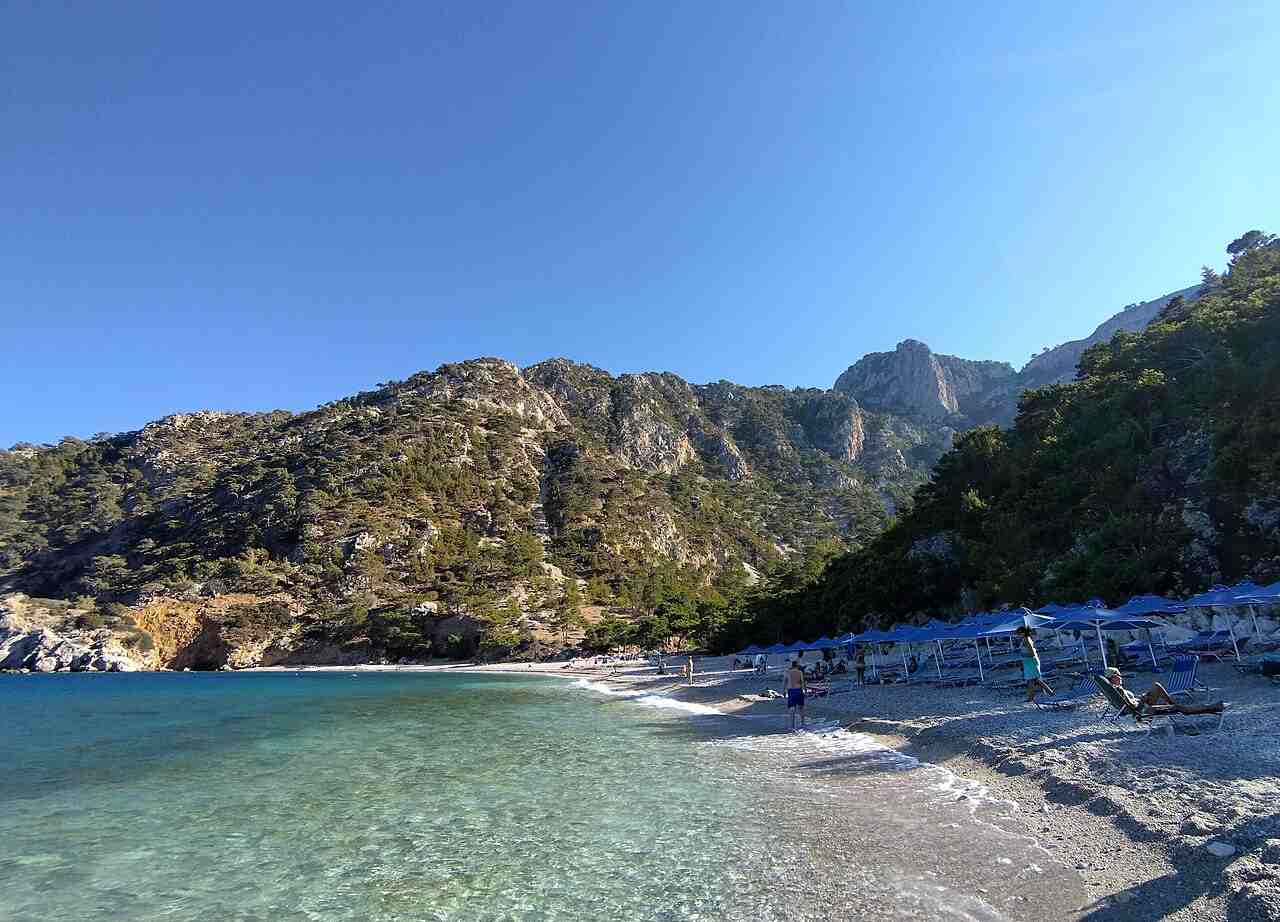
Karpathos strings its beaches along three very different coasts, and knowing which is which decides whether you swim in glass-calm turquoise or chase a force-six wind. The sheltered east coast holds the island’s famous cliff-backed coves. The flat south around the airport gathers sandy shallows and a world-class surf bay. The quieter west scatters small sheltered inlets that stay swimmable when the meltemi churns the other side. Plan the whole trip with Greece Tours.
This guide runs through the fifteen beaches worth planning a day around, from the award-winning cove of Apella to the white lagoon of Diakoftis and the linked coves of Lefkos. It sets out how to reach each one by road or by the daily boat from Pigadia, which have tavernas and sunbeds. Which to pick when the wind is up. Read it beside the wider guide to things to do in Karpathos to slot beach days into a full week.
What are the best beaches in Karpathos?
Apella and Kyra Panagia lead the east coast for turquoise water and scenery, Diakoftis has the whitest sand in the south, and Lefkos anchors the sheltered west. Achata, Amoopi and Vrondi complete the shortlist.
The east coast owns the postcard shots. Apella drops white pebbles into water so clear the seabed shows metres down, framed by a pine-clad slope, while Kyra Panagia pairs golden sand with a blue-domed chapel and is the island’s most photographed strip. Achata, the first cove north of Pigadia, adds a quiet pebble bay with a single taverna at the road’s end.
The south trades cliffs for space and sand. Diakoftis near the airport spreads fine pale sand around a shallow lagoon that glows Caribbean-blue on a calm day. The small linked bays of Amoopi suit families with young children. On the west coast, Lefkos wraps three sandy coves around a low headland, sheltered enough to swim when the meltemi shuts the eastern shore.
Add the town beach of Vrondi at Pigadia. A three-kilometre sweep of sand and shingle within walking distance of the harbour. The wild bays of the far north reached from Diafani. The sections below take each beach in turn, with road or boat access. The sand-versus-pebble split. Which coves hold tavernas and sunbeds against those you reach with only your own supplies.
Why is Apella the most famous beach in Karpathos?
Apella is regularly rated among the finest beaches in the Aegean for its white pebbles, pine backdrop and vivid turquoise water. It sits in a cliff-framed cove north of Pigadia, reached by a short walk down from the car park.
Apella lies about 25 kilometres north of Pigadia on the east-coast cliff road, where a signed lane drops to a car park above the pines. From there a stepped path descends to the beach in five minutes, opening onto a crescent of small white pebbles that give way to a smooth sandy seabed offshore. Pine and cedar climb the slope behind, so there is natural shade at the back even in high summer, and the water shelves gently into deep, clear blue.
A single taverna sits above the beach at the top of the path. Serving food and cold drinks and renting a handful of sunbeds. Apella keeps its unspoiled feel because there is no road right to the sand and no resort behind it. The cove faces east and is well sheltered from the prevailing north wind, so it stays swimmable on days when the surf bays in the south are wild. Snorkellers find clear visibility along the rocky edges of the bay.
Arrive early in July and August, since the car park is small and fills by late morning. Or reach the cove on the daily excursion boat from Pigadia, which anchors offshore and tenders swimmers in. Bring water and a hat if you plan to stay past midday, and note the walk back up the steps is steep in the heat. Apella works as the centrepiece of an east-coast beach day paired with Kyra Panagia or Achata.
What makes Kyra Panagia special?
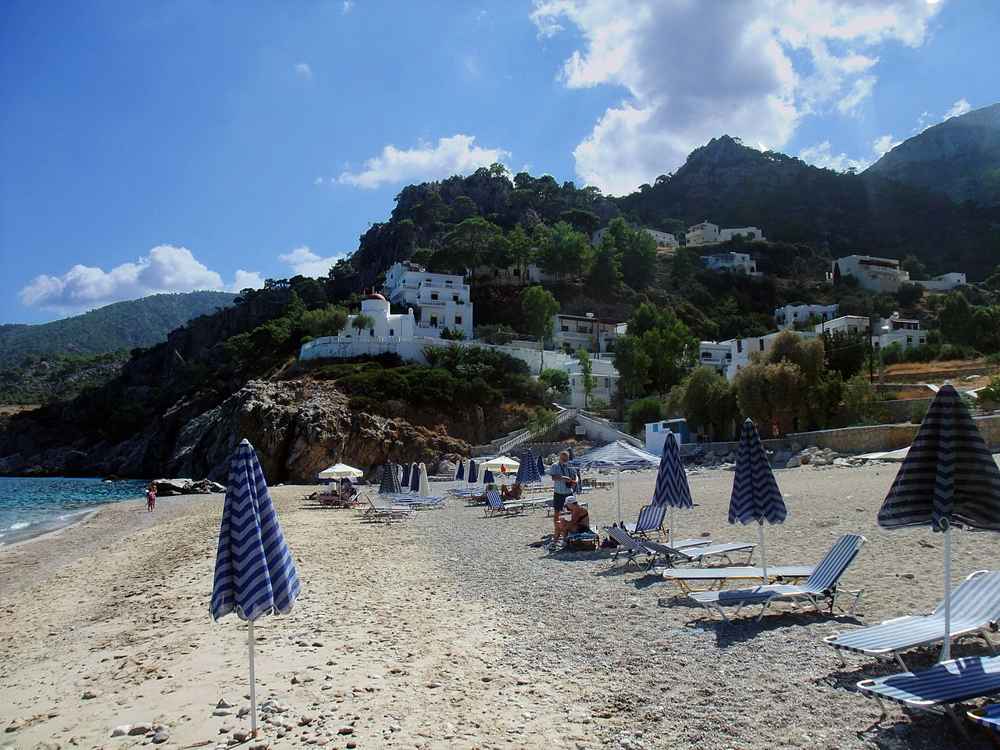
Kyra Panagia combines golden sand, luminous turquoise water and a white chapel with a red dome above the beach. It is fully organised with tavernas and sunbeds, making it the easiest of the famous east-coast coves.
The cove takes its name from the little church of Kyra Panagia that stands on the slope above the sand. Its whitewash and red dome forming the image that fills postcards of the island. A paved lane winds down to the beach past a scatter of rooms and two tavernas. Unlike the wilder coves nearby it has water, food and sunbeds on the sand. The bay faces east and shelters from the meltemi, and the water runs an intense blue over a mix of fine sand and pale pebble.
Kyra Panagia draws more visitors than Apella, yet the cove is generous enough to absorb them and the far end stays quieter. Families favour it for the gentle shelving entry and the tavernas within reach. The small rooms above the beach let you stay overnight to have the sand to yourself at either end of the day. The chapel is worth the short climb for the view back over the turquoise bay.
Kyra Panagia sits kilometres south of Apella on the same cliff road, so the two pair naturally into one east-coast day. Parking is limited to a rough area above the beach that fills in high summer, another reason to arrive early or come by the Pigadia excursion boat. There are no fuel stations on this stretch, so top up in Pigadia before driving north.
Which Karpathos beaches are best for families?
The south-coast bays of Amoopi and Diakoftis are best for families, with shallow, sandy shallows and calm water. Vrondi at Pigadia adds a long town beach within walking distance of tavernas and shops.
Amoopi, about seven kilometres south of Pigadia, is a cluster of small sandy coves linked by low rocks, and its shallow, sheltered water makes it the island’s most family-friendly stretch. Several of the bays have tavernas and rooms right behind the sand. Parents can reach shade. Food and facilities in steps, and the calm entry suits toddlers and weak swimmers. The coves are small, so arrive early in peak weeks to claim a spot.
Diakoftis, further south near the airport, offers a wider. Wilder version of the same idea: a broad arc of fine white sand around a lagoon so shallow you can wade far out, with water that turns a brilliant pale blue. It is less developed, with limited facilities, so families come prepared with water, shade and snacks, but the space and the safe shallows reward the short drive. The beach can catch the wind, so it is calmest in the morning.
Within Pigadia itself, the long town beach of Vrondi curves for nearly three kilometres of sand and shingle. Backed by tamarisk trees for shade and lined at its town end with beach bars. Families staying in the capital can walk straight to it. Split the day between sea and taverna. Detour to the ruins of the Agia Fotini basilica that sit halfway along the sand. It shelves gently and stays calm in most conditions.
Where are the best beaches for windsurfing and kitesurfing?
Afiartis bay in the south is the windsurf and kitesurf centre of Karpathos, with three linked spots for every level. Makrys Gialos and the wider Gun Bay area catch the reliable summer meltemi.
The south-eastern plain of Afiartis channels the meltemi into steady force-five and force-six wind through July and August, and the bay divides into three zones that match rising skill. Gun Bay has flat, shallow water and onshore wind that lets beginners water-start in safety. Devil’s Bay lies further out with stronger gusts and small swell for intermediates. The open speed strip suits advanced riders. Rental centres line the shore with boards, rigs and lessons.
The wind that makes Afiartis a magnet for surfers makes it a poor choice for a lazy swim. Treat this coast as a sport destination rather than a sunbathing one. Kitesurfers use a separate zone to keep clear of the windsurf fleet, and the season runs from May into October with the strongest wind at the height of summer. The bay has hosted professional speed-sailing events, a measure of how dependable the conditions are.
Non-surfers still enjoy Afiartis for the spectacle of a hundred sails crossing the water at once, best watched from a beach bar with the airport runway just behind. Anyone wanting to try the sport finds instructors here teaching from the first water-start upward, and gear rents by the day or the week. Combine a windy morning watching the speed strip with an afternoon at the calmer coves nearby when the meltemi eases.
What are the best beaches on the west coast of Karpathos?
Lefkos is the star of the west coast, with three linked sandy coves and shallow turquoise water sheltered from the meltemi. Arkasa and Agios Nikolaos add quieter sandy bays further south.
Lefkos sits on the sheltered west coast about halfway up the island. Where a low headland and offshore islets break the swell into three linked coves of pale sand and clear, shallow water. Because it faces away from the prevailing north wind, Lefkos often stays calm and swimmable on days when the east coast is churned up, which makes it the go-to alternative in a blow. A small village of tavernas and rooms backs the beaches, so it works for a full day or an overnight.
The setting adds interest beyond the sand: the remains of an early-Christian basilica and rock-cut catacombs sit on the headland above the coves, a short walk from the beach. The water shelves gently and the coves are calm enough for children, while the westward aspect makes Lefkos one of the best places on Karpathos to watch the sun drop into the sea over a taverna dinner.
Further south, the bay of Agios Nikolaos near Arkasa spreads a long, sandy, shallow beach that rarely fills, with a taverna or two and easy parking. Arkasa itself keeps the ruins of ancient Arkesia and the mosaic floors of a basilica on the low cape of Paleokastro nearby. These west and south-west beaches see fewer visitors than the famous eastern coves, so they reward anyone willing to drive across the island for space.
How do you reach the east-coast beaches of Karpathos?
The east-coast coves are reached by steep side lanes off the cliff road north of Pigadia, or by the daily excursion boat from Pigadia harbour. The boat is the easier option for Apella and the coves without road access.
From Pigadia the east-coast road climbs north above the sea. Signed turn-offs drop to each cove in turn: Achata after about nine kilometres. Then Kato Lakos, Kyra Panagia and finally Apella. The lanes are narrow, steep and often single-track. A small hire car or a scooter handles them better than a large vehicle. And the gravel parking areas at each cove fill by late morning in high summer. There are no fuel stations north of Pigadia, so start with a full tank.
Some of the finest coves have no road at all. Beaches such as Kato Lakos and the wild inlets toward the north are reachable only on foot or from the sea, which is why the daily boat matters. It leaves Pigadia harbour around nine each morning. Calls at the coves in turn. Gives swimmers an hour or more at each before returning by late afternoon, turning the day into a cruise with a lunch stop.
The boat suits anyone nervous of the cliff lanes or travelling without a car, and tickets sell from the quayside kiosks in Pigadia. For drivers, an early start beats both the heat and the parking crush, and pairing two neighbouring coves into one trip makes the winding drive worthwhile. Whichever way you go, carry water and shade, since most eastern coves have limited facilities.
Which beaches are best on a windy meltemi day?
Head to the sheltered west and south-west coast. Lefkos, Agios Nikolaos and the coves around Arkasa stay calm, while the exposed east and south become rough.
The meltemi blows from the north through much of July and August. It hits Karpathos hardest on the east and south-east coasts. Where it kicks up swell and drags sand into the wind. On those days the famous eastern coves lose their glassy calm, and the surf bays of Afiartis fill with sails instead of swimmers. Reading the wind before choosing a beach saves a wasted drive.
The answer is to cross to the western side. Lefkos, tucked behind its headland and islets, usually keeps flat, swimmable water when the east is rough, and the bay of Agios Nikolaos near Arkasa shelters similarly. These west-coast beaches face the sunset rather than the wind, so a meltemi day turns naturally into a westward swim followed by dinner as the sun drops into the sea.
In the far south, the enclosed coves of Amoopi offer partial shelter behind their rocks even when the open coast is breezy. The morning hours are calmest before the wind builds. If the whole island is blowing hard, the town beach of Vrondi at Pigadia and the tavernas behind it give an easy fallback within walking distance of a base in the capital.
Are there quiet or secluded beaches in Karpathos?
Yes. The far-north coves reached from Diafani, the islet of Saria, and hard-to-access bays like Kato Lakos stay empty. Even in peak season the island’s size keeps beaches uncrowded.
Karpathos is large and thinly developed, so seclusion is easy to find once you leave the three or four famous coves. North of the road’s end the coast breaks into wild inlets reached only on foot or by boat from Diafani. The small northern port has its own quiet beaches within walking distance for anyone staying up there. The old footpaths that thread the northern slopes pass hidden pebble bays with no facilities at all.
The uninhabited islet of Saria, off the northern cape, is the ultimate escape. Excursion boats from Diafani cross the narrow channel in about twenty minutes to the sheltered bay of Palatia. Where Byzantine ruins stand behind a shingle beach and the water runs a deep, clear blue with only the day’s boat passengers for company. Trips often add a swim stop at the cove of Papa Mina.
Closer to Pigadia, coves such as Kato Lakos stay quiet simply because the access deters casual visitors, whether by a rough track or a walk down from the cliff road. Anyone willing to carry their own water and shade. To give up a taverna and sunbeds. Can have a beautiful stretch of the Aegean almost to themselves even at the height of August.
Which Karpathos beaches are organised with sunbeds and tavernas?
Kyra Panagia, Amoopi, Lefkos and the town beach of Vrondi have sunbeds, umbrellas and tavernas on the sand. Most other coves, including Apella, offer only a single taverna or nothing at all.
Only a short list of Karpathos beaches count as fully organised. Kyra Panagia leads them, with two tavernas, sunbed rows and a paved access lane down to the golden sand. Which is why families and less mobile visitors favour it over the wilder coves. Amoopi in the south spreads its facilities across several small bays. Each with rooms and a taverna right behind the sand. The town beach of Vrondi at Pigadia lines its town end with beach bars and sunbed hire within walking distance of the harbour.
On the west coast, Lefkos backs its three coves with a village of tavernas and rooms. It offers shade. Food and a cold drink without leaving the beach, and the shallow water suits a long organised day. These beaches charge the usual euros for a pair of sunbeds and an umbrella. Often waived if you eat at the taverna behind. They have the parking and easy access that the cliff coves lack.
The trade-off is that the island’s most beautiful beaches are the least organised. Apella has a single taverna at the top of its path and no sunbeds on the sand itself, and remote coves such as Kato Lakos have nothing at all. Anyone heading to those beaches carry water, shade and food, and treat the lack of facilities as the price of the seclusion and the clear, uncrowded water they buy.
What are the best beaches in the north near Diafani?
Diafani has quiet town beaches and pebble coves within walking distance, and boats reach the wild inlets toward Saria beyond. The far north stays empty even at the height of August.
The small northern port of Diafani sits below Olympos and keeps its own beaches within a short walk of the harbour. A pebble-and-sand strip runs along the bay in front of the village, calm and clear. A coastal path leads north to quieter coves such as Vananda. Set in a green gully of pine and reached in twenty minutes on foot. Because most visitors arrive on the day boat and leave in the afternoon, these beaches empty out by evening for anyone staying overnight.
Beyond the road’s end the coast breaks into wild inlets that only the sea reaches. Excursion boats from Diafani work north to the beaches of Saria islet and to hidden pebble bays along the way. Dropping swimmers for an hour at each in water that runs a deep, undisturbed blue. The bay of Palatia on Saria, backed by Byzantine ruins, is the highlight, and the trips often add the cove of Papa Mina.
The whole northern tip rewards travellers willing to make the effort of reaching it, whether by the two-hour boat from Pigadia or the long mountain road. It is the emptiest quarter of an already quiet island, and the combination of clear water, ruins and the medieval village of Olympos above makes a day or an overnight in the north one of the most rewarding on Karpathos, far removed from the busier beaches of Rhodes to the north-east.
Which Karpathos beaches are best for snorkelling?
The rocky-edged coves of Apella, Achata and Kato Lakos offer the clearest water and most fish life for snorkelling. Dive centres run trips to reefs, caves and shallow wrecks off the south coast.
Snorkelling rewards you most where sand gives way to rock, and the eastern coves deliver exactly that. Along the edges of Apella and Achata the boulders shelter bream, wrasse and the occasional octopus, and the water is clear enough to pick them out metres down. Kato Lakos and the smaller inlets reached by boat add undisturbed rocky shorelines where the fish are less used to swimmers, so bring a mask to any east-coast beach day.
The south coast draws divers as well as snorkellers. Centres in Pigadia and Amoopi run guided dives to reefs, drop-offs and sea caves near the southern capes. Where visibility often exceeds thirty metres. They teach beginners in the sheltered bays before heading to the deeper sites. Shallow wrecks and rock formations off the south-east keep certified divers busy, and the same warm, clear water makes the shallows ideal for a first try with a snorkel.
For the best conditions, take to the water in the calm of morning before the meltemi ruffles the surface. Choose the sheltered coast for the day: the east on a still day. The west when the north wind blows. Water clarity peaks in June and September when the sea is warm and settled. Even the organised beaches like Kyra Panagia have clear enough water at their rocky edges to reward a mask and fins.
Is there a good beach near Karpathos airport?
Diakoftis, a white-sand lagoon with shallow turquoise water, lies minutes from the airport in the south. The windsurf bay of Afiartis sits right beside the runway, so both suit a first or last swim.
The airport occupies the flat southern tip of the island, and two very different beaches sit within minutes’ drive. Diakoftis is the pick for swimmers: a broad arc of fine white sand around a lagoon so shallow you can wade far out. With water that glows a brilliant pale blue on a calm day. Its position near the airport makes it the ideal spot to fill the hours before an afternoon flight or to shake off a long journey on arrival.
Right beside the runway, the bay of Afiartis is the island’s windsurf and kitesurf centre, its steady meltemi driving the sails that fill the water through summer. It is a poor choice for a lazy swim but a fine one for watching the sport or trying a lesson. The flat. Shallow entry at Gun Bay lets beginners water-start in safety. The wind that thrills surfers here occasionally delays flights from the adjacent airport.
They are a long drive from the northern half of the island. They work best for anyone based in the south or timing a swim around a flight. Diakoftis has limited facilities, so bring water and shade. And note the lagoon can catch the afternoon wind. The morning is calmest for a family swim in the shallows before the meltemi builds across the plain.
Which Karpathos beaches can you reach only by boat?
Several eastern inlets and the beaches of Saria islet have no road and are reached only by the daily Pigadia boat or the Diafani excursion. This keeps them among the emptiest on the island.
Karpathos is large and rugged, and its road network never reaches parts of the coast, which is why the excursion boats matter. The daily cruiser from Pigadia works up the east coast to coves that have no vehicle access at all. Dropping swimmers for an hour at each before moving on. It reaches wild inlets north of Apella that a car simply cannot. This turns a beach day into a cruise, with lunch at a taverna cove and swimming in water no crowd has churned.
The uninhabited islet of Saria, off the northern cape, is the ultimate boat-only destination. From Diafani the crossing takes about twenty minutes to the sheltered bay of Palatia. Where Byzantine ruins stand behind a shingle beach and the sea runs a deep, clear blue with only the day’s passengers for company. There is no other way to reach it, and the trips add smaller coves like Papa Mina along the northern shore.
Reaching a beach by boat has its own rhythm: you swim on the operator’s schedule rather than your own. You trade that for coves that stay empty because they are so hard to reach. Tickets for the beach boats and the Saria trip sell from the quayside kiosks in Pigadia and Diafani, and the wider range of cruises appears on the Karpathos travel guide. Bring water, since these remote beaches have no facilities.
What you know before visiting Karpathos beaches?
Many Karpathos beaches are unorganised, so bring water, shade and supplies. A car helps reach the coves, the meltemi shapes which coast to pick, and mornings are calmest for swimming and sand.
Only a handful of Karpathos beaches are fully organised with sunbeds, umbrellas and tavernas on the sand. Kyra Panagia, Amoopi and the town beach of Vrondi have facilities. The wilder coves such as Apella offer only a single taverna at the top of the path. And remote bays have nothing at all. Pack water, sun protection and a beach umbrella if you plan to stay past midday, since natural shade is limited on the open coves.
A hire car or scooter turns the island’s spread of beaches from a frustration into a pleasure, because buses reach only the main villages and run times a day. Fuel up in Pigadia before heading north or west, since fuel stations are scarce outside the capital, and take the narrow cove lanes slowly. The daily Pigadia boat is the car-free way to reach the eastern coves and the north.
Let the wind guide the day: the north meltemi favours the sheltered west, calm spells open up the famous east coast, and mornings are almost always calmer than afternoons. The sea stays warm from June into October, water clarity is excellent for snorkelling along the rocky cove edges, and the beaches quiet sharply outside July and August. Read the wider Karpathos travel guide for ferries, dates and where to base yourself.
Frequently Asked Questions
What is the most beautiful beach in Karpathos?
Apella is the most celebrated beach in Karpathos and is regularly ranked among the finest in the Aegean. With white pebbles, a pine backdrop and vivid turquoise water in a cliff-framed cove. Kyra Panagia, with its golden sand and blue-domed chapel, runs a close second and is easier to reach and fully organised. Which you rate highest often comes down to whether you value the wild pine-and-pebble drama of Apella or the comfort and easy access of Kyra Panagia. Many visitors make a point of seeing both on the same east-coast day.
Does Karpathos have sandy beaches?
Yes. While the famous eastern coves like Apella are white pebble, the south coast has broad sandy beaches, including the white lagoon of Diakoftis near the airport and the family bays of Amoopi. The west coast at Lefkos and the town beach of Vrondi at Pigadia are also sandy, so the island offers both sand and pebble. As a rule the south and west coasts hold the sandy beaches while the celebrated eastern coves are pebble. Choose the coast to suit whether you prefer sand underfoot or the clearer, cooler water that pebble bays tend to keep on a busy summer day.
Which Karpathos beach is best for windsurfing?
Afiartis bay in the south is the best beach for windsurfing and kitesurfing, with three zones for different levels and reliable force-five to force-six meltemi wind through July and August. Gun Bay suits beginners with flat, shallow water, while Devil’s Bay and the speed strip challenge intermediate and advanced riders. Rental centres and instructors line the shore.
Can you reach Apella beach without a car?
Yes. The daily excursion boat from Pigadia harbour calls at Apella and the other east-coast coves. Anchoring offshore and tendering swimmers in, which avoids the steep cliff lane and the small car park. The boat leaves around nine in the morning and returns in the afternoon, giving time to swim at more than one cove.
Are Karpathos beaches crowded?
Karpathos is far less crowded than islands like Rhodes or Santorini because it is large, remote and thinly developed. The three or four famous coves fill their small car parks by late morning in peak August. The island’s size means the west coast. The far north and the harder-to-reach bays stay quiet even at the height of summer. Outside July and August the beaches empty further, and by late September you can have a famous cove almost to yourself on a warm, still afternoon.
Which beach you choose when it is windy?
Choose the sheltered west coast: Lefkos and the bay of Agios Nikolaos near Arkasa usually keep calm, swimmable water while the east and south turn rough. The enclosed coves of Amoopi in the south offer partial shelter, and mornings are always calmer than afternoons across the whole island. Checking the forecast the night before, then choosing the coast to match the wind, is the single habit that saves a beach day on Karpathos.